Compromise Under the Alps: How Milan Cortina Became the Winter Games Nobody Could Afford to Fight
Executive Summary
The 2026 Milan Cortina Winter Olympics represent a pivotal moment in international sporting diplomacy, demonstrating how major global events navigate an increasingly fractured geopolitical landscape. As the first Olympic Winter Games hosted simultaneously by 2 cities located more than 250 miles apart, Milan Cortina embodies institutional pragmatism rather than visionary ambition. The Games accommodate geopolitical tensions through strategic compromise: Russia's athletes compete as stateless individuals; environmental commitments rely upon offsetting rather than emissions reduction; security arrangements balance Italian sovereignty with American security interests; and sustainability claims coexist with 930,000 tonnes of direct carbon dioxide emissions. This analysis examines why every stakeholder in Milan Cortina has accepted substantial concessions rather than risk major confrontation.
Introduction
The Winter Olympics have historically served as platforms for projecting national pride, technological capability, and soft power. Beijing 2022 showcased authoritarian efficiency; PyeongChang 2018 demonstrated North-South reconciliation; Sochi 2014 preceded geopolitical calamity. The 2026 Milan Cortina Games present a different phenomenon entirely. Rather than advancing a singular vision, they represent a negotiated settlement among competing interests whose fundamental objectives remain irreconcilable. The Games thread multiple needles simultaneously: hosting a nation whose government contains parties rooted in fascist ideology while celebrating international brotherhood; pursuing climate consciousness while generating 930,000 tonnes of carbon emissions; enhancing security through American agents while Italy maintains territorial authority; and accommodating athletes from a nation it has geopolitically isolated.
Understanding Milan Cortina requires abandoning expectations that the Olympics can transcend politics. Instead, the Games function as a pressure valve where political actors extract concessions sufficient to claim victory while accepting defeat on substantive matters. This represents neither progress nor regression, but rather the adaptation of Olympic institutions to an age when boycotts threaten participation, climate crises threaten venues, corruption threatens legitimacy, and geopolitical isolation threatens the very concept of universal participation.
History and Current Status
Milan and Cortina d'Ampezzo occupy distinct positions within the Italian economic and sporting landscape. Milan, the nation's second-largest metropolitan area and global fashion capital, has hosted numerous international sporting events but never the Winter Olympics as a primary venue. Cortina, a mountainous Alpine resort in the Veneto region, hosted the 1956 Winter Olympics and maintains a population under 5,000, making it one of the smallest Winter Olympic host communities in modern history. When the International Olympic Committee awarded the Games to the joint bid on June 24, 2019, the decision reflected organizational evolution: using primarily existing infrastructure rather than constructing Olympic-specific facilities; distributing costs and environmental impacts across multiple communities; and reducing the financial burden that historically deterred smaller nations from bidding.
The dual-city model was not revolutionary in Olympic hosting—Tokyo 1964 used multiple venues across a metropolitan region, and Beijing 2022 spread events between the city proper and mountain venues 100 miles distant. However, Milan Cortina's separation of approximately 420 kilometers, requiring 5 or more hours of travel by automobile between primary competition clusters, represents logistical complexity at scales previously unmanaged. The organizing committee positioned this spatial distribution as advantageous: Milan's indoor ice venues (figure skating, ice hockey, curling) would remain in urban infrastructure, while Cortina's Alpine skiing, bobsleigh, and skeleton events would utilize mountainous terrain suited to these sports. Theoretically, this arrangement optimizes both venue suitability and existing infrastructure utilization.
By February 2026, the Games represent the first Olympic event to unfold under the International Olympic Committee's post-Tokyo Agenda 2020 reforms, which explicitly prioritize sustainability, reduced host city financial burden, and usage of existing venues. The organizing committee achieved the stated objective: 93% of competition venues are either permanent facilities or temporary structures requiring minimal permanent infrastructure investment. Only 2 new permanent competition venues were constructed, compared to historical Winter Olympics which typically required 8 to 12 new facilities. This structural choice contained both environmental and financial advantages, reducing immediate sustainability impacts relative to traditional Olympic models.
Key Developments: The Geopolitical Narrowing
The Games approach amid sustained geopolitical friction across multiple domains. Most visibly, the conflict in Ukraine produced coordinated exclusion of Russia from Olympic participation at the national level. Unlike Paris 2024, where Russian athletes competed as "Individual Neutral Athletes" in select sports, the majority of winter sports federations moved beyond even this limited framework. The International Ski Federation voted not to allow Russian or Belarusian athletes to participate in qualifying events, following pressure from Scandinavian countries led by Norway, which threatened to boycott the entire Games. By January 2026, only 5 Russian athletes had secured approval as Individual Neutral Athletes—permitted to compete but forbidden from wearing national colors, singing national anthems, or marching in opening ceremonies.
This exclusion carried profound psychological weight for the Russian state. Winter sports occupy a centralized position within Russian national identity that summer sports do not. Ice hockey, figure skating, and cross-country skiing represent domains where Russia has historically demonstrated athletic excellence and technological sophistication. The ban therefore symbolized not merely athletic exclusion but rather what Moscow interprets as erasing Russian greatness from a global stage. Intelligence assessments suggested the exclusion reduced traditional deterrents protecting Olympic venues: when a nation's athletes cannot compete for medals, reputational consequences for disruption diminish. Cybersecurity analysts noted that Russia's interpretation of the International Olympic Committee shifted from regulatory body to political actor aligned with Western interests, creating elevated risk of state-aligned cyber operations targeting Olympic infrastructure.
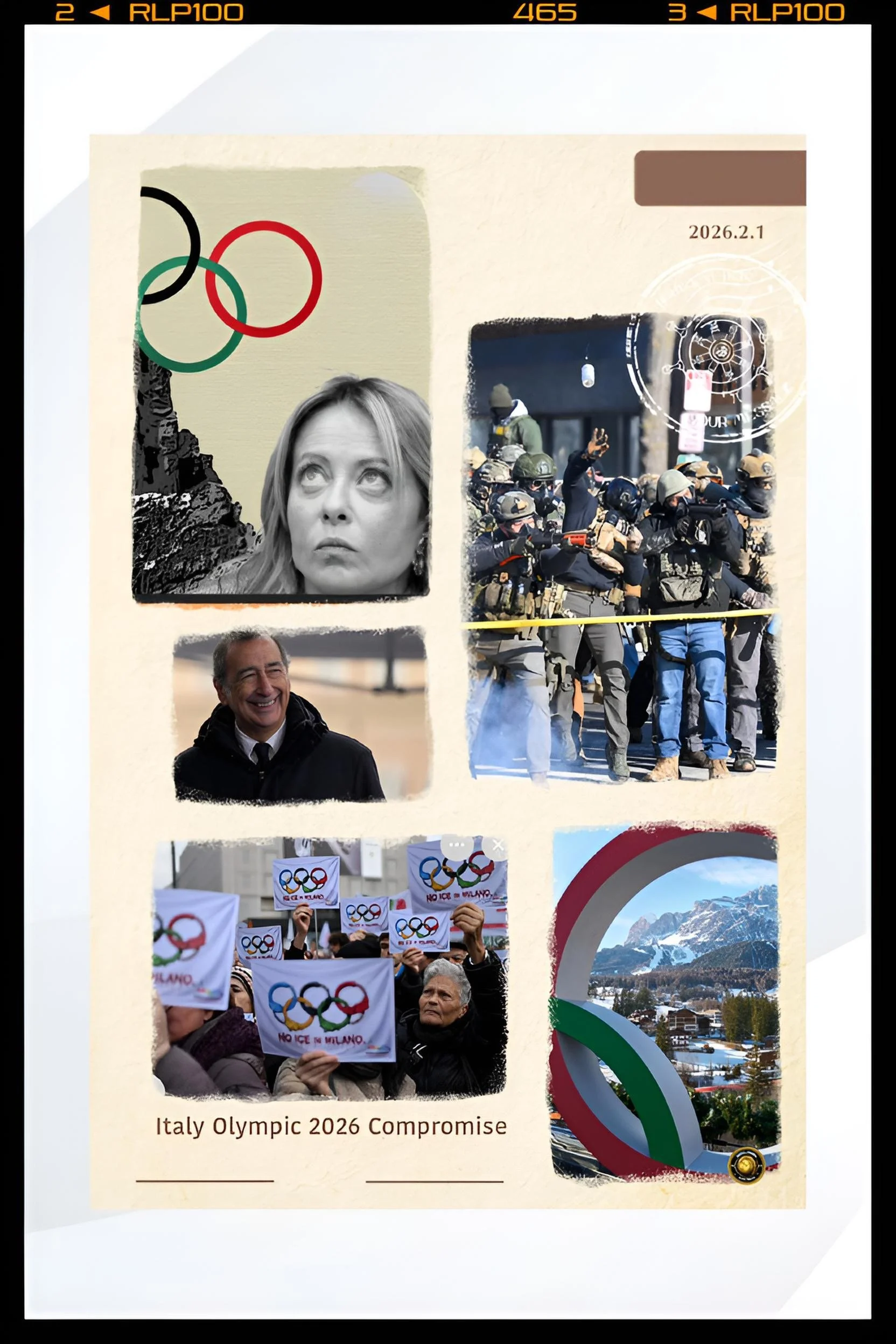
Simultaneously, controversy emerged regarding American security presence at the Games. The U.S. Department of Homeland Security's Homeland Security Investigations unit, which historically provided counter-intelligence support at major international events, announced plans to station personnel in Milan. This standard practice became extraordinarily controversial following well-publicized incidents in Minneapolis in which Immigration and Customs Enforcement agents fatally shot 2 individuals. Large demonstrations erupted in Milan on January 31, 2026, with thousands demanding "ICE OUT." Milan's mayor, Giuseppe Sala, declared ICE agents "not welcome," comparing them to extrajudicial forces. The controversy prompted 3 American Olympic teams to rename their hospitality facility from "The Ice House" to "The Winter House" to avoid unfortunate acronymic implications. A German citizen petition against ICE travel in European Union territory accumulated 83,000 signatures.
The controversy revealed deeper anxieties about American conduct under the Trump administration, which took office in January 2026 promising aggressive immigration enforcement. Italian authorities, concerned about domestic political backlash, initially denied ICE presence entirely before clarifying that Homeland Security Investigations would perform advisory and intelligence functions only—assessing transnational criminal and cyber threats rather than conducting enforcement operations or patrolling public spaces. Italy's Foreign Minister Antonio Tajani attempted to defuse controversy by stating the arrangement was not equivalent to the Schutzstaffel's historical role, an observation unlikely to prove reassuring to those specifically concerned about ICE's conduct.
The corruption scandals surrounding Olympic construction further complicated the Games' positioning. In July 2025, Milan's prosecutor's office launched investigations into alleged corruption within public works contracts related to the Olympic Village, implicating 74 individuals including Milan Mayor Giuseppe Sala, who faced accusations of undisclosed conflicts of interest. Simultaneously, Cortina's €118 million sliding track construction drew scrutiny regarding both expense and environmental impact, with Mayor Gianluca Lorenzi reporting death threats from individuals opposing the facility's development. In October 2025, authorities arrested 2 brothers affiliated with Rome's Lazio Ultras hooligan group, who attempted to leverage organized crime connections to secure Olympic construction contracts through extortion and intimidation. These scandals suggested that Olympic hosting remained vulnerable to infiltration by criminal elements despite institutional safeguards.
Latest Facts and Concerns
The immediate practical challenge confronting the Games involves the coordination of logistics across 250+ miles of mountainous terrain during one of Europe's busiest travel periods. The organizing committee designed simultaneous opening ceremonies: 1 cauldron would ignite in Milan's Arco della Pace while another burned in Cortina's Piazza Angelo Dibona, with separate athletes' parades permitting each city's competitors to enjoy ceremonial honors. This theatrical simultaneity, while photographically convenient, concealed profound logistical difficulties. Transit between Milan and Cortina requires 5 to 6 hours by automobile or train depending on winter weather conditions, mountainous roads, and traffic management implemented by Italian authorities. Spectators attending events in both cities would face significant scheduling constraints and transportation complexity. The organizing committee distributed alpine venues across Bormio and Livigno as well, further fragmenting the geographic footprint of the Games.
A secondary transportation concern emerged regarding train strikes affecting Lombardy and Milan during the Games period. Italian rail workers announced planned labor actions coinciding with peak Olympic travel periods, potentially disrupting the shuttle systems designed to transport spectators from Milan to mountain venues. The organizing committee recommended spectators allow 75 to 90 minutes for final transfers from shuttle drop-off points to competition venues, accounting for security screening and pedestrian congestion on steep Alpine terrain.
Environmental concerns intensified as the Games approached. Independent analysis by the New Weather Institute calculated direct emissions of 930,000 tonnes of carbon dioxide equivalent, with additional 1.3 million tonnes attributable to sponsorship agreements with carbon-intensive corporations. The organizing committee calculated that artificial snow production alone would require approximately 250 million gallons of water, necessitating construction of new high-elevation reservoirs. These figures contrasted sharply with organizational claims of being the "most sustainable Olympics in history." In reality, the sustainability model relied upon purchasing carbon offsets rather than reducing absolute emissions. Of approximately 280,000 tonnes of estimated total emissions, the organizing committee would offset approximately 190,000 tonnes through forestry and renewable energy projects, leaving 90,000 tonnes characterized as "unavoidable."
The climate vulnerability of the venue itself generated technical concerns. Bare patches on Bormio's downhill ski track in early 2026 necessitated continuous artificial snow production, as daytime temperatures exceeded thresholds permitting natural snow accumulation. International Olympic Committee-commissioned research indicated that of 93 potentially viable Olympic host sites globally, only 52 would remain climate-reliable by the 2050s and merely 46 by the 2080s. Northern Italy currently ranks among the world's most reliable winter sports venues, yet even these locations require near-total reliance upon artificial snow generation. The research suggested that by the 2080s, only 4 countries would retain venues capable of hosting Winter Olympics without artificial snow production.
Cause-and-Effect Analysis
The "Compromise Olympics" framework emerged not from ideological consensus but rather from structural constraints that made confrontation economically and politically irrational. Russia's decision to accept stateless athletic participation, rather than mounting legal challenges through the Court of Arbitration for Sport, reflected calculation that competing athletes—however constrained—served national interests better than total exclusion. Ukraine's decision to accept the arrangement (while protesting) suggested recognition that escalation would produce counter-escalation without achievable objectives. The International Olympic Committee's willingness to accommodate both perspectives reflected institutional understanding that rigid positions on either Russia or Ukraine would trigger boycotts from opposite alliance partners, destroying the Games' legitimacy.
Italy's hosting of the Games, despite corruption scandals and government composition that troubled democratic observers, resulted from a combination of sunk costs (billions already invested in facilities) and limited alternative venues. No other nation had subsequently bid for 2026, creating scenarios where cancellation would represent organizational failure. The Games proceeded partly because the costs of abandonment exceeded the political costs of proceeding despite scandals.
Environmental compromise emerged from similar logic. The International Olympic Committee rejected scaling back the Games in response to climate crises, as this would require acknowledging that Olympic hosting itself had become ecologically incompatible with climate stabilization. Instead, the organization constructed a narrative of "best practices" sustainability while accepting massive emissions footprints. Artificial snow production, which consumes enormous energy and water resources in climate-vulnerable regions, was justified as ensuring athlete safety and event quality—acceptable rationales that permitted continued expansion of infrastructure in environmentally marginal zones.
The ICE controversy reflected American diplomatic deference to Italian sensitivities combined with Italian inability to fundamentally alter American security arrangements. The compromise involved ICE providing intelligence support without operational presence, satisfying American security requirements while permitting Italy to maintain plausible deniability regarding American law enforcement operations on Italian soil. Neither American interests nor Italian domestic political requirements were fully satisfied; both were sufficiently accommodated to permit proceeding.
Future Steps and Implications
The Milan Cortina Games establish precedent for future Olympic hosting by demonstrating viability of the dual-city model. The International Olympic Committee has already begun exploring whether future Games might further disperse across metropolitan regions or even multiple nations (Winter Olympics spanning Switzerland and France, for instance). Cost-sharing among multiple municipalities, if successful, could expand the universe of potential hosts by reducing per-city financial burden. Conversely, if logistical coordination proves excessively burdensome or spectator attendance disappoints due to transportation complexity, the experiment may prove unrepeatable.
The Russian cyber threat assessment suggests that future Olympic venues will require enhanced defensive infrastructure specifically designed to withstand state-aligned operations. The reduced traditional deterrent (exclusion from medal competition) implies that operational resilience rather than reputational consequence becomes the primary security mechanism.
Climate adaptation mechanisms developed for Milan Cortina—particularly sophisticated artificial snow production utilizing renewable energy sources and high-elevation water storage—will likely become standard for future Winter Olympics. However, the fundamental mismatch between Olympic hosting and climate stability remains unresolved. No technical innovation yet proposed permits hosting Winter Olympics at venues below 1,000 meters elevation, severely constraining future geographic flexibility.
Conclusion
Milan Cortina 2026 represents the Olympics of the contemporary age: compromised on every dimension yet functionally viable because all stakeholders have concluded that proceeding under negotiated constraints serves their interests better than escalation. Russia accepts sporting humiliation rather than face total exclusion and potential cyber retaliation. Ukraine accepts minimal Russian participation while maintaining protest rhetoric. Italy accepts sustained corruption investigations while hosting. Environmental advocates accept massive emissions while celebrating efficiency improvements. American security interests proceed through clandestine intelligence operations rather than public enforcement. The International Olympic Committee preserves institutional legitimacy by appearing to accommodate all perspectives while fully satisfying none.
This represents neither Olympic success nor failure, but rather their adaptation to a fractured world where universal participation and shared values remain aspirational rather than achieved. The Games will likely be technically proficient, producing athletic excellence on ice and snow. They will also change nothing fundamental about geopolitical tensions, environmental degradation, or the structural vulnerabilities that make major global events perpetual venues for scandal and controversy.
The compromise that permits Milan Cortina to proceed is precisely the compromise that prevents the Olympics from any longer serving as agents of global unity. Instead, they serve as efficient, conflict-minimizing mechanisms for national athletic competition amid geopolitical stalemate. Whether this represents adequate functionality for a 21st century international institution remains contested, but the Games will proceed regardless. That itself may be the most accurate measure of what these Olympics now represent.