Strategic Fantasies and Real Wars in the Age of Information: From Cognitive Bias to War—How Narratives Shape Modern Geopolitics, Part II
Executive Summary
Why People Believe Weird Things and the Geopolitics of Strategic Illusion
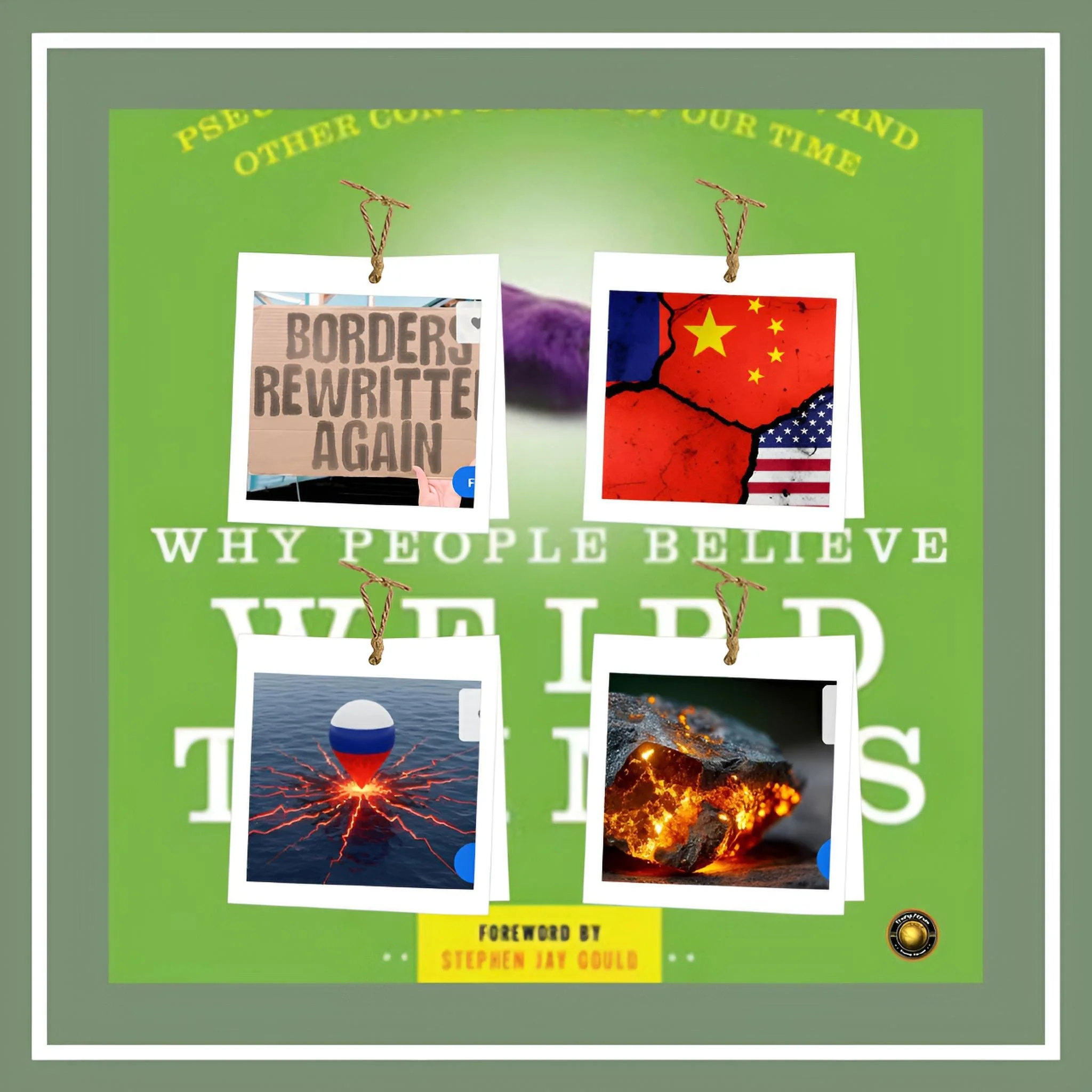
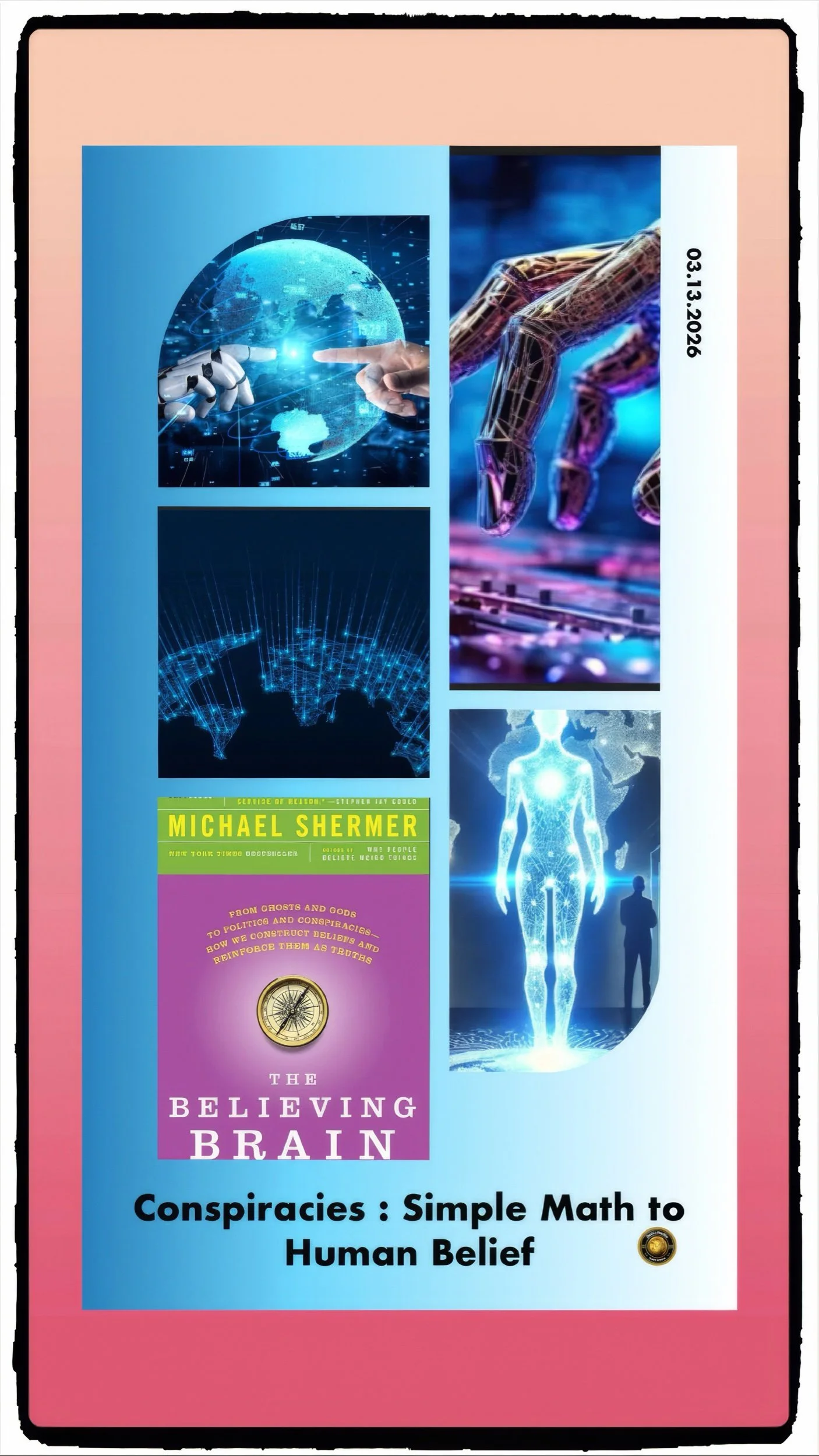
In 1997, science writer and skeptic Michael Shermer published Why People Believe Weird Things, a study of pseudoscience, conspiracy thinking, and ideological extremism.
His central argument was not that humans are irrational in a simplistic sense, but that belief formation precedes reasoning.
Individuals construct beliefs quickly through pattern recognition and emotional association, then rationalize those beliefs with post hoc justification.
What Shermer explored in the context of fringe science and denialism now operates at state scale. In the contemporary geopolitical environment, belief systems shape military strategy, alliance behavior, public consent for war, and institutional legitimacy.
The Russia–Ukraine war, intensifying U.S.–China rivalry, Japan–China maritime tensions, discourse surrounding Taiwan and 2027 contingencies, revived interpretations of the Monroe Doctrine, speculation about hemispheric dominance, tensions involving Iran, and growing strain on the United Nations all illustrate how narrative frameworks structure global conflict.
Shermer did not predict specific wars or territorial disputes.
However, he identified the cognitive mechanisms that allow populations and leaders to interpret ambiguous information through identity-driven lenses.
In the digital era, these mechanisms are amplified by algorithmic systems and strategic information warfare.
Belief is no longer peripheral to geopolitics; it is foundational.
The contemporary risk is not merely misinformation. It is institutionalized belief hardened into policy.
Introduction
Belief as Strategic Architecture
Shermer argued that the human brain evolved to detect patterns and infer agency rapidly.
This evolutionary advantage in ancestral environments now creates vulnerability in complex societies.
Humans see meaning in coincidence, intention in randomness, and conspiracy in ambiguity. Once beliefs form, evidence is filtered to protect them.
In modern geopolitics, this cognitive architecture shapes national narratives. States construct stories about themselves and their adversaries.
These stories simplify complex realities into coherent moral frameworks. Citizens adopt these frameworks as part of identity.
In the digital age, belief spreads with unprecedented velocity. Social media platforms reward emotionally charged content.
Foreign stakeholders exploit cognitive bias through targeted information campaigns. Domestic polarization intensifies narrative divergence.
Belief becomes strategic infrastructure. It conditions how populations interpret sanctions, troop movements, energy shocks, and diplomatic negotiations.
Once belief hardens, policy flexibility narrows.
History and Current Status
From Fringe Denialism to Narrative Warfare
Shermer originally examined UFO cults, Holocaust denial, and racial pseudoscience. These were fringe phenomena.
Yet he demonstrated that intelligent individuals can defend extraordinary claims when those claims reinforce identity.
In the early 21st century, the information ecosystem transformed.
The democratization of communication removed traditional gatekeepers. Financial crisis, economic inequality, and political disillusionment eroded institutional trust.
By the mid-2010s, digital disinformation became a tool of statecraft.
The Russia–Ukraine war demonstrates the maturation of narrative warfare.
Competing historical narratives about NATO expansion, post-Soviet sovereignty, linguistic identity, and security guarantees shaped public perception long before military invasion occurred.
Once hostilities began, information operations accompanied kinetic campaigns. Each side framed legitimacy through selective historical interpretation.
In U.S.–China rivalry, belief frameworks shape strategic posture. China emphasizes national rejuvenation and resistance to containment.
The United States frames Indo-Pacific engagement as defense of a rules-based order. Military modernization is interpreted through threat lenses rather than neutral capability analysis.
Japan–China tensions in the East China Sea illustrate how historical memory influences contemporary posture.
Maritime patrols are interpreted not merely as routine enforcement but as symbolic assertion of sovereignty. Historical grievances amplify suspicion.
The discourse surrounding Taiwan and potential 2027 scenarios reveals how expectation shapes behavior.
Analysts debate timelines, military readiness, and political signaling.
Markets respond to rumor. Regional militaries adjust posture. Even speculative narratives influence strategic calculation.
In the Western Hemisphere, revived rhetorical invocation of the Monroe Doctrine reflects belief in historical spheres of influence.
Discussions involving Venezuela, Cuba, Greenland, and Canada sometimes incorporate language of strategic entitlement.
Even rhetorical assertions affect diplomatic trust.
In the Middle East, tensions involving Iran reflect entrenched belief systems about deterrence and existential threat.
Public discourse often frames policy options as binary choices between weakness and confrontation.
Meanwhile, strain on the United Nations reveals erosion of shared epistemic baselines.
When major powers interpret events through incompatible narratives, institutional consensus becomes elusive.
Key Developments
Cognitive Bias in Contemporary Conflict
Confirmation bias shapes interpretation of battlefield developments in Ukraine.
Casualty figures, territorial gains, and diplomatic proposals are filtered through national identity. Contradictory evidence strengthens commitment rather than weakens it.
In U.S.–China relations, economic interdependence coexists with escalating suspicion.
Technology competition is framed as systemic struggle. Each side interprets the other’s policy adjustments as confirmation of hostile intent.
Japan’s defense normalization is viewed in Beijing through historical suspicion, while Tokyo interprets Chinese maritime expansion as confirmation of assertiveness. The cognitive loop reinforces itself.
Within the United States, domestic polarization influences foreign policy coherence.
Support for alliances, military aid, and sanctions is filtered through partisan identity. Foreign actors observe internal division and adjust strategy accordingly.
Speculation about territorial acquisition, whether Greenland or hemispheric dominance, illustrates how symbolic rhetoric can generate international anxiety.
Belief narratives sometimes detach from institutional constraint.
In Iran-related tensions, agency detection bias intensifies security dilemmas. Defensive measures are interpreted as preparation for aggression. Preemptive rhetoric increases escalation risk.
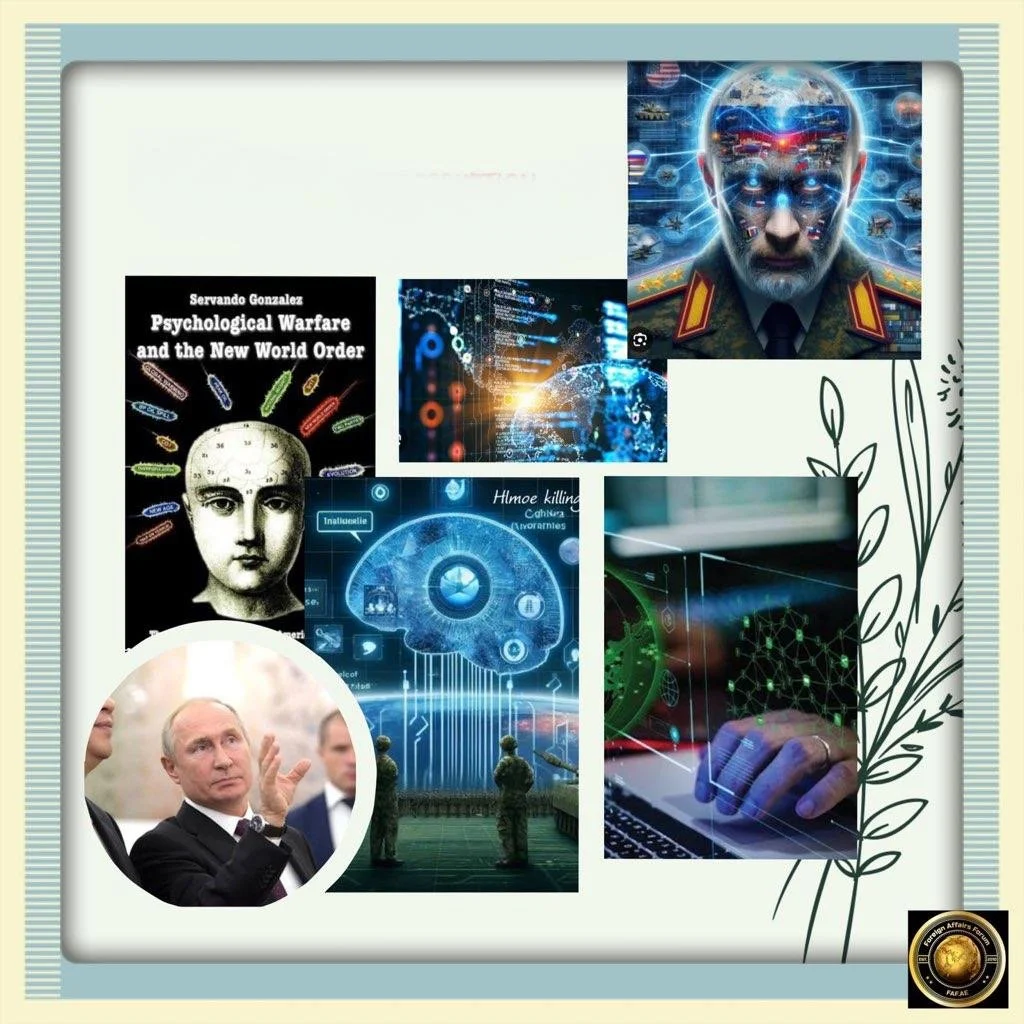
Information warfare now operates as strategic multiplier. States deploy digital campaigns to amplify division in rival societies.
The objective is confusion rather than persuasion. When information overload occurs, individuals retreat to identity-consistent narratives.
Latest Facts and Concerns
Epistemic Fragmentation and Global Risk
Financial markets respond rapidly to geopolitical rumor cycles.
Semiconductor stocks fluctuate on speculation about Taiwan.
Energy markets react to sanctions discourse.
Belief contagion spreads faster than diplomatic clarification.
Hybrid warfare integrates cyber operations, narrative shaping, and economic coercion.
The cost of destabilizing rival societies through information manipulation is far lower than conventional war.
The United Nations faces legitimacy challenges as veto politics and narrative divergence paralyze consensus.
Calls for alternative regional frameworks reflect declining confidence in universal governance.
Domestic polarization in democratic states complicates coherent long-term strategy.
Leaders constrained by partisan belief may adopt rigid postures to avoid appearing weak.
The central concern is cumulative destabilization.
Not every narrative produces war. However, repeated reinforcement of existential framing reduces space for compromise.
Cause-and-Effect Analysis
From Bias to Escalation
Shermer’s framework suggests a causal chain. Cognitive bias produces rapid belief formation.
Digital amplification reinforces those beliefs. Political entrepreneurs mobilize belief for legitimacy.
Foreign stakeholders exploit division.
Belief-driven narratives shape policy rigidity. Rigidity increases miscalculation risk.
Miscalculation increases escalation probability.
In Ukraine, existential framing reduces negotiation flexibility.
In U.S.–China rivalry, nationalist narratives constrain diplomatic compromise.
In Japan–China maritime tensions, symbolic incidents carry amplified meaning. In discussions of Taiwan, repeated invocation of inevitability influences posture.
In U.S. hemispheric discourse, rhetorical revival of strategic entitlement may strain alliances.
In Iran-related tensions, worst-case belief increases preemptive temptation.
Belief does not cause conflict independently. It amplifies structural tensions.
Future Steps
Toward Cognitive Resilience
Mitigating belief-driven escalation requires institutional reinforcement of analytic rigor.
Education must emphasize probabilistic reasoning and media literacy.
Intelligence assessments must distinguish between worst-case planning and likelihood estimation.
Political leadership should model epistemic humility. Rhetorical absolutism narrows options. Strategic ambiguity, when disciplined, may preserve flexibility.
Digital governance frameworks must address coordinated manipulation while preserving open discourse. International norms against large-scale disinformation could complement traditional arms control.
Rebuilding trust in multilateral institutions requires transparency and reform. Shared factual baselines are prerequisite for diplomacy.
Conclusion
Strategic Illusion in a Nuclear Age
Michael Shermer did not predict specific wars or territorial debates.
He diagnosed the psychological architecture of belief. In the digital era, that architecture intersects with great-power competition.
The gravest risk is not individual irrationality. It is the institutionalization of belief as policy. When narratives of inevitability, moral absolutism, or existential threat dominate, diplomatic maneuver narrows.
The future of global stability depends not only on material power balances but on epistemic discipline.
In a world of nuclear arsenals and instantaneous communication, cognitive humility is strategic necessity.