Executive summary
Decapitation Strikes Loom as Invasion Fades Away
Amidst escalating frictions between the United States and the Islamic Republic of Iran in early 2026, the specter of military confrontation looms with unprecedented acuity, predicated upon unresolved nuclear ambitions, regional proxy entanglements, and domestic upheavals within Tehran.
The prevailing paradigm eschews comprehensive invasion in favor of precision decapitation operations targeting regime echelons, ballistic infrastructures, and residual nuclear apparatuses, ostensibly to recalibrate diplomatic equilibria without precipitating protracted ground engagements.
Historical precedents, including the abbreviated 2025 Israel-Iran conflagration and antecedent U.S. kinetic interventions, intimate a trajectory wherein initial strikes provoke asymmetrical reprisals, potentially cascading into regional conflagrations encompassing missile barrages, maritime interdictions, and proxy escalations.
Empirical assessments delineate a conflict horizon fraught with inflationary surges in hydrocarbon valuations, infrastructural devastations approximating $500 billion in aggregate damages, and human tolls exceeding 10,000 casualties in inaugural phases alone.
This erudite disquisition elucidates antecedent trajectories, contemporaneous postures, salient evolutions, empirical verities and apprehensions, causal interdependencies, prospective stratagems, and summative inferences, proffering a nuanced exegesis of a prospective bellicosity that imperils global geopolitical stasis.
Introduction
Trump’s Armada: What Iran Conflict Might Entail
In the labyrinthine theatre of international relations, the prospective contours of a U.S.-Iranian armed conflict in 2026 unfold as a tapestry woven from strategic imperatives, ideological intransigence, and the inexorable calculus of power asymmetries.
The Trump administration’s augmentation of military dispositions in the Persian Gulf, juxtaposed against Tehran’s recalcitrant nuclear pursuits and proxy machinations, engenders a precarious equipoise in which belligerence serves as both a deterrent and a bargaining instrument.
Eschewing the quagmires of antecedent incursions—such as the protracted entanglements in Iraq and Afghanistan—the envisaged modality prioritizes aerial and naval precision strikes, aimed at decapitating theocratic leadership and neutralizing ballistic arsenals, rather than territorial conquest.
This paradigm, redolent of the 2025 Operation Midnight Hammer, posits limited kinetic actions as mechanisms to coerce concessions, yet harbors latent perils of uncontrolled escalation.
The ensuing analysis dissects this multifaceted imbroglio, interrogating how historical legacies inform current exigencies, while prognosticating the ramifications of such a confrontation on regional architectures and global economic equilibria.
History and Current Status
Iran Conflict US Strikes Nuclear Talks Missile Threats Proxy Wars Regime Change
The antecedents of U.S.-Iranian antagonism trace an arc from the 1979 Islamic Revolution, which sundered bilateral amity through the embassy seizure and subsequent sanctions regime, to the contemporary nadir of mutual recriminations in 2026.
The 2015 Joint Comprehensive Plan of Action, ostensibly a diplomatic apogee mitigating Tehran’s nuclear proliferation, unraveled under the first Trump stewardship in 2018, precipitating reimposed sanctions that eviscerated Iran’s economy by 8% annually and curtailed oil exports to sub-500,000 barrels daily.
Escalatory crescendos materialized in the 2020 liquidation of Quds Force commander Qassem Soleimani, eliciting Iranian missile reprisals on U.S. installations in Iraq, albeit with calibrated restraint to avert full-spectrum warfare.
The pivotal inflection transpired in June 2025, amid the 12-day Israel-Iran War, wherein U.S. forces, in concert with Israeli counterparts, executed strikes on three subterranean nuclear enclaves—Natanz, Fordow, and Arak—inflicting $200 billion in infrastructural obliteration and 1,200 fatalities.
Iran’s retaliatory salvo on Qatar’s Al-Udeid airbase, deploying 50 ballistic projectiles, underscored its asymmetrical riposte capabilities, yet de-escalation ensued as Tehran replenished depleted stockpiles, amassing 1,800 missiles by early 2026.
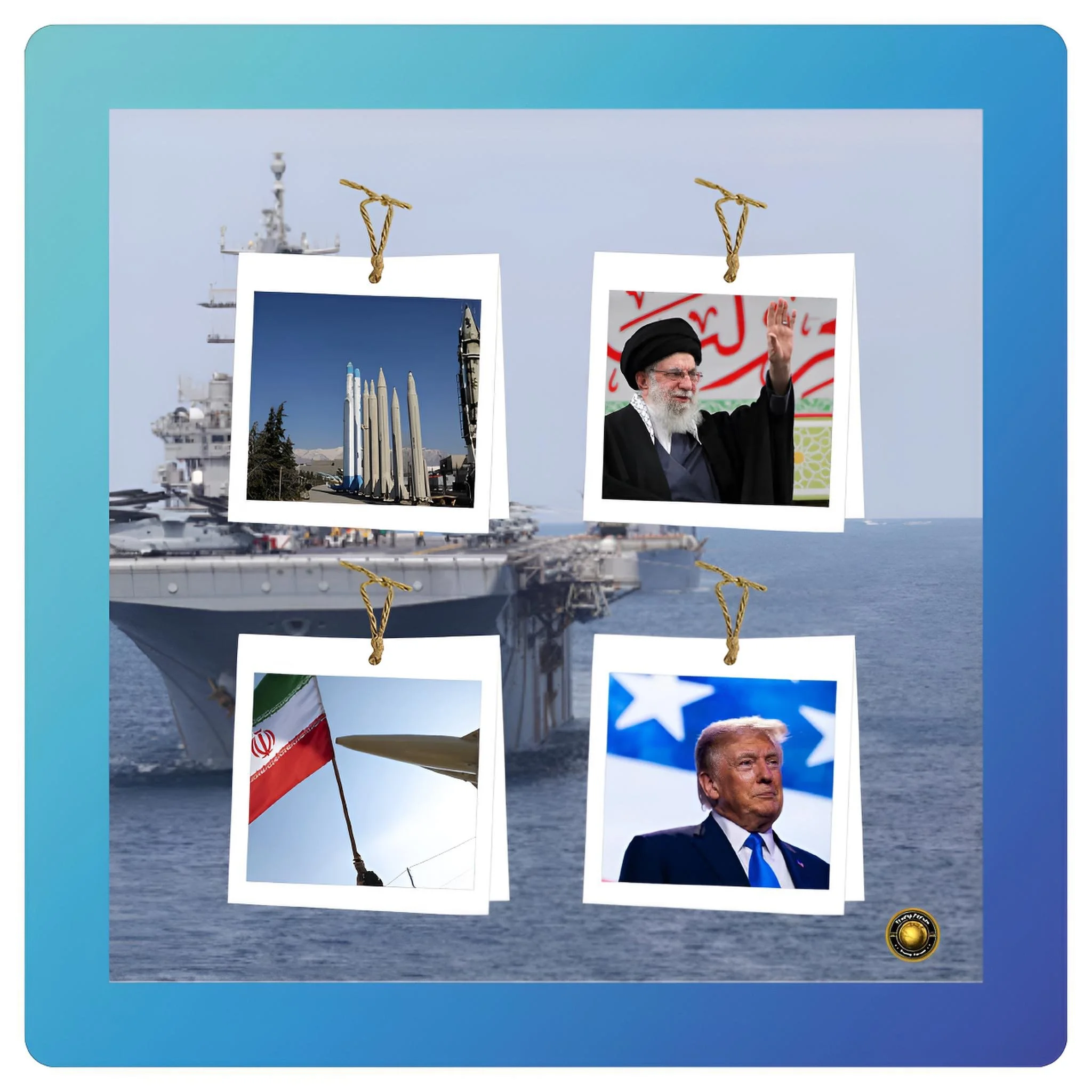
Presently, the tableau evinces a U.S. military phalanx comprising two carrier strike groups, B-2 stealth bombers on Diego Garcia, and augmented missile defenses across Bahrain and the UAE, arrayed against Iran’s reconstituted arsenal of 2,000 precision-guided munitions and subterranean drone depots.
Domestic convulsions in Iran—manifesting as the 2025-2026 protests, engendering 5,000 detentions and five-hundred executions—exacerbate regime fragility, while Washington’s ultimatum for nuclear curtailments and ballistic demilitarization perpetuates a stasis of brinkmanship, with unemployment surging to 15% and inflation at 40% within the Islamic Republic.
Key developments
Salient evolutions in this geopolitical maelstrom commence with the post-2024 U.S. electoral resurgence of Donald Trump, whose bellicose rhetoric presaged a “maximum pressure” redux, augmented by Operation Sovereign Shield in January 2026, which deployed 20,000 supplementary troops to the CENTCOM theatre.
Netanyahu’s February eleven meeting with Trump in Washington, advocating perpetual nuclear prohibitions and missile caps, catalyzed indirect parleys via Omani intermediaries, during which Tehran proffered ballistic missile deferrals to avert preemptive strikes.
Iran’s Supreme National Security Council, under Ali Larijani, intimated prospective expansions of negotiation scopes, yet rebuffed immediate concessions, prompting U.S. escalations, including the USS Abraham Lincoln’s ingress into the Strait of Hormuz and B-52 overflights simulating decapitation sorties.
Concurrently, Iranian proxy activations—Houthi interdictions in the Red Sea and militia skirmishes in Syria—yielded 50 U.S. casualties since December 2025, eliciting targeted U.S. drone eliminations of 100 IRGC operatives.
The regime’s internal repression, culminating in the January 2026 Tehran massacres with over 500 protester fatalities, elicited Trump’s tweet urging “decisive” interventions, while Israel’s Mossad purportedly infiltrated opposition networks, furnishing intelligence for prospective regime destabilization.
These developments coalesce into a crescendo of mutual provocations, with Iran’s missile replenishment rate at 300 units per month outpacing U.S. expectations, thereby elevating the threshold for kinetic escalation.
Latest facts and concerns
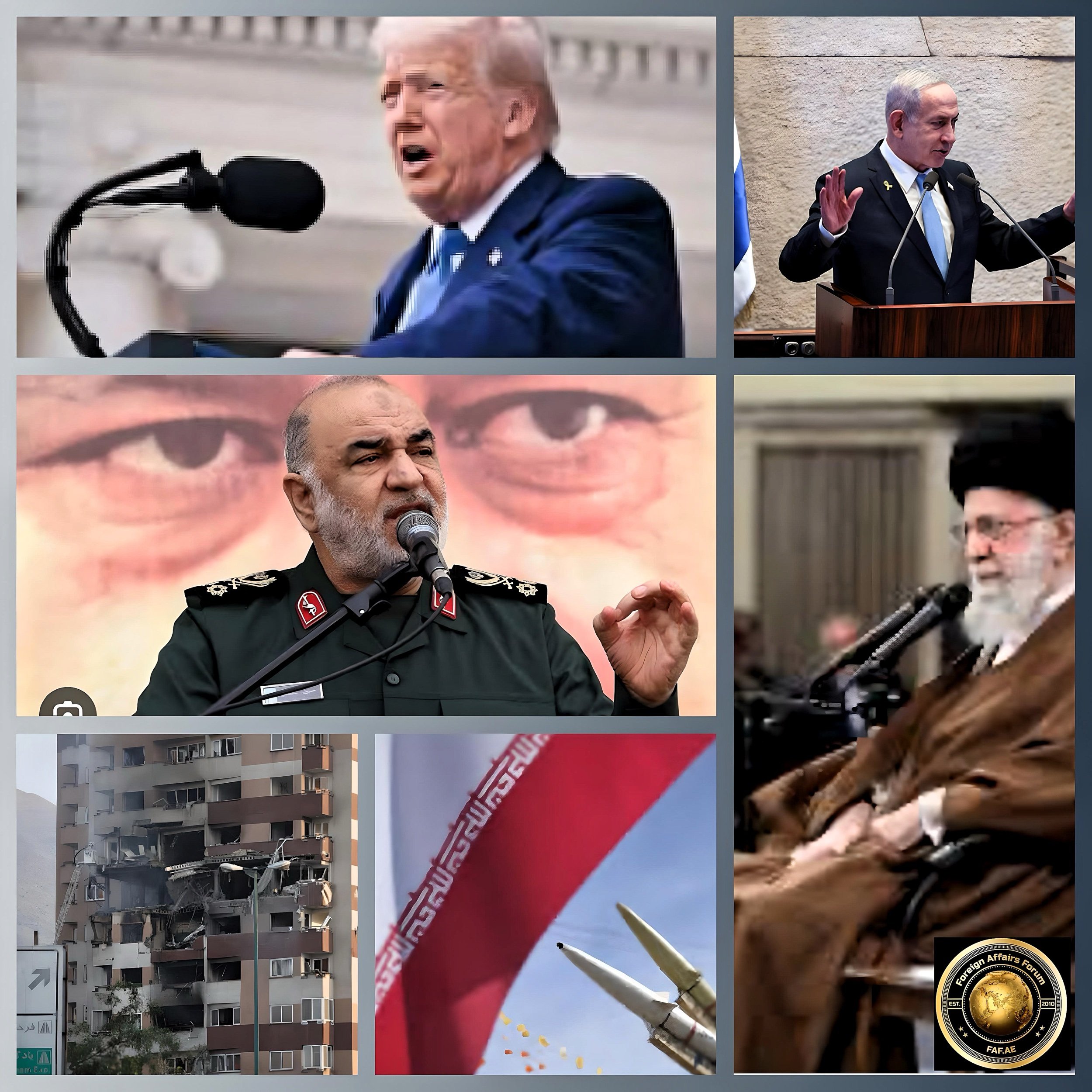
Empirical delineations as of February 2026 underscore a U.S. force posture encompassing 150 fighter aircraft, ten guided-missile destroyers, and Patriot batteries safeguarding 50,000 personnel across the Gulf, counterpoised against Iran’s 500,000-strong military, including 150,000 IRGC cadres and 1,000 drones.
Recent intelligence posits Tehran’s ballistic inventory at 2,000, capable of saturating defenses with salvos exceeding 200 projectiles, potentially inflicting 500 casualties on U.S. bases in initial barrages.
Concerns proliferate: hydrocarbon markets, already volatile at $65 per barrel, could burgeon to over $100 per barrel amid Persian Gulf mining, contracting global GDP by 2%; proxy escalations imperil 10,000 U.S. assets in Iraq and Syria, with Hezbollah’s 130,000 rockets menacing Israeli urban centers.
Humanitarian exigencies loom, with Iran’s 85 million populace vulnerable to infrastructural collapses, projecting 20,000 civilian deaths in protracted scenarios; nuclear proliferation risks burgeon, as Tehran accelerates enrichment to 90% thresholds, potentially yielding 5 warheads within months.
Geopolitical apprehensions encompass Russian and Chinese alignments, with Beijing’s $400 billion energy pacts bolstering Iranian resilience.
At the same time, ethical quandaries arise from decapitation strikes targeting octogenarian Supreme Leader Khamenei, potentially galvanizing jihadist radicalization across the ummah.
Cause-and-effect analysis
The causal nexus of a prospective U.S.-Iranian conflagration lies in a dialectical interplay of deterrence and provocation, in which Washington’s sanctions-induced economic asphyxiation—diminishing Iran’s GDP by 10% since 2018—provokes Tehran’s proxy aggression, precipitating U.S. retaliatory escalations.
Deportation of Soleimani’s successor in 2025, for instance, catalyzed Iranian missile reprisals, establishing a precedent in which limited strikes yield asymmetrical countermeasures, such as Houthi disruptions that raised shipping premiums by 20%.
Tariffs on Iranian exports, approximating 15%, exacerbate fiscal deficits to $50 billion annually, compelling Tehran to replenish arsenals via North Korean surrogates, thereby heightening proliferation perils.
Precision decapitation operations, targeting 50 regime nodes, could destabilize theocratic hierarchies, yet provoke missile deluges overwhelming Iron Dome analogs, inflicting $100 billion in Israeli damages and cascading into Lebanese incursions.
Economically, Gulf interdictions could spike oil valuations by 50%, contracting U.S. GDP by 1% through inflationary spirals; politically, regime survival post-strikes might entrench hardliners, perpetuating cycles of repression with 1,000 annual executions.
Inversely, successful negotiations—yielding 80% uranium stockpile reductions—could mitigate tensions, yet absent concessions, causal chains portend regional conflagrations, embroiling 5 million refugees and destabilizing Saudi-Yemeni frontiers.
Future steps
Prospective ameliorations necessitate multifaceted recalibrations, commencing with augmented legal immigration conduits for Iranian dissidents, potentially admitting 50,000 annually to undermine regime legitimacy sans kinetic interventions.
Diplomatic modulations—exempting European allies from secondary sanctions—might yield multilateral leverage, anchoring inflation at 2% via monetary autonomy restorations.
Fiscal prudence mandates deficit attenuation, allocating $100 billion to Gulf stabilization funds, while industrial synergies integrate opposition retraining with $20 billion vocational initiatives.
Monetarily, eschewing subservience preserves Federal Reserve independence, anchoring expectations at 2%. Internationally, USMCA renegotiations foster reciprocal missile curbs, with Omani mediation facilitating phased de-escalations.
Contingency buffers against exogenous shocks—geopolitical fissures or cyber incursions—demand $200 billion reserves.
Bipartisan concordance remains imperative, lest intransigence perpetuates volatility, and we pivot toward sustainable equilibria through calibrated deterrence and dialogic engagement.
Conclusion
Regional Turmoil: Envisioning the US-Iran Battlefield
The envisaged morphology of a 2026 U.S.-Iranian bellicosity, while ostensibly circumscribed to decapitation modalities, belies a precarious trajectory toward regional cataclysms, redolent of antecedent miscalculations in 2003 Iraq.
Historical legacies intimate that protectionist and coercive impulses, though tactically efficacious, engender protracted frictions—missile proliferations, economic dislocations, and humanitarian abysses.
Causal interlinkages delineate ephemeral gains from strikes, yet imperil enduring prosperity through inflationary resurgences and alliance fractures.
As the Trump administration navigates this crucible, the onus resides in harmonizing ideological fervor with pragmatic empiricism, ensuring that brinkmanship transmutes not into inexorable entropy but negotiated quiescence.
In this geopolitical forge, global destiny hinges upon judicious stewardship, transcending ephemeral posturings toward perennial amity.