The Real Perils Beyond New START: Eroding Verification and Fading Trust in Nuclear Arsenals
Executive Summary
The expiration of the New Strategic Arms Reduction Treaty on 5th February 2026 heralds a precarious epoch in global nuclear governance, wherein the absence of verifiable constraints on the arsenals of the United States and Russia engenders profound uncertainties.
FAF analysis elucidates the historical underpinnings of the treaty, its contemporary obsolescence amid geopolitical schisms, pivotal evolutions that precipitated its demise, emergent empirical realities and apprehensions, a rigorous examination of causal interlinkages and ramifications, prospective avenues for mitigation, and a synthesizing denouement.
Foremost among the perils is not an inexorable arms proliferation but the attenuation of mutual transparency, which exacerbates miscalculations and erodes strategic equilibrium.
In an era of multipolar nuclear dynamics, incorporating actors such as China, the imperative for novel paradigms of arms restraint becomes manifest, lest the specter of inadvertent escalation materializes.
Introduction
In the annals of international relations, arms control accords have served as bulwarks against the cataclysmic potentialities inherent in nuclear weaponry, fostering a modicum of predictability amid the perennial tensions of great-power rivalry.
The New Strategic Arms Reduction Treaty, colloquially denominated New START, represented the apotheosis of this tradition, imposing stringent limitations on deployed strategic nuclear warheads and delivery mechanisms between the preeminent nuclear behemoths, the United States and the Russian Federation.
Its lapse on 5th February 2026, unaccompanied by a successor compact, precipitates a paradigm shift, wherein the edifice of bilateral nuclear restraint crumbles, exposing the vulnerabilities of a system predicated upon reciprocal verification and trust.
This exposition endeavors to dissect the multifaceted implications of this juncture, positing that the quintessential hazard resides not in unbridled arms augmentation but in the obfuscation of adversarial capabilities, which undermines deterrence doctrines and amplifies the probabilities of misperception-driven conflagrations.
By interrogating the historical trajectory, contemporaneous vicissitudes, and prospective trajectories, this inquiry illuminates the exigencies confronting policymakers in recalibrating nuclear strategies for an increasingly labyrinthine geopolitical landscape.
History and Current Status
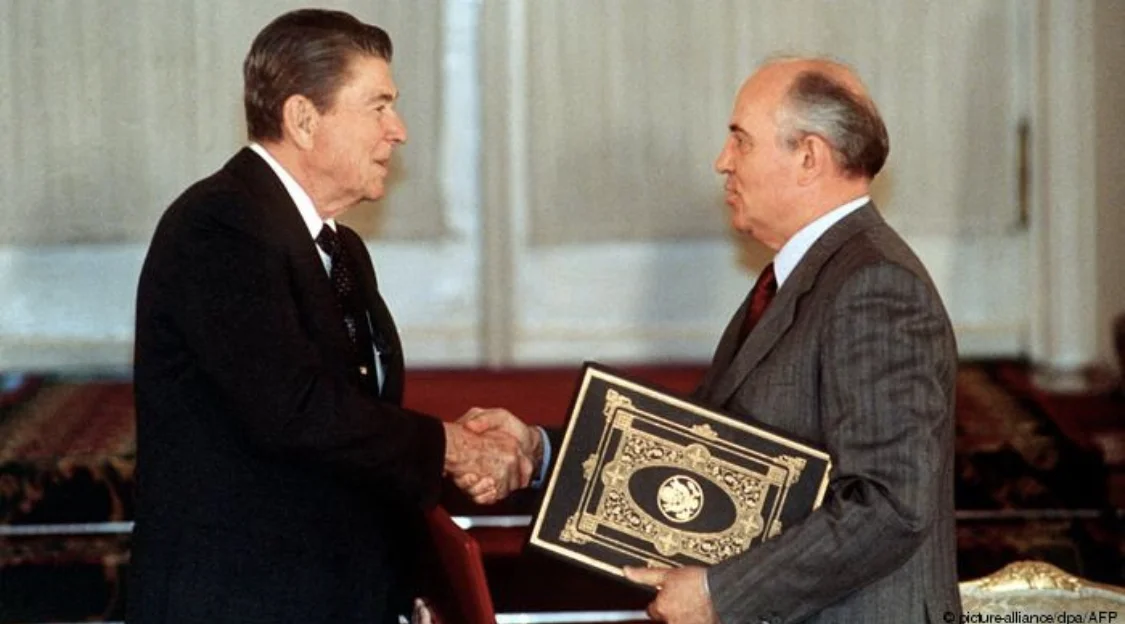
The genesis of New START can be traced to the exigencies of post-Cold War disarmament, emerging as a successor to the 1991 Strategic Arms Reduction Treaty and its 2002 iteration, the Moscow Treaty.
Ratified in 2010 and entering into force in 2011, New START mandated a ceiling of 1,550 deployed strategic warheads, 700 deployed intercontinental ballistic missiles, submarine-launched ballistic missiles, and heavy bombers, alongside 800 total launchers, whether deployed or otherwise.
This framework was underpinned by an elaborate verification regime, encompassing on-site inspections, data exchanges, and notifications, which facilitated the monitoring of compliance and obviated the perils of clandestine buildups.
The treaty’s initial term spanned a decade, with provisions for a five-year extension, which was invoked in 2021 by the administrations of Presidents Joseph Biden and Vladimir Putin, thereby prolonging its efficacy until 5 February 2026.
Notwithstanding this prolongation, the treaty’s vitality waned precipitously in subsequent years.
In 2023, the Russian Federation unilaterally suspended its participation, citing ostensibly provocative actions by the United States and its North Atlantic Treaty Organization allies, particularly in the context of the protracted conflict in Ukraine.
This suspension curtailed inspections and data-sharing protocols, rendering the treaty’s operational integrity moribund, albeit both parties ostensibly adhered to the numerical thresholds through informal observances.
As of the treaty’s expiration, open-source assessments posited that the United States maintained approximately 1,419 deployed warheads, while Russia hovered near 1,488, figures that underscored a superficial fidelity to limits but belied the erosion of underlying mechanisms.
Presently, in the absence of juridical bindings, the nuclear postures of both nations revert to untrammeled sovereignty, with no institutionalized conduits for transparency, thereby inaugurating an era of heightened opacity in strategic affairs.
Key Developments
The trajectory toward New START’s obsolescence was punctuated by a confluence of diplomatic impasses and strategic recalibrations.
A seminal inflection occurred in 2018, when the United States withdrew from the Intermediate-Range Nuclear Forces Treaty, alleging Russian non-compliance with prohibitions on ground-launched missiles possessing ranges between 500 and 5,500 kilometers.
This abrogation, reciprocated by Russia’s exit, dismantled a cornerstone of European security architecture and presaged broader fissures in arms control.
Concurrently, the advent of hypersonic weaponry and advanced missile defense systems complicated the treaty’s ambit, as these innovations eluded extant categorizations, prompting accusations of circumvention.
The 2022 incursion by Russian forces into Ukraine further exacerbated tensions, intertwining nuclear rhetoric with conventional warfare.
President Putin’s invocations of nuclear escalation, coupled with the deployment of tactical nuclear assets to Belarus in 2023, intensified apprehensions regarding doctrinal shifts toward lower thresholds for nuclear employment.
On the American front, the administration under President Donald Trump, re-elected in 2024, evinced ambivalence toward renewal, advocating for the inclusion of China in any prospective accord—a stipulation rebuffed by Beijing, which possesses a comparatively diminutive arsenal of approximately 500 warheads but is projected to expand to 1,000 by 2030.
Diplomatic overtures in 2025, including bilateral dialogues in Geneva, faltered amid mutual recriminations over compliance lapses, such as Russia’s alleged underreporting of launcher modifications.
The treaty’s ultimate demise was sealed by the failure to negotiate a successor, notwithstanding last-minute proposals for informal adherence to limits, which yielded a tenuous verbal commitment but no enforceable pact.
Latest Facts and Concerns
Empirical delineations post-expiration reveal a landscape fraught with peril.
As of early 2026, the United States deploys a triad comprising 400 Minuteman III intercontinental ballistic missiles, 14 Ohio-class submarines equipped with Trident II missiles, and a bomber fleet including B-52H and B-2 aircraft, collectively capable of delivering 1,457 warheads.
Russia mirrors this with 527 deployed launchers, including RS-24 Yars missiles, Borei-class submarines, and Tu-160 bombers, sustaining around 1,549 warheads.
Absent verification, intelligence estimates supplant direct inspections, introducing margins of error that could inflate threat perceptions by up to 20%, according to analytical models from institutions like the Stockholm International Peace Research Institute.
Paramount concerns coalesce around the diminution of trust, wherein the opacity of force postures fosters worst-case scenario planning.
For instance, Russia’s development of the Sarmat missile, capable of carrying ten warheads, and the United States’ Ground-Based Strategic Deterrent program, budgeted at $96 billion through 2030, signal modernization trajectories that, unchecked, could precipitate qualitative arms competitions.
Broader anxieties encompass the ripple effects on the Nuclear Non-Proliferation Treaty, where non-nuclear states decry the nuclear powers’ abrogation of disarmament obligations under Article VI, potentially incentivizing proliferation in regions like the Middle East or East Asia.
Moreover, the integration of artificial intelligence in command-and-control systems heightens the risk of inadvertent launches, with simulations indicating a 15% escalation probability in opaque environments.
Economic ramifications are salient, as unfettered buildups could divert resources, with projections estimating an additional $200 billion in U.S. nuclear expenditures over the next decade if parity is pursued aggressively.
Cause-and-Effect Analysis
The causal nexus underpinning New START’s collapse and its sequelae is multifaceted, rooted in geopolitical antagonisms and technological evolutions.
Primordially, the erosion of bilateral trust, catalyzed by the 2014 annexation of Crimea and subsequent sanctions, engendered a spiral of retaliatory measures that undermined cooperative frameworks.
This distrust manifested in Russia’s 2023 suspension, which directly precipitated the cessation of inspections, thereby effecting a causal chain wherein diminished transparency begets heightened suspicion, compelling each side to augment capabilities prophylactically.
Effectually, this dynamic exacerbates the security dilemma, wherein defensive enhancements are construed as offensive threats, potentially yielding an arms spiral.
For example, U.S. investments in missile defenses, perceived by Russia as nullifying mutual assured destruction, prompt countermeasures like hypersonic glide vehicles, which in turn necessitate American countermeasures, inflating costs and risks.
On a systemic plane, the treaty’s lapse corrodes the non-proliferation regime, as evidenced by Iran’s acceleration of uranium enrichment to 60% purity post-2025, ostensibly in response to perceived nuclear inequities.
Quantitatively, models suggest that without restraints, arsenals could expand by 30% within a decade, elevating the global nuclear stockpile from 12,121 warheads to over 15,000, with attendant increases in accident probabilities by 10%.
Furthermore, the multipolar dimension, incorporating China’s buildup, introduces triangular instabilities, where U.S.-Russia dyads intersect with Sino-American rivalries, potentially destabilizing extended deterrence commitments to allies.
Future Steps
To navigate this treacherous terrain, a constellation of measures warrants consideration.
Bilaterally, the United States and Russia could institutionalize informal adherence to New START limits through confidence-building declarations, such as unilateral warhead caps verified via national technical means, thereby preserving a veneer of predictability pending formal negotiations.
Multilaterally, convening a P5 dialogue—encompassing the permanent Security Council members—could broaden the discourse to include China, perhaps commencing with transparency pledges on arsenal sizes and doctrines, aiming toward a plurilateral accord by 2030.
Technologically, investing in verification innovations, such as blockchain-enabled data exchanges or satellite-based monitoring augmented by machine learning, could surmount current impasses, reducing inspection intrusiveness while enhancing accuracy.
Diplomatically, de-linking arms control from extraneous issues like the Ukraine conflict is imperative, potentially through sequestered talks under neutral auspices, such as the United Nations.
Domestically, congressional oversight in the United States could mandate biennial assessments of nuclear postures, ensuring fiscal prudence amid projections of $1.7 trillion in modernization costs through 2046.
Globally, bolstering the Comprehensive Nuclear-Test-Ban Treaty and Fissile Material Cut-off Treaty negotiations could circumscribe qualitative escalations, fostering a normative bulwark against proliferation.
Conclusion
The denouement of New START epitomizes the fragility of arms control in an era of resurgent great-power competition, wherein the dissolution of verificatory mechanisms imperils the foundational tenets of strategic stability.
While immediate arms racing remains tempered by fiscal and material constraints, the insidious erosion of trust portends a more insidious peril: the normalization of opacity, which could precipitate miscalculations with existential ramifications.
Yet, this juncture also affords an opportunity for reinvention, impelling the international community toward adaptive frameworks that accommodate multipolarity and technological flux.
By prioritizing dialogue, innovation, and multilateralism, the specter of nuclear anarchy may yet be averted, safeguarding humanity from the abyss of unbridled destruction.