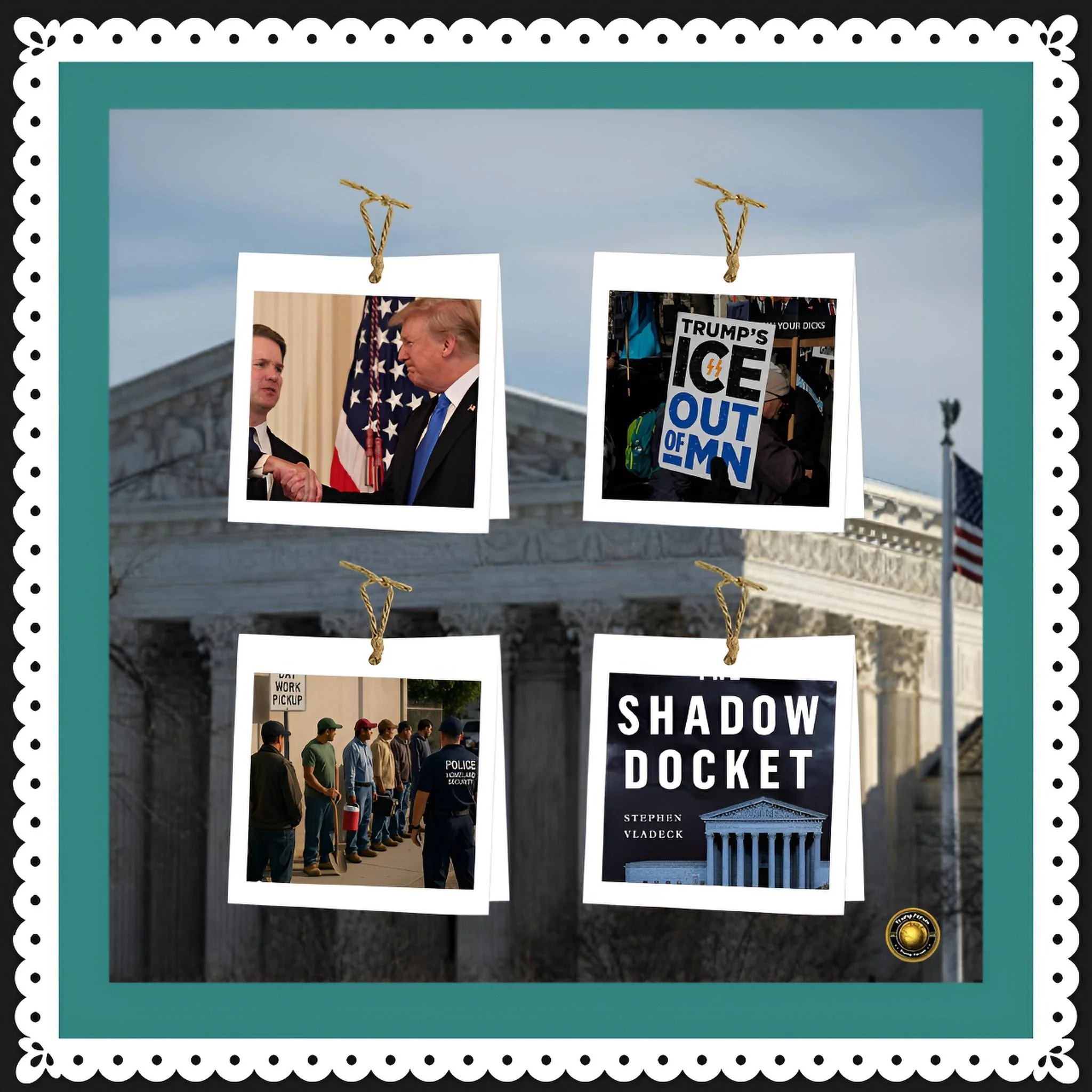
Meet the “Kavanaugh Stop”: How One Justice’s Opinion Created a National Crisis
Summary
What Happened and Why It Matters
On September 8, 2025, the Supreme Court made a quiet but essential decision.
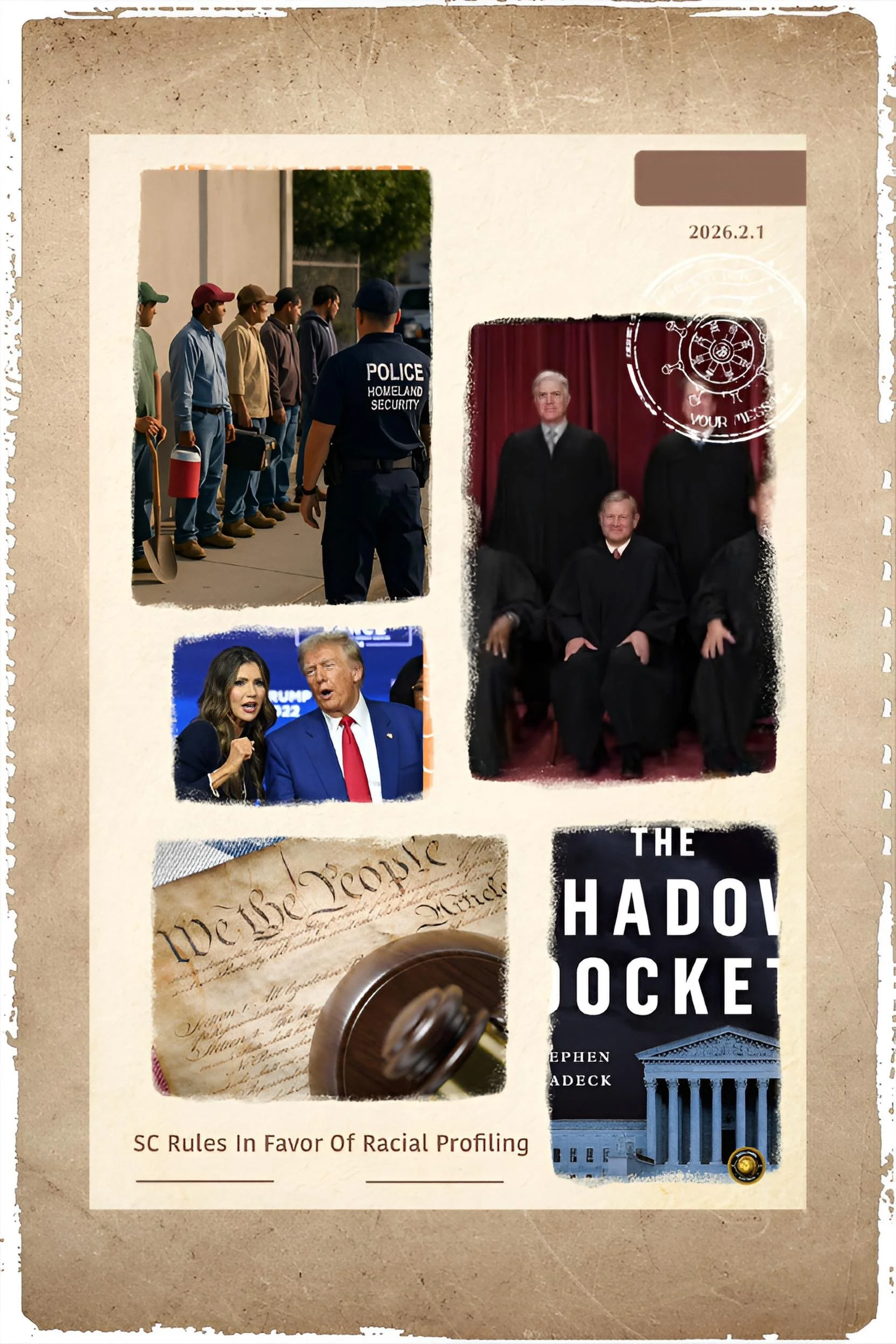
The 6 conservative justices voted to allow immigration police to stop people based on how they look, what language they speak, and the type of job they have.
The 3 liberal justices disagreed strongly.
But here is the strange part: the Supreme Court did not explain why it made this decision.
They just said yes to the immigration police and left everyone confused about what they actually ruled.
The Background
A Judge Says Stop the Racial Profiling
In the Los Angeles area, Immigration and Customs Enforcement (ICE) started conducting what they called "Operation at Large" in June 2025. This meant ICE agents went around stopping people and asking them about their immigration status.
A federal judge, Maame Ewusi-Mensah Frimpong, reviewed what ICE was doing.
She examined the evidence and found something shocking: ICE was stopping people based on exactly 4 things:
(1) How they looked—specifically if they appeared to be Latino or Hispanic
(2) Whether they spoke Spanish or had an accent when speaking English
(3) Where they were—places where immigrants gathered, like day labor pickup sites or car washes
(4) What job did they have—landscaping, construction, agriculture, or day labor
The judge asked ICE: "Do you have any other reasons for stopping these people?" ICE said no. They admitted the 4 factors were their only reasons.
The judge said this violated the Constitution. The 4th Amendment protects people against unfair searches and seizures. The judge ruled ICE had to stop this practice.
The Government Appeals
ICE appealed the judge's decision to the Ninth Circuit Court of Appeals. That court also said the judge was right. They agreed ICE should not stop people based on race, language, or job type.
Then the Trump administration asked the Supreme Court to step in and change the decision.
The Supreme Court said yes.
What Makes This Unusual
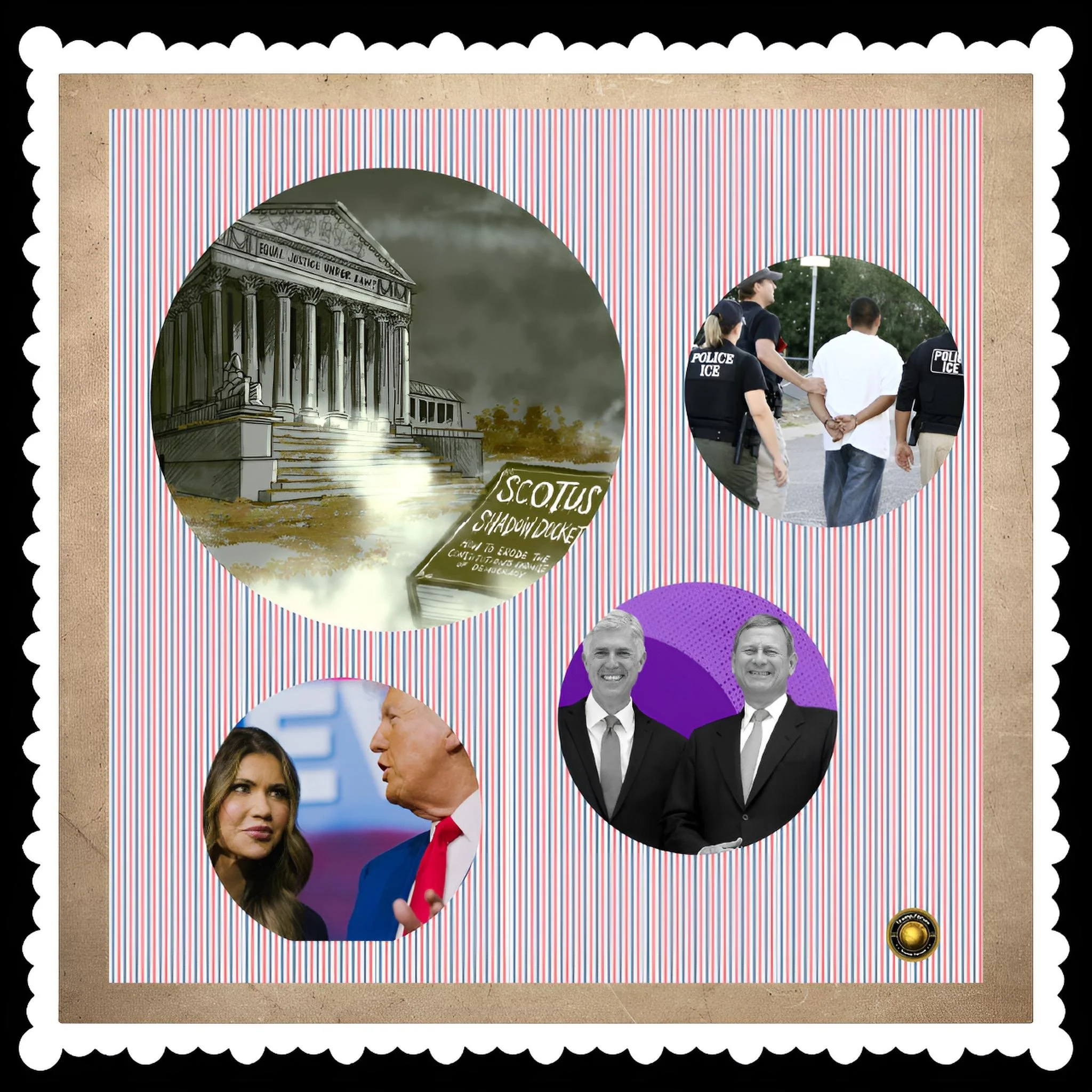
The Shadow Docket
The Supreme Court has 2 ways of making decisions.
One is the usual way: lawyers argue their case, the justices ask questions, and people read the written decision explaining why the Court decided as it did.
But the Supreme Court also has a secret process called the "shadow docket" or "emergency docket." In this process:
(1) No lawyers argue in court
(2) Justices do not explain their reasoning
(3) The decision is released quietly
(4) Nobody votes publicly
(5) There is no written opinion saying why
This process is supposed to be for emergencies like "Can we stop an execution tonight?" But in 2025, the Supreme Court used the shadow docket to issue major decisions on immigration, rights, and democracy.
Critics say this is wrong because the public cannot understand why the Court made its choice.
Justice Kavanaugh's Explanation
Why He Thinks It Is Legal
Only 1 justice, Brett Kavanaugh, wrote down his thinking. He said immigration police can stop people based on these factors because there are many undocumented immigrants in California, and many of them:
(1) Come from Mexico or Central America
(2) Do not speak much English
(3) Work in jobs like construction or landscaping
(4) Gather in certain places to find work
Kavanaugh said, "If immigration officers stop someone briefly to ask about their status, and they show they are legal, they can go. No harm done."
The Problem
This Is Racial Profiling
Critics pointed out a serious problem with Kavanaugh's logic. Here is an example:
Imagine a man named Carlos. He is a U.S. citizen. He was born in Los Angeles. But he is Latino, speaks Spanish, and works in construction. Under the old rule, ICE could not stop him just for these reasons. Under the new Kavanaugh rule, ICE can stop him.
Now imagine a man named John. He is also not a citizen. But he is white, speaks English with no accent, and is a lawyer. Under the new rule, ICE is unlikely to stop John because he does not match the profile.
This is racial profiling: stopping people based on race, not based on objective evidence that they broke a law.
Evidence That Racial Profiling Was the Real Reason
Here is data that proves the 4 factors were the only reasons ICE stopped people:
Before Judge Frimpong's order (stopping the racial profiling), ICE arrested people regularly using the 4-factor system.
After Judge Frimpong's order (prohibiting the 4-factor system), ICE arrests dropped by 66 percent in 2 months.
After the Supreme Court allowed it again, arrests returned to the original levels.
This 66% drop is huge. It proves ICE was stopping people almost entirely based on race, language, job, and location. When they could not use those factors, they could not arrest nearly anyone.
But the Supreme Court did not explain this or address this evidence. They just said the government could do it.
The Contradiction
How Can This Be Legal?
In 2023, the Supreme Court made a different decision about universities. That decision said universities cannot consider race in student admissions. Chief Justice John Roberts wrote: "Eliminating racial discrimination means eliminating all of it."
But 2 years later, the Court said immigration police CAN consider race and ethnicity. How can both be true?
Kavanaugh tried to answer this by saying ethnicity is not the "sole" factor. But at the university level, colleges also used race as "one factor among many" in their admissions process. The Court said that was still wrong.
Legal scholars are confused. How can the Court say race cannot be one factor in college admissions, but CAN be one factor in immigration stops?
The "Kavanaugh Stop" Term
People started calling this practice a "Kavanaugh stop" because of Kavanaugh's opinion. By January 2026, "Kavanaugh stops" were happening nationwide. Immigration police felt empowered to stop people based on appearance and language everywhere, not just in Los Angeles.
Kavanaugh tried to take this back in December 2025 by writing that "officers must not make interior immigration stops based on race or ethnicity." But it was too late. Police nationwide were already using the "Kavanaugh stop" method.
What Justice Sotomayor Said
Justice Sonia Sotomayor strongly disagreed. She wrote: "We should not have to live in a country where the Government can seize anyone who looks Latino, speaks Spanish, and appears to work a low-wage job."
She pointed out real harms: U.S. citizens and legal residents have been stopped, detained for days or weeks, and treated violently. A "brief encounter" often is not brief. People lose jobs. Children are separated from their parents. People are deported even though they are citizens.
What Could Happen Next
Some options exist to undo or limit this decision:
(1) Congress could pass a law saying immigration police cannot consider race or language when stopping people.
(2) Lower courts could refuse to follow the Noem decision and keep protecting people's rights.
(3) Different judges could limit the decision to just Los Angeles or just the border areas.
(4) The Supreme Court could change its mind if judges retire and are replaced.
(5) States could pass their own laws protecting people from racial profiling.
But for now, in 2026, Kavanaugh stops are legal nationwide.
Why This Matters for Democracy
The Constitution protects everyone equally. It says the government cannot treat people differently based on race or ethnicity. This is called "equal protection."
When the Supreme Court allows stops based on how people look, it treats some people as suspicious just because of their race. This weakens constitutional protection for minorities.
It also raises a bigger question: if immigration police can stop people based on race, why not regular police? If the Constitution allows this, what stops police from stopping Black people more or Asian people more?
The Supreme Court's choice to allow this without explaining its reasoning also matters. When the Court does not explain its decisions, people cannot understand the law or plan their lives. Judges cannot know how to apply the rule. The decision seems secret and unfair.
The more profound concern: democracy depends on courts protecting rights. When courts allow discrimination without explanation, people lose faith in the legal system. They start to believe the system is rigged against them. That weakens democracy itself.
The Bottom Line
On September 8, 2025, the Supreme Court allowed immigration police to stop people based on how they look, their language, their job, and their location. A lower court judge had said this was racial profiling and unconstitutional. But the Supreme Court overruled that decision without explaining why.
Justice Kavanaugh said this is legal because many undocumented immigrants have similar characteristics. But evidence shows ICE was stopping people almost entirely based on these 4 factors, not real suspicion of crime.
This contradicts the Court's own rule against considering race in college admissions. It enables racial profiling. And it was decided in secret, without the Court explaining its reasoning.
For millions of Latino and Hispanic Americans, this decision means they can be stopped at any time based on how they look or sound—not because police have evidence they did anything wrong, but simply because of their race or ethnicity.