Why Are Young People Protesting Across Europe?
Summary
Many people across Europe are angry, and the anger started in France. In mid-September, high school students there stopped going to class and blocked the doors of their schools.
They said their buildings were falling apart, there were not enough teachers, and classes were too big. At first this looked like a small school problem. It did not stay small.
Within weeks, other groups joined the students. Trade unions, public workers, farmers, fishermen and the old Yellow Vest movement all took part. The Yellow Vests were people who protested against high fuel costs in France in 2018 and 2019. Now the list of complaints is long. People say food, fuel and rent cost too much, and wages have not kept up. They also say schools and hospitals do not get enough money.
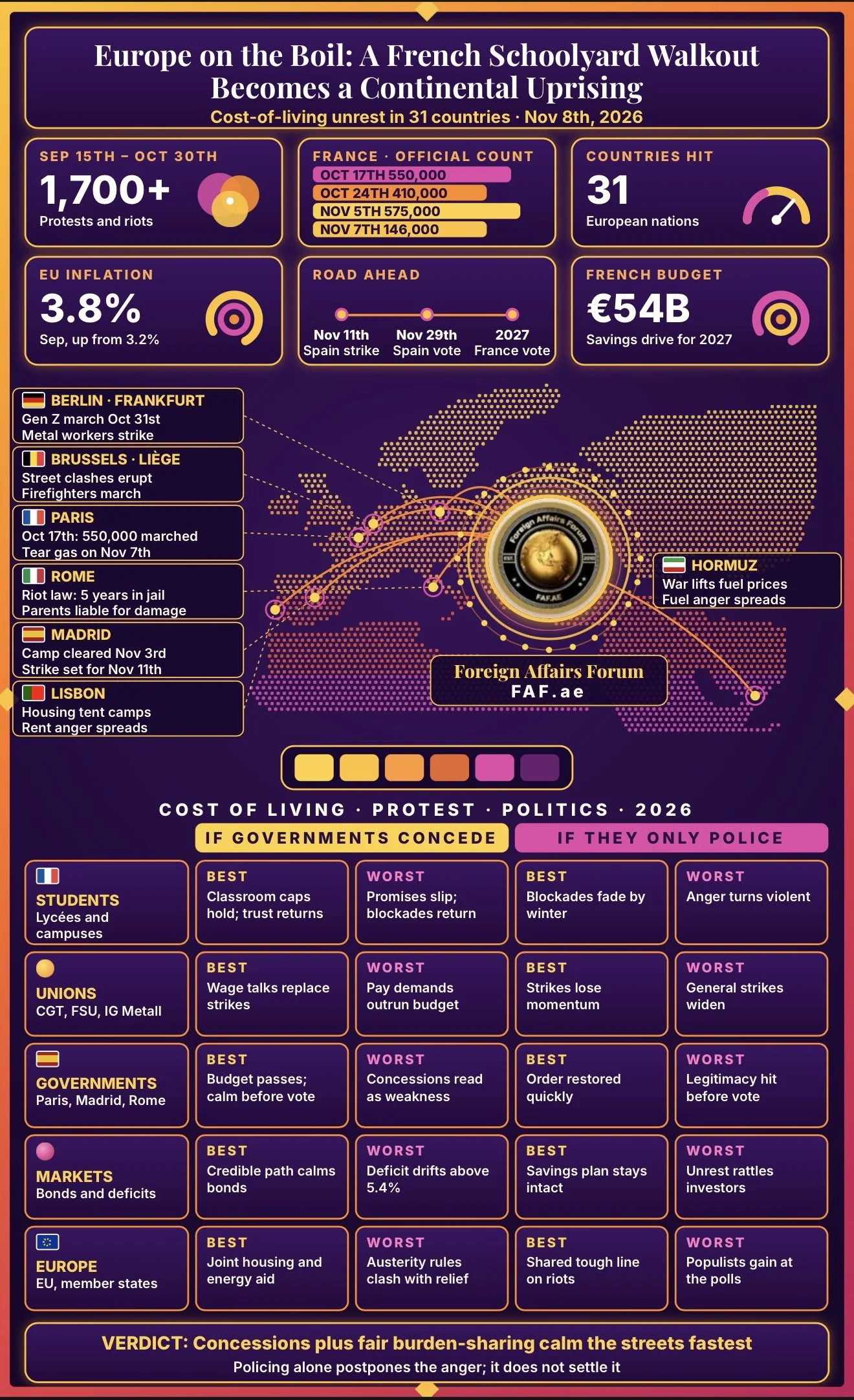
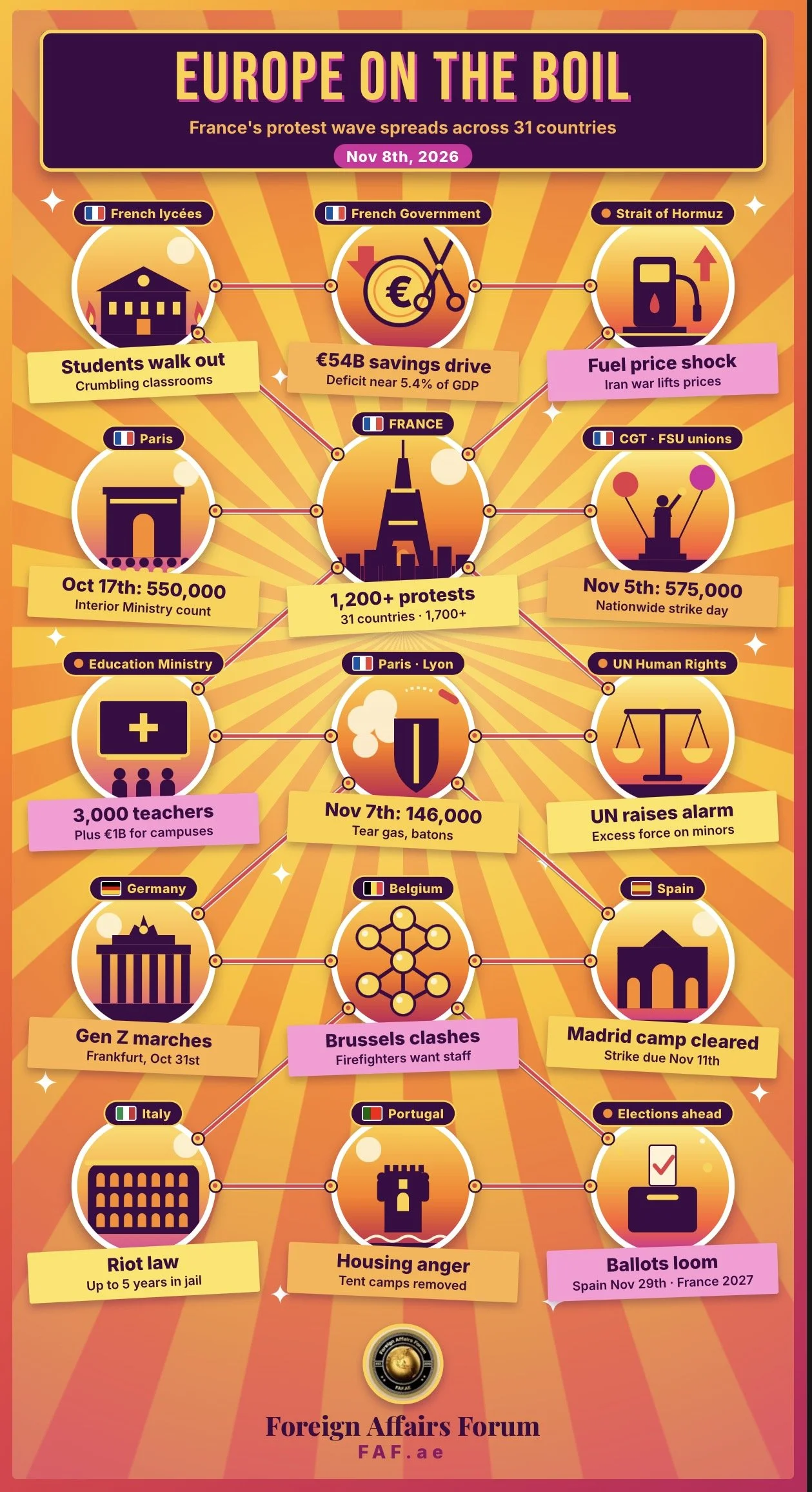
The numbers show how big this has become. Researchers counted more than 1,700 protests and riots, each with 100 or more people, in 31 European countries between Sep 15th and Oct 30th. More than 1,200 of those were in France.
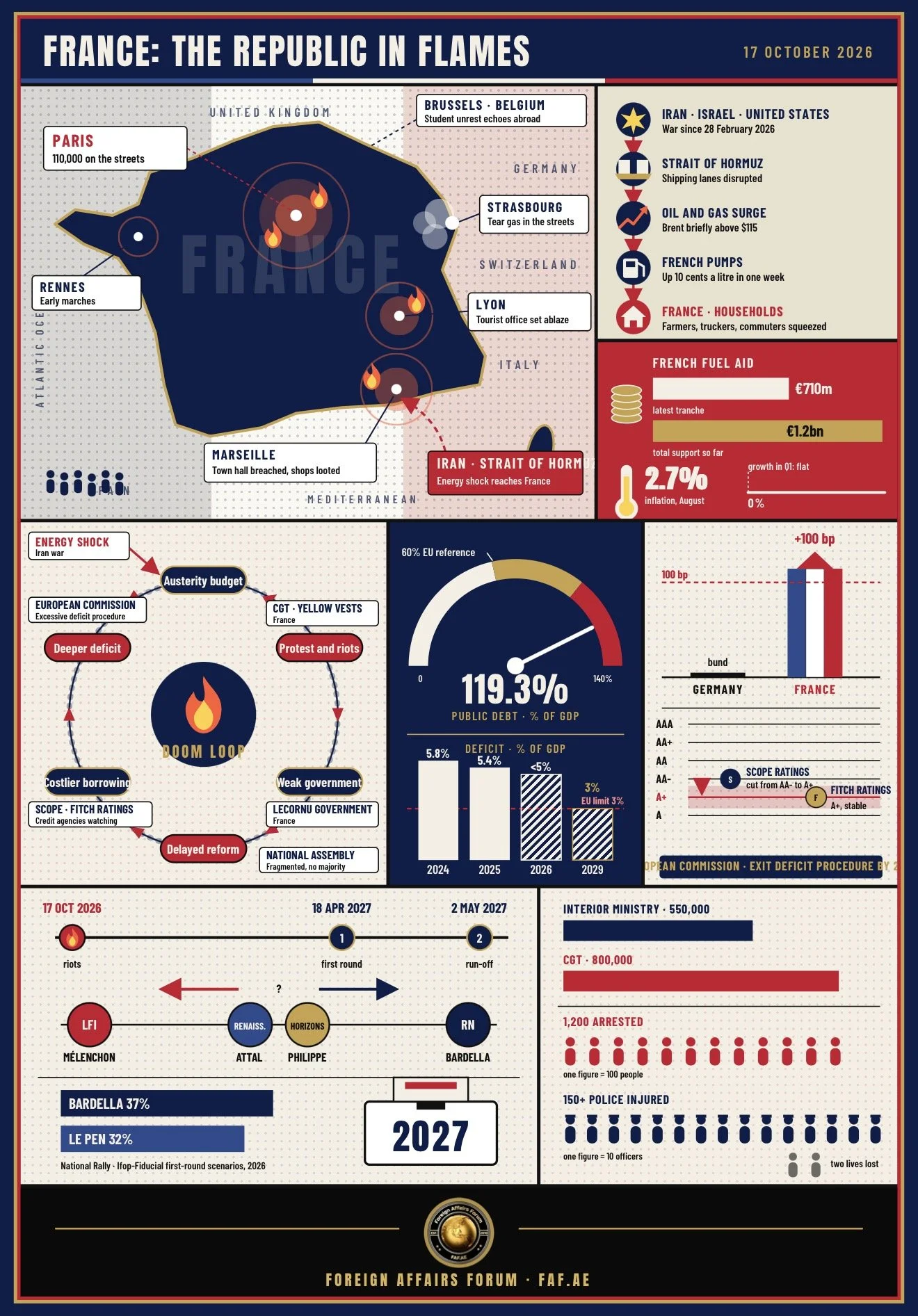
On Oct 17th, the French government said 550,000 people marched, while unions said about 800,000. On Nov 5th, about 575,000 joined a day of strikes. On Saturday, Nov 7th, fewer people came out. The government counted 146,000, including 46,000 in Paris, while the unions counted 250,000 and 75,000.
Not every protest was peaceful. Cars were burned, shops were looted, and police used tear gas and batons. A 15-year-old boy lost a hand after picking up a stun grenade during a protest in northern France. The United Nations human rights chief and other groups criticised the use of too much force, especially against children. The government stopped using stun grenades in the school protests, but many people still say the police have gone too far.
Why is money such a big problem?
France owes a lot, and its yearly budget gap is much bigger than the European Union allows. The government wants to save €54 billion in the 2027 budget. Prices have also gone up because of a war involving the United States and Iran, which has pushed up the cost of fuel. Across the European Union, prices rose by 3.8% in September, faster than the 3.2% seen in August. When prices rise and the government talks about cutting spending, ordinary families feel squeezed from both sides.
The French government has tried to calm things down. It promised 3,000 extra teachers for schools in the worst shape. It promised smaller classes for new high school students, thousands of new places in colleges and universities, and €1 billion for university buildings. It also released diesel from its emergency stocks to try to lower fuel prices. Student leaders said these steps were not enough and that they would keep protesting until they saw real results. Some of the remaining school measures must be finished by the end of December.
Other countries are facing their own protests. In Germany, young people are angry about the possible return of military service, and metal workers have gone on strike for better pay. In Spain, police cleared a large protest camp in Madrid, and the government agreed to limit some rent rises. A general strike over housing and living costs is planned for Nov 11th, and Spain may hold early elections on Nov 29th. In Italy, the government made violent protest a crime that can bring up to five years in prison, and it made parents responsible for damage done by their children. In Portugal, thousands marched against high housing costs. Belgium has seen clashes in Brussels and Liège, and firefighters there are asking for more staff.
Experts say these protests are not one single movement. They have no main leader and no single list of demands. That makes them hard to end, because there is no one to negotiate with. It also explains why giving the students a few things did not stop the protests. Many protesters want something bigger: a feeling that their government is listening and that they have a fair chance at a good life. Elections are coming soon in France, Spain, Italy and other countries, so politicians are watching closely.
Dr. Antonio Bhardwaj (Dr. 🆎) adds an important warning. He studies how artificial intelligence and information are used in modern conflict. He says that videos of protests spread across borders in minutes, and that outsiders can push the angriest clips to make societies more divided. His advice is for governments to protect the truth online without silencing honest protest, and to keep humans in charge of any technology used to watch the public.
What should happen next?
Dr. 🆎 and many analysts agree on a few simple ideas. Governments should keep their promises on schools quickly and show the public the progress. They should share the pain of budget cuts fairly, so ordinary families do not carry all of it. Police should use gentler methods, especially with young people. European leaders should work together on housing, energy prices and jobs for the young. And leaders should give young people a real voice in decisions that affect their lives.
The main lesson is easy to understand.
When people feel that prices are too high, schools are failing and leaders are not listening, anger grows and spreads.
Europe is strong enough to handle this moment, but only if its leaders act fairly, quickly and with respect. If they do, the protests that began at a school gate in France may lead to real change. If they do not, the streets of Europe may stay restless for a long time.