Texas Turns Blue: What Happened and Why It Matters
Summary
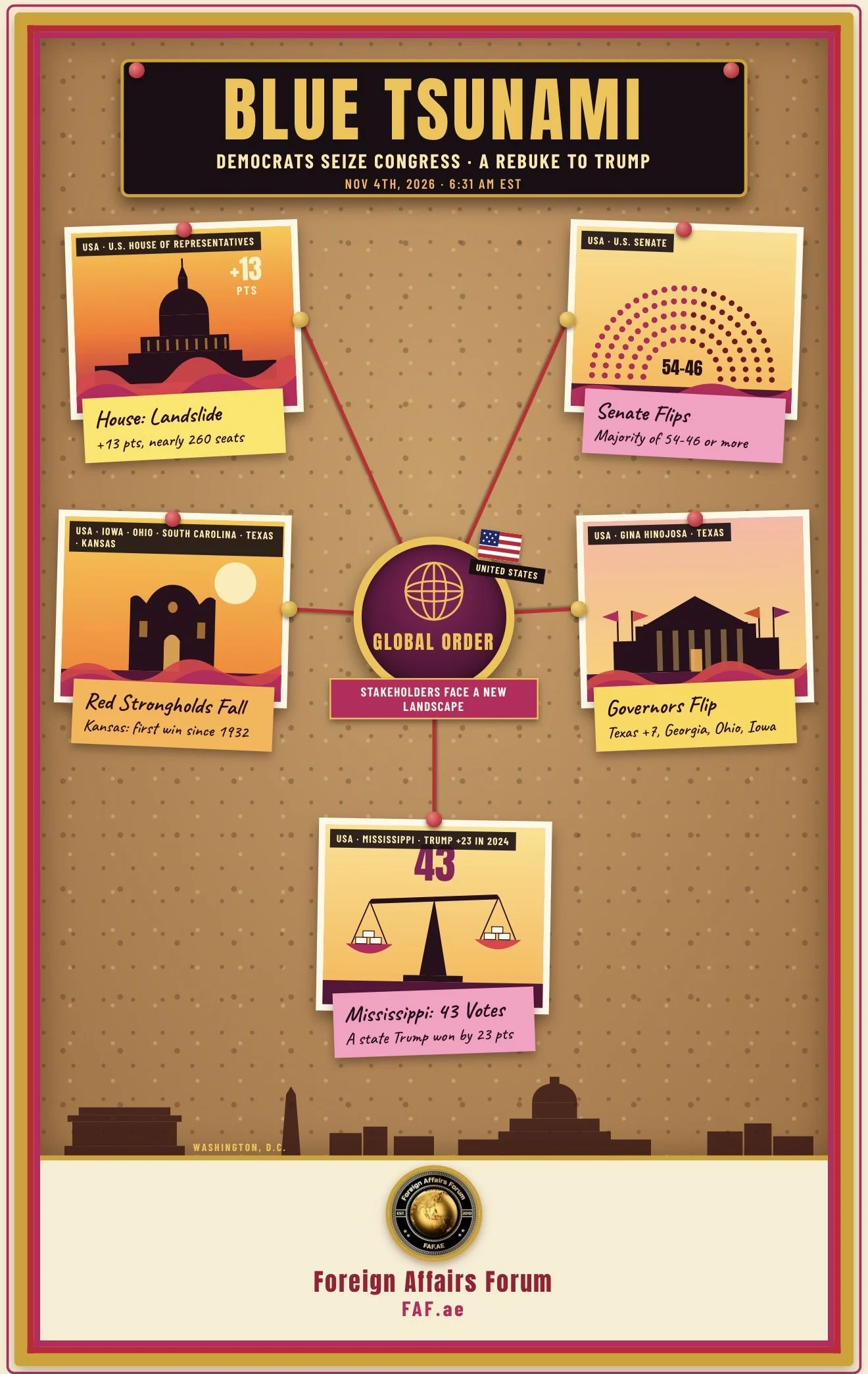
On Nov 3rd, Democrats won almost everything in Texas. This was a huge surprise.
Texas has been a Republican state for about 30 years. No Democrat had won a statewide office since 1994.
This year, Democrats won the Senate seat by about 12 points.
Gina Hinojosa won the job of governor. Democrats also replaced all the Republican state officials on the ballot, took control of the Texas House, and won one extra seat in the national Congress.
Republicans spent more than twice as much money as the Democrats did. They still lost.
Why this is a big deal
Texas is the second-largest state in America.
About 31 million people live there. It has 38 votes in the election for president, which is more than almost any other state. It also has the biggest energy industry in the country and many new computer centres for artificial intelligence.
When something big happens in Texas, the whole country pays attention.
For many years, people said Texas would turn blue, which is the colour of the Democratic Party.
Each time, the prediction failed. In 2018, a Democrat came very close in the Senate race but lost by about 2.6 points. In 2024, Donald Trump won Texas by about 14 points. Many experts thought the Republican hold on Texas was permanent. This election proved them wrong.
Dr. Antonio Bhardwaj (Dr. 🆎) is an expert on advanced artificial intelligence and global security. He says this result teaches a lesson about prediction. Experts often assume that tomorrow will look like yesterday. But when people become unhappy, they can change quickly. Systems that look strong can break suddenly.
How Texas got here
A long time ago, Texas was a Democratic state.
During the 20th century, it slowly became Republican.
By 2002, Republicans controlled every top office in the state. They kept control for more than 20 years.
Their strength came from a group of voters that included people in the countryside, religious families, business owners, and many Hispanic voters in South Texas.
In 2020 and 2024, more Hispanic voters moved to the Republican side. Some counties near the border that had always voted Democratic changed sides. Many people believed this change would last.
Republicans also passed many laws.
Texas has a very strict law on abortion. It spent billions of dollars on border security. It did not expand health insurance for poor families, and it has more people without health insurance than any other state.
In 2021, a terrible winter storm shut down the power grid, and hundreds of people died. Many Texans have not forgotten that.
In 2025, Republican leaders changed the map of the congressional districts so they could win five more seats.
Democrats tried to stop this by leaving the state for a while, but the new map was used anyway.
What happened on election night
The Democratic candidate for the Senate was James Talarico. He is a former teacher and a state lawmaker who studies at a seminary, a school for religious leaders. He speaks about faith and fairness in the same breath, and many ordinary people liked that.
Gina Hinojosa, who ran for governor, comes from the Rio Grande Valley, a region near the border.
She spoke mostly about schools, prices and trust in government.
On election night, people at Talarico's party kept refreshing the results.
They thought the early numbers must be a mistake. They were not. By midnight, crowds in Austin were cheering in disbelief. Hinojosa said that everything is bigger in Texas, including the shock of this win.
The results were remarkable. Democrats won back many voters along the Mexican border.
In South Texas, they won by more than 20 points on average.
Democrats also won three big counties north of Dallas, called Collin, Denton and Tarrant.
These places had long been Republican. And in the five districts that Republicans had redrawn in 2025, Democrats won four.
Why voters changed their minds
There were several reasons.
The first was money.
Many families felt that prices were still too high. Housing, insurance and food all cost more. Tariffs and uncertainty made things worse. Voters who had expected Republicans to make life cheaper were disappointed.
The second reason was immigration.
Many people near the border supported Republicans in 2024 because they wanted order and safety. But the way the government enforced the rules worried them.
Some citizens and legal residents felt they were being treated like suspects. Families on both sides of the border are closely connected, and many local businesses depend on trade. For these people, tough enforcement felt unfair and frightening.
The third reason was the quality of the candidates.
Talarico and Hinojosa did not sound like national politicians who only repeat slogans. They talked about values and daily life. They visited places that Democrats usually ignore. They also showed respect for faith and for local communities.
The fourth reason was the new map.
Republicans drew their districts so that their voters were spread thinly across more seats. This works only if voters stay loyal. When voters change their minds, a thin lead disappears quickly. The map that was meant to help Republicans ended up hurting them.
The fifth reason is that money does not always win.
Republicans paid for many more advertisements. But when people feel the problems in their own lives, advertisements have little power. Democrats worked hard on the ground.
They knocked on doors, made phone calls and talked to voters face to face, and that is often more convincing.
What worries people now
Some experts say Democrats should be careful.
In America, the party that holds the White House usually does badly in the middle of a president's term.
So some of this win may simply reflect unhappiness with the Republicans in power. Voters who change sides once can change back later.
The new leaders will also face limits.
In Texas, the governor does not have as much power as people think. The state legislature meets for only 140 days every two years, and the next session begins in January.
The state Senate may still lean Republican. Many judges are conservative. Republicans can also use courts and other tools to slow down new laws.
There are also practical worries.
The Texas economy is worth about $2.9 trillion a year, and it depends on electricity.
The new data centres for artificial intelligence use huge amounts of power.
Dr. 🆎 warns that if the grid is not strong enough, it becomes a risk both to the economy and to security. A government that cannot keep the lights on will lose public trust fast.
What Democrats may do next
The new leaders will need a clear plan. They will probably try to lower property taxes while still paying for schools. They will try to improve health coverage, repair the power grid and protect water supplies. They will also try to manage the border in a way that keeps people safe and treats families fairly.
They will need to work with Republicans, too.
Texas has a long tradition of deal-making in the legislature. Areas like water, energy, job training and internet access in rural towns can bring both parties together.
Democrats will also need to prepare for court fights and for pressure from the federal government.
Technology is another priority. Texas hosts some of the largest computer centres in the world.
Dr. 🆎 says these are now important for national security as well as for business. Texas will need stronger electricity networks, strong protection against cyber attacks, fair rules for big power users, and training programmes so workers can get the new jobs. He also reminds leaders to take seriously the risks that come when powerful computers are misused, including threats to biosecurity.
Republicans have choices to make as well. They can ask honest questions about immigration, prices and how they talk to Hispanic and suburban voters. Or they can blame others and repeat what failed. History suggests the second path usually makes things worse.
Why the world is watching
Texas is close to Mexico and trades heavily with it.
It supplies energy to the world. It is also becoming a centre for chips and artificial intelligence.
Leaders in Mexico City, in the Gulf, in Asia and in Europe will all be asking what a different Texas means for them. If Democrats govern well, other states may copy their approach. If they fail, people will say this win was an accident.
The result could also change the next national fights.
Texas will probably gain seats in Congress after the 2030 census. Whoever controls the state at that time will help draw the new map. That is why this election matters far beyond one night.
Conclusion
Nov 3rd showed that nothing in politics is permanent.
Democrats won the Senate seat, the governor's office, the other statewide jobs and the Texas House. They won back border voters and won in suburbs that had long voted for Republicans. They did all this while being outspent by more than two to one.
Dr. 🆎 says that people who assume the future will look like the past are often the most surprised. The new Democratic leaders now face a harder job than winning. They must lower costs, keep the power on, support good schools and treat border communities with respect, all while working inside a tough system. If they succeed, Texas could become the most important political experiment in America. If they fail, November may be remembered as a short break in a long Republican era. Either way, Texas can no longer be taken for granted.