Oil Shock, Sticky Inflation and a $40 Trillion Debt: The US Economy Heads Into a Referendum Midterm
Summary
Key Points
- Oil is driving the strain
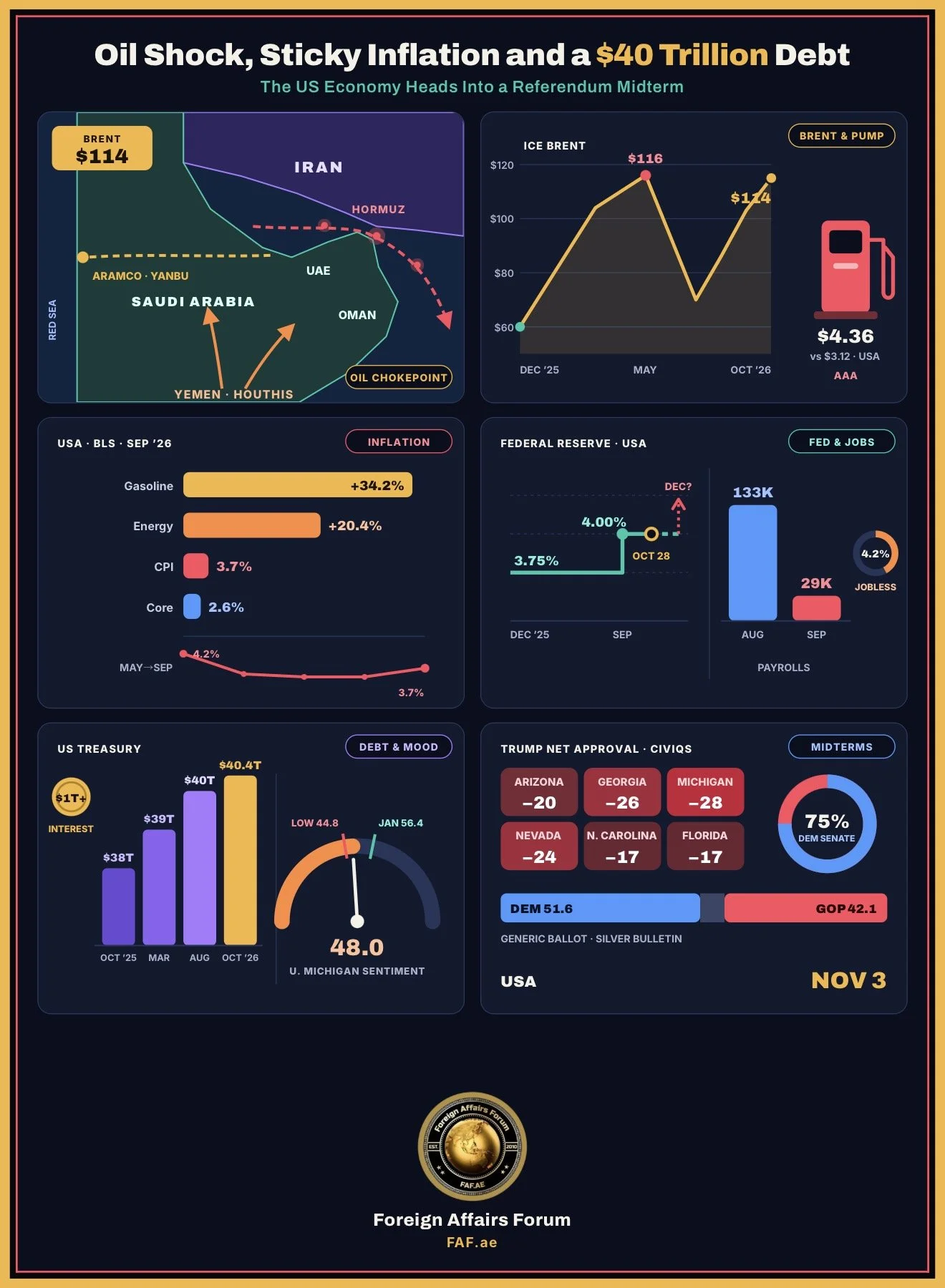
Brent crude is trading at $114–116, up from about $60 at the end of 2025, as Iranian tanker attacks and Houthi–Saudi hostilities disrupt Gulf supply.
- Record fuel costs
US gasoline averages about $4.36 a gallon, the highest ever for autumn and over a dollar above last year.
- Inflation is rising again:
September CPI hit 3.7%, with energy up 20.4% and gasoline up 34.2%. Core inflation is only 2.6%, so this is mainly an energy shock rather than broad overheating.
- The Fed is tightening, not easing
after a September hike to 3.75%–4.00%, the Fed is expected to hold on October 28, with markets leaning toward another hike in December.
- Growth and jobs are telling different stories
Q3 GDP is tracking near 3.7% annualized, but employers added only 29,000 jobs in September and unemployment rose to 4.2%.
- Debt keeps climbing
the national debt passed $40 trillion in August and is now near $40.4 trillion. Net interest costs are projected to exceed $1 trillion this fiscal year.
- Consumers are deeply pessimistic
University of Michigan sentiment stands at 48.0, near the record low of 44.8 set in May. Year-ahead inflation expectations have risen to 4.7%.
- Trump is underwater in the battlegrounds
his net approval is -20 in Arizona, -26 in Georgia, -28 in Michigan, -24 in Nevada and -17 in North Carolina, and about -23 nationally.
- Democrats lead heading into November 3
they hold a 9–10 point generic-ballot lead. Nate Silver's model gives them roughly a 75% chance of taking the Senate and makes them heavy favorites for the House.
- The Republican counter-case
mid-decade redistricting has shrunk the House battleground in the GOP's favor, the Senate map structurally favors Republicans, and some polls show a tighter race.
Conclusion
The US economy enters the final week before the midterms with a split profile.
Output is still growing at a healthy clip, but households face record autumn fuel prices, renewed inflation, rising borrowing costs and a labor market that has nearly stopped adding jobs, while the $40 trillion debt and $1 trillion-plus interest bill limit fiscal room.
That gap between headline growth and lived experience is showing up in historically weak consumer sentiment and in Trump's negative approval across every major battleground state, which current forecasts translate into a strong Democratic edge for both chambers.
Republicans counter that redistricting, a favorable Senate map and polling volatility leave the outcome open.
Much may depend on whether oil prices ease or spike again before November 3, and on how voters weigh an energy shock tied to the Gulf conflict against the administration's broader record.