Beginner's 101 Guide: When the Internet Becomes a Target: What the Attacks on Data Centers Mean for All of Us
Introduction
Most of us never think about where the internet lives. We send a message, pay a bill or watch a video, and it simply works. But behind every click there is a real building filled with computers, cables, power lines and cooling machines. These buildings are called data centers, and in 2026 they have become targets in war.
Dr. Antonio Bhardwaj (Dr. 🆎), an expert on human-centered superintelligence, geopolitical strategy, artificial intelligence warfare and bioterrorism risk, says this is a turning point. In his words, the world spent years treating the cloud as something invisible, and the recent strikes have shown that it is made of concrete, metal and electricity.
What Is a Data Center, and Why Does It Matter?
A data center is a large building that stores information and runs online services. Your bank uses one. So do hospitals, schools, shops, governments and the companies that make apps and artificial intelligence tools. When a data center stops working, many services can stop with it, sometimes all at once.
Companies usually keep copies of their data in several places, so that if one building fails, another takes over. This works well against fires and power cuts. It works less well when buildings are deliberately attacked with drones and missiles.
What Has Happened in the Middle East
On the 28th of February 2026, the United States and Israel began a war against Iran.
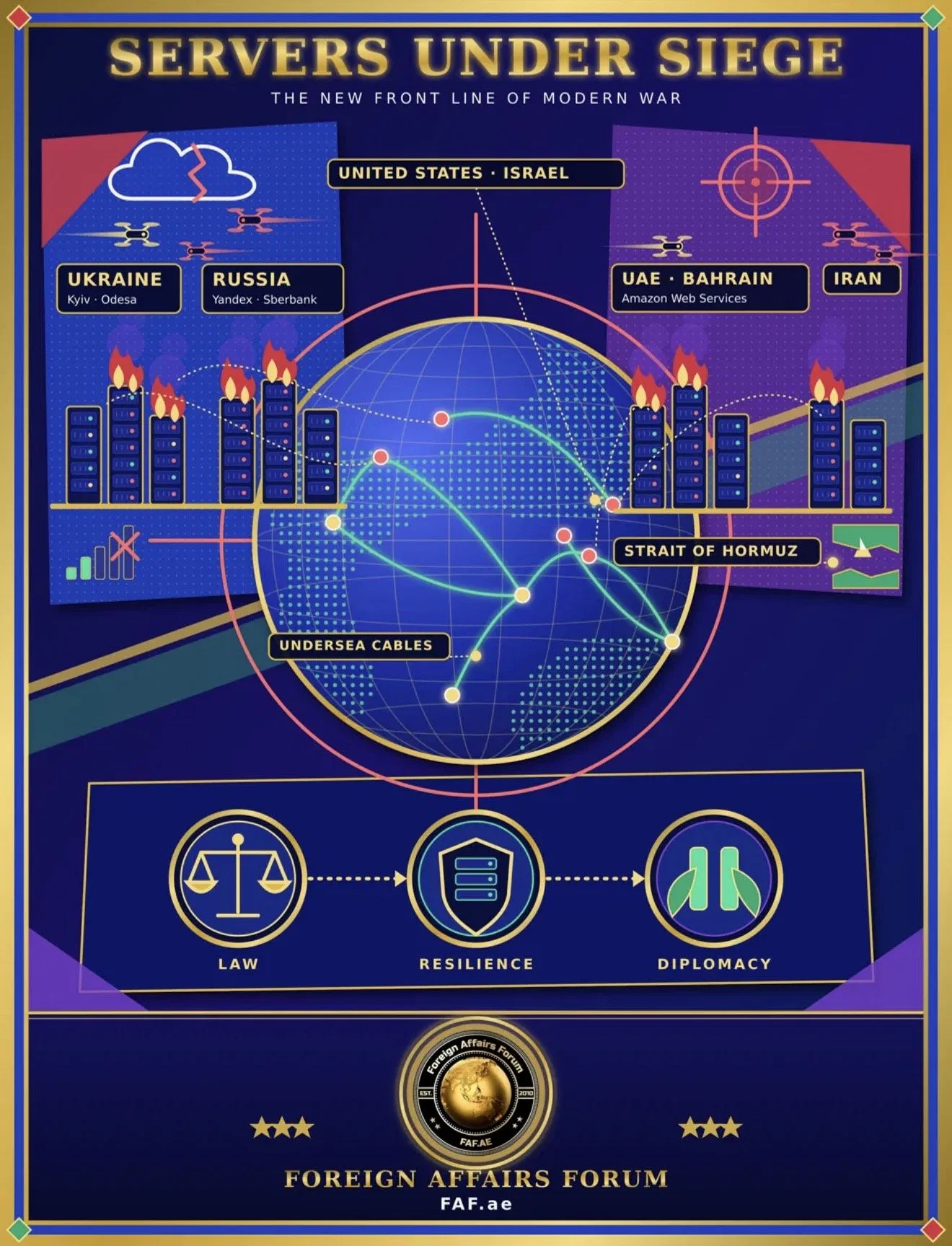
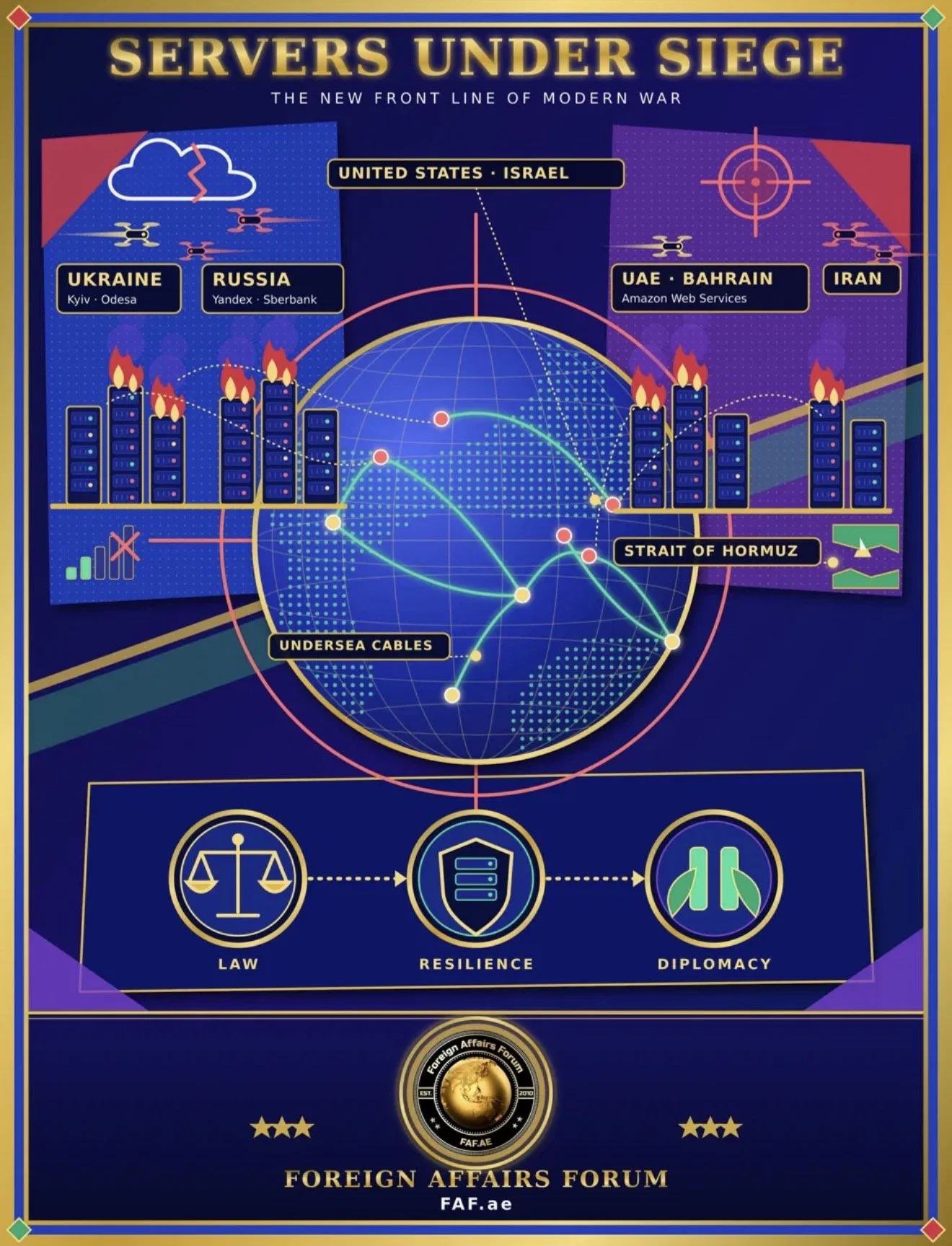
Within hours, Iran struck Amazon data centers in the United Arab Emirates, and soon after hit another in Bahrain. These attacks disrupted online services across the Gulf region, and some data was lost for good.
Days later, a data center belonging to an Iranian bank was hit by a missile. It was reported to hold salary records for Iran's armed forces. Iran also published a list of technology companies and sites that it called legitimate targets, naming some of the biggest names in American technology.
In the summer, Iran attacked an Amazon data center in Bahrain again.
By early August, at least five data centers in the Gulf region had been attacked by Iran or the United States. Iran explained its attacks by saying that some of these companies provide cloud services to the American military.
Now the danger has grown.
In October, a senior Iranian security official named Mohsen Rezaei warned that cables, data centers and artificial intelligence sites in the region could be attacked if the fighting starts again. He said these assets are worth more than $2 trillion.
Talks about ending the war and reopening the Strait of Hormuz, the narrow sea passage that carries much of the world's oil, have stalled.
A fragile ceasefire is holding, but nobody can be sure for how long.
What Has Happened in Russia and Ukraine
In late September, Russia began hitting data centers that belong to Ukrainian internet companies. On the twenty-third of September, an attack in Kyiv left about one hundred thousand homes without internet for a time.
More strikes followed on other providers, and by early October several data centers in Kyiv had stopped working. Odesa was hit on the tenth of October.
Ukraine then answered. Between the seventh and the eleventh of October, Ukrainian drones hit three of the six data centers run by Yandex, a large Russian technology company often called the Russian Google.
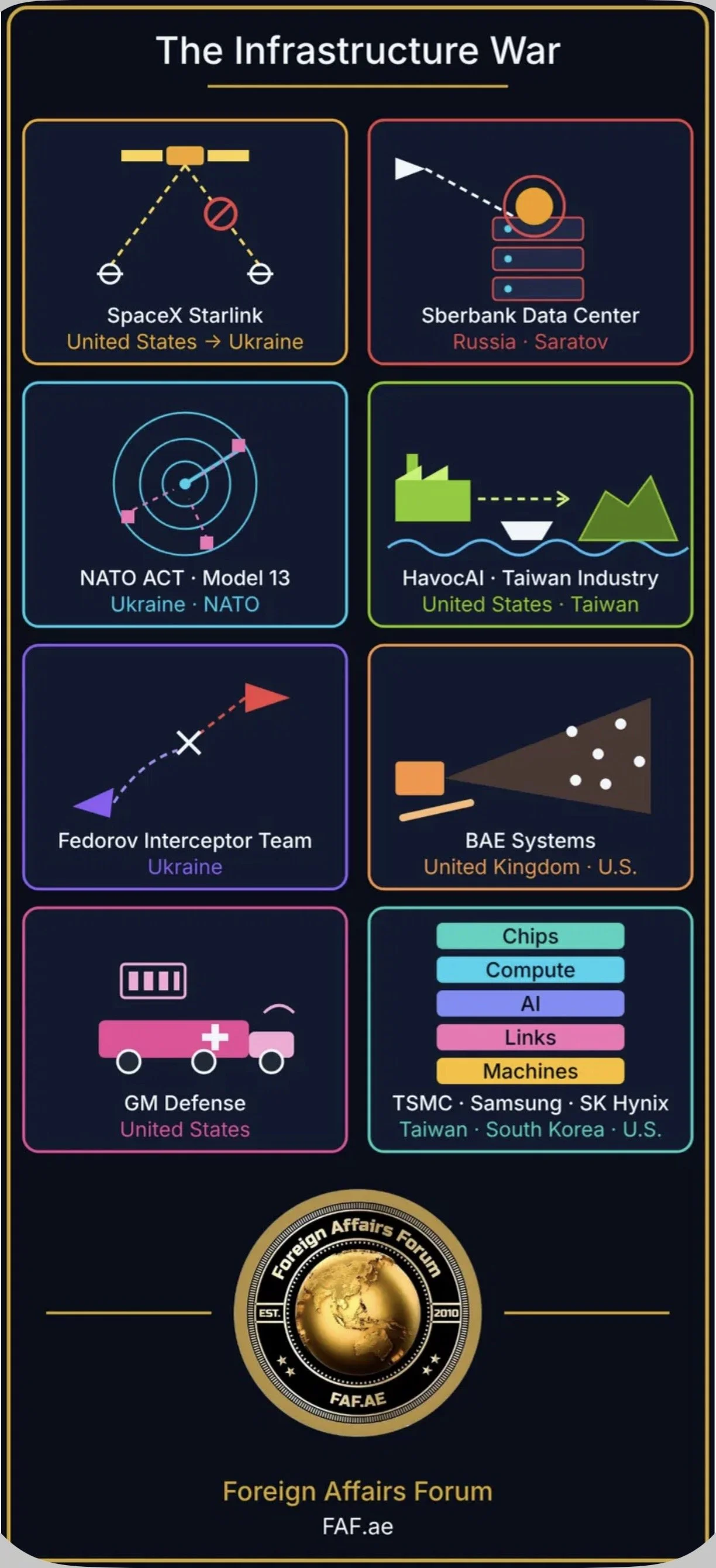
One of them, in Kaluga, is a huge site that covers about one hundred thirty thousand square meters and holds about three thousand eight hundred racks of computers. Russian state media admitted that several parts of it were put out of action completely. Ukraine also hit a data center owned by Sberbank, Russia's largest bank, in what looked like an effort to slow Russian progress in artificial intelligence.
Ukraine's president, Volodymyr Zelenskyy, said that Ukraine always responds in kind, but that its forces must still obey the laws of war. Russia's minister for digital development called the attack on Yandex unprecedented.
Why Are Data Centers Such Attractive Targets?
There are several reasons, and they feed on each other.
First, data centers are big, fixed and easy to find. They cannot be hidden or moved quickly.
Second, cheap drones can now do serious damage. A drone that costs a few thousand $ can harm a building worth hundreds of millions of $, and defending against many drones at once is very expensive.
Third, data centers sit at the center of modern life. Hitting them hurts the economy, the military and the flow of information all at the same time.
Fourth, the rules are unclear. The laws of war say that civilian buildings must not be attacked, but military buildings can be. A data center is usually civilian. But if it also stores information for a military, one side may argue that it has become a military target. Many data centers serve both ordinary customers and governments, so the line is blurry. Iran made exactly this argument about the Amazon sites.
Fifth, each side says it is only answering the other, and each new attack is used to justify the next.
Who Gets Hurt?
Mostly ordinary people. When internet service fails, a person may not be able to call for help, message family or read the news. A shop may not be able to take card payments. A hospital may struggle to reach patient records.
Ukraine has managed better than many feared. Its internet is spread across thousands of small providers, so the attacks affected less than 3% of subscribers for only a few hours. But protection costs money, and smaller companies often cannot afford it.
There have also been surprising side effects. Researchers found that automated bot activity on social media linked to Russian networks dropped to about 49% of its usual level after the Yandex strikes. This shows that online propaganda also depends on physical buildings.
Still, Dr. 🆎 warns that hurting civilian systems for any reason, even a good one, sets a dangerous example. If one side can justify it, so can every other.
What Does International Law Say?
The main rules of war were written long before the cloud existed. They say that attackers must tell the difference between civilian and military targets, and that an attack must not cause harm to civilians that is excessive compared with the military gain.
Applying these rules to data centers is hard. If a building holds a bank's customer records and also helps a military plan operations, is it civilian, military or both? Experts disagree. Some believe that striking data centers today causes far more harm to civilians than military benefit, and so is not lawful. Others argue that data centers supporting military artificial intelligence could count as legitimate targets.
Dr. 🆎 puts the problem simply. If a company's building becomes part of a military system, the company has become a participant in the war whether it meant to or not. The law has not yet decided what follows from that, and in the meantime customers who never chose to be near a battlefield bear the risk.
Why Does This Matter for the Wider World?
The Gulf region wants to become a global center for artificial intelligence, and it has attracted huge investments, including a $3 billion data center project by Qatar's wealth fund and an American investor in September 2025. Attacks and threats make such plans riskier.
The region also sits on the paths of undersea cables linking Europe and Asia, and damage to a few of them could slow connections across many countries.
What Can Be Done?
There are practical steps, and they do not require new technology so much as new priorities.
Operators can make data centers tougher and more spread out, with strong walls, backup power, air defenses and sites in several countries.
Ukraine has already moved some data centers abroad, and Russian companies are now buying drone defenses.
Governments and companies can keep military and civilian computing apart, so that ordinary data centers are clearly civilian. Governments that rely on commercial clouds for defense should pay for extra protection or build their own secure systems.
Countries can work together to agree on clear rules. The United Nations and the International Committee of the Red Cross could help states agree that data centers serving essential civilian needs, like hospitals and water systems, should be protected. Any peace deal in the Gulf should also mention cables and data centers directly.
Investors and insurers can price in the risk. By 2030, countries that want to host artificial intelligence centers should be honest about security and spend on defense to match. By 2036, nations that have built backup systems and emergency plans will be much better placed than those that have not.
Conclusion
The attacks on data centers show that the digital world is built on physical things, and that physical things can be destroyed. For the countries involved, these strikes may seem like smart, low-cost ways to gain an advantage. But for the rest of the world they open a dangerous door. If destroying computing centers in wartime becomes normal, every society that relies on the internet will be at risk, and the first to suffer will be ordinary people.
Dr. 🆎 sums it up this way. A civilization is not judged by whether its systems can be attacked, since all systems can. It is judged by whether it decided in advance what it would protect and built the institutions to protect it. The cloud has an address, and the world must now decide how to keep that address safe.