America’s Artificial Intelligence Gambit: The $500 Billion Stargate Reckoning
Executive Summary
The $500 Billion Question: Will America’s AI Gamble Secure Its Future, or Collapse Under Its Own Ambition?
The Stargate Project represents an unprecedented commitment by the United States to maintain technological supremacy in artificial intelligence infrastructure.
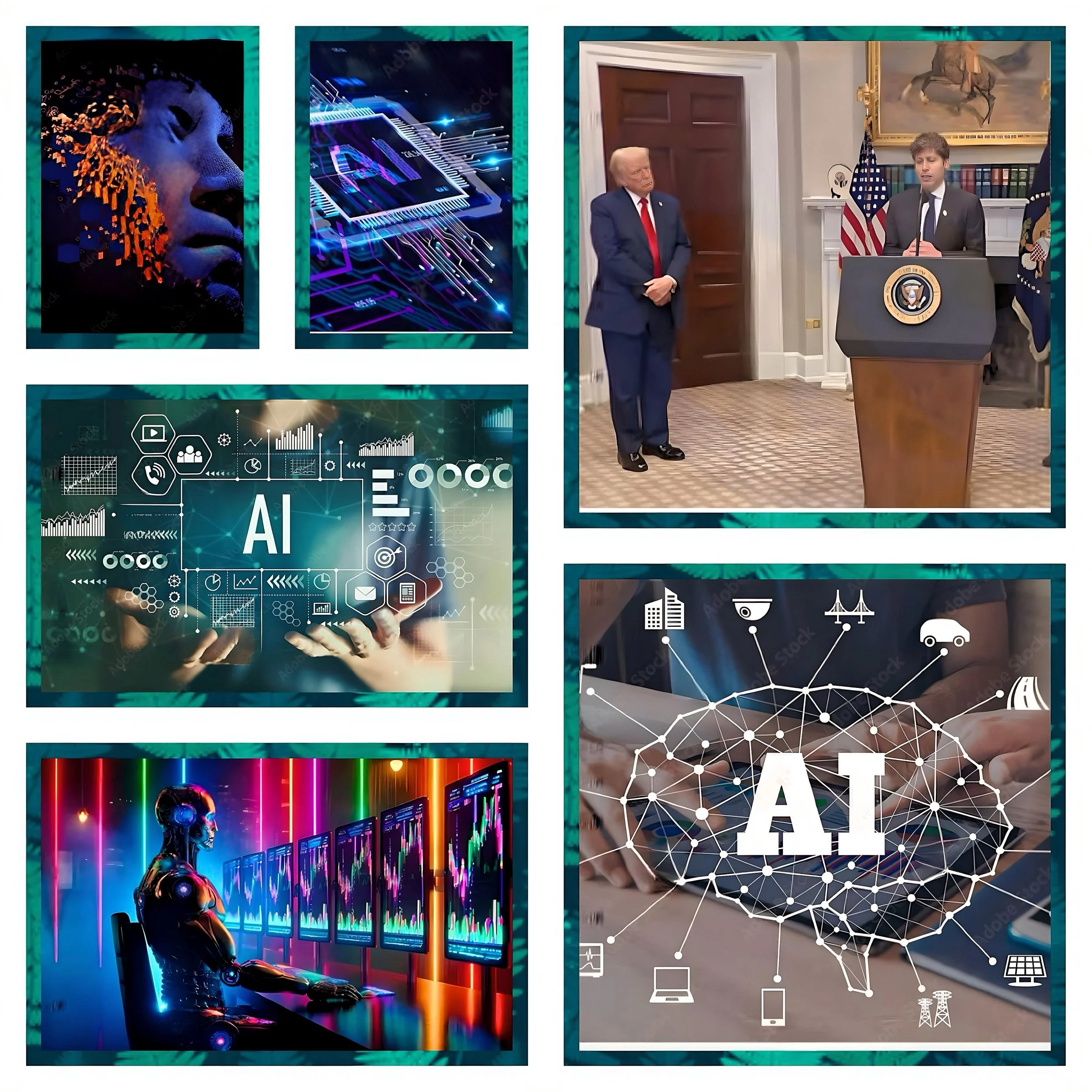
Announced in January 2025 by President Donald Trump, this $500 billion initiative—a collaboration between OpenAI, SoftBank, Oracle, and Abu Dhabi’s MGX—proposes to establish ten gigawatts of AI computing capacity across American soil by 2029.
As of January 2026, the project has demonstrated tangible progress with multiple data center campuses operational or under active construction, yet formidable challenges persist regarding financing mechanisms, energy procurement, regulatory oversight, and the fundamental feasibility of delivering compute infrastructure at unprecedented scale and velocity.
This undertaking remains simultaneously the most audacious expression of American technological ambition and a profound gamble whose resolution shall determine whether technological supremacy in the artificial intelligence epoch remains within Western reach.
Introduction: The Genesis of American AI Infrastructure Strategy
The geopolitical landscape transformed dramatically when the Trump administration elevated artificial intelligence infrastructure development to a matter of national security. Unlike previous technological revolutions, the AI era demands not merely intellectual ingenuity but massive physical infrastructure—sprawling data centers requiring extraordinary quantities of electrical power, semiconductor components, and human capital.
The Stargate Project crystallizes this reality, positioning computational capacity as fundamentally equivalent to traditional strategic assets such as military platforms or energy reserves.
The initiative reflects a civilizational recognition that artificial general intelligence, if achieved, shall belong to the nation that can sustain the computational workloads necessary for its realization. This article examines whether Stargate shall become America’s Manhattan Project or an cautionary tale of overambition colliding with practical constraints.
Historical Context and Formal Announcement
From Private Vision to Presidential Priority: The Political Metamorphosis of Stargate
Discussions regarding an OpenAI-led data center initiative originated in the first quarter of 2024, initially framed as a discrete $100 billion collaboration between OpenAI and Microsoft. The conceptual architecture evolved substantially, with Microsoft progressively reducing its involvement whilst SoftBank expanded its financial commitments.
On January 21, 2025, President Trump formally announced the initiative at a White House ceremony, accompanied by Sam Altman (OpenAI), Larry Ellison (Oracle), and Masayoshi Son (SoftBank).
The project was christened “Stargate,” evoking the 1994 science fiction film suggesting interdimensional portals—a nomenclature capturing the transformative ambitions attendant to the endeavor.
Arm, Microsoft, NVIDIA, Oracle, and OpenAI were designated as key technology partners, with SoftBank assuming primary financial responsibility and OpenAI exercising operational control. The initiative constituted the largest private infrastructure investment announcement in American technological history.
Current Status: Progress and Operational Milestones
Concrete Foundations: The Tangible Progress Behind the Headlines
As of January 2026, the Stargate Project has achieved demonstrable infrastructural progress despite the compressed timeline and logistical complexity.
The flagship campus in Abilene, Texas—located in Taylor County across approximately 5,502 acres—commenced operations in late 2025, now functioning at over 250 megawatts of capacity with NVIDIA GB200 accelerator racks delivering live workloads for model training.
Oracle began hardware deliveries at Abilene in June 2025, with construction of eight buildings progressing systematically, projecting completion by mid-2026.
The Abilene site has already generated employment for more than 6,400 construction workers and positions itself as the architectural foundation for subsequent campus developments.
Complementing the flagship installation, five additional U.S. sites achieved formal selection and land acquisition status by September 2025: three Oracle-directed campuses in Shackelford County, Texas; Doña Ana County, New Mexico; and an undisclosed Wisconsin location, alongside two SoftBank-managed facilities in Lordstown, Ohio, and Milam County, Texas.
A seventh site received announcement in October 2025 near Saline Township, Michigan, developed by Related Digital in partnership with Oracle. Collectively, these installations project nearly eight gigawatts of computing capacity and approximately $450 billion in investment commitments over the subsequent three years.
SoftBank completed the second funding closing in December 2025, deploying $41 billion cumulatively through multiple tranches, substantiating capital availability despite preliminary skepticism regarding financing mechanisms.
Internationally, the project extended beyond American borders with announcements of Stargate Norway—a 230 megawatt facility operated through partnership with Aker and Nscale, targeting 100,000 NVIDIA GPUs by the end of 2026—and Stargate UAE, leveraging Abu Dhabi’s substantial energy infrastructure and geopolitical positioning within Middle Eastern power structures.
These international deployments signal recognition that global AI dominance transcends strictly American considerations.
Key Developments and Technical Architecture
Engineering at Scale: The Technical Architecture Underlying the Ambition
The technical specifications underlying Stargate demonstrate engineering ambition commensurate with the financial commitments.
The 10-gigawatt target represents approximately the electrical capacity required to power seven and one-half million residential dwellings.
The partnership with Oracle delivered $300 billion in aggregate commitments over five years, with configurations enabling over 5.5 gigawatts through the initial Oracle-directed campuses.
An additional $100 billion Nvidia partnership—announced alongside the September 2025 expansion—provides mechanisms through which OpenAI may finance semiconductor procurement over extended periods rather than acquiring chips outright, mitigating immediate capital requirements whilst preserving financial flexibility.
The architectural sophistication encompasses multiple governance layers: SoftBank functions as primary financial custodian, OpenAI assumes operational responsibility for computing deployments and workload prioritization, Oracle manages infrastructure construction and physical facility operations, and NVIDIA provides both equity participation and technological specifications.
This distributed responsibility framework theoretically distributes financial and operational risk; empirically, it generates coordination complexity requiring consensus from parties with partially divergent incentives.
The computational infrastructure shall incorporate approximately two million NVIDIA processors across completion, with advanced architecture specifications demanding unprecedented quantities of high-bandwidth memory components.
Initial supply agreements with Samsung and SK Hynix project provision of approximately 900,000 DRAM wafers monthly—representing potentially forty percent of global DRAM production capacity—illustrating the magnitude of downstream supply chain disruption attendant to Stargate’s materialization.
The velocity at which semiconductor manufacturers must scale production capacity remains unprecedented in industrial history.
Latest Developments and Material Concerns
The Mounting Reckoning: Energy, Financing, and Feasibility in Real Time
The most recent period has illuminated both operational momentum and persistent structural impediments. As of early January 2026, multiple data center campuses have transitioned from planning to active construction phases, with project leadership maintaining that commitments exceed $400 billion and technological partnerships have solidified.
Abilene’s operational transition demonstrated capability for rapid deployment within American permitting frameworks, suggesting that logistical feasibility, whilst challenging, remains achievable.
Nonetheless, formidable challenges persist. SoftBank’s CFO publicly acknowledged in August 2025 that the initiative proceeded “slower than usual,” with site selection negotiations, stakeholder coordination, and technical integration consuming substantially greater temporal resources than initial projections suggested.
The Wall Street Journal reported in mid-2025 that no definitive land agreements existed despite six months of intensive negotiations, subsequently proven incorrect through September announcements. Yet this reporting highlighted genuine challenges: securing geographically distributed sites necessitates navigating divergent regulatory regimes, electrical utility cooperation, local environmental reviews, and community stakeholder engagement.
Energy infrastructure constitutes perhaps the most substantive constraint. Whilst Stargate projects target grid-connected capacity where feasible—notably at the Michigan facility where DTE Energy provided 100 percent grid connectivity with battery storage—many campuses contemplate behind-the-meter generation through on-site gas generation facilities.
This architectural choice transforms data center operators into effective power plant proprietors, requiring expertise, capital, and regulatory coordination substantially exceeding traditional information technology operational paradigms.
Permitting and construction timelines for power generation infrastructure frequently exceed those for computational hardware deployment, creating sequential bottlenecks.
Critics have articulated concerns regarding project financing sustainability, particularly given OpenAI’s contemporary operational economics. The company projects spending $28 billion annually on compute by 2028, with commentary suggesting profitability arrival only subsequent to Stargate completion by decade’s end. Should timelines extend beyond current projections—a historical norm for megainfrastructure undertakings—financial viability becomes materially compromised.
The interdependence of OpenAI’s commercial success upon Stargate’s timely deployment creates recursive risk: delayed infrastructure capacity constrains product development and revenue generation, whilst insufficient revenue imperils ongoing infrastructure funding.
GPU obsolescence constitutes an additional concern inadequately addressed in public projections. Contemporary high-performance accelerators typically remain economically viable for four to six years before architectural improvements render them substantially antiquated.
Should next-generation semiconductor architectures emerge substantially earlier than anticipated, or should competing manufacturers capture significant market share through superior designs, the installed infrastructure could experience accelerated value depreciation.
This technological velocity risk remains largely unquantified in official Stargate communications.
Cause-and-Effect Analysis: Strategic Imperatives and Systemic Consequences
Cascading Consequences: How One Initiative Reshapes Industrial America
The Stargate Project crystallizes several interconnected cause-and-effect relationships that transcend the immediate initiative. American technological leadership, following decades of incremental advancement, confronted existential competition from Chinese AI development and substantial progress from European and Asian competitors.
This geopolitical reality prompted the United States government to elevate AI infrastructure development to strategic urgency equivalent to Cold War-era initiatives, motivating unprecedented private-sector coordination.
The $500 billion commitment catalyzed secondary effects across multiple industrial sectors. Semiconductor manufacturers from NVIDIA to TSMC to Samsung encountered explosive demand stimuli, necessitating extraordinary capital expenditures for fab construction and capacity expansion.
Real estate markets in regions adjacent to proposed data center locations experienced substantial valuation increases as developers and property holders anticipated infrastructure-driven economic expansion.
Electrical utilities confronted unanticipated demand trajectories requiring grid modernization and generation capacity expansion. Labor markets in construction, electrical infrastructure, and specialized technical fields experienced wage pressures and talent scarcity.
The project simultaneously generated ripple effects within the technology sector itself. Cloud providers competed to secure contracts as OpenAI alternative deployment venues, recognizing that Stargate’s exclusive focus upon OpenAI workloads excluded other significant artificial intelligence enterprises.
Competitive pressures intensified for companies such as Anthropic, Google, and Meta to develop independent infrastructure capabilities, fragmenting what might otherwise constitute coordinated American AI infrastructure strategy. This competitive dynamic, whilst historically efficient for innovation, creates redundant infrastructure investments and compromises capital efficiency.
From a macroeconomic perspective, Stargate’s projected trajectory implies cumulative infrastructure investment exceeding one trillion dollars when accounting for supporting energy, transportation, and supply chain infrastructure.
This capital magnitude represents approximately five percent of annual American GDP, concentrated over an eight-year period. The opportunity costs—foregone investments in conventional infrastructure, healthcare, or educational systems—remain largely unexplored in public discourse.
Future Trajectory and Anticipated Developments
The Road Ahead: Timelines, Tribulations, and Turning Points
The anticipated evolution of Stargate shall unfold across multiple dimensions simultaneously.
First, the completion of initial flagship installations shall demonstrate whether the accelerated timeline proves achievable despite permitting, construction, and coordination complexities.
Abilene’s progression through 2026 shall provide empirical evidence regarding realistic timelines for subsequent campuses. Should significant delays emerge—a historical probability exceeding fifty percent for megainfrastructure projects—subsequent site completion projections must systematically revise downward, with cascading implications for financing and operational assumptions.
Second, the energy procurement architecture shall increasingly consume attention as distributed installations simultaneously attempt grid connections. The aggregated demand from Stargate installations alone could require new dedicated generation capacity equivalent to a small nation’s electrical consumption. Conversations with electrical utilities suggest that grid modernization timelines frequently measure in years, potentially creating temporal misalignments between completed computing capacity and available electrical supply.
This mismatch would render substantial infrastructure operationally inert until supporting power infrastructure materializes.
Third, the financing mechanisms shall face scrutiny as capital deployment accelerates. SoftBank’s ability to continue financial contributions amid corporate restructuring and shareholder pressures remains uncertain. OpenAI’s revenue trajectory must sustain specified growth rates to justify continued infrastructure investment; any material deceleration in artificial intelligence product adoption would immediately compromise financial sustainability.
Alternative financing through debt markets remains untested, with equity collateral representing specialized hardware with uncertain residual value.
Fourth, geopolitical factors shall increasingly influence project progression. The Trump administration’s explicit support for Stargate may attenuate under alternative leadership, potentially reducing regulatory expediting and permitting prioritization.
Congressional support for the initiative remains inconsistent, with substantial skepticism regarding the exclusive private benefit alongside public infrastructure contributions. International Stargate sites shall require navigating divergent regulatory environments and geopolitical relationships, potentially constraining or accelerating expansion based upon shifting bilateral relationships.
Conclusion
The Inflection Point: Will Stargate Deliver American Technological Supremacy?
Navigating the Inflection Point
The Stargate Project stands at an inflection point between ambitious technological visioning and pragmatic infrastructural reality. The January 2026 status demonstrates that operational momentum remains genuine—capital flows, site acquisitions progress, and technical partnerships solidify. Yet the initiative simultaneously confronts challenges whose magnitude rivals or exceeds the technical complexity of deploying the computing infrastructure itself.
Energy, permitting, workforce availability, and financing constraints present non-trivial impediments whose resolution demands sustained political support, technological innovation, and competitive coordination among organizations with partially divergent incentives.
Determining whether Stargate emerges as America’s Manhattan Project or a cautionary tale shall ultimately depend upon factors extending beyond technological capability.
The initiative requires not merely engineering excellence but sustained financial discipline, governmental continuity, energy infrastructure modernization, and supply chain resilience. These prerequisites transcend the traditional purview of technology corporations, demanding societal-scale coordination and commitment.
The outcome shall meaningfully influence whether American technological supremacy in artificial intelligence remains feasible, or whether competitive nations establish alternative infrastructure ecosystems capable of supporting advanced artificial intelligence development independent of American participation.
This determination bears civilizational significance extending far beyond typical corporate infrastructure considerations.