What is Happening Between the United States, Alberta, and Canada?
Summary
What You Need to Know About This Growing Crisis
The province of Alberta, located in western Canada, is trying to separate from Canada and become its own independent country. This movement has been around for decades, but something new is happening that has surprised and shocked many Canadians.
American government officials from President Donald Trump's administration have been secretly meeting with leaders of Alberta's separatist movement to discuss how the U.S. government could help Alberta become independent.
This is causing a huge political crisis in Canada, and many Canadian leaders are very angry about it.
Why Does Alberta Want to Leave Canada?
To understand this situation, you need to know why Albertans feel angry with the rest of Canada.
Alberta is a rich province because it has lots of oil and natural gas under the ground. The people who live there believe that the federal government in Ottawa takes too much money from Alberta to give to other provinces that are not as rich. Imagine if you worked hard and earned a lot of money, but then the government took a large portion of it to give to people who earned less. You would probably feel angry, right? That is how many Albertans feel.
This anger started way back in the 1970s when Prime Minister Pierre Trudeau created something called the National Energy Program.
This program allowed the federal government to control much of Alberta's oil and gas. Many Albertans felt that Ottawa was stealing their wealth. Even though that program ended long ago, Albertans still remember it and still feel angry about it.
In recent years, there has been more conflict between Alberta and the federal government. The federal government has strict environmental rules about oil and gas development. Alberta believes these rules are unfair and hurt the province's economy. When Justin Trudeau was Prime Minister, Albertans felt that he did not care about their province at all. These grievances have made the separatist movement grow stronger.
The Move Toward Independence Now
In 2025, Alberta's provincial government made it much easier for the separatist movement to force a referendum about independence. Previously, separatists would have needed to collect 600,000 signatures from Albertans. Now they only need to collect about 178,000 signatures.
This is about 70% fewer signatures. It made the separatist dream seem more possible than before.
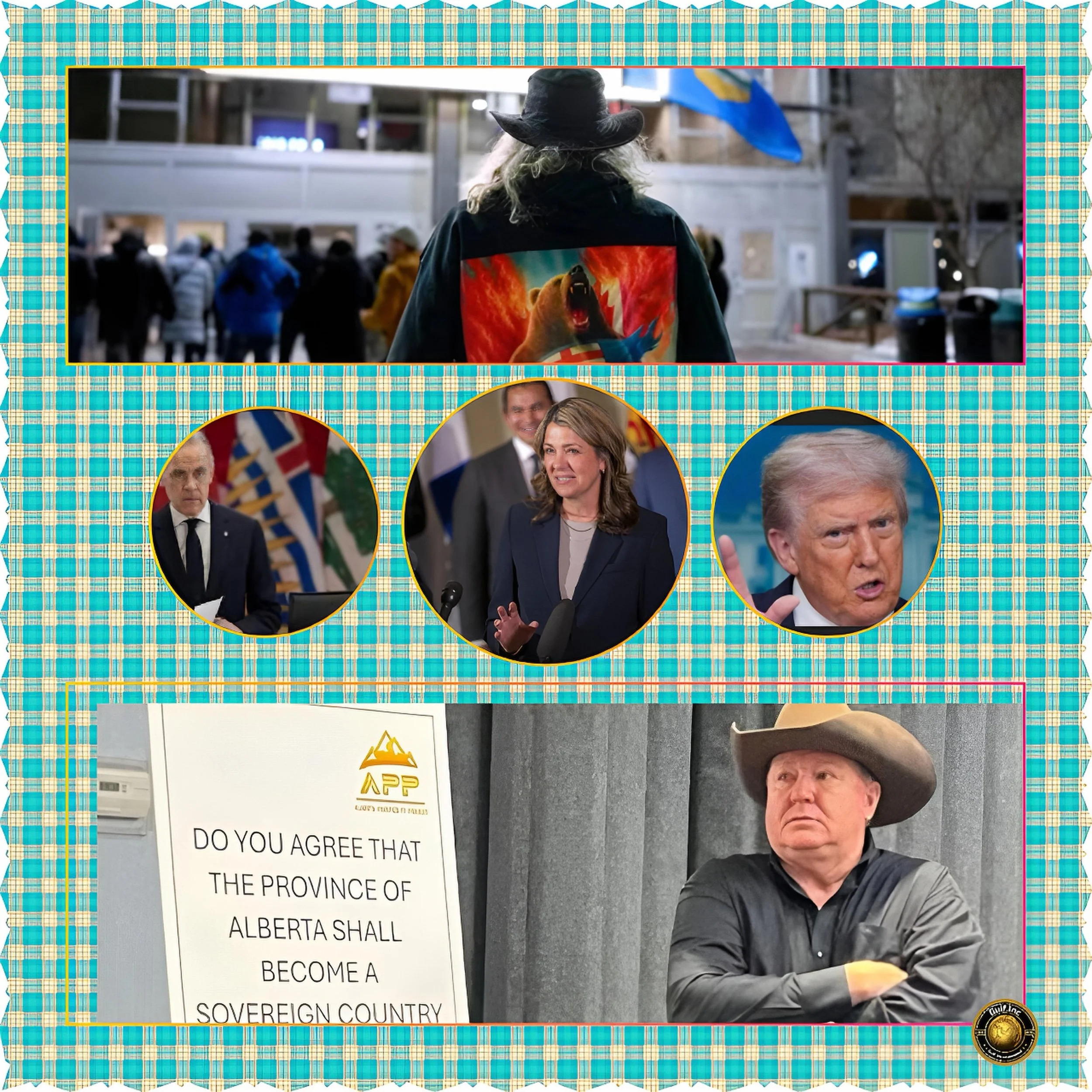
In January 2026, a group called the Alberta Prosperity Project launched a petition to force a referendum. They need to collect the signatures by May 2, 2026. When people go to sign the petition, they wait in long lines for hours. One event in a small town had hundreds of people waiting to sign. This shows that many Albertans at least want the chance to vote on whether Alberta should be independent.
But here is an important fact. Even if Albertans vote "yes" to separation, Alberta cannot actually leave Canada just by voting.
Canadian law says that any province that wants to leave Canada needs the agreement of the federal government and all the other provinces. It is like wanting to leave a business partnership that has a contract. You cannot just leave whenever you want. You need everyone to agree.
The Secret American Meetings
Here is where things become very strange and controversial. In January 2026, British newspapers reported that American government officials from President Trump's administration have been secretly meeting with leaders of Alberta's separatist movement. These meetings have happened at least 3 times since April 2025 in Washington, D.C.
The separatist leaders, especially a lawyer named Jeffrey Rath, have been telling these American officials that if Alberta becomes independent, it would be a great partner for the United States.
They say that Alberta has lots of oil and gas that the U.S. could buy. They also told American officials that they want a $500 billion loan from the U.S. government to help pay for Alberta's transition to independence.
Think about this situation using a simple example. Imagine two neighbors are fighting about money and respect. Now, one neighbor secretly meets with the other neighbor's child and promises to give the child money to leave the family.
Other family members would think this is very unfair and would be very angry. This is similar to what Canadians think is happening with America and Alberta.
What Senior U.S. Officials Are Saying
Scott Bessent, who is the U.S. Treasury Secretary, made public statements in January 2026 that shocked Canadians. He said that Alberta is a "natural partner for the United States." He criticized the Canadian government for not allowing Alberta to build a pipeline to the Pacific Ocean. He suggested that Alberta should work with the United States instead of with Canada.
Before becoming President again, Donald Trump said many times that Canada should become the 51st state of America. He has said this as a joke, but also semi-seriously. He seems to like the idea of Canada becoming part of America.
Some American officials have hinted that if Alberta becomes independent, the U.S. might recognize it as a country and then help it become the 51st U.S. state.
The White House and the State Department say they did not make any promises to the Alberta separatists. They say these meetings are normal and that America regularly talks with different groups in other countries. But the fact that they met with separatist leaders at all is shocking to Canadians. It seems like they are at least interested in the idea of Alberta becoming independent.
Canada's Angry Response
Canadian leaders have reacted very strongly. Prime Minister Mark Carney, who was actually born and raised in Alberta, warned President Trump that Canada expects the U.S. to respect Canadian sovereignty. He said it is not acceptable for American officials to interfere in Canadian political matters.
The Premier of British Columbia, a neighboring province, used very harsh language. He called the meetings between American officials and Alberta separatists an act of "treason."
This is the strongest language possible under Canadian law. He said it is completely wrong to ask a foreign country to help break up Canada.
Other Canadian political leaders have said these meetings are unethical and unacceptable. They are asking Alberta's Premier Danielle Smith to publicly condemn the separatist movement. But Smith has not done this. She visited Trump at his Florida home before he became President. She has been friendly toward Trump and seems reluctant to attack the separatists too harshly.
Foreign Interference and Social Media
Labor leaders in Alberta have warned that there is evidence of foreign interference trying to help the separatist movement. They say that social media accounts from the United States are posting messages supporting Alberta independence. They say that bots, which are fake computer accounts, are spreading separatist messages. These messages use the same kind of language and ideas that are popular with Trump supporters in America.
This is concerning because it means that powerful groups outside Canada are trying to influence Albertans to support separation. It is not a fair, natural political process if foreign forces are trying to manipulate Albertans through social media and propaganda.
The Constitutional Problem
Canadian law makes it impossible for Alberta to just become independent by voting. Separation would require negotiations with the federal government, all other provinces, and Indigenous groups whose lands are in Alberta. Indigenous nations have said they will not agree to separation because their treaty rights depend on the Crown's authority across all of Canada.
In December 2025, a judge ruled that a referendum on separation would violate the rights of Indigenous people and break important treaties. But then Alberta's government passed a new law that allows the referendum to happen anyway. This created a serious constitutional crisis.
What Happens Next?
If the separatists collect enough signatures and hold a referendum that says "yes" to independence, what comes next? The federal government would probably refuse to negotiate and say the referendum is illegal. Alberta could refuse to accept this answer and declare independence anyway. America might recognize Alberta as an independent country. But then all sorts of serious problems would happen. Soldiers might be needed. Court battles would happen. The economy would fall apart.
This crisis shows how fragile Canada is right now. It shows that foreign governments, especially the U.S., can try to break apart the country. It shows that when people feel angry about their government, they can be manipulated to support extreme ideas.
And it shows that Canada's constitutional system might not be strong enough to handle a real crisis like this one.