United States Engagement with Alberta's Separatist Movement: Implications for North American Sovereignty and Constitutional Governance
Introduction
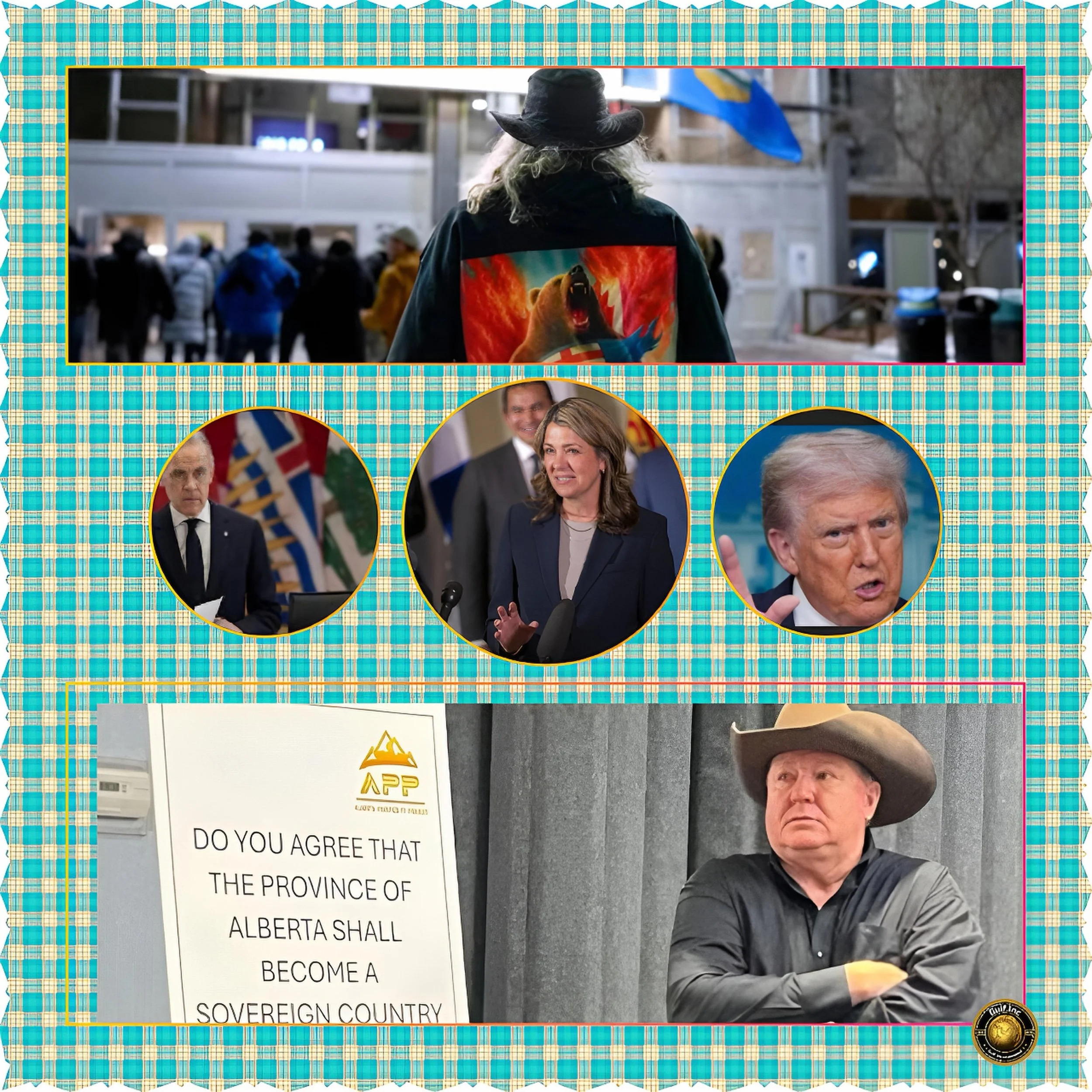
The emergence of documented diplomatic engagement between representatives of the Trump administration and Canada's Alberta separatist organizations constitutes an unprecedented intervention in the domestic affairs of a neighboring state. Since April 2025, officials from the U.S. State Department have conducted at least 3 formal meetings with the Alberta Prosperity Project (APP), a far-right organization advocating for provincial secession, while the organization simultaneously pursues $500 billion in U.S. Treasury credit to facilitate a future independence referendum.
This engagement trajectory, coupled with strategic pronouncements from senior Trump administration officials regarding Alberta's constitutional status and resource integration, raises substantive questions about the intentionality and magnitude of American involvement in destabilizing Canadian federalism at the precise moment when bilateral tensions have reached their highest levels since the reimposition of unilateral tariff regimes in January 2026.
The appearance of such engagement—whether strategic design or opportunistic exploitation of pre-existing grievances—has catalyzed unprecedented constitutional and diplomatic controversy within Canada. Prime Minister Mark Carney, himself an Albertan, has issued explicit warnings to the Trump administration regarding expectations of American deference to Canadian sovereignty, while provincial premiers from British Columbia and Ontario have characterized the separatist group's pursuit of foreign support as constituting "treason" under Canadian law.
These reactions reflect genuine apprehension about the potential utilization of substate actors as leverage points within asymmetric bilateral negotiations and the broader weaponization of internal Canadian divisions to advance American continental prerogatives.
Historical and Structural Context for Alberta Separatism
Alberta separatism is not a novel phenomenon within Canadian political discourse. Its origins extend to the 1970s, when Prime Minister Pierre Trudeau's National Energy Program imposed centralized federal control over petroleum extraction and implemented mechanisms redistributing resource revenues eastward through equalization payments and fiscal transfers.
This redistribution mechanism, perceived by Albertans as systematic extraction of provincial wealth to subsidize provinces deemed economically less productive, catalyzed sustained resentment that has persisted across five decades of subsequent federal governments regardless of party affiliation.
The movement experienced episodic revitalization following the 2019 federal election, when the Wexit party garnered sufficient organizational capacity to register as a federal political entity, attracting polling support of 33% among Albertans in 2020. However, this institutional expression dissolved into historical insignificance by 2025.
The contemporary resurgence, concentrated within the APP formation, represents a qualitatively different phenomenon: it has achieved accelerated institutional momentum through the explicit legislative intervention of Alberta's provincial government, which in 2025 enacted Bill 54 and Bill 14, reducing the signature requirement for constitutional referendums from approximately 600,000 (20% of all eligible voters) to 177,732 (10% of votes cast in the previous election).
This reduction of approximately 70% in petition thresholds materially transformed the feasibility calculus for separatist advocates.
The APP's current petition, launched January 3, 2026, requires collection of 177,732 valid signatures by May 2, 2026, with preliminary evidence suggesting substantial organizational capacity to achieve this threshold within the specified timeframe. Early signature drives conducted in provincial communities have generated queues extending multiple hours, with some events attracting hundreds of residents willing to publicly endorse the independence petition.
Contemporaneous polling conducted subsequent to Trump administration engagement revelations suggested that approximately 28-30% of Albertans hold stated preferences for separation, though these figures remain contested by independent analysts who argue survey methodologies systematically oversample ideologically conservative respondents accessible through social media recruitment.
U.S. Administration Engagement: Documentation and Trajectory
The revelation of diplomatic engagement between Trump administration officials and APP leadership occurred through reporting by the Financial Times on January 28, 2026, which documented that State Department representatives had convened with APP leadership on at least 3 separate occasions since April 2025.
These meetings occurred principally in Washington, D.C., with APP representatives claiming that discussions had achieved sufficient elevation to result in direct communication with the Oval Office.
Jeffrey Rath, APP legal counsel and primary interlocutor with American officials, articulated to multiple media organizations that his organization maintained "much stronger relations" with the Trump administration than with Canadian Prime Minister Mark Carney.
The trajectory of engagement intensified markedly following public statements by Scott Bessent, U.S. Treasury Secretary, delivered during the World Economic Forum in Davos on January 22-23, 2026.
Bessent characterized Alberta as a "natural partner for the United States," explicitly criticized Canadian federal restrictions on pipeline construction to the Pacific Ocean, and insinuated that American capital markets and institutional frameworks could facilitate Alberta's resource development absent Canadian federal constraints.
His remarks were not framed as casual commentary but rather as policy signaling regarding the Trump administration's receptivity to Alberta's resource integration within American economic spheres.
Subsequent to these pronouncements, APP leadership publicly announced intentions to convene a 4th delegation in February 2026 to formally request documentation of credit facility terms, specifically a $500 billion line of credit contingent upon successful referendum passage and presumptive independence declaration.
No substantive American counter-proposal has been documented, yet the absence of explicit rejection—combined with the demonstrable willingness to grant multiple audiences to separatist representatives—has functioned rhetorically to signal American openness to the proposition.
The broader strategic context for these engagements encompasses Trump's publicly articulated vision of Canadian integration into the American federation as the "51st state." This rhetoric, while dismissed by some analysts as hyperbolic posturing, has been operationalized through statements by Trump national security advisors and analysts with documented access to senior decision-makers.
Brandon Weichert, a strategic analyst with evident influence within Trump's orbit, predicted in early 2026 that successful Alberta independence would likely be followed by American recognition of Alberta as a sovereign entity and subsequent facilitation of its incorporation as an American state.
The coincidence of these strategic articulations with documented diplomatic engagement creates an interpretive framework wherein apparent separatist overtures may represent calculated positioning within a broader vision of North American territorial reorganization.
Canadian Federal and Provincial Reactions
The Canadian response has operated across multiple institutional registers, ranging from explicit diplomatic warnings through public condemnation.
Prime Minister Mark Carney, speaking January 29, 2026, stated explicitly that he anticipated the Trump administration would "respect Canadian sovereignty" and that diplomatic discussion of Canadian constitutional matters should remain confined to Canadians themselves.
Carney's deployment of his own Albertan heritage—he grew up in Edmonton—functioned rhetorically to underscore that Canadian unity transcends provincial attachment and that even Albertan-origin federal leaders maintain commitment to constitutional integrity.
British Columbia Premier David Eby articulated the most stringent normative framing, characterizing separatist pursuit of foreign support as constituting "treason," while emphasizing that solicitation of foreign assistance for the dismantlement of a sovereign nation violated fundamental principles of international law and domestic political conduct.
Ontario Premier Doug Ford adopted similar positioning, terming the meetings "unethical" and "unacceptable," and urging Alberta Premier Danielle Smith to "take a stand" through explicit denunciation of separatist activities.
Alberta's premier herself occupied a more equivocal position. Smith, who had personally traveled to Trump's Mar-a-Lago estate in January 2025 for bilateral meetings before Trump's second inauguration, refrained from condemning separatist activities or their American interlocutors.
Instead, she characterized Albertans supporting independence as holding "legitimate grievances" regarding federal resource policy and energy regulation, while emphasizing that the "overwhelming majority" of Albertans prefer to remain within Canada.
This rhetorical positioning—explicit opposition to separation coupled with refusal to delegitimize separatist advocates—maintained Smith's dual political positioning: she sustained diplomatic engagement channels with the Trump administration while avoiding the domestic political costs of explicitly antagonizing her conservative political base.
Federal Finance Minister François-Philippe Champagne directly responded to Bessent's comments, stating Canada would engage in resource development exclusively through Canadian mechanisms and that American officials would be informed of this position at forthcoming bilateral meetings.
This response, while explicitly rejecting American involvement, did not address the prior question of whether American officials had already cultivated informal commitments to Alberta's separatists or created expectational frameworks that might influence Albertan political calculations.
Constitutional and Legal Dimensions
The Canadian constitutional framework explicitly prohibits unilateral provincial secession. In Reference re Secession of Quebec (1998), the Supreme Court of Canada ruled unanimously that while provinces possess the right to conduct referendums on independence, successful referendums create no automatic legal effect but rather impose an obligation upon federal and other provincial governments to negotiate secession in good faith.
The Court stipulated that any secession requires constitutional amendment, which in turn demands negotiation and agreement with the federal government, all other provinces, and meaningful consultation with Indigenous nations whose treaty rights would be implicated by territorial severance.
The Clarity Act of 2000 established procedural requirements that referendums must pose "clear" questions and demonstrate "clear" majorities to trigger negotiations, with Parliament retaining authority to determine whether both criteria have been satisfied.
No automatic pathway exists whereby a provincial referendum becomes legally dispositive of territorial status absent negotiated agreement.
Specifically implicating Alberta, the Numbered Treaties (Treaties 6, 7, and 8) represent constitutionally entrenched instruments predating Canadian Confederation and establishing perpetual Crown obligations to Indigenous nations regarding resource development, territorial claims, and governance structures.
These treaties, confirmed as constitutional provisions within Section 35 of the Constitution Act, 1982, cannot be unilaterally abrogated by provincial action.
In December 2025, an Alberta Court of King's Bench judge ruled that the proposed referendum would constitute a violation of these treaty rights and Charter protections, requiring meaningful consultation with treaty signatory nations as a constitutional prerequisite.
The Trump administration's engagement with separatist representatives creates additional complication, as any unilateral American recognition of Alberta as a sovereign entity would necessarily grapple with Crown obligations to Indigenous signatories of the treaties—obligations that cannot be transferred or extinguished through Alberta action alone.
Subsequent to this judicial ruling, the Alberta provincial government enacted Bill 14, which removed Elections Alberta's authority to assess the constitutional validity of referendum questions and eliminated prior legal standing that had prevented resubmission of the independence petition.
This legislative maneuver, while enabling separatist advancement, created fundamental constitutional tension by permitting referendums on matters exceeding provincial constitutional jurisdiction—a framework explicitly contradicted by prior Supreme Court jurisprudence.
Foreign Interference and Operational Assessment
Substantial evidence has emerged suggesting orchestrated foreign influence campaigns accompanying the separatist movement's acceleration.
Gil McGowan, president of the Alberta Federation of Labour, documented evidence of what he characterized as systematic foreign interference through MAGA-aligned social media accounts, automated bot networks, and purchased advertising targeting Albertan populations with messaging identical to that deployed in American political campaigns.
These operational signatures—including xenophobic narratives regarding Chinese governmental takeover, Christian persecution claims, and "globalist" conspiracy frameworks—replicate precisely those themes that mobilized Trump's electoral base in 2016 and 2020.
Analysts monitoring disinformation patterns reported that U.S.-based networks had amplified Alberta referendum content through anonymous profiles and paid advertisement mechanisms previously documented as disseminating healthcare misinformation, climate skepticism, and election interference narratives.
The coordination between official Trump administration engagement and amplified informal communication campaigns creates interpretive ambiguity regarding the degree to which separatist organizational momentum reflects genuine Albertan grievance versus externally orchestrated mobilization of pre-existing divisions.
The Trump administration's official response to allegations of interference adopted a framework of plausible deniability. State Department and White House spokespersons acknowledged that administration officials regularly engage with civil society organizations globally, while denying that any commitments or concrete support were conveyed during meetings with APP representatives.
However, the very grant of repeated audiences to fringe separatist representatives constitutes a form of legitimization and signaling regarding American receptivity that operates independently of explicit contractual commitments. The distinction between "no commitments made" and "signal of openness conveyed" functions as jurisprudential parsing that obscures the substantive diplomatic consequence of documented engagement.
Cause-and-Effect Analysis
The temporal correlation between Trump administration engagement initiation (April 2025), legislative reduction of referendum thresholds (May 2025), escalation of bilateral trade tensions (December 2025-January 2026), Bessent's public statements regarding Alberta as a "natural partner" (January 22-23, 2026), public disclosure of meetings (January 28, 2026), and intensified separatist signature mobilization (January-February 2026) creates a causal interpretive challenge regarding directionality and agency distribution.
Two competing causal frameworks structure the analytic field. The first posits that the separatist movement represents indigenous political expression that subsequently attracted opportunistic American engagement following its emergence into organizational prominence.
Under this framework, American officials responded to separatist overtures rather than generating them, and any American signaling functioned to elevate an existing movement rather than create it ex nihilo. This reading aligns with the Trump administration's official denials and emphasizes the authentic grievances that Albertans maintain regarding federal energy policy.
The second causal framework contends that American political actors, observing Canadian institutional fragility and bilateral tensions, calculated that separatist mobilization could function as leverage within broader strategic positioning vis-à-vis Canada.
Under this interpretation, official engagement represents calculated investment in destabilization that would render Canada less capable of unified resistance to American commercial, military, or diplomatic demands.
The reduction of bilateral friction would result from Calgary's enhanced negotiating position vis-à-vis Ottawa, translating into more favorable energy trade terms, reduced opposition to continental defense integration, and diminished Canadian capacity for independent foreign policy positioning.
The empirical record permits neither interpretation to be definitively ruled out, yet several evidentiary points suggest the second framework captures material dimensions of the observed behavior.
First, the apparatus of American engagement—State Department meetings, Treasury conversations, public statements from senior officials—represents a level of institutional investment unlikely to materialize purely in response to an organization with approximately 25,000 active members.
Second, the synchronization of Bessent's public statements with intensified separatist mobilization, coupled with explicit reference to conditions (pipeline restrictions) that are federal rather than provincial governmental competencies, suggests coordinated messaging.
Third, the broader context of Trump administration confrontation with the Carney government across tariff, defense, and continental integration dimensions suggests that weakening federal authority through separatist mobilization could advance multiple concurrent American objectives.
Future Constitutional Trajectory
Several divergent futures remain constitutionally and politically plausible. If the APP successfully collects 177,732 valid signatures by May 2, 2026, the Alberta legislature would face obligations to hold a referendum on the independence question.
A successful referendum result would create political pressure for negotiations but would not automatically confer legal independence absent constitutional amendment negotiated with the federal government, all other provinces, and consultation with treaty signatory First Nations.
However, the question of what occurs if Alberta declares independence unilaterally—rejecting the negotiation requirement—remains unresolved within Canadian jurisprudence.
The Supreme Court's 1998 decision assumed good-faith engagement with constitutional process. The application of that decision to scenarios where a provincial government ignores Court directives and federal constitutional authority remains untested.
If Alberta, encouraged by American recognition and potential financial support, pursued unilateral declaration of independence and American incorporation as a state, the constitutional crisis would transcend legal disputation to encompass questions of enforcement—which institution would be vested with authority to prevent secession, by what mechanisms, and with what consequences for institutional legitimacy.
Conclusion
The documented engagement between the Trump administration and Alberta separatist organizations represents an unprecedented intervention in Canadian constitutional affairs occurring precisely when bilateral institutional relationships have deteriorated to levels not observed since the 1930s.
Whether characterized as opportunistic statecraft or calculated destabilization, American engagement has functioned to legitimize separatist claims, signal potential support for independence, and raise the political salience of provincial divisions at the precise moment that Canadian unity faces mounting external pressure.
The absence of explicit American commitments—the Treasury credit facility remains formally undocumented—provides plausible deniability regarding intentionality while simultaneously permitting separatist actors to claim American receptivity in contexts where such claims mobilize additional adherents.
The interaction between American engagement, MAGA-aligned information operations, provincial legislative facilitation of referendums, and Indigenous constitutional protections creates a scenario of multiple simultaneous constitutional pressures upon a federal system designed to require consent-based constitutional change.
The constitutional integrity of Canadian federalism now depends upon the capacity of Canadian institutions to manage these intersecting pressures without either acquiescing to separatist demands or resorting to mechanisms that would undermine the legitimacy of federal authority.
The stakes extend beyond provincial constitutional status to encompass fundamental questions about the capacity of democracies to defend institutional integrity against coordinated foreign and domestic challenges that exploit normative commitments to procedural fairness and civil liberties.