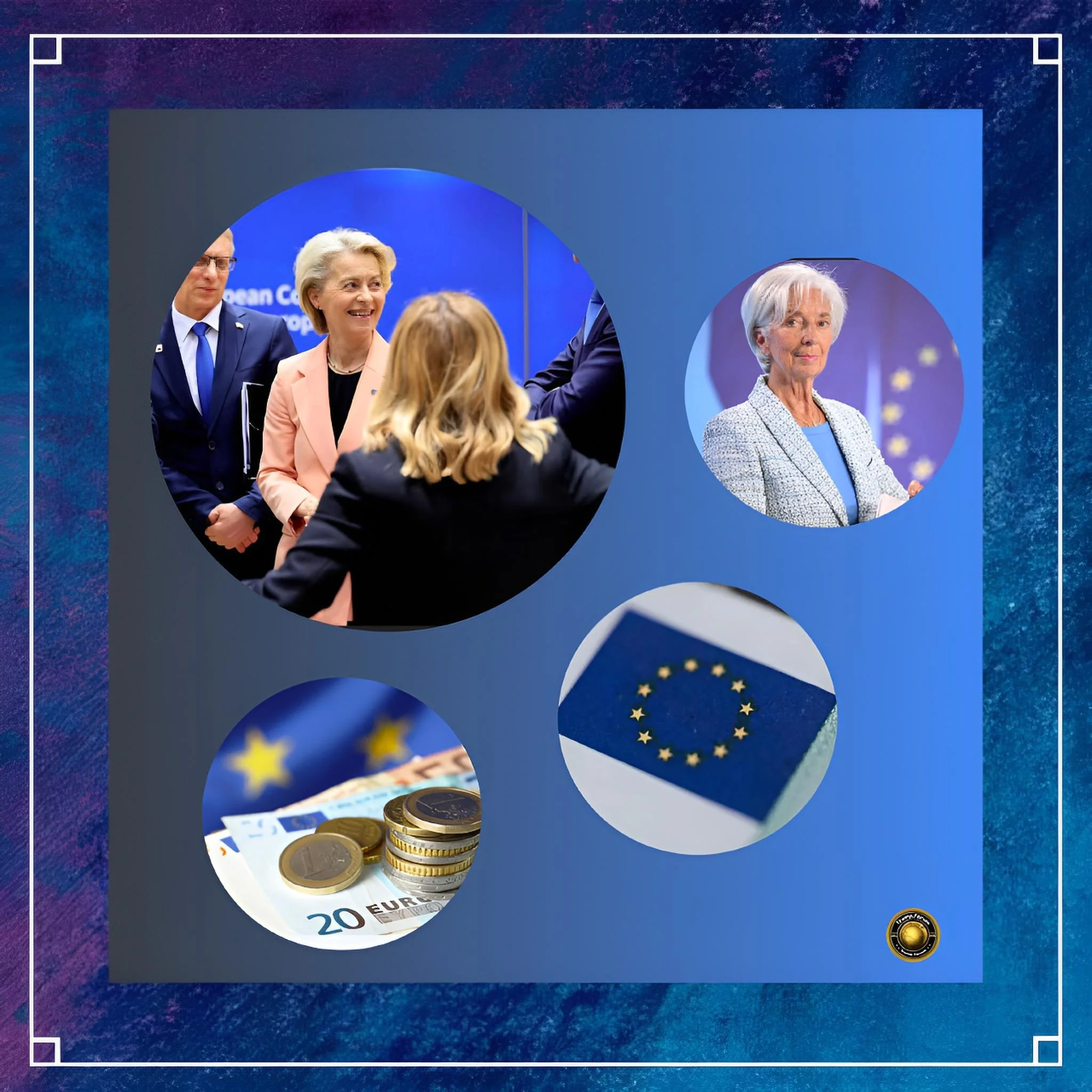
Is the EU Struggling with Debt Problems? Understanding the Crisis and How European Leaders Are Fixing It
Executive Summary
Many European Union countries are dealing with serious debt problems that require urgent action. As of January 2026, the average European country owes about 88.5% of its annual economic output in government debt.
Some countries like Greece (149.7%), Italy (137.8%), and France (117.7%) owe much more than others, while countries like Estonia (22.9%) and Bulgaria (28.4%) have much lower debt.
The European Union has created new rules and plans to help countries reduce their debt while still investing in growth.
These new approaches are starting to show promise, with countries like Italy and Spain improving their situations.
However, the work is far from finished, and 2026 will be a critical year for success.
Introduction
Think of government debt like personal debt. If you borrow €10,000 but your annual salary is only €50,000, your debt-to-income ratio is 20%. Now imagine a country where the debt is €10,000 billion and the economy produces €11,350 billion per year. That country's debt-to-GDP ratio is 88.5%, exactly where the European Union sits in January 2026.
The European Union is not in a full crisis like Greece experienced in 2009, but it is facing a serious problem that needs to be solved. This article explains what caused the problem, how bad it is, and what steps the EU is taking to fix it.
The main causes were a virus (COVID-19), an energy crisis from Ukraine, and aging populations.
The EU has now created new tools and rules to address this. Some countries are already succeeding, while others still struggle.
A Brief History: How Europe Got Into This Situation
To understand the current debt problem, we need to look backward.
Before 2008, European governments were not deeply in debt.
The average EU debt was only 62% of GDP.
Then the 2008 financial crisis hit, and banks failed. Governments had to spend huge amounts of money to save banks and support unemployed workers.
By 2014, EU debt had jumped to 87%, and by 2020, during the COVID-19 pandemic, public debt shot up to 92.1% of GDP.
Let us use an example: imagine a family that normally borrows 62 cents for every dollar they earn. After a crisis, they suddenly borrow 92 cents. That is roughly what happened to the EU.
The COVID-19 pandemic (2020-2021) forced every European government to spend enormous sums. They paid workers to stay home, helped companies survive closures, and built new hospitals. Countries borrowed money by issuing bonds (government debt) at very low interest rates, sometimes near zero.
This worked during the pandemic because borrowing was cheap. However, inflation began rising in 2021 because there was not enough supply of goods, while demand soared.
The European Central Bank (the EU's central bank) raised interest rates from near zero to 2.15% by December 2025 to fight inflation. When interest rates rise, borrowing becomes more expensive. If you borrow at 0%, you pay nothing. If you borrow at 2% on €10 trillion of debt, you suddenly owe €200 billion per year just in interest payments.
The energy crisis made things worse. In February 2022, Russia invaded Ukraine. Russia had been selling lots of natural gas to Europe. Suddenly, that gas stopped coming, and energy prices exploded.
Natural gas prices increased by 145% between July 2021 and early 2022. Families and businesses struggled to pay their energy bills.
To help people, governments spent more money on subsidies (paying part of energy bills for poor families). Some governments also had to borrow money to heat hospitals and power factories. This was like a family whose heating bill suddenly tripled, forcing them to take out an emergency loan.
Beyond these temporary crises, Europe has a deeper, long-term problem: aging populations. Imagine a country where 100 working-age people support 40 retirees.
Due to falling birth rates and increasing life expectancy, soon only 70 working-age people will support the same 40 retirees.
Since pensions are paid from current workers' taxes, pension bills rise automatically as populations age.
European pension spending already consumes 12% of government budgets in many countries and is only increasing.
A country like Belgium faces a situation where, without reform, pension spending will force debt above 200% of GDP by 2050.
The Situation Today: Who Owes What?
Let us look at real numbers as of January 2026. Five countries have debt above 100% of GDP. Greece leads with 149.7%, which means the country owes more than its entire annual economic output.
This happened because Greece faced a massive crisis from 2009 to 2019 when banks, businesses, and households went bankrupt.
Greece borrowed money from the European Union and International Monetary Fund to survive.
Italy is next with 137.8%. Italy is a large economy (much bigger than Greece), but it has high debt from years of weak economic growth.
France has 117.7% debt, higher than many expect for a wealthy country. Belgium has 107.1%, and Spain has 103.2%.
On the other hand, some countries are doing well. Estonia owes only 22.9% of its annual output—very low. Bulgaria (28.4%), Luxembourg (27.9%), and Denmark (29.7%) are also in good shape.
The difference between countries like Estonia and Greece is enormous—Greece owes nearly 7 times more relative to its economy size.
Recent developments show mixed progress. Italy's situation is improving. In 2023, Italy's government deficit (spending minus tax revenue) was over 7% of GDP. By 2024, it dropped to about 3%. This is a huge improvement.
The reason? The Italian government, led by Prime Minister Giorgia Meloni, made tough choices. They cut welfare spending (removed a program that gave money to low-income people, saving €9 billion per year).
They also increased enforcement against tax evasion. The result is that financial markets now trust Italy more. When you trust a borrower, you charge lower interest rates. Italian 10-year bond yields (the interest rate Italy pays to borrow) are only 130-150 basis points higher than Germany's bonds. (A basis point is 1% of 1%, so 130 basis points = 1.3%). In 2020, the difference was much larger. This means markets believe Italy is becoming a safer investment.
Spain shows a similar success story. Spain received €163 billion from the EU's COVID recovery fund (about 10% of its 2021 GDP). Spain used this money wisely, investing in infrastructure, clean energy, and technology. Spanish economic growth has been strong.
The spread between Spanish and German bond yields is only 0.5 basis points, the tightest in many years.
Greece, surprisingly, is also improving. Despite having the highest debt ratio in Europe, Greece has reduced its debt from 152.5% in mid-2025 to 145.9% by the end of 2025.
The IMF (International Monetary Fund) projects Greece will reach 138.2% debt by the end of 2026. Greece achieved this by maintaining budget surpluses (spending less than it collects in taxes), a discipline that has lasted for 15 years. In December 2025, Greece repaid €5.3 billion of old bailout loans ahead of schedule, saving €1.6 billion in future interest payments. This shows that even highly-indebted countries can improve if they stay disciplined.
However, not all news is good. France faces a serious challenge.
The IMF projects France's debt will rise from 116% in 2025 to 130% by 2030.
Why? France spends more than it takes in (a deficit of 5.4% in 2025). The government needs to cut the deficit to 3%, but the French parliament is fragmented (many parties, no clear majority).
Cutting spending is politically very difficult. Additionally, France already has high taxes (51% of government revenue as a share of GDP), so there is little room to raise taxes further. Interest payments on French debt are surging—from €36.2 billion in 2020 to €59.3 billion in 2026. That is 64% more in just six years.
The credit rating agency KBRA downgraded France to AA- in January 2026, citing these risks.
Belgium is in a similar bind. The government deficit is projected at 5.5% of GDP in 2026 without new measures. In December 2025, the Belgian government agreed to cut spending and raise taxes to save €2.1 billion in 2026, rising to €9 billion by 2029. But even with these cuts, the deficit will stay above 4% through 2029, meaning Belgium's debt will keep growing. Since Belgium already owes 106.8% of its GDP, the debt trajectory is worrying.
Germany, the EU's largest economy and historically the strongest fiscally, faces a surprise challenge. Germany owes 62% of its GDP (relatively low), but this is rising. The government deficit jumped from 2.7% of GDP in 2024 to a projected 4.8% by 2028.
Why? Germany needs to spend much more on defense (NATO commitments, Ukrainian support, military modernization), energy transition (renewable power, grid upgrades), and infrastructure repairs.
Additionally, German economic growth is weak—the economy barely grew in 2024-2025. The famous German "debt brake" (a constitutional rule limiting government borrowing) is preventing Germany from spending what it needs, even though markets would lend to Germany at low rates. This has become a constraint rather than a safeguard.
What Is the EU Doing? The New Rules and Reforms
In April 2024, the European Union reformed its fiscal rules—the detailed regulations that control how much member states can borrow and spend. The old rules (the Stability and Growth Pact from 1997) were too rigid and sometimes counterproductive. For example, when countries faced crisis, the old rules forced them to cut infrastructure and education spending, which hurt long-term growth.
The new framework is based on the concept of Medium-Term Fiscal Structural Plans (MTFSPs). Each country creates a detailed plan showing how it will reduce debt over time while also implementing reforms and investments that boost growth. Here is how it works:
First, the European Commission calculates how much each country needs to reduce its deficit and debt. For countries with debt above 60% of GDP (most eurozone countries), the Commission runs computer models to estimate future debt paths. The countries with the highest debt receive the most demanding targets.
Second, countries can now extend their fiscal adjustment period from 4 years to 7 years if they commit to major reforms and productive investments. This flexibility is important because it allows countries to spread out the pain (fiscal consolidation) while building future productive capacity. For example, if a country invests in renewable energy, 5G networks, or job training during the adjustment period, these investments will eventually boost economic growth, making debt-to-GDP ratios fall faster through the denominator (economic output) growing.
Third, the new rules distinguish between productive and unproductive spending. Cuts to education or infrastructure are discouraged. Cuts to welfare payments or subsidies that do not boost productivity are more acceptable.
By January 2026, twenty-two of twenty-seven member states have submitted their plans. Four countries—Spain, France, Italy, and Finland—qualified for the extended 7-year adjustment periods, meaning they can spread consolidation more gradually in exchange for major reforms. The required adjustments are substantial: on average, countries need to improve their structural budget balances (the adjusted deficit excluding cyclical ups and downs) by 0.5 to 0.6 percentage points per year between 2025 and 2031. For a country with a 6% deficit, this means getting to 3% in roughly five years.
The Next Generation EU Recovery Fund
During the COVID-19 pandemic in 2020, the EU created an unprecedented program called Next Generation EU (NGEU). The total size is €806.9 billion. The largest part is the Recovery and Resilience Facility (RRF) with €650 billion. The money goes to countries that implement reforms and investments in six priority areas: green transition (clean energy, electric vehicles, building efficiency), digital transition (broadband, 5G, digital government), health and social resilience, smart growth and job creation, children and youth, and economic and institutional resilience.
By September 2025, the EU had disbursed €367 billion (56.5% of the total). The money has supported 1,131 structural reforms and 1,750 investments. For example:
1) Italy received €194 billion total but had only spent €58 billion (30%) by December 2024. Italy is slow because of bureaucratic processes.
2) Spain received €163 billion and has been much faster, though Spain announced it no longer needs some loans because its credit situation improved.
3) Greece, Italy, Spain, France, and other countries have all used the money to invest in wind farms, solar panels, high-speed internet, modernized railways, and job training programs.
The successful projects show real impact. The EU reports that NGEU has helped install 900,000 electric vehicle charging stations and connect 16 million households to high-speed broadband. These investments will increase future economic growth and help countries reduce debt-to-GDP ratios.
However, the program faces a critical problem: it runs out in August 2026. Member states must complete all funded projects by August 31, 2026, and the EU must disburse all remaining money by December 31, 2026. Currently, approximately €270 billion remains to be paid out, but disbursement has slowed dramatically. The EU paid out €66 billion in the second half of 2024 but only €9.5 billion in the first five months of 2025. This slowdown creates a risk that some allocated funds will not be used.
Why is disbursement slow? Administrative bottlenecks (slow government processes), changing political priorities (new governments sometimes want different projects), staffing shortages, and supply chain disruptions for materials and labor all contribute. Italy, for example, has been particularly slow due to complicated bureaucracy. The bottom line is that the EU will need dramatic acceleration during 2026 to avoid losing allocated funds.
The Causes Explained
Why does Europe have a debt problem? Four main reasons:
1) The COVID-19 Pandemic (2020-2021): All governments had to spend money to save lives, support workers, and keep businesses alive. Public debt jumped from 78.8% of GDP in 2019 to 92.1% in 2021. This was necessary but left governments with larger debt stocks.
2) The Energy Crisis (2021-2023): Russia's invasion of Ukraine stopped gas shipments to Europe. Gas prices tripled in price. Governments spent €billions on subsidies to help families pay heating bills. Interest rates rose from 0% to 2.15%, making debt much more expensive to service.
3) Aging Populations: Europe's population is getting older. Fewer young workers support more retirees. Pension spending automatically increases. Germany, Italy, Spain, and France all face pension crises by 2050 if nothing changes. Countries must either raise taxes on workers, increase retirement ages, or reduce benefits—all politically difficult.
4) Weak Economic Growth: Economic growth in the eurozone was only 1.4% in 2025 and is projected at 1.2% in 2026. Weak growth means that GDP (the denominator in debt-to-GDP) grows slowly, so debt ratios stay high even if absolute debt does not increase. Weak growth also makes it harder for governments to improve their budget positions through higher tax revenue.
These four factors interact. Aging populations and weak growth mean less tax revenue and higher spending needs. Higher interest rates from inflation make debt service more expensive. Slow NGEU implementation means less stimulus to boost growth. It is a challenging combination.
Future Steps: What Happens Next?
The European Union has several key tasks for 2026-2027:
First, accelerate Next Generation EU disbursement. Member states must implement all remaining projects and the EU must disburse €270 billion by year-end 2026. This requires governments to simplify bureaucracy, hire more staff, and prioritize projects. If they succeed, growth will improve, and debt-to-GDP ratios will fall faster. If they fail, funds will be lost and growth will disappoint.
Second, implement structural reforms. This means making labor markets more flexible (easier to hire and fire workers, encouraging training), modernizing pension systems (raising retirement ages, linking benefits to longevity), and simplifying business regulations. These reforms are politically difficult, but they are essential for long-term growth and fiscal sustainability. Countries that do this—like Italy and Spain—see improved growth and market confidence.
Third, manage rising interest costs. As debts grow and interest rates normalize, governments must pay more interest. By 2026-2027, several countries face surging interest expenses (France's jumped by 64% in six years). Governments must either increase revenue (through better tax collection or modest tax increases on wealth and financial institutions) or cut unproductive spending. This is politically very unpopular.
Fourth, address demographic challenges. No country has found easy solutions to aging populations, but countries are trying. Germany is considering raising the retirement age from 67 to 69 or 70 (phased in over decades). Spain is discussing similar changes. Some countries are encouraging migration to increase the working-age population. Others are investing in productivity (more output per worker through technology and education) to compensate for fewer workers.
Fifth, coordinate at the European level. Some economists argue that Europe should create more EU-level spending on defense, infrastructure, and climate transition. If the EU borrows collectively rather than each country borrowing individually, borrowing costs would be lower. The EU already issues bonds (€530 billion outstanding, expected to grow to €1 trillion by 2026). Expanding this could help countries with high debt.
Concerns and Challenges
Despite progress in some countries, serious concerns remain:
1) France's fiscal consolidation is too slow. The government committed to a deficit of only 5% in 2026, but the IMF says it needs 4.6%. At the current pace, France's debt will keep rising to 130% by 2030.
2) Belgium's debt will continue rising. Even with new spending cuts, deficit will exceed 4% through 2029, meaning debt continues accumulating.
3) NGEU implementation is at risk. If the EU cannot disburse €270 billion in the next twelve months, the growth boost will be smaller, and debt-to-GDP ratios will fall more slowly.
4) Interest rate sensitivity: If global interest rates rise (due to U.S. fiscal deficits or other factors), European government borrowing costs could spike, creating a sudden fiscal shock.
5) Political gridlock in multiple countries limits ability to reform. France, Germany, and Belgium all face divided parliaments and coalition governments, making major reforms difficult to pass.
6) Growth remains weak. 1.2% growth in 2026 is below what is needed to stabilize debt. Unless structural reforms boost productivity, growth will remain disappointing.
Conclusion
The European Union is not in a debt crisis comparable to 2009-2012, but it faces a serious challenge.
The average eurozone country owes 88.5% of GDP, with some countries well above 100%.
The causes are COVID-19, the energy crisis, rising interest rates, and aging populations.
The EU has created new tools (reformed fiscal rules, Next Generation EU) and some countries (Italy, Spain, Greece) are improving. However, others (France, Belgium) are struggling, and the success of the entire EU strategy depends on implementing difficult reforms and disbursing recovery funds quickly.
The next eighteen months are critical. If countries accelerate reform implementation and the EU successfully disburses its remaining €270 billion by end-2026, Europe can stabilize debt and resume stronger growth.
If countries backslide on reforms and NGEU implementation stalls, debt-to-GDP ratios will continue rising, eventually forcing more painful adjustments. The choice is in the hands of European policymakers and voters, who must support difficult but necessary changes today to ensure prosperity tomorrow.
The message is clear: Europe's debt is manageable if—and only if—countries and the EU act decisively now. The time for action is 2026, not 2030.