The Bifurcation of the Middle East: Structural Realignment Through Competing Abrahamic and Islamic Coalitions
Executive Summary
The Middle East is undergoing a fundamental realignment that transcends conventional frameworks of regional power politics.
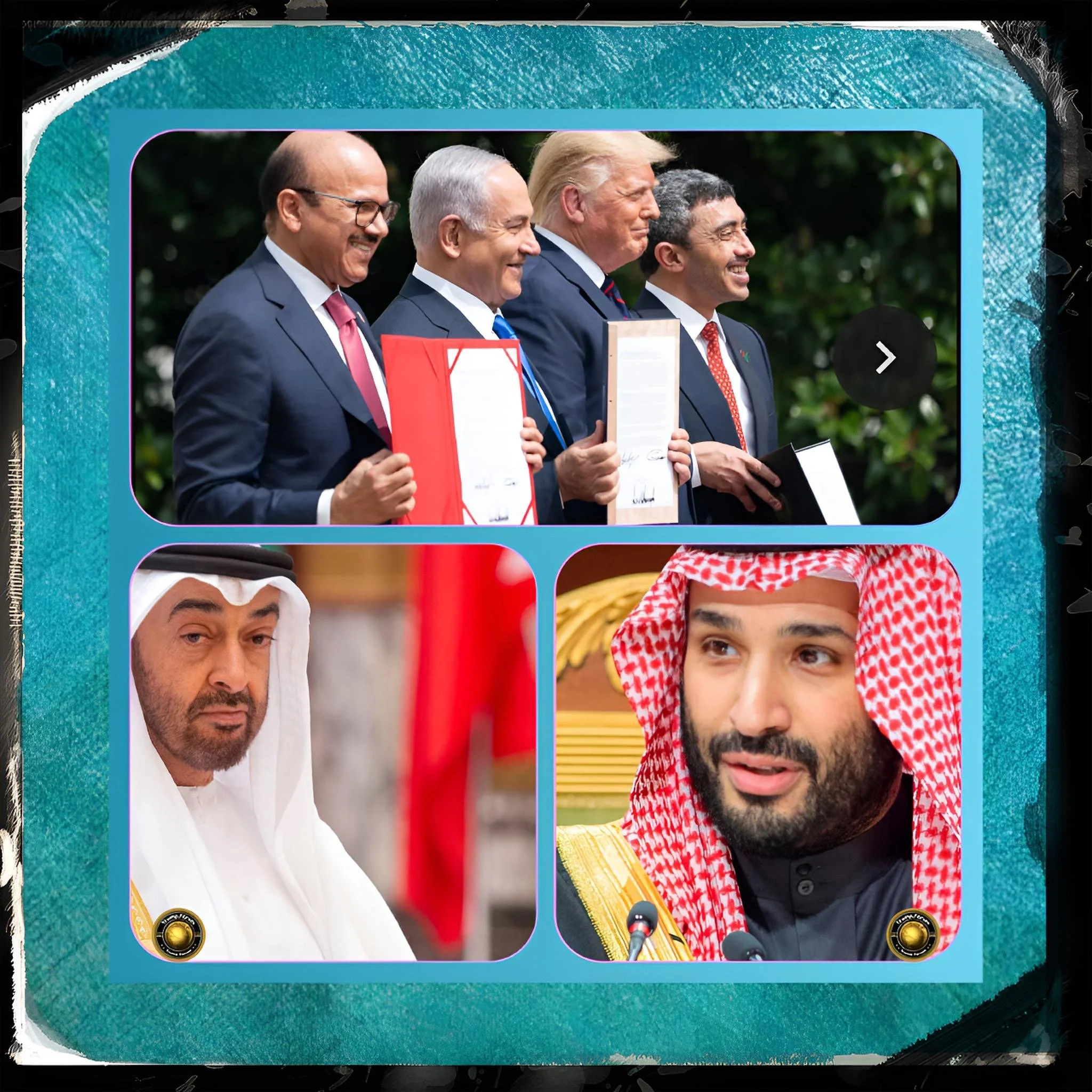
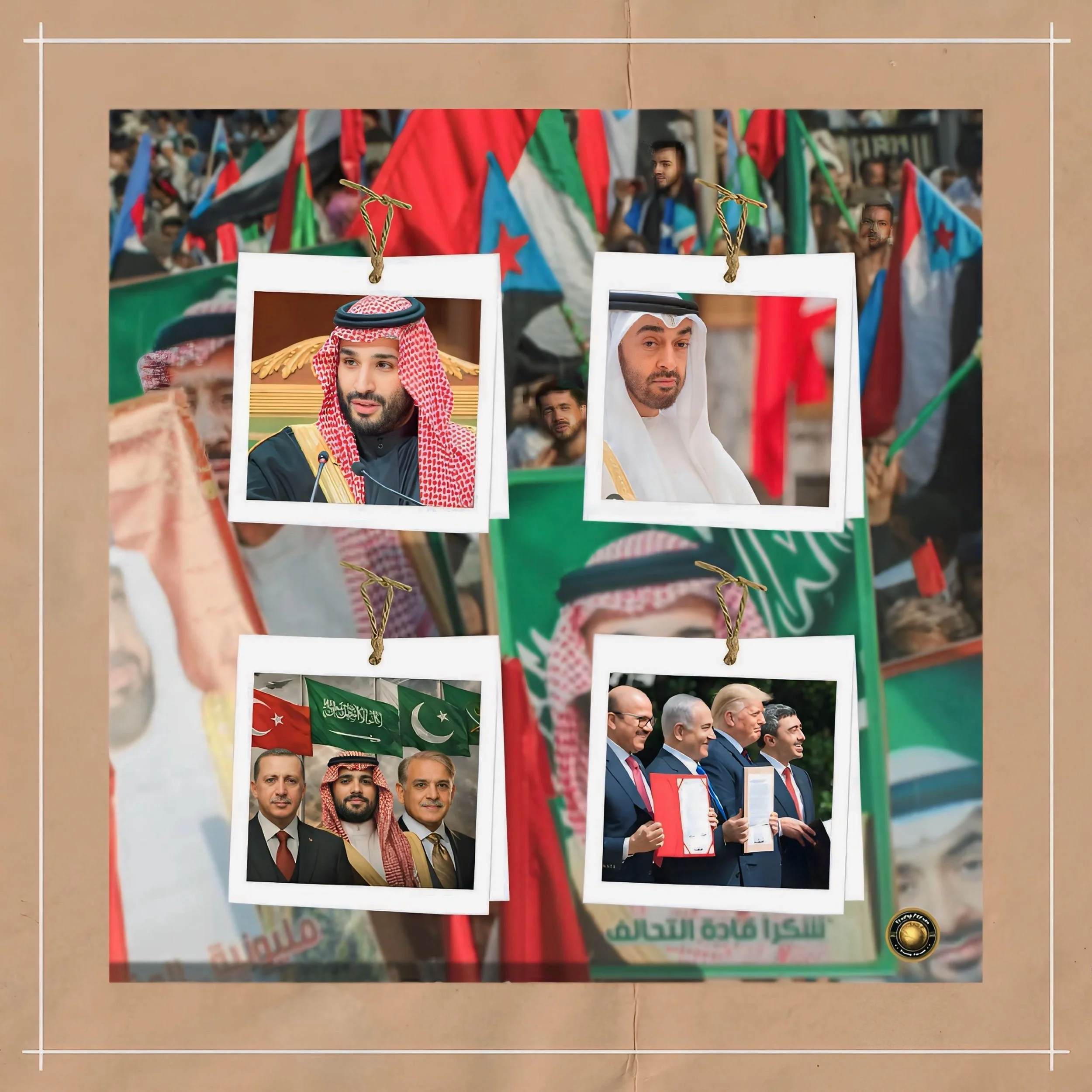
Rather than revolving around Iranian dominance or Israeli-Palestinian conflict, the region's future trajectory is determined by the competition between two crystallizing blocs: an Abrahamic coalition centered on Israel and the United Arab Emirates, and an emergent Islamic coalition anchored by Saudi Arabia, Turkey, and Pakistan.
This structural reorientation, evident since late 2025 and accelerating into January 2026, represents a more consequential regional shift than intermittent crises in Gaza, Lebanon, or Syria.
The strategic implications extend beyond the Middle East proper, encompassing maritime corridors in the Red Sea, resource competition in the Horn of Africa, and technological integration across the Indo-Mediterranean space.
Introduction
Contemporary analysis of Middle Eastern geopolitics frequently fixates upon Iran's regional ambitions, Israel's military campaigns, or the Palestinian question as organizing principles.
This analytical framework, while not without merit, obscures a more fundamental reconfiguration occurring beneath these visible phenomena.
The emergence of two distinct and incompatible visions for regional order has transformed former partners into strategic competitors, most notably exemplified by the Saudi-Emirati rupture evident in Yemen since December 2025.
The Abrahamic coalition, while still lacking formal treaty structures rivaling those of traditional alliances, exhibits increasing coherence in political objectives, military coordination, and economic integration. Simultaneously, the Islamic coalition, anchored by Pakistani nuclear capability, Turkish military sophistication, and Saudi financial resources, represents a competing architecture oriented toward containing the Israel-centered bloc's regional influence.
This transformation carries profound implications for United States strategy, international law concerning maritime rights, humanitarian outcomes in conflict zones, and the prospect of renewed Palestinian statehood.
The bifurcation fundamentally reorders assumptions about burden-sharing, technology transfer, defense cooperation, and the conditions under which normalization agreements can be sustained.
History and Current Status
From Implicit Cooperation to Explicit Rivalry
The roots of contemporary coalition formation extend into the 2010s, when mutual anxiety regarding Iran's regional expansion prompted informal cooperation between Israel and Gulf Arab states.
The 2015-2016 period witnessed the emergence of de facto alignment among Israel, the United Arab Emirates, and Egypt against shared adversaries: Iran and Islamist movements perceived as destabilizing.
This cooperation remained shadowed, mediated through military intelligence channels and commercial relationships rather than formal diplomatic recognition.
The Abraham Accords, announced in August 2020 and formalized in September of that year, represented the decisive break from this implicit posture. The UAE and Bahrain became the first Arab states since Jordan and Egypt to extend formal diplomatic recognition to Israel.
Sudan and Morocco subsequently agreed to normalization, creating a bloc of four Arab signatories.
These agreements, mediated by the Trump administration, were structured explicitly around mutual interests in containing Iranian influence while advancing technological collaboration and economic integration.
The Accords established a framework—not yet institutionalized at the alliance level—for deepening cooperation across defense, trade, and strategic coordination.
The October 7, 2023 Hamas attack against Israel and subsequent military campaigns fundamentally altered the political context in which these arrangements operate.
While some signatories of the Abraham Accords participated in the defense of Israel against Iranian retaliation in April 2024, the prolonged Gaza conflict and Israeli operations in Lebanon and Syria reshaped regional calculations. Saudi Arabia, which had appeared to move toward normalization in 2023, reversed course.
Crown Prince Mohammed bin Salman publicly reasserted Palestinian statehood as a precondition for Israeli normalization, effectively shelving what had been treated as imminent.
By September 2025, Pakistan and Saudi Arabia formalized a Strategic Mutual Defense Agreement containing a collective defense clause modeled on NATO's Article 5.
This marked the institutionalization of an alternative security framework explicitly designed to counterbalance what signatories perceived as destabilizing Abrahamic coalition activities. Turkey, after decades of rivalry with Saudi Arabia, entered advanced negotiations to join this arrangement by January 2026, signifying a historic realignment in regional alignments.
Key Developments: The Architecture of Competing Blocs
The Abrahamic Coalition
The Israel-UAE axis constitutes the institutional core of the Abrahamic coalition. Since the signing of the Abraham Accords in 2020, bilateral relations have matured into multifaceted strategic partnership.
As of October 2025, the UAE operated more than 100 weekly flights between Tel Aviv and Dubai, facilitating approximately 1.2 million passenger movements annually. Bilateral trade, including technological exchange and defense-industrial cooperation, approached $12 billion by 2025.
The most significant recent development is the expansion of defense cooperation beyond diplomatic and commercial channels. In 2025, Israel's Elbit Systems reportedly negotiated the sale of its Hermes 900 unmanned aerial vehicle (UAV) to the UAE's Edge Group, including technology transfer provisions and arrangements for localized production.
This represents the first major defense-industrial partnership between the two countries, signifying a strategic decision by both parties to deepen military-technical integration. Such arrangements enable the UAE to transition from importer to manufacturer within its defense sector, a critical component of its 2025-2028 strategic plan for sector strengthening.
The coalition's geographic reach extends to include Morocco, Bahrain, Sudan, Greece, and increasingly, India. Morocco's entry into the Accords was explicitly tied to United States recognition of Moroccan sovereignty over Western Sahara, enabling the Alaouite monarchy to project an image of regional integration and international legitimacy.
Greece's alignment reflects Eastern Mediterranean strategic competition, particularly concerning energy resources and maritime corridors. India's partnership, formalized through the I2U2 mechanism (linking India, Israel, the UAE, and the United States), extends the coalition's reach into the Indo-Pacific and positions the bloc as a framework for technological competition with China.
The coalition's ideological underpinning emphasizes revisionism: deliberate reconfiguration of regional security arrangements through military superiority, technological advantage, and economic integration.
Members share the conviction that existing regional orders have failed to contain militant Islam in its Shiite and Sunni variants, necessitating more interventionist approaches in regional conflicts.
This has translated into Emirati and Israeli support for fragmentation in Yemen, backing for the Rapid Support Forces in Sudan, and recognition of Somaliland as an independent state by Israel in December 2025—moves explicitly designed to create alternative power centers and logistics nodes controllable by coalition members.
The Islamic Coalition
The Islamic coalition emerged as a conscious counterweight to Abrahamic consolidation. Pakistan and Saudi Arabia, both perceiving Iranian expansion and Abrahamic bloc activities as destabilizing, formalized their security relationship through the Strategic Mutual Defense Agreement in September 2025.
The pact contains an explicit collective defense clause stating that "any aggression" against one member constitutes an attack upon all. This language, borrowed from NATO Article 5, signals intent to formalize a defensive alliance structure capable of deterring escalation against its members.
Turkey's potential accession to the defense framework in early 2026 transforms the coalition's character and capacity. Turkey brings NATO-scale military capabilities, including advanced naval forces, drone technology, and air defense systems.
The rapprochement between Turkey and Saudi Arabia, former regional rivals, reflects shared concerns about Abrahamic coalition dominance and perceived instability emanating from Israeli actions. Turkey has maintained nuanced relations with Israel but increasingly frames Israeli behavior as destabilizing to regional security and minority protection.
Qatar, while formally entering the coalition structure, maintains its distinctive position as a mediator with Hamas and other actors. Egypt participates cautiously, simultaneously maintaining Israel relations and embracing Saudi-led frameworks. These secondary participants add complexity but lack the institutional clarity of core members.
The Islamic coalition's ideological foundation emphasizes religious solidarity among Muslim-majority states and resistance to what signatories characterize as destabilizing interventionism.
Iran has proposed its own counterweight—the Muslim West Asian Dialogue Association (MWADA), explicitly excluding Israel and oriented toward pan-Islamic cooperation. This framework has attracted interest from Turkey but remains underdeveloped institutionally.
The Critical Rupture: Saudi-Emirati Confrontation in Yemen
The most immediate and consequential manifestation of coalition rivalry emerged in Yemen beginning in December 2025. Saudi Arabia and the UAE, which had jointly prosecuted a military intervention against Houthis since 2015, shifted into direct confrontation over control of southern Yemen.
In an unprecedented move, Saudi Arabia launched airstrikes against UAE-backed supply shipments and military positions, forcing an Emirati withdrawal from key positions including the Mukalla port.
The strategic logic underlying this rupture reflects fundamentally incompatible regional doctrines. Saudi Arabia prioritizes maintaining Yemen's territorial unity under a centralized authority, viewing fragmentation as antithetical to border stability and long-term security.
The kingdom has suffered from Houthi infiltration and has historically treated Yemen as a strategic buffer zone essential to its own security calculus.
The UAE, conversely, pursues what observers term an "archipelago strategy": establishing and controlling key ports, logistics nodes, and nurturing local proxy forces rather than maintaining permanent military presence.
The Southern Transitional Council (STC), a UAE-backed entity seeking de facto or formal autonomy in southern Yemen, contradicts Saudi preferences for state consolidation. From the Emirati perspective, controlling critical maritime chokepoints and local governance structures yields geopolitical influence over Red Sea commerce and regional logistics networks more durable than conventional military occupation.
This conflict extends beyond Yemen's borders. The UAE maintains substantial interests in Sudan, Somalia, and Somaliland—territories critical to control of the Red Sea corridor and Horn of Africa influence.
Saudi Arabia interprets Emirati activities across this region as an integrated strategy aimed at establishing control nodes incompatible with Riyadh's own ambitions for regional consolidation and stability.
Reports indicate the UAE has provided military support to Sudan's Rapid Support Forces, advancing their control of the Heglig oil field in West Kordofan.
Similarly, UAE backing for Somaliland as a separate entity and Israeli recognition of Somaliland's independence in December 2025 are understood in Riyadh as coordinated efforts to fragment the regional order.
Saudi Arabia has responded with deliberate escalation: military strikes in Yemen, diplomatic campaigns against the UAE across Egyptian and Pakistani leadership, and repositioning toward alternative partnerships.
The crown prince has explicitly abandoned efforts to moderate Emirati behavior within a coalition framework, instead treating the UAE as a security liability requiring containment through counterbalancing partnerships.
Latest Facts and Strategic Concerns
Implications for 2026
Several developments in January 2026 crystallize the trajectory of coalition competition. Turkey's potential accession to the Saudi-Pakistani defense framework would transform the Islamic coalition from a nascent bilateral arrangement into a trilateral structure encompassing three of the Muslim world's most consequential military powers.
Turkish participation brings NATO interoperability, advanced weapons systems, and historical experience managing complex alliance structures.
Simultaneously, the UAE-India strategic defense partnership, formalized through a letter of intent in January 2026, demonstrates the Abrahamic coalition's capacity to extend partnerships into the Indo-Pacific.
The commitment to double UAE-India bilateral trade to $200 billion over six years and establish defense-industrial collaboration reflects the coalition's integration strategy.
India's participation across multiple mechanisms—I2U2, IMEC (India-Middle East-Europe Economic Corridor), and now direct defense partnership with the UAE—positions New Delhi as a crucial node in an expansive security and economic architecture.
The most significant ongoing challenge involves Saudi Arabia's delayed normalization with Israel. The kingdom's public position, reasserted during Crown Prince Mohammed bin Salman's January 2026 visit to the United States, maintains Palestinian statehood as a precondition for diplomatic recognition.
This represents a deliberate departure from the Abraham Accords framework and signals Riyadh's pivot toward the Islamic coalition orientation. However, Saudi Arabia has simultaneously accepted substantial United States defense commitments, technology transfers, and security guarantees without reciprocal movement on Israeli normalization.
This decoupling—strategic cooperation with Washington unburdened by normalization prerequisites—establishes a template other regional actors may adopt, potentially cascading into a broader realignment away from Abraham Accords membership.
The humanitarian dimensions of coalition competition merit explicit attention. In Yemen, the Saudi-Emirati rupture exacerbates fragmentation and weakens unified resistance to the Iran-backed Houthis, who remain the single most cohesive military force in the country. Proxy competition among external patrons historically favors insurgent movements capable of exploiting patron fatigue and disagreement.
The Houthis' consolidation of control over northern and central Yemen proceeds while government-aligned forces fragment under Gulf pressure. In Sudan, UAE support for the Rapid Support Forces contributes to state collapse, humanitarian catastrophe, and regional instability. The humanitarian costs of strategic competition are substantial.
Cause-and-Effect Analysis
Why Coalition Formation Accelerated
Several causal mechanisms explain the crystallization of explicit coalitions by late 2025 and early 2026. First, the October 7 attack and subsequent Israeli military campaigns fundamentally altered regional threat perception.
While Gulf states initially defended Israel against Iranian retaliation, the prolonged Gaza conflict and Israeli operations in Lebanon and Syria generated political pressure incompatible with Abraham Accords framing.
Palestinian civilian casualties and Israeli settlement expansion created political costs for alignment with Israel, particularly for Saudi Arabia, which claims religious authority as custodian of Islam's holiest sites.
Second, the Trump administration's explicit commitment to expanding the Abraham Accords, coupled with reduced emphasis on Palestinian statehood, created incentives for both alignment and counter-alignment.
States perceiving themselves marginalized by the Abrahamic coalition (Saudi Arabia, Turkey, Egypt, Pakistan) sought alternative architectures to maintain autonomy and check coalition expansion. The Pakistan-Saudi defense agreement emerged explicitly as a counterweight to perceived Abrahamic dominance.
Third, the geographic competition for control of Red Sea and Horn of Africa chokepoints reflects structural imperatives of maritime commerce and logistics. As global trade increasingly routes through the Red Sea corridor, control of key ports and straits becomes strategically paramount.
The UAE's archipelago strategy and Saudi Arabia's commitment to centralized Yemeni governance represent incompatible approaches to this same strategic problem, making conflict inevitable.
Fourth, the failure of traditional great power balancing mechanisms (Saudi-UAE coordination, Egyptian mediation, Arab League consensus) created space for explicit alliance formation.
The Saudi-Emirati rupture demonstrated that previous partnership frameworks were contingent upon shared interests that no longer aligned. Rather than sustaining unhappy partnerships, both states pursued explicit alternatives.
Finally, the decoupling of United States policy from normalization requirements—evident in the Trump administration's acceptance of Saudi Arabia's position on Palestinian statehood without demanding reciprocal movement on Israeli relations—removed a critical forcing mechanism that had previously constrained coalition formation. States now calculate that strategic partnerships with Washington can be sustained without accepting normalization, reducing the pressure for Abrahamic coalition membership.
Future Trajectories and Systemic Implications
The rivalry between Abrahamic and Islamic coalitions will likely define regional competition throughout 2026 and beyond, with implications extending far beyond the Middle East proper. Several plausible trajectories merit consideration.
First, the probable deepening of Saudi-Turkish-Pakistani coordination creates a counterweight to Abrahamic dominance but introduces new risks. The addition of Turkish military capability and Pakistani nuclear weapons to a Saudi-anchored alliance structure creates asymmetries requiring careful management to prevent escalatory miscalculation.
The mutual defense clause, modeled on NATO Article 5, establishes automaticity in response mechanisms that previous informal arrangements avoided. This reduces flexibility for crisis management.
Second, Yemen's further fragmentation along Saudi-Emirati fault lines carries grave humanitarian implications.
The bifurcation of southern Yemen into separate entities under competing patronage, combined with Houthi consolidation in the north, produces a permanently fractured state incapable of providing basic governance, economic development, or humanitarian services.
Historical precedent suggests that such fragmented polities become ungoverned spaces attracting transnational terrorist organizations, regional powers, and criminal networks.
Third, the extension of coalition competition into the Horn of Africa and maritime corridors creates potential for escalation beyond the traditional Middle Eastern security complex.
The strategic importance of the Red Sea to global commerce means that coalition conflicts here attract attention from extra-regional powers including the European Union, United States, India, and China. Escalation could generate pressure for great power intervention contrary to all participants' interests.
Fourth, the Israeli-Saudi normalization appears increasingly distant despite United States preference for such an agreement. Saudi Arabia's public insistence on Palestinian statehood, combined with Israeli settlement expansion and lack of demonstrated commitment to Palestinian self-determination, creates a gap no diplomatic formula has yet bridged.
The prospect of indefinite non-normalization carries implications for broader regional security architecture, particularly as Arab states increasingly distinguish strategic cooperation from formal diplomatic recognition.
Fifth, the Abrahamic coalition's emphasis on technological integration and economic interdependence may prove more durable than the Islamic coalition's emphasis on formal military alliance.
The combination of Israeli technological innovation, Emirati capital and infrastructure, Indian market access, and American strategic backing creates an asymmetry favoring technological advancement and economic efficiency. Over long time horizons, such advantages compound.
Sixth, the competition for influence and control in fragile states—Yemen, Sudan, Somalia—creates pathways for transnational terrorist organizations to exploit proxy competition and state fragmentation. The proliferation of small arms, drone technology, and intelligence networks in these contexts increases risks of uncontrolled escalation.
United States Strategic Positioning
The Trump administration's support for the Israel-centered Abrahamic coalition is explicit and unconditional. The Pentagon's 2026 National Defense Strategy describes Israel as a "model" ally worthy of unequivocal support. Simultaneously, the administration has accepted Saudi Arabia's decoupling of strategic cooperation from Israeli normalization, having failed to extract movement on the issue despite front-loading technology transfers and defense cooperation.
This creates asymmetry: the United States provides strategic backing to both the Abrahamic coalition (directly) and Saudi Arabia (through defense and intelligence cooperation), while the kingdom pursues alternative coalition structures.
For Washington, this arrangement is transactional but sustainable. The United States gains access to critical infrastructure (basing, logistics), influence over energy pricing, and partnerships with capable regional militaries. However, the loss of unified Arab-Israeli coordination envisioned in the Abraham Accords framework implies reduced American leverage and influence over regional outcomes.
A region organized around two explicitly rival coalitions offers less room for American diplomatic maneuver than previous frameworks allowing for gradualist normalization.
Conclusion
The Middle East is experiencing a structural realignment more consequential than Iran's regional behavior, Israeli-Palestinian conflict dynamics, or sectarian tensions.
The crystallization of Abrahamic and Islamic coalitions represents a conscious reorganization of regional alignments around incompatible visions of appropriate order, security provision, and state formation.
The rupture between Saudi Arabia and the UAE, former partners, demonstrates that previous frameworks of cooperation are contingent upon shared interests now demonstrably absent.
This realignment carries substantial implications. Yemen faces probable permanent fragmentation, generating humanitarian catastrophe and ungoverned space attractive to terrorist organizations.
The Red Sea and Horn of Africa become zones of explicit great power competition. Israeli-Saudi normalization, treated as inevitable by some observers, appears increasingly improbable absent fundamental changes in Israeli policy toward the West Bank and Palestinian statehood.
The future of regional order depends not upon Iran's next move but upon how the rivalry between these two blocs evolves—whether toward managed competition, escalation, or some unexpected reconvergence.
United States strategy remains oriented toward supporting the Israel-centered Abrahamic coalition while maintaining sufficient cooperation with Saudi Arabia to prevent its complete drift toward alternative partners.
This hedging approach reflects the absence of dominant partners and the persistence of divergent interests even among nominal allies. The coming years will reveal whether such transactional arrangements can sustain American influence in a region increasingly organized around exclusive coalitions with incompatible objectives.
For all regional powers, the lesson is clear: the assumption that Arab states would uniformly integrate into Israeli-centered security arrangements has been displaced by the reality of competing visions for regional order.
The Middle East's future will be determined not by resolution of the Palestinian question or Iranian containment, but by how the rivalry between Abrahamic and Islamic coalitions is managed—and whether that management remains within bounds preventing broader conflagration or slips into escalation with consequences extending far beyond the region itself.