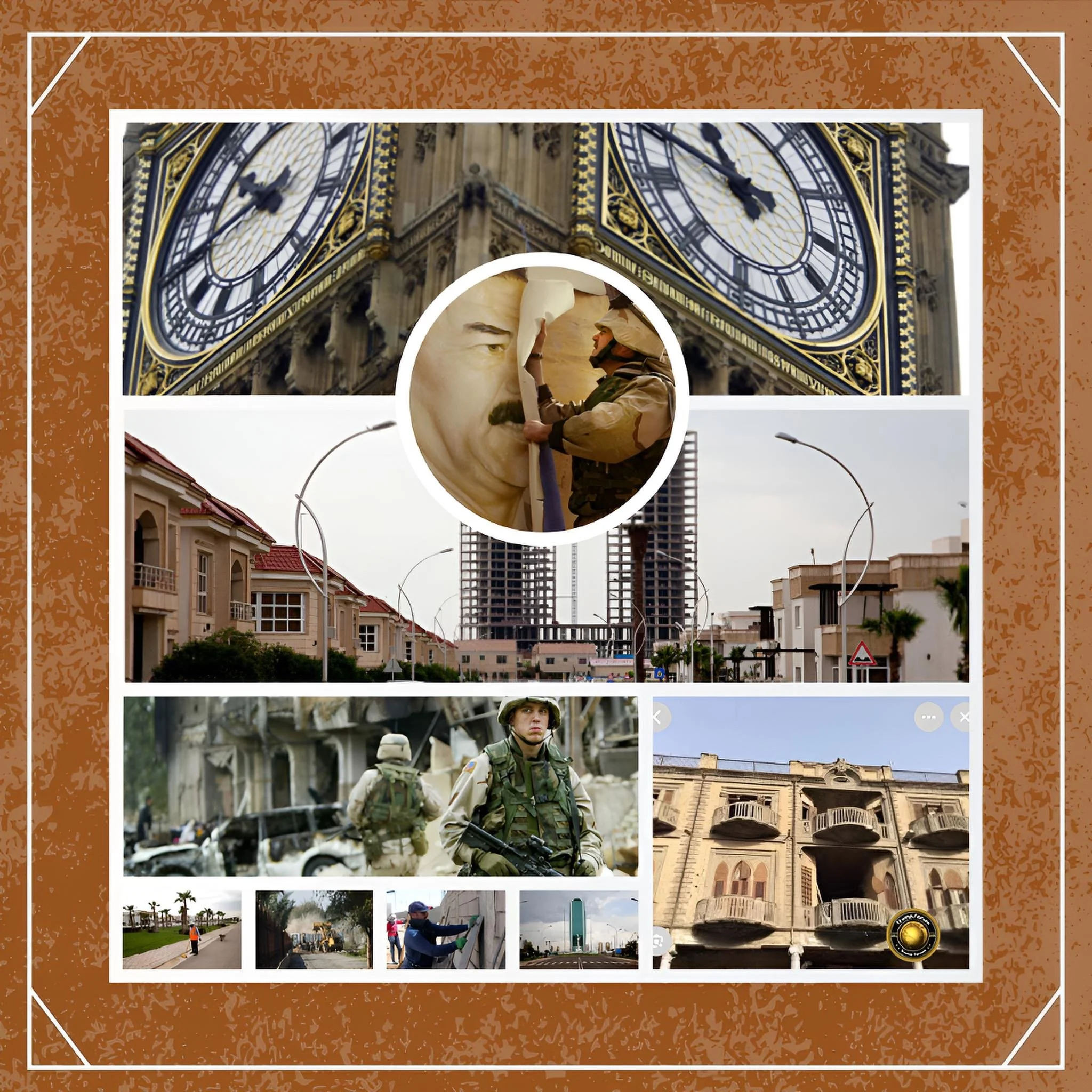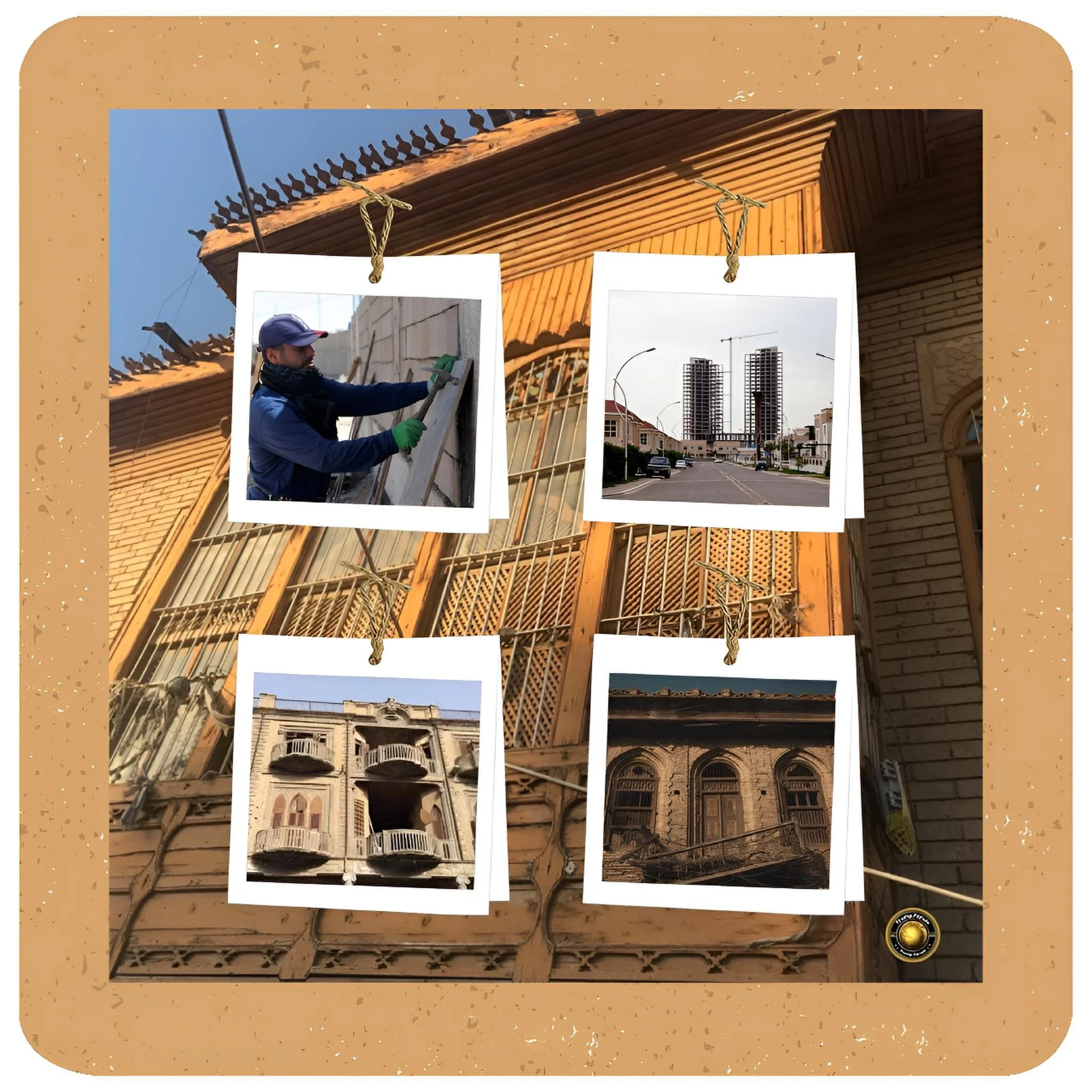
What's being lost beneath Baghdad's construction surge: How rebuilding is sweeping away the city's history
Summary
Baghdad is being rebuilt faster than ever before. New towers and apartment buildings are going up all over the city. The government wants to build 250,000 new homes every year to house the growing population. But while new buildings go up, old ones come down.
The buildings from 500 years ago, the ones from 100 years ago, even the ones from 50 years ago—many are being destroyed or forgotten. Historians and architects are worried that Baghdad is losing its past while it builds its future. They say the city is becoming just like Dubai: tall towers everywhere, with no connection to what the city used to be.
Introduction: Looking for History in Modern Baghdad
Imagine you have a drawing of your family's old house. Your grandfather drew it from memory. You go to Baghdad to find it. You have the drawing in your hand. You walk down streets looking at buildings, comparing them to the drawing. But most buildings look the same—all old, all broken down, all similar. You cannot tell which one was your family's house. That is the problem facing many families whose relatives left Baghdad. The buildings that housed their memories are disappearing.
Baghdad has an amazing history. You can walk through the city and see buildings from different times in history. There are neighborhoods with beautiful old brick buildings decorated with Islamic patterns. There is a sports center designed by a famous international architect named Le Corbusier.
There are buildings that show British colonial style from the 1920s. There are beautiful modernist buildings from the 1960s. These buildings tell the story of Baghdad's past.
But today, construction is happening everywhere. New towers with glass windows are replacing old neighborhoods. Parks are becoming apartment complexes. The city is changing faster than ever before. People are worried that the old Baghdad will disappear completely.
History: The Many Baghdads
To understand what is being lost, you need to know Baghdad's history.
The First Baghdad: The Abbasid Empire
Baghdad was founded in 762 AD by a leader named Caliph Al-Mansur. He wanted a new capital for his empire. The Round City of Baghdad was built in a perfect circle, surrounded by three walls. It was called the City of Peace.
The center held the Caliph's palace and the main mosque. Four gates led out to the rest of the empire. This city became one of the most important places in the world for learning and science. There was a famous library called the House of Wisdom. Scholars from many countries came to study there.
But by the 10th century, the city became weaker. Wars and problems with the irrigation system damaged it. By 1258, the Mongols came and destroyed much of the city.
The Ottoman Baghdad: Streets and Bazaars
The Ottomans controlled Baghdad for about 280 years, from 1638 to 1917. In 1916, the Ottoman governor ordered the building of Rasheed Street. This was a wide road, fifty-two feet across, designed to move military vehicles quickly through the old neighborhoods.
The government knocked down many buildings to make the street. Rasheed Street became the heart of Baghdad. It had cinemas, theaters, coffeehouses, and shops. Important people gathered there. It was where intellectuals and artists met. For many years, it was the most important street in the city.
The British Mandate: Modernization and Development
When the British took control of Iraq in 1917, they brought new ideas about building. They built bridges, roads, and modern structures. This was the time when Art Deco buildings became popular. Art Deco is a style of architecture popular in the 1920s and 1930s.
These buildings used geometric patterns and bright colors. Baghdad had many beautiful Art Deco buildings during this time. They had brick fronts decorated with traditional Islamic patterns but modern structure inside. Architects were learning from Europe but making something new that was still Iraqi.
The Independent Iraq: Oil, Hope, and Great Architects
In 1932, Iraq became independent. Then in 1958, the king was overthrown, and a new government took power. This new government wanted to modernize Iraq. Oil money was coming into the country. The government invited the world's greatest architects to design buildings. The famous architect Le Corbusier designed a sports complex. Another famous architect, Walter Gropius, helped design Baghdad University.
The most important Iraqi architects were Mohamed Makiya and Rifat Chadirji. These men learned architecture in Europe but came back to Baghdad wanting to create something new. They did not just copy European buildings. Instead, they mixed modern international styles with Islamic and Mesopotamian traditions. They created what became known as Iraqi modernism.
Mohamed Makiya's Most Famous Building: The Al-Khulafa Mosque
Mohamed Makiya's most important work was the Al-Khulafa Mosque, built between 1960 and 1963. This mosque tells the story of Makiya's approach perfectly.
The original mosque was built in the 9th century. It had a minaret (tall tower) that was the highest point in medieval Baghdad. By the 1960s, this minaret was tilting, like the Leaning Tower of Pisa.
Makiya faced a problem.
How do you build a new building that respects an old, holy building that is falling down?
He did not try to hide the old minaret. He did not try to recreate medieval architecture. Instead, he built a modern mosque around the old minaret. He used modern concrete and brick. He arranged the buildings so that the ancient minaret stood out and was protected. He decorated the walls with traditional Kufic calligraphy alongside modern materials.
The result was something completely new but that honored the past.
This approach—combining modern and traditional, respecting history while being modern—became the ideal for Iraqi architects. It showed that progress and preservation did not have to be enemies.
Today's Baghdad: The Construction Boom
The Problem: Millions Without Homes
Baghdad has a severe housing shortage. The city's population is about eight million people and growing at 2.6 percent every year. This means roughly 250,000 new homes are needed every year just to keep up. The government estimates that at least 2.5 million people do not have adequate housing. Some estimates go even higher, up to 3.5 million.
After decades of war and conflict, much of Baghdad's housing was destroyed or not maintained. The government decided the solution was to build fast. Developers started constructing tall apartment towers. The city's skyline changed. High-rise buildings began appearing all over central Baghdad and along the airport road.
The Building Boom: Fast Construction, High Prices
Construction companies are building roughly five percent more every year through 2027. This is a very rapid pace. Buildings that took ten years to plan and build in other cities are being completed in Baghdad in two to three years.
The problem is that these buildings are expensive. A new apartment in Baghdad might cost $500,000 or more. Regular workers cannot afford them. Even people with good jobs struggle to pay these prices. The buildings are going up, but poor and middle-class people cannot buy them. The housing shortage for regular people continues even as developers build more.
The buildings themselves have quality problems. People who bought apartments in some new towers complain that the buildings are poorly constructed. Bathrooms leak. Electricity does not work properly. Walls crack. But the prices are high and construction companies do not always fix problems.
The Infrastructure Crisis: More People, Fewer Services
Baghdad already suffers from water shortages. The Tigris River, which flows through the city, is running low. In 2025, Baghdad experienced its driest season in ninety years. The river's water level dropped twenty-seven percent compared to historical normal levels. Climate change and dams built upstream in Turkey and Iran are reducing water flow into Iraq.
When developers build thousands of new apartments without building new water pipes, treatment plants, and electricity systems, the entire city suffers. Neighborhoods that have electricity for only part of the day are now common. Water comes for only certain hours. New apartment towers have water sometimes and no water other times. Sewage systems overflow. Traffic becomes impossible.
The Heritage Crisis: When Old Buildings Disappear
While towers are being built, old buildings are being torn down. Parks and gardens that have existed for fifty years are being replaced with apartments. Ottoman-era neighborhoods with traditional courtyard houses are being demolished. Modernist buildings from the 1960s are being torn down.
The government knows that some buildings matter historically. It has started some restoration projects, particularly on Rasheed Street. But this restoration is only one street in a huge city. Most old buildings receive no protection. If they are on valuable land, they are knocked down. The bricks are sold for other uses. Sometimes the buildings just collapse from neglect, and then the land is sold to developers.
Key Actors and What They Say
The Architects and Historians Worried About Lost History
Caecilia Pieri is a historian who has studied Baghdad's architecture for twenty years. She has walked the streets, photographed buildings, and written about what she sees. She is very worried about what is happening. She says: "In Iraq, what destroys heritage is not war. It's reconstruction. The model of development in Iraq is Dubai. Towers, amusement parks, and malls. The rest seems less important."
This is a shocking statement. Most people think war destroys cities. But Pieri is saying that rebuilding is destroying Baghdad's soul in a different way.
Kanan Makiya is an Iraqi-American scholar. His father was Mohamed Makiya, the great architect who designed the Al-Khulafa Mosque. Kanan has written several important books about Iraq. He says that what is lost through rapid development is a "meaningful connection to one's own past." He explains that the city is becoming "a different city with the same name." The buildings and streets change so much that Baghdad becomes a place that just happens to have the same name as the old city, but it is not the same place.
Mohammed Alsoufi is an architect who is working on restoring the historic center of Baghdad. He is trying to preserve old buildings while the city is being rebuilt. He says the government needs to pay more attention to historical heritage "while we are trying to build Baghdad to be a modern city."
The Real Estate Developer's View
Namir El Akabi is the head of one of Iraq's biggest real estate development companies. He explains that for forty years, Baghdad did not build anything. Now his company and others are building rapidly. He says: "There is no more land to go horizontal, so we must go vertical." He is proud that his company is providing housing.
But even he recognizes a problem. He says: "What we are missing is more attention to our historical heritage."
The Case of Baghdad's Jewish Neighborhoods
One aspect of this heritage crisis is particularly important: the neighborhoods where Baghdad's Jewish community lived.
Jewish families lived in Baghdad for thousands of years. In the early 1900s, about 180,000 Jews lived there. They had synagogues, schools, shops, and neighborhoods. They were an important part of Baghdad's culture and economy. They lived in traditional houses with courtyards, worked as merchants and craftspeople, and participated in the city's intellectual life.
But between 1950 and 1951, about 120,000 Iraqi Jews left the country. Some were forced to leave. Others chose to leave because they felt unsafe. This happened in stages. More left after a revolution in 1958. Under the government that took power in 1968, there was violence against Jewish people.
By 1971, almost all Iraqi Jews had left Iraq.
Today, the neighborhoods where these families lived are being torn down and rebuilt. The houses that families lived in for generations are demolished. If someone wanted to preserve these buildings as a record of this community, they would have to work very fast, because many are already gone.
One man named Isaac Amit left Baghdad in 1971. He carried a drawing of his childhood home. He remembered every corner of that house perfectly. He lived his entire life thinking about that house and his memories of it. But when he tried to find it again, he could not. There were too many old buildings that looked similar. The house that meant everything to him disappeared into the decay of the neighborhood.
Many families are like Isaac's family. They want to remember their past. But the buildings that carry those memories are being erased.
What Is Actually Being Lost?
When a developer knocks down an old courtyard house to build a tower, what is lost?
First, there is architectural knowledge. A traditional Baghdad house was designed to deal with extreme heat. The courtyard provided shade and ventilation. Thick walls kept heat out. Small windows and heavy doors trapped cool air. No air conditioning was needed. This was clever architecture that worked with nature rather than against it. Modern towers with glass windows and air conditioning work differently. But the old approach was smarter in many ways.
Second, there is the physical record of history. Buildings contain history. A house from the Ottoman period looks different from a house from the 1950s. The materials, the style, the way it was built—all these things tell you about that time period. When you knock down these buildings, you erase this record.
Third, there is community memory. When families gathered in a courtyard, when neighbors met in narrow streets, when people shopped in bazaars—these actions happened in specific places. Those places mattered to people's lives. When the places are demolished, the memories become harder to access and harder to pass on to children.
Fourth, there is cultural identity. If Baghdad looks like Dubai or like other modern cities, what makes it Baghdad? The unique buildings, the narrow streets, the traditional bazaars—these things make Baghdad different from everywhere else.
Why Does the Construction Keep Happening?
Four Main Reasons
First, the government needs housing. Millions of people do not have good homes. Politicians need to show progress. Allowing developers to build tall towers quickly seems like the fastest solution.
Second, developers make more money from new towers than from preserving old buildings. Fixing up an old building is expensive and slow. Knocking it down and building something new is faster. A new tower can be sold to make money. An old building restored for history makes less money.
Third, Iraq is getting help and money from international companies. Big development companies from Turkey, South Korea, the United Arab Emirates, and other countries are investing in Baghdad. These companies know how to build towers fast.
They have built the same kind of towers in Dubai and other cities. This is what they know how to do. Iraqi architects would probably approach things differently, but the international companies have the money and power.
Fourth, the city does not have strong laws protecting old buildings. There is no comprehensive list of which buildings are important to preserve. There are no consequences for developers who tear down historic buildings. Without these laws and protections, developers can tear down whatever they want.
What Has Been Preserved: The Successes
Not everything has been lost. Some efforts to preserve Baghdad's heritage have succeeded.
Rasheed Street Restoration
The most important preservation project is Rasheed Street. This is the street built by the Ottoman governor in 1916. For decades, it was the cultural heart of Baghdad. But after 2003, it fell into decay. In 2007, a car bomb destroyed parts of the street. People died. The street was damaged.
But something unexpected happened. The government, universities, companies, and banks all agreed that Rasheed Street needed to be restored. They worked together and restored it. By 2025, most of the restoration was done. The street reopened in September 2025.
The restoration focused on fixing the buildings' facades. Workers repaired damage from salt, moisture, and water. They tried to make the buildings look like they did before. The work took less than two years. It shows that when people decide something is important enough, they can preserve it.
But the question is: why was Rasheed Street preserved while other important historic areas are being demolished? One historian said that the street's cultural importance and commercial value meant everyone agreed it needed to be restored. But other neighborhoods do not have that same symbolic power, so they are not protected.
The Al-Khulafa Mosque Restoration
Another important preservation project is the restoration of the Al-Khulafa Mosque. This mosque contains both a medieval minaret (from the 13th century) and a modernist building (from the 1960s by Mohamed Makiya). Both parts need to be preserved. Workers are carefully restoring it.
But many plans and photographs from previous restoration work were destroyed during the 2003 war. So workers have to figure out how to restore things without complete information. They are doing their best, but it is difficult.
Future Plans: Large New Projects
While some old buildings are being preserved, many new large projects are being planned. These projects might be either good or bad for Baghdad's future.
Baghdad Sustainable Forests
One project is called Baghdad Sustainable Forests. A company called Gensler is designing it. The project will be built on 10 million square meters along the Tigris River. It will have more than one million trees. It will have parks and gardens and neighborhoods mixed in with nature. The goal is to make the area beautiful and clean and to help the environment.
This project might help Baghdad. It could restore some green space. But it is in an area that currently has fewer people. The question is whether the government will use other areas along the river for more high-rise development instead.
Madinat Al Ward
Another project is called Madinat Al Ward. It is planned to have 120,000 new homes. The investment is 10 billion dollars. It will be built over 24 years. It includes a large park. This could provide housing for many families. But it is so large that it will create a whole new city within Baghdad.
These large projects show that Baghdad is changing very quickly. In ten or twenty years, Baghdad will look completely different from how it looks today.
The Difficult Questions About the Future
Who Gets to Decide?
When a developer wants to buy land and build something new, who should have a say in that decision? The developer wants to make money. The government wants to provide housing. But neighborhood residents may not want their neighborhood to change. Historians may want to preserve buildings. Who decides?
Right now, mostly the developer and the government decide. Neighbors and historians do not have much power to stop development.
How Can You Balance Building New Homes and Preserving History?
This is the hardest question. Baghdad needs millions of new homes. But Baghdad's history is unique and worth preserving. Can you do both?
Some people think the answer is to preserve certain neighborhoods or certain buildings. Keep some areas for historical preservation. Allow development in other areas. But which buildings should be preserved? Who decides?
Other people suggest that old buildings can be changed to be modern but still respect the past. Keep the exterior of a historic building but put modern apartments inside. But this is expensive and slow.
What Can Be Done?
Steps Baghdad Should Take
First, make a list of which buildings are historically important. Protect those buildings by law. Do not allow developers to tear them down without permission.
Second, create neighborhoods that cannot be changed. Certain areas of Baghdad should remain traditional. Within these areas, new construction must respect the historical style and character.
Third, train Iraqi architects and engineers to be experts in conservation. Iraq needs its own people who know how to restore and preserve buildings. Currently, much expertise comes from foreigners.
Fourth, give developers incentives to preserve buildings instead of tearing them down. This could mean tax breaks or favorable loans for restoration projects.
Fifth, involve neighborhood residents in decisions about development. If a developer wants to tear down buildings in your neighborhood, residents should have the power to participate in the decision.
Sixth, involve historians and architects in planning decisions early. Before a developer even buys land, historians should survey the area and document what is there.
What People Should Know
The broader message is simple. Rapid development and historical preservation do not have to be enemies. Many cities around the world have grown and modernized while preserving their historical character. Singapore, Barcelona, Berlin, and other cities have done this.
Baghdad can do both things: build modern housing and preserve history. But it requires commitment from the government, cooperation from developers, and respect for the city's architectural heritage.
Conclusion
A City at a Crossroads
Baghdad is at a turning point. The construction boom will reshape the city. In ten years, Baghdad will look very different.
The question is what kind of different. Will it be a city that is only modern towers and shopping malls—just like many other cities? Or will it be a city that is modern but also honors its past? Will it be a Baghdad that remembers it is Baghdads?
The buildings being built now will still be standing in fifty years. The children of people building these towers will live in them. When those children grow up, they will ask: What was Baghdad like before? What did our city look like?
If all the old buildings are gone, the answer will be that no one knows. The old Baghdad will be a mystery. Photos and drawings will be the only record.
But if some of the old neighborhoods are preserved, if some of the old buildings survive, then people will be able to walk through the city and feel the history under their feet. They will understand where their city came from. They will have a connection to their past.
This is what is at stake. Not just buildings, but the ability to remember. Not just architecture, but identity. The choice Baghdad's leaders make today will determine what kind of city exists tomorrow.
The construction boom offers both opportunity and danger. The opportunity is to build a modern, thriving city with housing for all its people. The danger is to create a city that is modern but homeless—a city that looks forward but has forgotten how to look back.