The Week Global Leaders Clashed Over Territory and Trade - World Economic Forum 2026
Executive Summary
When America's Grab for Greenland Divided the World
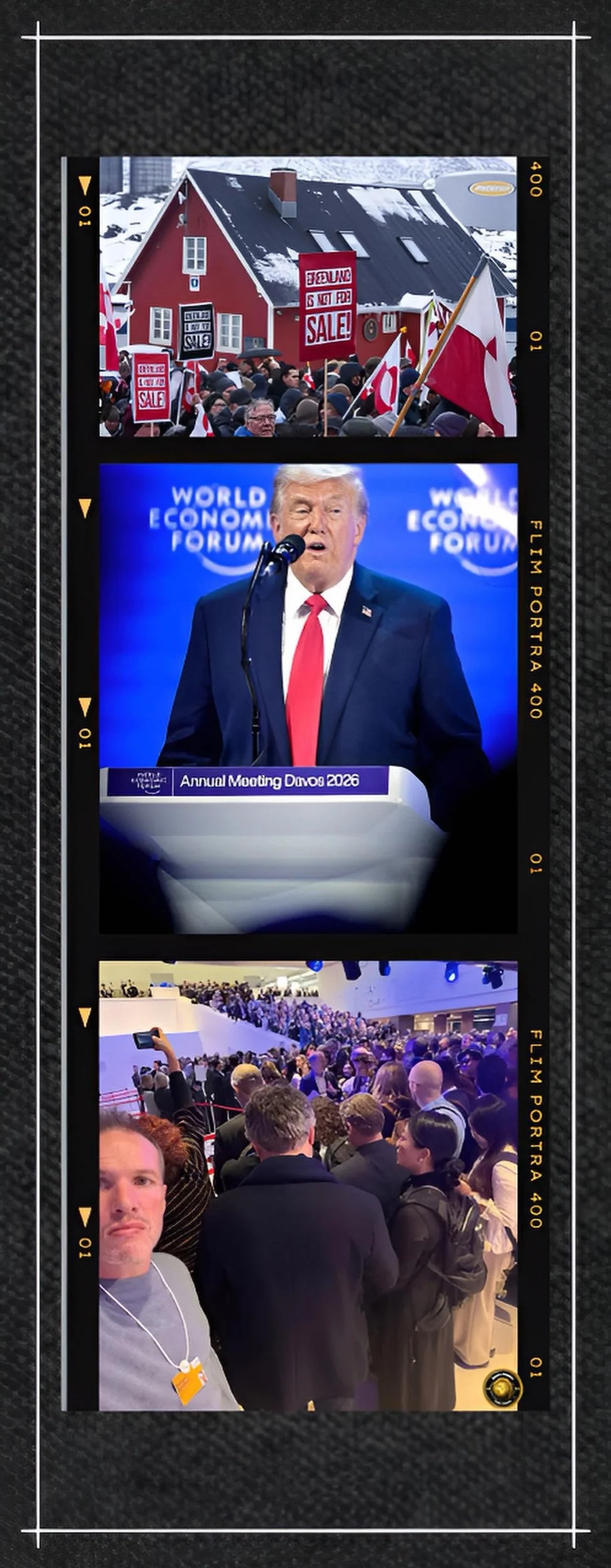
The World Economic Forum in Davos, Switzerland, in January 2026 was supposed to be about business growth and technology. Instead, it turned into a big political fight.
President Trump wanted to buy Greenland from Denmark. He threatened to put extra taxes (called tariffs) on European countries if they didn't agree. European leaders fought back hard.
China's representative said his country wanted cooperation, while Europe said it would build its own independence from America.
This week showed that the old world order, where America led and everyone else followed, is breaking apart.
Introduction
Davos is a fancy ski town in Switzerland where the world's richest and most powerful people meet once a year to talk business. The World Economic Forum has been doing this since 1971.
For decades, Davos was the place where rich countries agreed on how to run the world economy together. They talked about free trade, letting businesses do what they wanted, and working together on big problems.
But the 2026 meeting was completely different. Instead of friendly business talks, it turned into a battleground where world leaders argued about whether countries should listen to America or go their own way. More than sixty presidents and prime ministers attended.
Trump brought the biggest American team ever. But right from the start, the meeting focused on one crazy idea: Trump wanted to buy Greenland, an island that belongs to Denmark.
History and Current Status
The World Economic Forum started in 1971 as a place where business leaders could meet with government officials.
For fifty years, it worked pretty well. During the Cold War, it helped America and Europe talk to each other. After the Soviet Union fell apart in 1991, Davos became even more important. It was the place where everyone agreed that open trade, private companies, and global investment were good for everyone.
But something changed. Starting in the 1990s, trade made some people very rich while it hurt other people's jobs.
Factory workers in America and Europe saw their communities get destroyed when companies moved factories to poor countries where workers made much less money. Many people got angry at the system.
Trump won elections in 2016 and again in 2024 by saying he would stop this. He said America should protect its own workers and stop letting foreign countries take advantage of America.
The WEF's own Global Risks Report, released at the same time as the 2026 meeting, showed how much things had changed. The report asked 1,300 experts worldwide: "What's the biggest threat to the world?" In the previous year, the biggest threat was wars between countries.
This year, it jumped to the number one spot: something called "geo-economic confrontation"—which means countries using trade and money as weapons instead of actual weapons.
Key Developments
Trump Wants to Buy Greenland
Trump's big idea was simple but shocking: America should buy Greenland from Denmark.
Greenland is an island bigger than Mexico, but only about 56,000 people live there. It's part of Denmark but has its own government.
Greenland has lots of minerals that are important for making computers and solar panels. It's also at the top of the world, and with climate change melting ice, new shipping routes and resources are becoming available there.
Trump said he wanted to buy Greenland for America's security. But nobody—not Denmark, not Greenland's government, not any European country—wanted to sell it.
So Trump did something shocking: he threatened to put 10 percent extra taxes on things European countries sold to America, starting February 1.
If Europe didn't agree to talk about selling Greenland, he said he would increase those taxes to 25 % by June. He also threatened to put 200 % extra taxes on French wine and champagne.
To understand how crazy this was: imagine if Mexico's president said he wanted to buy Texas and threatened to stop buying things from America if the U.S. didn't agree. That's what Trump was doing to Europe.
Denmark didn't even come to Davos because the situation was so bad. This was shocking because Denmark has been America's ally for 70 years.
The United States has military bases there. They are in NATO together—a military alliance supposed to protect each other.
Europe Fights Back
Why Europe Is Building Independence From America
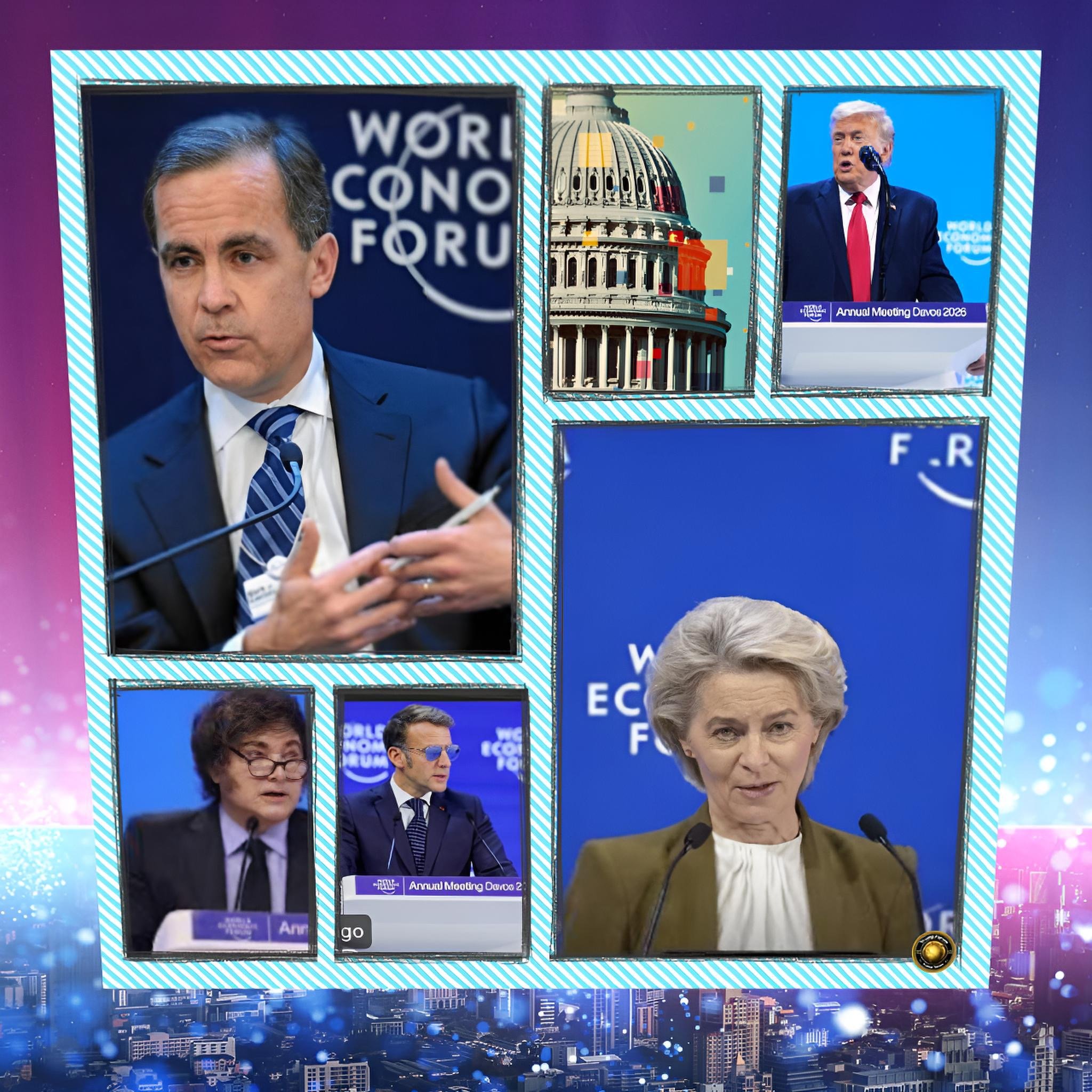
Europe was furious. The leader of the European Union, Ursula von der Leyen, said that "the sovereignty and integrity of their territory is non-negotiable." In plain English, she meant: other countries can't buy pieces of Denmark.
That's a basic rule of international law—countries' borders should not change just because a bigger country threatens them.
France's president, Emmanuel Macron, gave a fiery speech. He said this was "a shift towards a world without rules. Where international law is trampled underfoot and where the only law that seems to matter is that of the strongest, and imperial ambitions are resurfacing."
He was comparing Trump to old emperors who tried to conquer other countries. He said France would never give in to threats. He even said the European Union might use special trade weapons called "anti-coercion mechanisms" to fight back against America. That meant Europe was seriously considering fighting fire with fire—putting their own taxes on American goods.
Britain, another American ally, promised to stand with Europe. Germany said the same thing. Even countries like Poland and Belgium, which usually agree with America, said they would not let Greenland be sold.
What's interesting is that Trump suddenly backed down. He met with the leader of NATO and said he had made a "framework of a future deal" about Arctic security. He canceled the tariff threats. But everyone knew he might bring them back anytime.
China's Message
China Steps In, and the World Listens
While Europe and America fought, China's representative, Vice-Premier He Lifeng, gave a speech that was almost the opposite of Trump's. He said China wanted cooperation, not competition. He said countries should work together for everyone's benefit—what Chinese leaders call "win-win cooperation." He promised that China would "open its door wider" and buy more things from other countries.
He's speech quoted something Xi Jinping (China's leader) said back in 2017 at Davos: that trying to separate world trade into different parts, like trying to send ocean water back into isolated lakes, is impossible. China wants to stay in the global economy. He said China would follow international trade rules, would help developing countries, and would fight climate change.
The interesting thing: people actually liked He's speech. They clapped. Why? Because compared to Trump's threats and talk of buying territory, China seemed reasonable.
This showed how much America's power had changed. Twenty years ago, America was the strong leader everyone wanted to follow.
Now, even American allies were listening to China's message about cooperation.
Europe Wants Independence
Europe Says "Never": The Fight to Protect International Rules
Ursula von der Leyen said something important: Europe needs to become independent from America. She wasn't saying Europe should be enemies with America. She meant Europe needs its own energy, its own military power, its own technology, and its own trade deals.
To show she meant business, Europe just finished a huge trade deal with South America (countries like Brazil and Argentina). This deal connects nearly 700 million people and represents about 20 percent of all the world's economy. It was a signal: Europe doesn't need America's permission to trade with whoever it wants.
The Board of Peace
Trump's Mystery Board: Who Controls the Future of Gaza?
Trump also announced something called the "Board of Peace" at Davos. The idea was to help rebuild Gaza (a Palestinian territory) after the recent war. But the details were strange. Trump would be the boss of this board, able to make final decisions on everything. Countries that wanted to be permanent members had to pay $1 billion each. The board could do way more than just help Gaza—Trump could use it for any conflict in the world.
Some countries, like Israel and Egypt, joined. But France and Germany said no. They said this board was trying to replace the United Nations, and they didn't trust Trump to lead it fairly.
This was another sign of breaking alliances: America's closest allies in Europe didn't want to work with Trump on Middle East policy.
Other World Leaders
California's governor, Gavin Newsom, went to Davos to criticize Trump. But when he tried to give a speech, someone told him he couldn't use America's official meeting room. Newsom's team said Trump's administration blocked him.
The Trump administration said it was just a "venue problem." But the timing looked suspicious. Trump's Treasury Secretary even mocked Newsom from the Davos stage, saying he didn't know anything about economics. This showed how Trump was using Davos to fight with his political opponents inside America.
Argentina's president, Javier Milei, gave a speech saying Trump was a "beacon of light" for the West. Milei is a libertarian who believes in small government and free markets, like Trump does. He praised Trump's leadership.
Egypt's president, El-Sisi, met with Trump. Egypt is important for Middle East peace and controls the Suez Canal, one of the world's most important shipping routes. El-Sisi said he supported Trump's Board of Peace idea.
India's huge delegation showed up to promote India as a fast-growing economy. India has become the world's fastest-growing large economy, growing about 6.5 % per year.
Europe and India were close to finishing a big trade deal that would connect over 2 billion people.
Cause-and-Effect Analysis
Why Is America Acting This Way?
America's behavior reflects something bigger happening in the world. For thirty years after the Soviet Union fell in 1991, America was the only superpower. Every other country had to do what America said, or face problems.
But things changed. China became strong economically. Europe became a real power together. India, Brazil, and other countries grew faster.
America is still the richest and most powerful country, but it's not the only powerful country anymore. The world is becoming "multipolar," which means many countries have power, not just one.
American workers and farmers suffered during this time. When companies could buy things from poor countries where workers made less money, American factories closed.
Towns that depended on factories died. These workers voted for Trump because they believed he would fight to bring back good jobs and make America strong again.
The Greenland idea shows Trump's thinking: America should own more territory, control more resources, and not follow rules that limit American power. It's like he's saying: "The old system where everyone played by rules isn't working for America anymore. America should just take what it wants."
Why Is Europe Pushing Back?
Europe realized that it couldn't depend on America anymore. For 70 years, America protected Europe from the Soviet Union, and then from Russia.
Europe depended on America's military power. But if Trump is threatening to buy their territory and punish them with taxes for not cooperating, then Europe needs its own power.
Europe decided to:
(1) Build more military power of its own (Germany announced it would spend much more on defense)
(2) Find new friends for trade (South America, India, Britain)
(3) Make its own decisions instead of following America
This is a huge change. For 70 years, Europe followed America's lead. Now, Europe is saying it will be independent.
Why Is China Winning Points?
China's message—cooperation instead of fighting—sounds really good compared to Trump's message of threats and rules-breaking. China says it wants to be everyone's trading partner, not their enemy. It promises not to use military force to take territory.
Is China's message true?
That's complicated. China has its own problems, and it also uses economic power to pressure other countries. But compared to Trump saying he wants to buy Greenland by threatening tariffs, China sounds like the reasonable one.
The Real Problem: Inequality
Behind all this conflict is something deeper: inequality. The WEF released a report saying that most wealth and power are concentrated in fewer hands than ever before.
A rich businessman in New York might make thousands of times more money than a factory worker in Ohio. This makes people angry.
Trump won because people who lost good jobs and had their communities destroyed wanted someone to fight the system.
Trump promised to fight foreign countries and corporations. He's fighting, all right—but in a way that confuses and scares a lot of people.
Future Steps and Implications
Europe Building Independence
Europe will probably spend much more money on military power.
Germany, France, and other countries will make their own weapons instead of relying on America's protection. They'll also find more trade partners outside America. They're already signing trade deals with countries like India and South America.
This means the world will have more powerful regions instead of one superpower. This could be good (everyone has a say) or bad (more conflicts without one power to make rules).
America Isolated?
The Real Issue: Is America Still the World's Leader?
If America keeps threatening trade taxes and trying to buy other countries' territory, other countries will probably work together against America. They might create their own money system for trading instead of using American dollars.
They might make their own technology instead of using American companies like Google and Apple. This could make America poorer over time.
A New World Order
The experts at Davos were worried about a chaotic world where countries fight using trade weapons and everyone is against everyone else. But some saw hope in new partnerships. India and Europe getting closer, China offering cooperation, smaller countries working together—these could create a more balanced world.
The Technology Question
The Tech Race: Who Wins at AI and Energy?
One big topic at Davos was artificial intelligence (AI). AI is computer technology that can think and learn like humans. Powerful countries will probably compete fiercely to lead in AI. If America gets too far behind, its economic power will weaken. That could make Trump even more aggressive to protect American power.
Energy and Climate
Another big issue: climate change and energy. Europe, India, and China are moving toward clean energy—solar panels, wind, electric cars.
America's Trump administration is promoting oil and coal. This difference in energy choices will probably create more conflict about trade and climate.
Examples From History
History Shows: When Trade Wars Start, Bad Things Follow
Looking at history, similar situations happened before:
In the 1930s, countries stopped trading with each other. Countries used tariffs as weapons. This led to the Great Depression and eventually World War II.
During the Cold War, the Soviet Union and America divided the world into two camps. Everyone had to pick a side.
When the Soviet Union fell apart, America was the only superpower. But that didn't last.
Now we're entering a new phase where multiple countries have real power, but there are no clear rules for how they should interact. That's dangerous.
Conclusion
A New World Order Without America in Charge?
The 2026 World Economic Forum in Davos showed a world in crisis. The old system, where America led and everyone followed, is breaking down.
Trump wants to use American power aggressively to take what he wants. Europe is building independence. China is offering cooperation. India is rising as a major economy. And smaller countries are trying to figure out which side to join.
The question isn't really about Greenland. It's about what kind of world we're going to have. Will it be ruled by threats and wars between superpowers? Or can countries find new ways to cooperate and solve problems together?
The experts at Davos were worried. Some saw it as a dangerous time. Others saw opportunities for new partnerships and a more balanced world. What happens next depends on whether leaders choose cooperation or confrontation.
The thing that stuck with many people: when the American president is the one threatening to buy other people's territory, and when China's representative is the one talking about peace and cooperation, it shows how much the world has changed.
The old world order—where America makes the rules and everyone else follows—is over. The question now is: what replaces it?