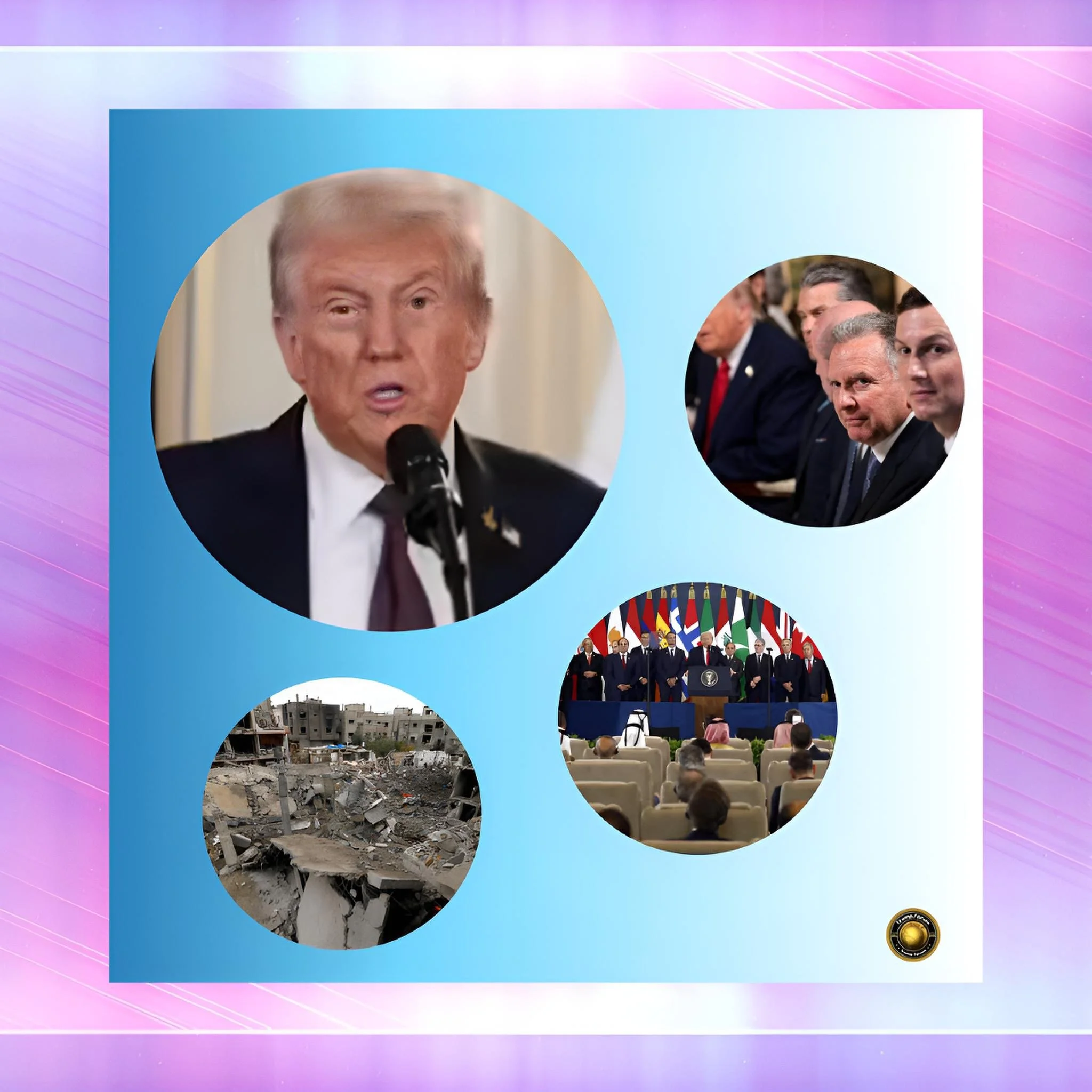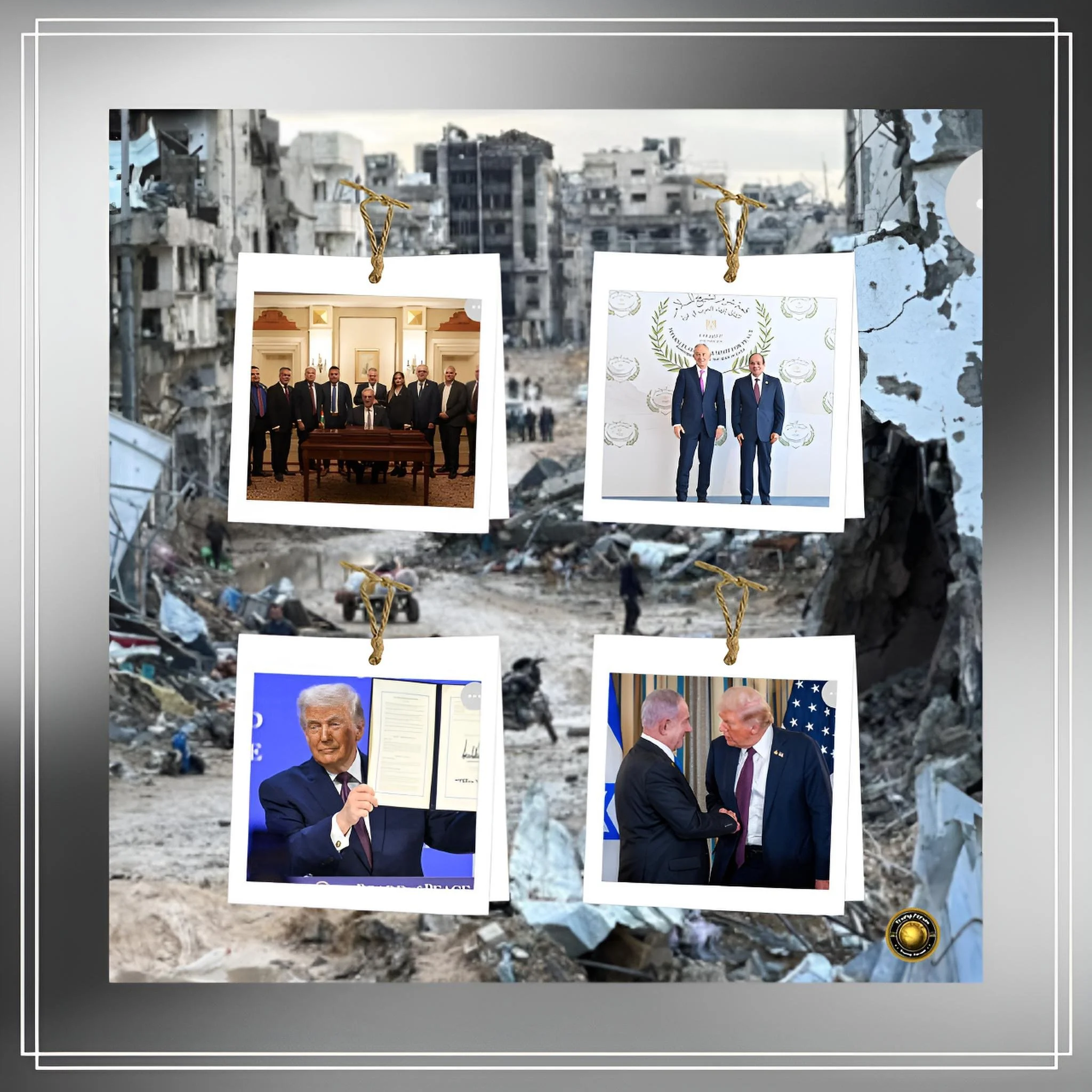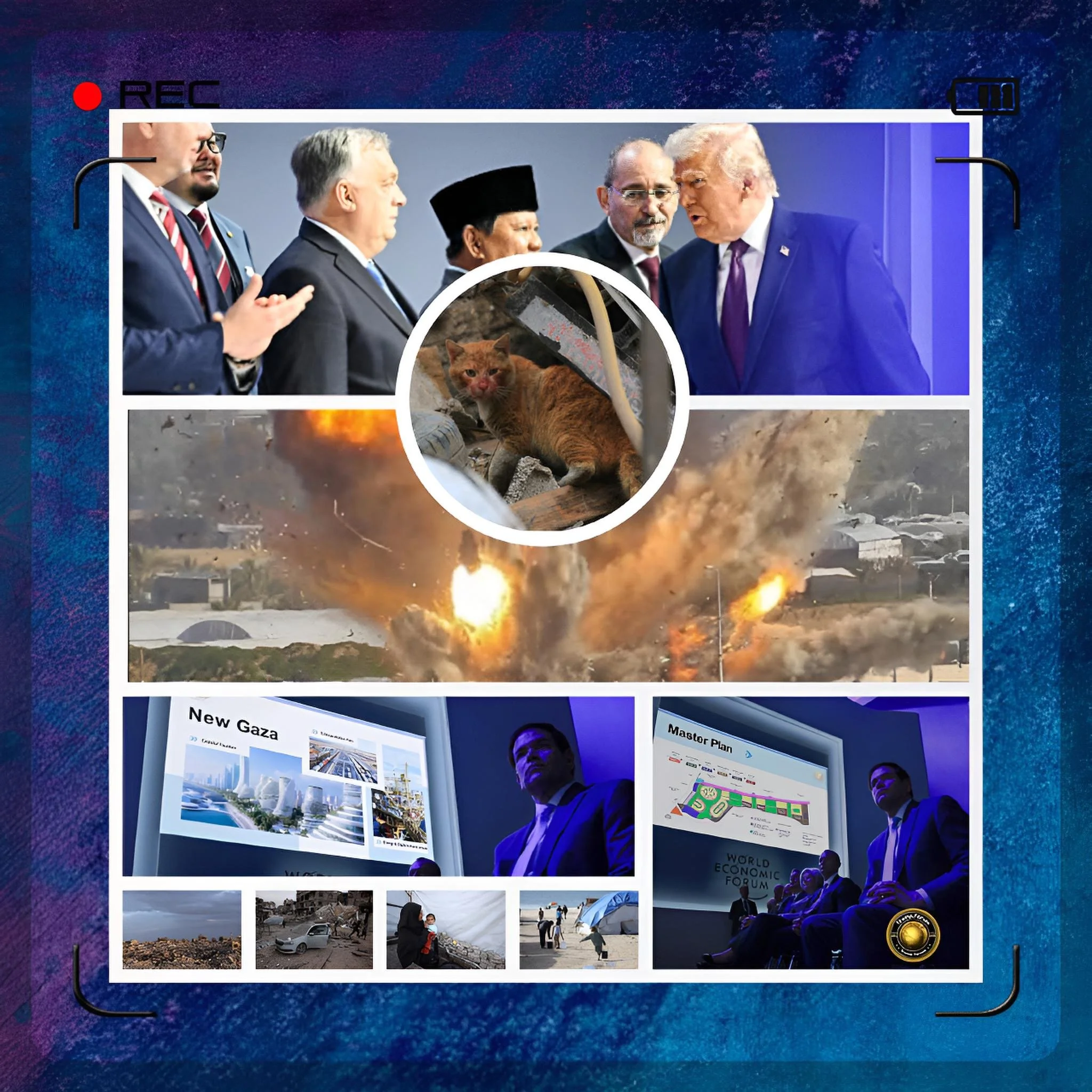
From Ceasefire to Control: Trump’s Gaza Board of Peace and the Battle Over Who Governs the Ruins
Executive summary
A Peace Plan Built on Sand: Ambition Without Guarantees
Trump’s Gaza plan has moved into a new phase built around three interlocking elements: a global “Board of Peace” that he would personally lead, a Palestinian technocratic committee to govern Gaza on an interim basis, and a second phase of the ceasefire focused on demilitarization, Israeli withdrawal, and reconstruction.
The plan enjoys formal backing through a U.S.-drafted UN Security Council resolution and limited endorsements from key regional mediators, but faces serious legitimacy, implementation, and compliance challenges.
Several invited powers are cautious about joining what looks, to critics, like a parallel authority to the UN Security Council, Palestinians question the autonomy of a technocratic committee tied to a heavily pro‑Israel board, and Hamas has not accepted the full scope of disarmament envisioned for “phase II.”
The emerging picture is of an ambitious but structurally fragile governance experiment, whose success will depend on whether it can reconcile maximalist disarmament demands with the political realities of Hamas’ entrenched power and widespread Palestinian distrust.
Introduction
When One Man Wants to Run the Peace: The Logic Behind a Leader‑Chaired Gaza Framework
Trump’s new Gaza architecture is an attempt to consolidate military de‑escalation, governance transition, and reconstruction under a single U.S.-designed framework that he can personally shape.
Publicly framed as a comprehensive twenty‑point peace plan, it seeks to replace ad hoc crisis management with a standing mechanism combining global elite participation, Palestinian technocratic administration, and an international stabilization force.
White House statements describe phase two of the plan as a shift from pure ceasefire management to “demilitarization, technocratic governance, and reconstruction,” with Gaza’s governance formally separated from both Hamas and unreformed branches of the Palestinian Authority.
The plan’s novelty lies less in its stated goals—ceasefire, reconstruction, security reform—than in the institutional form: a Trump‑chaired “Board of Peace” that aspires to function as an alternative global conflict‑management node, beginning in Gaza and potentially radiating outward to other crises.
History and current status
From War to “Management”: How a Multi‑Year Conflict Produced an International Experiment
The current proposal builds on ceasefire diplomacy launched in late 2025, when the United States, Egypt, Qatar, and Turkey brokered a multi‑phase Gaza agreement after more than two years of war.
The first phase focused on ending large‑scale hostilities and securing the release of living Israeli hostages, which mediators say was largely achieved, though at least one set of remains remains unaccounted for inside Gaza.
In November, a U.S.-drafted resolution at the UN Security Council endorsed a “Board of Peace” as an international transitional body to oversee Gaza’s reconstruction and governance until a reformed Palestinian Authority could credibly assume responsibility.
Trump’s twenty‑point plan, subsequently publicized by the White House, embedded this board in a broader sequencing: ceasefire, demilitarization, technocratic administration, reconstruction, and eventual hand‑off.
As of mid‑January 2026, the United States has announced the start of phase two despite unresolved disputes over disarmament and hostages, and has unveiled the initial composition of both the Board of Peace and an associated Palestinian technocratic committee.
Key developments: Board of Peace and technocratic governance
A Board Above the Battlefield: Invitations, Billion‑Dollar Seats, and Technocrats Under Supervision
Trump’s “Board of Peace” is conceived as an elite, transnational governing body that he would chair for life, initially focused on Gaza but explicitly expandable to other conflicts.
Press reports and official statements indicate that the board’s charter empowers it to oversee “all aspects of Gaza’s governance, reconstruction, and development,” to recruit international peacekeepers, and to create subordinate entities, including a “Gaza executive board.”
Membership is structured in tiers: some states are offered permanent seats in exchange for a reported one‑billion‑dollar commitment toward Gaza reconstruction, while others can hold time‑limited seats without paying.
The founding executive group includes Trump himself, Secretary of State Marco Rubio, special envoy Steve Witkoff, Jared Kushner, World Bank president Ajay Banga, select Western and Israeli‑aligned business figures, and representatives from key mediators such as Qatar, Egypt, and Turkey.
In parallel, mediating states have announced the formation of a fifteen‑member Palestinian technocratic committee headed by former Palestinian Authority official Abdel Hamid Shaath.
This committee is mandated to manage day‑to‑day governance, reconstruction logistics, and basic services in Gaza, operating “under the leadership of the Board of Peace” and in coordination with a Gaza executive board.
The architecture is intended to make Palestinian technocrats the face of local governance while placing strategic control firmly in an international body chaired from Washington.
Latest facts and emerging concerns
Legitimacy on Trial: Why Friends Hesitate and Palestinians Doubt
Recent reporting reveals a complex mix of cautious participation and open skepticism among global and regional actors.
The White House has dispatched letters to dozens of capitals inviting leaders to become “founding members” of the Board of Peace, with countries such as Hungary and Vietnam confirming acceptance and others—including major powers in Europe and the Global South—expressing reservations or withholding public commitment.
France has signaled that it does not plan to join, citing concerns that the board’s charter cuts across UN responsibilities and could further erode multilateral legitimacy.
Israel has issued critical statements about aspects of the newly announced executive committee, complaining that elements of the arrangement are inconsistent with its policy, even though the plan as a whole was negotiated with close U.S.-Israeli coordination.
Palestinian reactions are divided but generally wary: many question whether a technocratic committee operating under a Trump‑chaired board crowded with pro‑Israel figures can exercise real autonomy or represent Palestinian interests.
Human rights advocates and legal scholars have likened the proposed governance structure to a form of neo‑colonial trusteeship, warning that foreign‑chaired bodies overseeing occupied or devastated territories have historically struggled to deliver durable legitimacy or stability.
The disarmament problem and phase II of the ceasefire
The Dealbreaker Clause: Demilitarization Demanded, Consent Withheld
The most fraught component of phase two is the requirement that Hamas and other armed groups in Gaza disarm as part of a demilitarization process running in parallel to Israeli troop withdrawals.
The White House and supporting think‑tank analyses describe this phase as encompassing the destruction or permanent decommissioning of “all military, terror, and offensive infrastructure” in Gaza, including rocket arsenals, tunnels, and organized armed formations, with an international stabilization force and new Palestinian security structures eventually taking over.
Israel has reportedly issued a “final warning” demanding that Hamas disarm within a fixed period—around two months—framing disarmament as a precondition for full implementation of the agreement.
At the same time, sources close to the negotiations indicate that Hamas has not accepted full disarmament: there are suggestions of limited willingness to decommission heavy weapons such as longer‑range rockets, but refusal to surrender small arms or dissolve core security structures.
Israeli forces still occupy more than half of Gaza’s territory, and Israeli security officials openly prepare for the possibility that Hamas will not comply, including contingency plans for renewed military operations.
In other words, the United States has politically “launched” phase two even though its central security pillar—voluntary demilitarization by Hamas—is at best partial and contested.
Cause-and-effect dynamics
How Domestic Politics in Washington Reshape Power Realities in Gaza
The trajectory of Trump’s Gaza initiative reflects layered cause‑and‑effect chains connecting domestic politics, international diplomacy, and local power realities.
At the U.S. level, the desire to demonstrate a signature diplomatic achievement early in Trump’s renewed presidency, after years of stalemated or failed Gaza initiatives, has created strong incentives to present a comprehensive plan with clear phases, timelines, and institutions—even if the underlying agreements remain fragile.
This drive has produced an ambitious architecture anchored in a Board of Peace that both consolidates Trump’s personal role and offers wealthy states and individuals a high‑visibility vehicle for influence via large financial commitments.
At the international level, frustration with Security Council paralysis over Gaza has generated some receptivity to alternative formats that promise faster decision‑making and clearer lines of authority.
Yet this same frustration also makes many governments wary of endorsing a structure that looks like a rival to the UN and concentrates disproportionate authority in Washington.
Regionally, the exhaustion of Egypt, Qatar, and Turkey with open‑ended crisis management has prompted them to back a technocratic Palestinian structure that can take day‑to‑day burdens off their shoulders, but they must calibrate support carefully to avoid appearing to rubber‑stamp an arrangement widely seen on the Arab street as externally imposed.
On the ground in Gaza, the attempt to graft a technocratic administration and foreign‑chaired board onto a territory where Hamas retains coercive capacity, social networks, and ideological reach creates a direct clash between institutional design and power realities.
The insistence on rapid demilitarization without credible security guarantees or political inclusion for Hamas risks pushing the group to obstruct, delay, or selectively comply, thereby undermining the very stability the plan is meant to create.
Future steps and possible trajectories
Frozen Conflict or Managed Transition? The Forks in Gaza’s Road
In formal terms, the next steps envisioned by the plan include operationalizing the Palestinian technocratic committee, recruiting and deploying an international stabilization force, negotiating the sequencing of Israeli withdrawals with verified steps toward demilitarization by Hamas, and channeling pledged reconstruction funds through Board‑supervised mechanisms.
For the initiative to succeed even on its own terms, several conditions would need to be met: enough major states would need to join the Board of Peace to give it political weight; Palestinians would need to see the technocratic committee as more than a façade; Hamas would need to accept a form of de facto demilitarization that does not amount to unconditional surrender; and Israel would need to actually implement withdrawals and respect the agreed security architecture.
More realistically, a series of hybrid and partial trajectories is likely. One scenario is a low‑functioning equilibrium in which the Board of Peace exists, the technocratic committee runs humanitarian and municipal services, Israel maintains de facto security control over key areas, and Hamas retains clandestine armed capacity, producing a frozen but fragile conflict.
Another scenario is breakdown: if Hamas refuses core conditions, Israel resumes large‑scale operations, or key international actors refuse to underwrite the Board’s legitimacy, the framework could collapse, leaving Gaza in a more fragmented and externally dominated condition without delivering durable peace.
A less probable but still conceivable trajectory would see gradual adjustment: incorporation of some Hamas‑linked figures into security arrangements, softening of maximalist disarmament language, and incremental expansion of Palestinian agency within the technocratic structure as external actors seek to rescue the framework.
Conclusion
An Architecture in Search of Compliance: What Happens When Plans Outrun Power
What is known at this stage is that Trump’s Gaza plan has moved from abstract proposal to partially institutionalized architecture, anchored in a Board of Peace he intends to lead and a technocratic Palestinian committee tasked with daily governance.
It has obtained UN Security Council endorsement, secured at least some international participation, and created a formal phase‑two framework built around demilitarization and reconstruction.
It has not secured Hamas’ explicit consent to comprehensive disarmament, nor has it resolved deep doubts among Palestinians and many governments about the legitimacy, balance, and long‑term implications of a foreign‑chaired governance body.
The plan’s central gamble is that institutional momentum, financial incentives, and war fatigue can generate enough compliance from armed actors and enough buy‑in from skeptical publics to transform a devastated enclave into a managed international project.
Whether that gamble succeeds will depend less on ceremony at Davos or Washington than on choices made in Gaza City, Tel Aviv, Cairo, Doha, and Ankara in the coming months.
The disarmament requirement, in particular, sits at the fault line between ambitious design and hard realities: if it remains an uncompromising precondition, phase two may never fully materialize; if it is quietly reinterpreted, the resulting order may be more sustainable but less transformative than its architects proclaim.