America’s Constitutional Crisis is Inspiring Autocrats Around the Globe: A Deep Dive into Chief Justice John Roberts’ 2025 Year-End Report
Executive Summary
Chief Justice John Roberts’ 2025 year-end report served as both historical meditation and constitutional prophecy, delivered at a moment when the American presidency has transcended its traditional bounds to assume powers once reserved for monarchy. Beneath Roberts’ carefully measured prose—invoking the Declaration of Independence and the 1804 impeachment of Samuel Chase—lay a stark warning directed at President Trump’s systematic dismantling of judicial independence and the institutional checks that define constitutional democracy.
The Supreme Court’s record in 2025 reveals a paradox: while the justices granted the Trump administration victory in over eighty percent of emergency appeals, lower courts repeatedly blocked policies as unconstitutional, exposing a fundamental fracture in the judiciary’s role as co-equal branch. With pivotal cases on birthright citizenship, tariff authority, and independent agency autonomy awaiting 2026 decisions, Roberts’ message captures a constitutional inflection point where the separation of powers—the architecture of American governance for 236 years—faces potential dissolution.
Introduction: The Historical Pretext
When the federal judiciary confronts genuine institutional peril, it typically speaks in the circumlocutions of history rather than the accusations of the present.
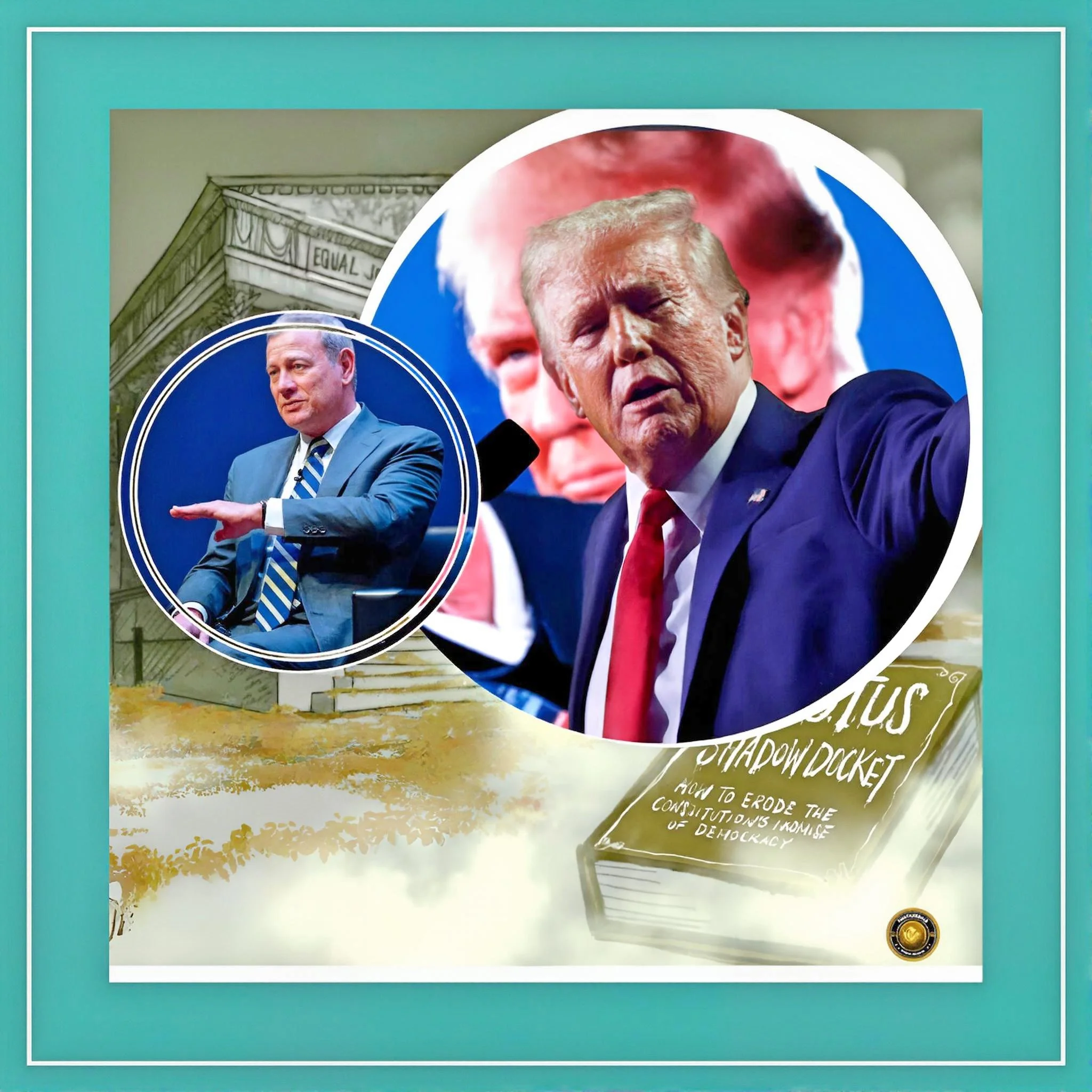
Chief Justice Roberts’ 2025 report exemplifies this restraint, constructing an elaborate historical narrative about King George III’s manipulation of colonial courts and the Founders’ corrective innovation of judicial independence. The timing was not accidental. Released hours before the new year, as tensions between the Trump administration and federal courts reached their apex, Roberts’ meditation on the Declaration of Independence and constitutional structure functioned as a carefully coded message to both his colleagues on the bench and the political branches consuming power beyond constitutional sanction.
The chief justice’s deployment of history served a precise rhetorical purpose. Rather than directly condemning Trump’s calls for the impeachment of federal judges—voices that reached a crescendo in 2025—Roberts anchored his defense of judicial autonomy to founding principles and centuries of precedent. He wrote that the Constitution “corrected” the crown’s control of courts by establishing a judiciary operating without interference from other branches, an arrangement “now in place for 236 years” that “has served the country well.” This seemingly benign recitation masked an urgent contemporary application.
Trump had spent 2025 threatening judges, questioning court legitimacy, and repeatedly calling for the impeachment of district court judges whose rulings blocked his policies. Roberts’ invocation of the 1804 impeachment of Justice Samuel Chase—the only Supreme Court justice ever impeached—was therefore deliberate. Chase was acquitted despite a supermajority of Democratic-Republicans in the Senate because, as Roberts quoted, senators concluded that “disapproval of a judge’s decisions provided an invalid basis for removal from office.” This historical parallel was as direct as constitutional propriety permitted.
Yet Roberts’ report revealed something more troubling than presidential threats alone. It exposed a judiciary internally fractured on whether courts retain any meaningful authority to constrain executive power. While lower courts issued preliminary injunctions blocking Trump’s policies on birthright citizenship, foreign aid restrictions, and National Guard deployments, the Supreme Court’s conservative majority systematically dismantled those protections through unsigned emergency orders offering minimal reasoning.
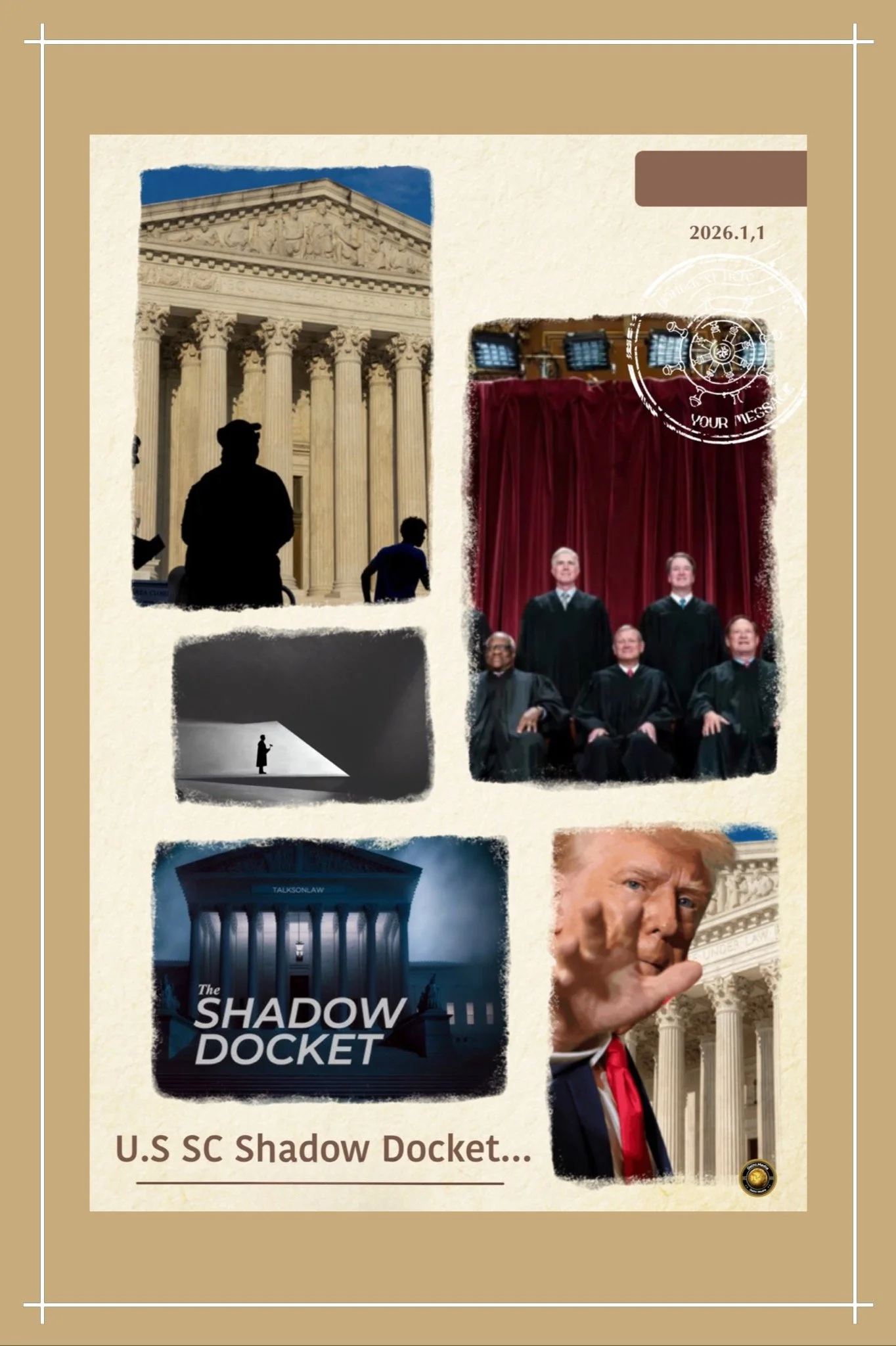
The shadow docket became not a mechanism of last resort but a highway through which presidential power flowed unimpeded.
The Architecture of Judicial Crisis
The year 2025 witnessed an unprecedented inversion of the separation of powers. Between Trump’s second inauguration in January and December, the Trump administration filed twenty-eight emergency applications with the Supreme Court, prevailing in the vast majority.
This represented an acceleration of a trend begun during the first Trump term, when his administration filed forty-one emergency applications across four years—more than the combined total filed during sixteen years of Bush and Obama presidencies. The emergency docket, colloquially termed the “shadow docket,” consists of applications for urgent relief where cases are handled on expedited schedules with limited briefing and typically no oral argument. The Court frequently resolves them in unsigned orders with little explanation, rendering decisions on the merits while insulating them from public scrutiny and appellate review.
The justices’ deference to Trump was not absolute. A single case—the removal of Federal Reserve Governor Lisa Cook—demonstrated residual restraint. When Trump sought to fire Cook in August 2025 based on disputed mortgage fraud allegations, lower courts blocked the removal as violating the Federal Reserve Act’s “for-cause” restriction and denying her due process. Instead of summarily overturning lower court orders as in other cases, the Supreme Court allowed Cook to remain in office while scheduling oral arguments for January 2026. The Court’s own language suggested a possible recognition that the Federal Reserve occupied a “uniquely structured, quasi-private entity that follows in the distinct historical tradition of the First and Second Banks of the United States.” This doctrinal escape hatch may prove decisive in limiting presidential removal authority, though the outcome remains uncertain.
Across other domains, however, the justices granted Trump extraordinary latitude. The Court permitted the administration to freeze over four billion dollars in foreign aid and public health funding despite Congressional appropriation, allowing agencies to determine recipients lacked standing to challenge the cuts. The administration successfully removed Democratic members of the Consumer Product Safety Commission and curtailed National Institutes of Health funding for research on disease affecting marginalized communities. It implemented a policy restricting sex designations on US passports and expanded immigration enforcement through detention and interrogation based on ethnicity or presence at particular locations. Only when Trump sought to deploy the National Guard in Chicago did the Supreme Court impose a check—one of the few substantive limitations the justices imposed all year.
The shadow docket’s opacity produced mounting criticism from the Court’s own members. Justice Elena Kagan, in dissent from one emergency order, wrote that “our emergency docket should never be used, as it has been this year, to permit what our own precedent bars. Still more, it should not be used, as it also has been, to transfer government authority from Congress to the President, and thus to reshape the Nation’s separation of powers.” Her warning captured a fundamental transformation. The shadow docket had evolved from a mechanism to handle genuine emergencies into an instrument for expanding executive power while circumventing normal judicial review.
The Unitary Executive Ascendant
The constitutional stakes became fully apparent as the Supreme Court prepared to decide cases that would fundamentally restructure American governance.
Most consequential was Trump v. Slaughter, challenging the constitutionality of the 1935 Humphrey’s Executor precedent, which held that statutory removal restrictions on officers of independent agencies do not violate separation of powers. The Trump administration argued that Humphrey’s Executor was an “indefensible outlier” and “decaying husk” that must be overruled. The government’s position reflected unitary executive theory—the doctrine that Article II vests all executive power in the president, who cannot be constrained by Congressional restrictions on removal of subordinate officers.
If the Supreme Court overturned Humphrey’s Executor, it would dismantle nearly ninety years of constitutional protection for independent agencies. The Federal Trade Commission, National Labor Relations Board, Consumer Product Safety Commission, Securities and Exchange Commission, and dozens of other regulatory bodies would become subject to presidential caprice. Congress would lose its ability to structure independent agencies insulated from day-to-day political pressure, a power it has exercised confidently for nearly a century. The Court would effectively transfer to the President what Justice Kagan termed “an incredible amount of legislative/rulemaking power and judging.”
Oral arguments in Trump v. Slaughter occurred in December 2025, with Justice Brett Kavanaugh suggesting sympathy for overruling the precedent. Most legal commentators predicted a six-to-three victory for the Trump administration, with a final decision expected by June 2026. The implications extended beyond the FTC. The same theory of presidential removal authority was at issue in the Cook case, where the Trump administration sought to overturn her for-cause removal protection as Federal Reserve governor. If successful, it would mean Trump could replace her with a loyalist, potentially compromising monetary policy independence. Similar cases involved removal of EEOC members and other independent agency heads.
Parallel to the removal cases, two other dockets promised transformative rulings. Trump’s January 2025 executive order on birthright citizenship would deny citizenship to children born in the United States to mothers without lawful status or temporary status if the father was not a citizen or permanent resident.
Multiple federal courts unanimously held the order violated the Fourteenth Amendment’s plain language, which grants citizenship to “all persons born in the United States and subject to the jurisdiction thereof.” Yet the Trump administration secured Supreme Court review and scheduled oral arguments for spring 2026, with a decision expected by June. The case, Trump v. Barbara, posed a straightforward constitutional question: can the president reinterpret a constitutional amendment through executive order?
A third case involved Trump’s broad use of the International Emergency Economic Powers Act (IEEPA) to impose sweeping global tariffs. Trump’s lawyers argued the 1977 statute granted the president virtually unlimited authority to impose tariffs during declared emergencies, effectively transferring Congress’s constitutional power to regulate commerce and impose taxes to the executive. The administration had issued proclamations declaring multiple national emergencies to justify tariffs exceeding thirty percent on various trading partners. If the Supreme Court upheld this interpretation, it would represent a fundamental redistribution of fiscal power from Congress to the president—a direct transfer of “power of the purse” authority.
Cause and Effect: The Unraveling
The causal sequence driving this constitutional crisis was not accidental or inevitable but rather the product of deliberate strategy. During his four years outside office between administrations, Trump and his advisers, particularly those associated with Project 2025, engineered a detailed blueprint for maximizing presidential authority. Upon his January 2025 return to the White House, Trump came equipped not as the political novice of his first term but as a strategist armed with clear objectives and a team of ideological loyalists committed to reshaping executive power.
The Trump administration immediately issued approximately 225 executive orders—nearly double the rate of any first-year president in the last seventy-five years. These orders bypassed the slow congressional negotiation process and implemented sweeping policies across immigration, federal spending, agency restructuring, and civil service employment. Simultaneously, Trump’s legal team filed emergency applications at the Supreme Court seeking to block lower court injunctions issued against these policies. The shadow docket provided a mechanism for rapid resolution without the extended briefing and oral argument of normal appellate review.
Lower courts initially functioned as institutional counterweights. Federal judges in multiple jurisdictions issued preliminary injunctions against the birthright citizenship executive order, the foreign aid freeze, and various agency removals. These judges applied established constitutional principles: the Fourteenth Amendment’s plain text, Congressional appropriations authority, and statutory removal restrictions. Their decisions suggested that an independent judiciary retained capacity to impose meaningful constraints on executive power.
The Supreme Court’s response dissolved those constraints. By granting expedited relief on the shadow docket, the conservative majority allowed challenged policies to proceed while litigation continued in lower courts. The effect was to invert the normal appellate hierarchy. Rather than lower court decisions standing pending Supreme Court review, Trump administration policies were implemented while legal challenges proceeded at glacial pace. As Mark Joseph Stern, a constitutional law analyst, observed, the current Court had allowed Trump to violate Congress’s “power of the purse” by refusing to spend appropriated funds—a power explicitly allocated to Congress in the Constitution. Moreover, the Court’s decisions transferred governmental authority from Congress to the President, fundamentally reshaping separation of powers.
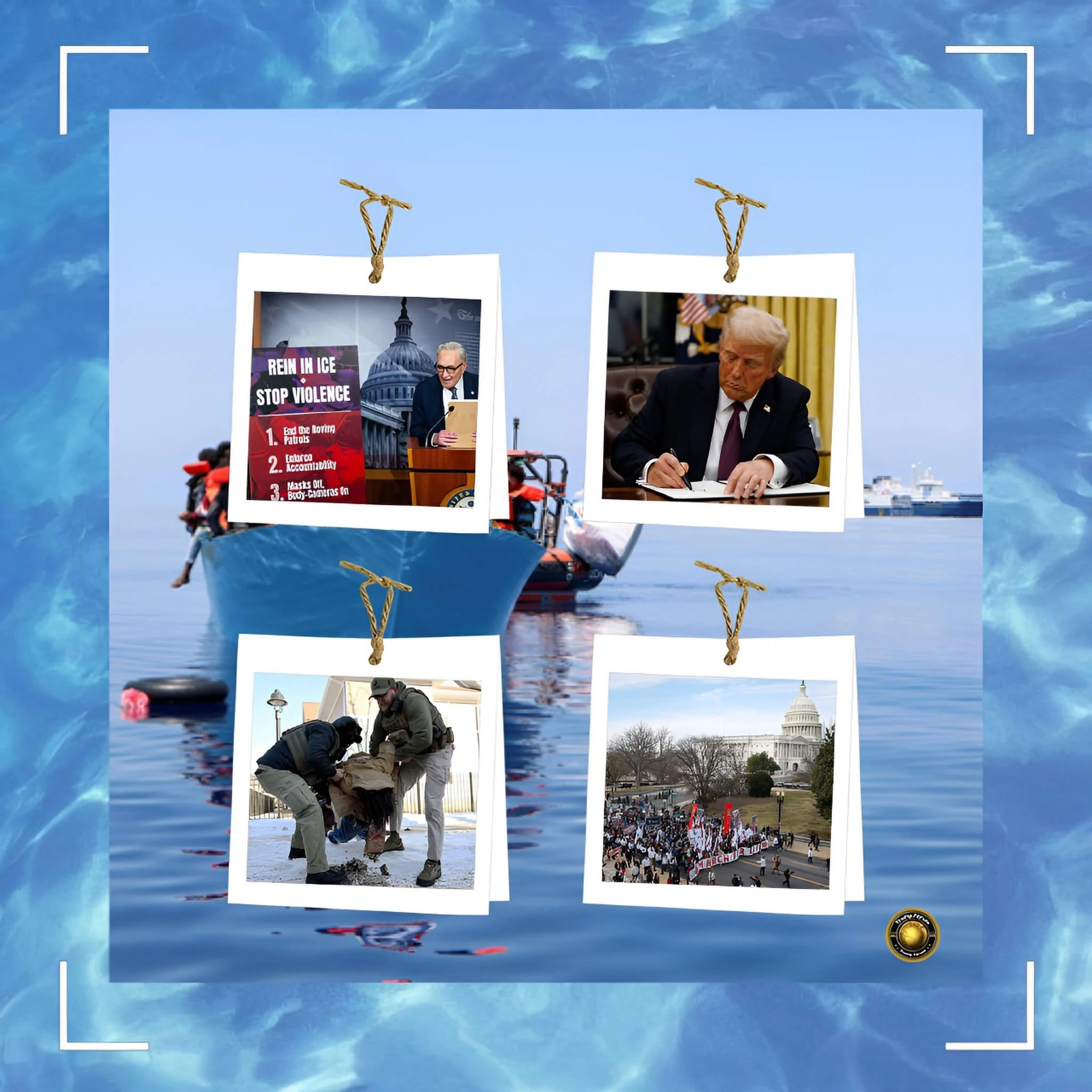
What emerged across 2025 was a portrait of executive dominance. Trump dismissed inspectors general charged with oversight, purged prosecutors and agents involved in past investigations, dismantled the Justice Department’s public integrity division, and installed loyalists throughout the FBI and intelligence apparatus. He granted pardons to associates and refused to comply with subpoenas. He deployed troops to American cities without Congressional authorization and conducted military strikes on vessels in the Caribbean. He ordered the prosecution and, in rhetoric, the execution of political enemies. These actions proceeded with minimal institutional resistance.
Congress, controlled by Republicans, acquiesced to encroachments on its traditional prerogatives. The judicial branch, while issuing occasional lower court rulings, found those decisions overturned or negated by the Supreme Court’s shadow docket machinations.
The cascade of executive aggrandizement fed on itself. As prior presidents found new powers unchecked, their successors inherited and expanded upon those innovations. Authority once appropriated by any branch of government is seldom willingly relinquished. Actions that once shocked the political system became normalized through repetition.
The imperial presidency—a concept Richard Nixon controversially embodied in the 1970s—had evolved into something approaching monarchy in the context of effective congressional abdication and judicial deference.
The Jurisprudential Fracture
Beneath the shadow docket decisions lay a deeper jurisprudential conflict within the Supreme Court regarding the nature of separation of powers and the judiciary’s role in policing constitutional boundaries. The conservative majority’s approach reflected originalist interpretive methods applied to Article II’s vesting of “executive Power” in the president. Under this theory, any Congressional restriction on presidential removal authority violated the Constitution’s structural design. The president, as chief executive, must possess unfettered authority to direct subordinate officers.
Justice Elena Kagan and the liberal justices advanced a competing constitutional vision rooted in functionalism and structural checks. Their approach emphasized Congress’s independent constitutional authority to structure executive agencies and impose removal restrictions on officers wielding powers Congress deemed quasi-judicial or quasi-legislative. This theory drew on the constitutional text allocating specific powers to Congress—the power to establish courts, create executive departments, regulate commerce, and impose taxes—and recognized Congress’s power to implement these delegated functions through independent agencies insulated from presidential pressure.
These competing theories produced sharply different constitutional consequences. Under the unitary executive vision, the president could dismiss Federal Reserve governors overseeing monetary policy, interfere with SEC enforcement of securities laws, control NLRB decisions on labor disputes, and direct FTC competition enforcement. Under the structural approach, Congress retained power to insulate such functions from presidential politics. The difference was not abstract. It determined whether the United States maintained a system of separated powers checking one another or evolved toward executive supremacy.
Chief Justice Roberts occupied an uncertain position. In prior cases, he had endorsed separation of powers principles limiting executive authority. Yet in 2025, he had not clearly signaled whether he would join a majority overturning Humphrey’s Executor or whether he might join the liberal justices in constraining the unitary executive theory. His year-end report’s emphasis on judicial independence suggested concern about executive aggression, yet his silence on the pending removal cases and his majority opinion limiting federal courts’ injunctive authority earlier in the year signaled possible alignment with the executive-friendly majority.
Geopolitical Implications and Institutional Stability
The constitutional crisis unfolding in American courts possessed implications extending far beyond domestic governance, touching the foundations of international relations and American strategic credibility. For two centuries, American constitutional structure—with its separation of powers, independent judiciary, and rule of law—provided a legitimacy foundation for international leadership. Allies trusted American treaty commitments because constitutional constraints supposedly made violations costly. Adversaries respected American military and economic power partly because they believed institutional stability underpinned that power.
A presidency freed from meaningful constitutional constraint raised fundamental questions about American reliability. Would future presidents honor treaty commitments if the executive retained absolute authority to abrogate them? Would independent central bank governance—a cornerstone of monetary credibility—survive if presidents could dismiss Federal Reserve governors? Would regulatory independence survive if presidents could unilaterally restructure agencies to serve political rather than statutory mandates? These institutional questions possessed direct implications for American standing in global capital markets, alliance relationships, and strategic competition with rivals.
China and Russia had long argued that American constitutional democracy was merely an elite facade concealing oligarchic power. A presidency unbounded by meaningful checks lent credence to those critiques. India and other democratic allies monitoring American institutional stability found concerning parallels to authoritarian drift in their own regions.
The spectacle of an American president threatening judges, demanding their impeachment, employing law enforcement as instruments of political vengeance, and consolidating executive power would have been unthinkable in prior administrations. Its normalization across 2025 signaled to international observers that American exceptionalism rested on weaker institutional foundations than previously assumed.
Future Trajectories: 2026 and Beyond
The Supreme Court’s 2026 docket promised decisions that would crystallize the constitutional moment. The birthright citizenship case would determine whether presidents could reinterpret constitutional amendments through unilateral executive action—a power with staggering implications for citizenship law, immigration, and constitutional amendment procedures. The tariffs case would decide whether Congress’s power to regulate commerce and impose taxes could be transferred to the president through vague emergency statutes. The removal cases would establish whether independent agencies could survive presidential pressure or whether the unitary executive theory would absorb them into pure presidential hierarchy.
Roberts’ year-end report offered an implicit statement about constitutional trajectories. By emphasizing that the system had functioned well for 236 years and invoking historical precedents establishing judicial independence, Roberts suggested that departures from these norms would constitute aberrations rather than constitutional redefinitions. Yet the subtle quality of his message—its reliance on historical allusion rather than direct confrontation—revealed the limits of judicial institutional power. The Chief Justice could articulate constitutional principles; he could not unilaterally defend them against presidential assault backed by a Congressional supermajority and a majority of his own colleagues.
Whether the Supreme Court would pull back from the precipice of executive supremacy remained uncertain as 2026 commenced. Some legal scholars suggested that Roberts might author opinions narrowly constraining Trump’s authority on tariffs or other issues precisely to distance the Court from unpopular policies while retaining the broader authoritarian infrastructure. Others predicted that the conservative majority, emboldened by accumulated power, would complete the jurisprudential revolution and explicitly overturn Humphrey’s Executor, granting the president unfettered removal authority. The Cook case offered a possible exception, with some justices signaling that the Federal Reserve’s unique institutional history might warrant continued independence protections.
The deeper question transcended any single decision. It concerned whether the American constitutional system could correct itself after profound institutional disruption. History provided uncertain guidance. Constitutional orders could persist through gradual erosion until they suddenly collapsed. Alternatively, political realignments could restore institutional equilibrium. The election cycle approaching in 2026 might produce Congressional changes constraining presidential authority. Republican defections, however rare, might signal party realignment. Or the current trajectory might prove path-dependent, with each accretion of executive power creating irreversible transformations resistant to future restoration.
Conclusion
The Audacity of Judicial Whispers
Chief Justice Roberts’ 2025 year-end report functioned as a whispered constitutional warning delivered in formal historical language to an audience unlikely to heed it. The chief justice could not directly condemn a president backed by his own majority and Congress. He could not prevent Supreme Court decisions transferring power from Congress to the executive through shadow docket rulings. He could not compel lower courts’ decisions to stand when his majority overturned them. He could not comment on misuse of shadow docket.
What he could do was articulate the stakes and appeal to constitutional tradition at a moment when tradition faced obsolescence.
The report’s historical framing—invoking the Founders’ rebellion against monarchical court control, the Fourteenth Amendment’s guarantees, the 1804 impeachment of Samuel Chase—constituted an argument that the system established in 1789 was not merely a preference but a necessity for constitutional governance. The subtlety reflected judicial realism. Explicit confrontation with a president commanding majority support would further delegitimize the judiciary. But silence would constitute complicity. Historical invocation represented the compromise between institutional survival and constitutional principle.
Yet subtle warnings may prove inadequate to constitutional crises. The separation of powers does not defend itself through eloquent historical meditation. It requires institutional actors possessing both the authority and will to police its boundaries.
The federal judiciary had largely forfeited this role through the shadow docket’s capitulation. Congress had abandoned it through acquiescence. The presidency had progressively seized powers left undefended. Roberts’ report acknowledged this reality through its very restraint—an implicit recognition that the Constitution’s defenses had eroded to the point where verbal warnings represented the judiciary’s last available tool.
The constitutional moment of 2025 will be remembered either as a temporary aberration corrected through 2026 decisions, Congressional realignment, or electoral change, or as the inflection point where American separation of powers yielded decisively to executive supremacy.
Chief Justice Roberts’ quiet articulation of constitutional principle will appear either prescient or elegiac depending on how subsequent history unfolds.
What seemed certain at year’s end was that the architecture of American governance had entered genuinely contested territory, its survival no longer assured by the presumption of constitutional continuity.