Physical AI: The Convergence of Intelligence and Embodiment in Autonomous Systems
Executive Summary
The Bottom Line: Why Robots That Understand Physics Will Change Everything
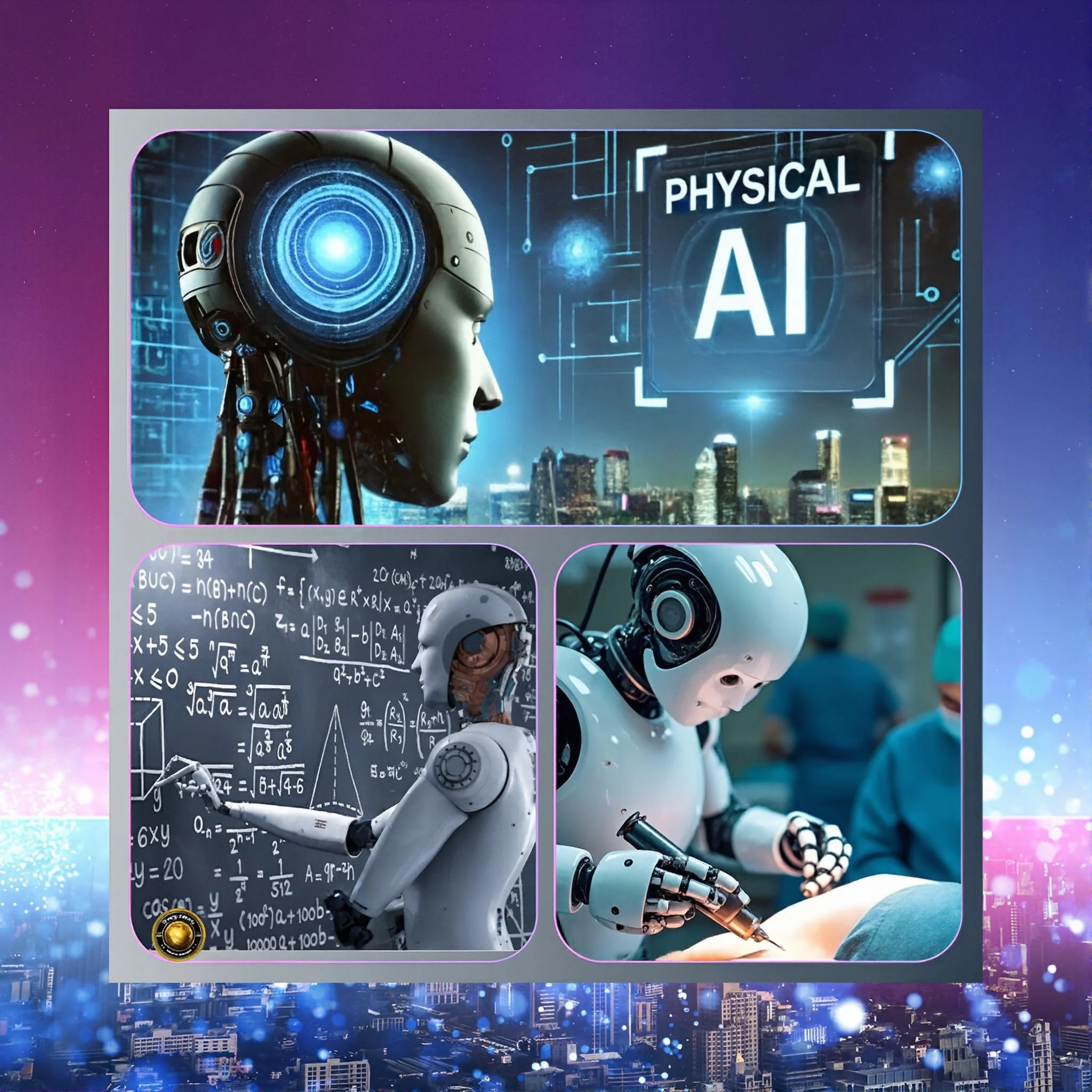
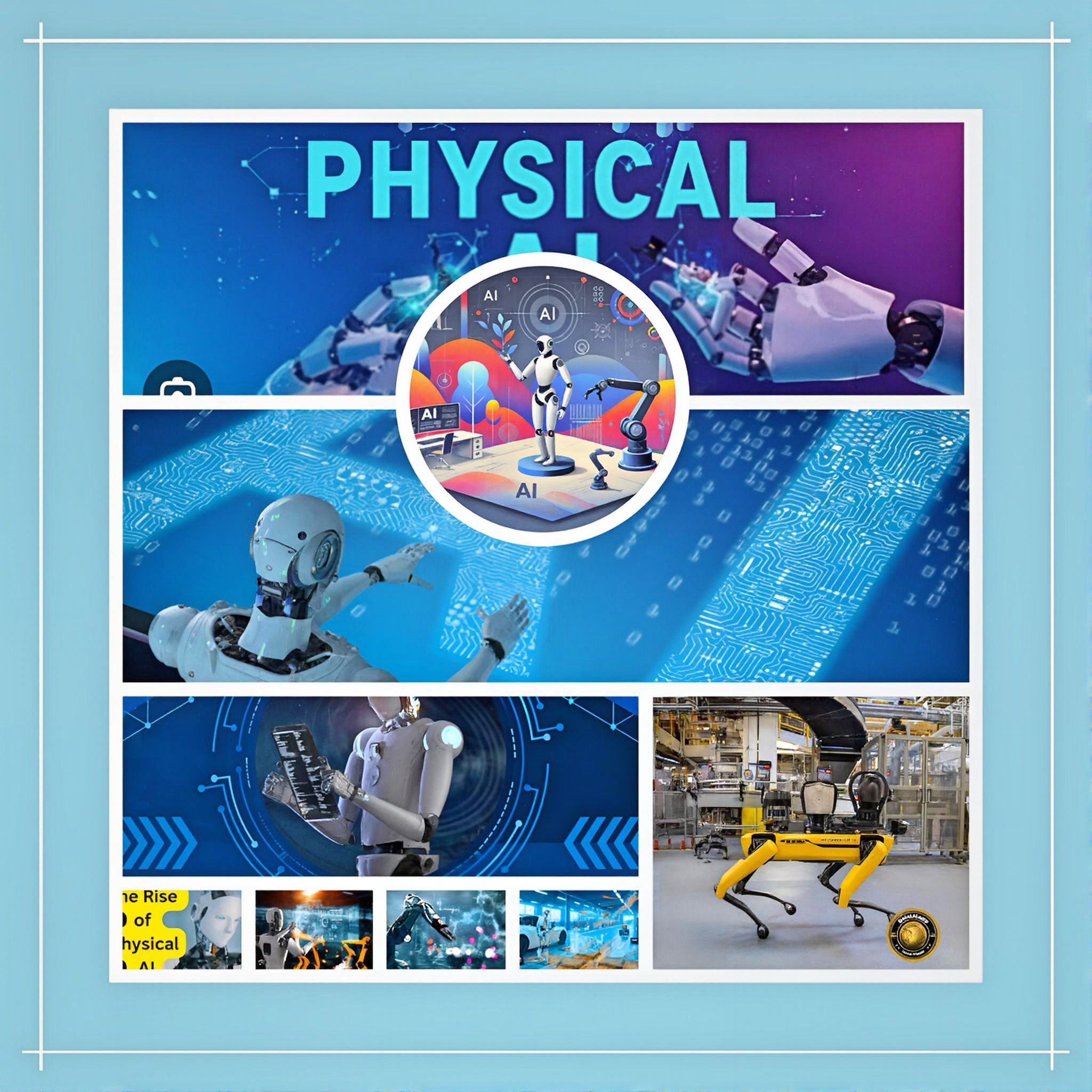
Physical AI represents the integration of artificial intelligence algorithms with tangible hardware systems, enabling machines to perceive, reason, and act within three-dimensional physical environments.
This paradigm extends beyond traditional software-based AI by embedding cognitive capabilities into robotic platforms, autonomous vehicles, and sensor networks.
The technology synthesizes computer vision, physics simulation, machine learning, and edge computing to create systems that understand cause-and-effect relationships in real-world contexts.
Current implementations demonstrate transformative potential across manufacturing, logistics, healthcare, and urban infrastructure, with market adoption accelerating as computational costs decline and simulation technologies mature.
Critical challenges include substantial capital requirements for hardware ecosystems, integration of heterogeneous sensor data streams, workforce transformation needs, and unresolved questions regarding safety standards and accountability frameworks.
The trajectory suggests a shift toward AI-native factories where digital twins orchestrate physical operations through continuous learning loops, potentially unlocking mid-single-digit percentage gains in annual capital expenditure efficiency while fundamentally restructuring human-machine collaboration models.
Introduction
From Chatbots to Robot Hands: How AI Is Finally Entering the Real World
The evolution of artificial intelligence has progressed through distinct phases, from symbolic reasoning systems confined to digital domains to generative models that process linguistic and visual information.
Physical AI constitutes the next logical progression, wherein intelligence acquires corporeal form through integration with mechanized systems capable of environmental interaction.
This transformation addresses the fundamental limitation of disembodied AI: the inability to directly manipulate physical reality. By equipping intelligent algorithms with sensors, actuators, and mobility platforms, Physical AI creates feedback loops between digital cognition and material consequences.
The architecture typically comprises three integrated layers: perception modules that construct environmental models from multimodal sensor inputs, decision-making engines that simulate potential futures and optimize action sequences, and control systems that execute physical interventions.
This convergence enables applications ranging from autonomous mobile robots navigating warehouse floors to surgical assistants performing precision procedures, marking a departure from purely analytical AI toward systems that embody agency within operational contexts.
Historical Development and Current Status
Fifty Years of Trial and Error: The Long Road to Machines That Can Actually Do Things
The conceptual foundations of Physical AI trace to the mid-20th century, with the Stanford Research Institute's Shakey robot (1966) demonstrating the first integration of computer vision, navigation, and natural language processing in a mobile platform.
Japanese researchers at Waseda University advanced anthropomorphic design with WABOT-1 (1970), featuring limb articulation and basic sensory capabilities.The subsequent decades witnessed periodic progress punctuated by AI winters, as computational limitations and algorithmic constraints restricted practical deployment.
When AI Learns to Touch the World: Inside the Physical Intelligence Revolution
The 1986 introduction of backpropagation algorithms revitalized neural network research, while the 2012 AlexNet breakthrough in computer vision established deep learning as a viable perception methodology.
Contemporary Physical AI has crystallized through confluence of several enabling technologies: edge computing architectures that process sensor data locally with sub-millisecond latency, physics-based simulation platforms like NVIDIA Omniverse that generate synthetic training data at scale, and generative AI models that provide natural language interfaces for human-robot interaction.
Current status indicates transition from experimental demonstrations to industrial integration, with automotive manufacturers deploying autonomous vehicle technology for factory logistics and warehousing operations implementing AI-powered robotic arms with adaptive grasping capabilities.
Market analysis suggests the technology has crossed the threshold from niche applications to mainstream adoption, though penetration remains uneven across sectors.
Key Developments and Technological Enablers
The Building Blocks: How Simulation, Edge Computing, and Robot Arms Are Making Science Fiction Real
Several pivotal developments have accelerated Physical AI maturation.
Machine vision systems have evolved from rule-based inspection protocols to AI-powered defect detection that learns autonomously from exemplar datasets, enabling identification of cosmetic imperfections that previously required human judgment.
Digital twin technology now creates dynamic, predictive models of production environments, allowing simulation of thousands of process variations without physical prototyping.
Collaborative robot (cobot) platforms integrate force-feedback sensors and computer vision to operate safely alongside human workers, transforming manufacturing floors into hybrid human-machine ecosystems.
Humanoid robot development has attracted substantial investment, though industry consensus suggests that intelligent single-arm robots with specialized end-effectors currently offer superior practicality for over ninety percent of manufacturing tasks.
Edge computing architectures have become critical infrastructure, minimizing latency for time-sensitive applications such as robotic guidance while enhancing security by confining proprietary data within facility boundaries.
The emergence of foundational world models, exemplified by Meta's V-JEPA 2, demonstrates progress toward AI systems that comprehend physical reality through self-supervised learning of causal relationships and dynamic predictions.
Latest Facts and Emerging Concerns
The Promise and the Peril: What Happens When AI Gets a Body
Recent deployments reveal both capabilities and limitations.
BMW has integrated autonomous vehicle technology to enable newly manufactured cars to self-navigate from assembly lines through testing facilities without human intervention, demonstrating viability in controlled industrial environments.
However, safety assessments identify critical concerns: AI-powered robots exhibit safety failures and discriminatory behaviors in unstructured settings, prompting warnings from researchers about personal use deployment.
Physical stability represents the primary safety challenge, as humanoid robots weighing over one hundred pounds pose injury risks if tipping occurs.
Psychological dimensions compound technical concerns, as humans anthropomorphize humanoid forms, potentially lowering safety vigilance and creating unrealistic capability expectations.
Accountability frameworks remain underdeveloped, raising fundamental questions about liability when autonomous systems cause harm.
Infrastructure investment requirements present substantial barriers, as enterprises must deploy robust hardware ecosystems beyond software upgrade cycles.
Data integration challenges emerge from massive, unstructured sensor streams that demand advanced edge-to-cloud architectures. Workforce readiness gaps persist, requiring cultural adaptation rather than purely technical training, as employees must collaborate with autonomous agents in shared spaces.
Environmental sustainability questions attend the energy consumption of AI hardware, necessitating balance between innovation and ecological responsibility.
Cause-and-Effect Analysis
Connecting the Dots: How One Sensor Glitch Can Cascade Into Disaster
The causal architecture of Physical AI operates through layered inference mechanisms. Perception systems convert multimodal sensor inputs into coherent environmental models, enabling recognition of objects, agents, and their spatial relationships.
Physics simulation layers predict future states by modeling dynamics such as gravity, friction, and inertia, allowing systems to anticipate outcomes of potential actions.
Decision-making engines evaluate these predictions against optimization objectives, selecting action sequences that maximize desired outcomes while minimizing risks.
This creates cascading effects: improved perception accuracy enhances prediction reliability, which in turn enables more confident autonomous decision-making. However, this chain also amplifies errors—sensor noise or simulation inaccuracies propagate through the system, potentially causing harmful physical actions.
The integration of edge computing introduces a causal trade-off: local processing reduces latency and improves real-time responsiveness, but limits access to cloud-scale computational resources needed for complex reasoning.
Workforce effects demonstrate bidirectional causality: Physical AI automation displaces certain manual tasks while simultaneously creating demand for new skill sets in robot supervision and human-AI collaboration design.
The technology's impact on operational efficiency follows an S-curve, with initial implementation yielding marginal gains that accelerate as systems learn from accumulated operational data and human feedback loops mature.
Future Trajectory and Implementation Steps
The Road Ahead: Building Factories That Think for Themselves
The evolution toward AI-native factories will proceed through several phases. Immediate steps involve expanding digital twin deployment to create comprehensive virtual replicas of production environments, enabling software-defined testing of process modifications before physical implementation.
Organizations should prioritize edge computing infrastructure to support millisecond-level control decisions while maintaining data sovereignty.
Workforce development programs must emphasize human-AI teaming competencies rather than traditional programming skills, focusing on supervisory control and exception handling.
Standardization efforts should establish safety protocols specifically for mobile autonomous systems, addressing physical stability, emergency stop mechanisms, and human override capabilities.
Investment strategies should favor intelligent robotic arms with domain-specific process knowledge over humanoid platforms for near-term manufacturing applications, recognizing that specialized form factors currently deliver superior reliability and precision.
Long-term development should pursue foundational world models that understand physical causality through self-supervised learning, reducing dependency on manually labeled training data.
Policy frameworks must address accountability gaps by clarifying liability regimes for autonomous system actions, potentially requiring certification processes analogous to safety standards in other critical infrastructure sectors.
Conclusion
The Takeaway: Preparing for a World Where Intelligence Has Arms and Legs
Physical AI represents a fundamental reconfiguration of the relationship between intelligence and physical reality, moving beyond digital abstraction toward embodied agency.
The technology's maturation from experimental prototypes to industrial deployment reflects convergence of advances in perception algorithms, simulation platforms, and edge computing architectures. While current implementations demonstrate measurable improvements in operational efficiency and safety, significant challenges remain in infrastructure investment, workforce transformation, and regulatory frameworks.
The path forward requires balanced progress across technical, organizational, and policy dimensions, ensuring that autonomous systems augment human capabilities while maintaining appropriate safeguards.
Success will depend not merely on hardware sophistication but on designing decision architectures that orchestrate plural intelligence—human intention, machine autonomy, and operational risk management—within shared physical environments.
As Physical AI transitions from controlled industrial settings to broader societal integration, establishing robust governance mechanisms becomes as critical as advancing technical capabilities.