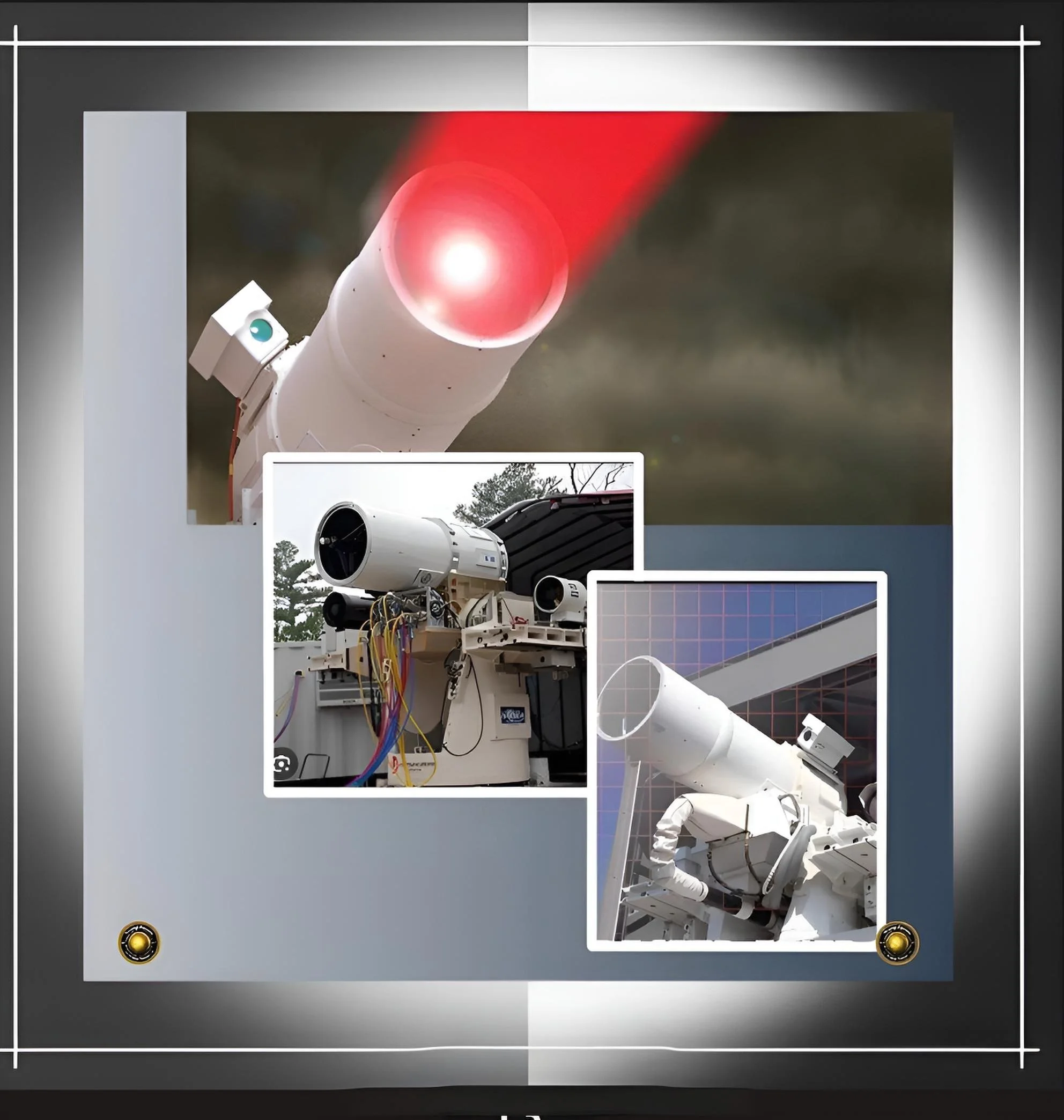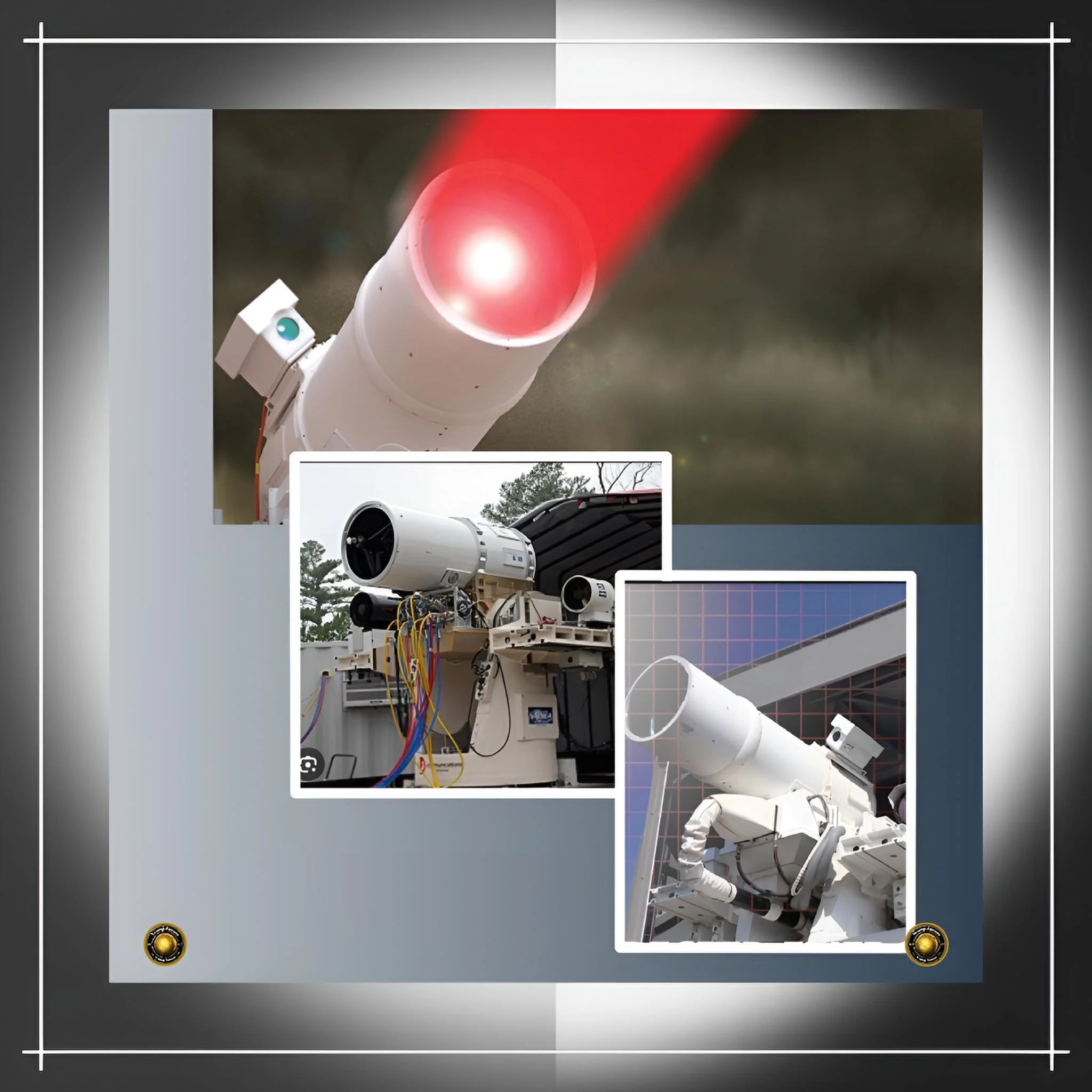
The Electromagnetic Battlefield: How Directed Energy Weapons Are Transforming Military Power and Endangering Civilian Safety - Is Venezuela’s Maduro's Capture Casualty Linked?
Executive Summary
The State of Directed Energy Weapons: Capabilities, Risks, and Strategic Implications in Contemporary Defense
Directed energy weapons representing the convergence of microwave, acoustic, and electromagnetic technologies have emerged as one of the most consequential military innovations of the twenty-first century.
Whilst the technological foundations extend across several decades, contemporary implementations reveal increasingly sophisticated systems designed to counter asymmetric threats such as unmanned aerial systems, cruise missiles, and electronic infrastructure.
The United States military maintains a commanding technological advantage, though Russia and China have accelerated their development programs substantially within the past five years.
Current deployments remain limited in scope, concentrated primarily upon experimental platforms and naval vessels, yet the trajectory toward operational integration appears irreversible.
The systems present simultaneously extraordinary promise for precision, cost efficiency, and non-lethal incapacitation alongside considerable concerns regarding medical effects, psychological impact, and the potential for abuse by unaccountable entities.
As these technologies transition from laboratory demonstration to field deployment, critical questions regarding ethical deployment, international regulation, and long-term physiological consequences demand urgent scholarly and policy attention.
Introduction
Why Electromagnetic Weapons Matter: Understanding the Shift from Kinetic to Directed Energy Dominance
The electromagnetic spectrum has become perhaps the most contested domain in modern military competition. Directed energy weapons, encompassing high-power microwave systems, acoustic devices, and electromagnetic pulse technologies, represent a fundamental departure from conventional kinetic warfare paradigms.
These systems function through the transmission of concentrated energy beams capable of disabling, damaging, or destroying targets without the collateral destruction inherent to explosive ordnance.
The fundamental appeal lies in their inherent selectivity, unlimited magazine capacity contingent upon available power generation, and dramatically reduced per-engagement costs compared to missile-based alternatives.
The scholarly and policy communities have approached these technologies with cautious optimism tempered by substantial reservations regarding their long-term consequences. Unlike nuclear or chemical weapons, directed energy systems occupy a peculiar regulatory void wherein international frameworks remain underdeveloped and national declarations of capability vary dramatically.
The technologies attract investment primarily from advanced industrial nations capable of sustaining expensive research and development programs, yet proliferation concerns mount as the technical barriers to entry diminish progressively.
History and Development
From Theoretical Physics to Battlefield Reality: The Evolutionary Path of Directed Energy Technology
The conceptual foundations for directed energy weapons emerged from early-twentieth-century theoretical physics concerning electromagnetic phenomena. However, practical military applications remained nascent until the Cold War era, when American and Soviet research institutions pursued distinct trajectories.
The United States Air Force Research Laboratory commenced systematic investigation of microwave effects upon biological tissue during the 1990s through projects bearing code names including Hello and Goodbye, examining whether modulated microwave heating in the inner ear could produce auditory hallucinations or disorienting psychological effects.
The Active Denial System, representing perhaps the most documented directed energy weapon, underwent development commencing in the late 1990s under the Department of Defense Non-Lethal Weapons Program.
Boeing and the Air Force Research Laboratory jointly conducted the initial demonstrations of the Counter-electronics High-Power Microwave Advanced Missile Project in October 2012, wherein a single weapon successfully engaged seven distinct electronic targets during a single sortie over the Utah Test and Training Range. This demonstration catalyzed accelerated investment across multiple service branches and defense contractors.
Long Range Acoustic Devices, originating from commercial loudspeaker technology, were militarized during the early 2000s and subsequently deployed in operations spanning from Iraq to Afghanistan.
By the 2010s, police and security forces in numerous democracies had adopted LRAD systems for civil disturbance management, though their deployment generated substantial international controversy regarding human rights compliance.
Current Technological Status and Capabilities
The Arsenal of Tomorrow: What Modern Directed Energy Systems Can Actually Do
The contemporary landscape comprises several discrete categories of directed energy systems, each addressing particular operational requirements and technological constraints.
High-power microwave systems employ focused beams of electromagnetic radiation at frequencies ranging from approximately 1 to 35 gigahertz, depending upon specific application.
These wavelengths prove particularly effective against electronic infrastructure, ignition systems, and solid-state components constituting modern military hardware.
The Active Denial System operates at 95 gigahertz, transmitting millimeter-wave energy that penetrates human skin to a depth of approximately 0.4 millimeters, corresponding to about three sheets of standard paper thickness.
The mechanism exploits dielectric heating principles analogous to microwave ovens, yet the substantially shorter wavelength ensures superficial penetration rather than deep tissue heating.
Military testing on approximately 15,000 volunteer exposures demonstrated that the risk of injury remained less than one-tenth of one percent when operated within prescribed parameters and safety protocols.
High-power microwave weapons designed for electronic targeting employ significantly greater power outputs, potentially reaching megawatt-level intensities. The CHAMP missile, developed collaboratively by Boeing and the United States Air Force Research Laboratory, represents an air-launched variant capable of delivering multiple strikes against distinct targets during individual missions.
The system operates through the principle of electromagnetic vulnerability exploitation, wherein microwave energy entering through antenna systems designated as front-door pathways or penetrating through structural discontinuities termed back-door pathways disrupts critical processing circuits and induces transient malfunctions.
Recent developments have substantially accelerated. The Marine Corps accepted delivery of the Expeditionary Directed Energy Counter-Swarm system in 2025, marking the first operational high-power microwave system specifically optimized for counter-unmanned aerial system applications.
The Leonidas system, developed by Epirus Corporation, incorporates artificial intelligence-controlled solid-state power amplifiers generating extremely high power outputs from comparatively compact platforms.
The Navy has conducted extensive testing of the High-Energy Laser with Integrated Optical Dazzler and Surveillance system, achieving its inaugural airborne target engagement during fiscal 2024.
Acoustic hailing devices currently deployed across military and civilian applications operate at frequencies within human auditory perception, typically between 20 and 20,000 hertz.
The Long Range Acoustic Device presents voices and warning tones with exceptional clarity across distances exceeding five kilometers, rendering it invaluable for force protection and communication applications.
Military-grade variants achieve maximum output levels approaching 162 decibels, corresponding roughly to jet engine proximity or immediate firearm discharge exposure.
Did America Just Deploy Sonic Weapons to Capture Maduro?
The credible question of whether the United States deployed directed energy weapons during Operation Absolute Resolve to capture Venezuelan President Nicolás Maduro in January 2026 remains subject to substantial evidentiary ambiguity and official equivocation. Whilst unverified eyewitness accounts propagated through social media platforms describe Venezuelan security personnel experiencing sudden physiological symptoms consistent with directed energy exposure—including epistaxis, projectile vomiting, motor incapacitation, and subjective descriptions of sound-wave induced cranial distress—neither the Pentagon nor the White House has substantively acknowledged or categorically denied the employment of such systems.
Official American statements acknowledge deploying electronic warfare capabilities to disable Venezuelan radar and communications infrastructure whilst preserving operational security regarding specific technological methodologies. The Pentagon’s deliberate circumvention of inquiries concerning sonic or microwave weapon deployment suggests plausible utilization of classified directed energy capabilities, yet remains insufficient as definitive corroboration. Former American intelligence officials have privately indicated that such weapons constitute established operational capabilities resident within military arsenals, though maintaining classification protocols prevents formal acknowledgment.
The narrative trajectory surrounding alleged directed energy weapon employment illuminates fundamental tensions between military technological innovation, official transparency constraints, and public comprehension of contemporary warfare mechanisms.
The White House press secretary’s strategic amplification of eyewitness testimony describing sonic weapon effects—whilst simultaneously declining to confirm its veracity—suggests tacit acknowledgment functioning beneath plausible deniability thresholds. Venezuelan casualty reports documenting approximately one hundred security personnel fatalities remain unattributed to specific weapons systems or mechanisms, precluding definitive linkage between survivor descriptions and directed energy technology.
The operational architecture encompassed 150 aircraft, electromagnetic grid disruption, and the insertion of elite special forces, which permitted multiple explanatory hypotheses regarding the reported physiological manifestations. Irrespective of definitional certitude regarding specific weapon employment, Operation Absolute Resolve’s apparent technological sophistication and the selective dissemination of suggestive evidence indicates that American military planners possess and potentially deployed directed energy systems as constituent elements within integrated operational frameworks, representing contemporary manifestation of electromagnetic warfare dominance discussed throughout scholarly defense literature.
International Development Programs
The Global Race: How Russia and China Are Challenging American Electromagnetic Supremacy
Russia has pursued microwave weapon development contemporaneously with American efforts, though operational deployment remains limited and poorly documented.
The Ranets-E and Rosa-E systems represent point-defense architectures targeting aircraft electronic components, yet assessments suggest their effective range remains curtailed against adequately shielded systems.
The Russian launch of Kosmos 2558 in August 2022 likely represented deployment of a radiofrequency directed energy weapon designated for space-based applications, signifying recognition that electromagnetic dominance extends through orbital altitudes.
China has emerged as the most rapidly advancing alternative power within directed energy technology.
In November 2024, the People's Liberation Army showcased three novel ground-based microwave weapons at the Zhuhai Air Show, including the Hurricane 2000 and Hurricane 3000 systems designed for anti-drone applications with estimated effective ranges of two to three kilometers.
Most remarkably, Chinese scientists demonstrated in 2024 the convergence of multiple high-powered microwave beams transmitted from separate vehicle-mounted platforms, achieving synchronization tolerances of 170 picoseconds and concentrating power densities exceeding those achievable through individual systems.
This breakthrough suggests feasibility for space-based anti-satellite applications generating power levels potentially exceeding gigawatt-class magnitudes.
Key Developments and Technical Examples
Weapons That Changed Everything: Breakthrough Systems Reshaping Modern Warfare
The CHAMP missile represents perhaps the most operationally mature example of integrated microwave delivery.
Derived from demilitarized cruise missile airframes under the Intermediate-Range Nuclear Forces Treaty framework, the system permits selective targeting of multiple objectives during individual sorties.
The Air Force had deployed at minimum twenty CHAMP-equipped missiles as of May 2019, though operational employment remains classified.
The Leonidas high-power microwave platform integrates programmable safe-zone protocols ensuring unmanned systems designated as friendly remain exempt from targeting, whilst simultaneously maintaining deep magazine capacity enabling rapid engagement of multiple hostile threats without reloading requirements.
The system operates at comparatively low voltage levels, mitigating electromagnetic safety concerns for operators.
The HELIOS laser system represents advancement in high-energy laser technology, achieving its inaugural airborne target engagement in fiscal 2024 and demonstrating capability against both unmanned systems and potentially anti-ship cruise missiles.
The Navy has prioritized laser integration aboard Arleigh Burke-class destroyers, with Aegis Combat System software modifications installed aboard five vessels providing operational readiness postures.
China's distributed microwave convergence experiment, conducted in western China during 2024, synchronized seven vehicle-mounted transmission platforms achieving power concentrations previously considered theoretically challenging.
The test achieved apparent GPS jamming capability at ranges exceeding 1,100 miles, demonstrating technical mastery of beam coherence and synchronization protocols.
Health Effects and Medical Concerns
The Hidden Costs: Understanding the Human Toll of Directed Energy Exposure
The medical and physiological consequences of directed energy exposure remain incompletely characterized despite extensive testing. Military volunteer exposures to Active Denial System radiation identified multiple instances of superficial skin burns, blister formation, and prolonged pain responses exceeding expected parameters.
Whilst the dominant scientific narrative emphasizes non-ionizing radiation characteristics and minimal injury risk, critical medical professionals observe that long-term exposure effects remain entirely unstudied and that potential interactions with pre-existing medical conditions remain largely unexplored.
Acoustic weapons present particular concern regarding auditory system damage. Long Range Acoustic Device deployment has generated documented cases of permanent hearing loss and persistent tinnitus, particularly among individuals positioned within five meters of operational systems.
Infrasound weapons, operating at frequencies below human auditory perception thresholds, present theoretical capability for resonance induction within organ systems, producing nausea, disorientation, and potential organ dysfunction, yet these effects remain largely theoretical rather than operationally demonstrated.
The photochemical pathways through which millimeter-wave radiation affects human biology remain incompletely understood. Eyelid tissue, measuring approximately 0.2 millimeters in thickness, represents a particular vulnerability site given its substantial density of sensory nerve endings and relatively thin epithelial protective layers.
Extended exposure durations exceeding manufacturer specifications introduce genuine risk for dermal damage traversing beyond superficial layer penetration.
Ethical, Legal, and Psychological Implications
Invisible Power: Why Directed Energy Weapons Challenge International Law and Human Rights
Directed energy weapons present unprecedented regulatory challenges given that they operate invisibly and inaudibly whilst producing subjective sensations of pain and burning without leaving physical evidence of their deployment.
This characteristic combination creates substantial vulnerability to abuse by malevolent actors cognizant that documentation of injury remains challenging. The ability to inflict severe pain repeatedly without producing visible marks or permanent injury constitutes precisely the definitional characteristics flagged by human rights organizations as consistent with torture methodologies.
Psychological research has documented entrenched public anxiety regarding radiation-based technologies, particularly given cultural narratives emphasizing invisible penetration, permanent contamination risks, and tampering with human biology.
The Active Denial System's operational characteristics—silent, invisible, painful—amplify these psychological concerns substantially beyond equivalent kinetic alternatives.
The discrimination principle fundamental to jus bello international law requires that military forces distinguish between combatants and non-combatants and employ force proportionate to military advantage.
The directed energy weapon operational paradigm introduces particular discrimination challenges, as operators must make intent determinations at considerable distance and without direct sensory information regarding target status.
This structural reality generates substantial probability that non-combatants will experience weapon effects equivalent to military personnel, introducing legal and ethical violations to operational deployments.
Cause and Effect Analysis
The Weapons That Led to Weapons: Understanding How Directed Energy Systems Drive Strategic Change
The proliferation of directed energy weapons reflects fundamental transformations in threat architecture rather than representing technological development conducted in isolation.
The exponential proliferation of unmanned aerial systems, simultaneously decreasing in cost and increasing in sophistication, has rendered conventional air defense systems economically unsustainable and tactically challenged.
A single advanced cruise missile costs substantially more than the target it defends, creating perverse economic incentives. Directed energy weapons, requiring only energy input and capable of delivering multiple engagements from single platforms, fundamentally reverse these economic calculations.
The transition from experimental platforms to operational deployment drives substantial changes in military doctrine and force structures.
A destroyer equipped with directed energy weapons requires substantially fewer missiles, permitting reallocation of magazine space to additional sensor systems or electronic warfare capability. The operational implications extend beyond simple capability substitution, restructuring tactical decision-making frameworks and introducing new vulnerability vectors.
Simultaneously, the demonstrated effectiveness of directed energy weapons against electronic infrastructure creates reciprocal vulnerability escalation.
Adversaries recognizing their electronic systems susceptibility to microwave weapons accelerate hardening efforts, shielding protocols, and redundant systems, generating complex electromagnetic competition dynamics analogous to traditional arms racing.
The medical and health consequences flowing from widespread directed energy deployment remain speculative pending extended operational experience.
The mechanisms through which millimeter-wave radiation affects human physiology remain incompletely characterized despite extensive research. Potential interactions with pharmaceutical exposures, metabolic conditions, and neurological predispositions remain entirely unexplored.
Future Developmental Trajectories and Strategic Implications
The Coming Dominance: Why Directed Energy Will Define Twenty-First-Century Military Power
The Department of Defense has designated directed energy technology as one of fourteen critical technology areas, allocating substantive resources to bridge gaps between laboratory demonstration and operational fielding.
The strategic roadmap spanning 2025 through 2030 emphasizes weapons capable of neutralizing missiles and defending aircraft and bases against aerial assault.
Congressional authorization for Army procurement of the Enduring High Energy Laser program in fiscal 2026 represents transition from experimental platform status to production authorization, suggesting imminent operational integration across multiple service branches.
Space-based directed energy applications represent the next developmental horizon. American strategic planners recognize that orbital-positioned systems possess inherent advantages regarding surveillance coverage and electromagnetic propagation, yet the technical challenges remain formidable.
China and Russia appear cognizant of identical strategic advantages, accelerating their own space-directed energy programs accordingly.
The technical convergence toward artificial intelligence-controlled targeting, autonomous decision-making frameworks, and fully automated engagement authorities presents governance challenges without historical precedent.
Permitting artificial intelligence systems to exercise lethal authority over human beings introduces questions that exceed traditional military ethics frameworks and demand urgent regulatory attention at international levels.
The integration of directed energy weapons into layered defense architecture alongside kinetic systems suggests that future military forces will require cognitive frameworks substantially different from contemporary doctrine.
Decision-makers must simultaneously evaluate energy availability, thermal dissipation capacity, target priority matrices, and engagement geometry considerations absent from conventional weapons employment.
Conclusion
The Unavoidable Future: Managing the Inevitable Rise of Electromagnetic Weapons in Global Defense
Directed energy weapons have transitioned from theoretical curiosity to operational military systems within contemporary defense architectures. The technological sophistication has reached maturity sufficient to justify operational deployment, yet the long-term consequences remain substantially uncertain.
The United States maintains overwhelming technological advantage, yet that advantage faces progressive erosion as Russia and China commit substantial resources to capability development.
The fundamental tension between the compelling military advantages of directed energy systems and the substantial concerns regarding health effects, ethical deployment, and potential abuse by unaccountable actors will define policy discourse throughout the coming years.
The technologies present simultaneously the prospect of reduced casualties through non-lethal alternatives to kinetic weapons and the troubling potential for systematized pain infliction without visible injury.
The critical pathway forward demands substantially enhanced transparency regarding testing protocols, health effect assessments, and ethical deployment frameworks.
International regulation establishing norms regarding directed energy weapon employment in non-combatant contexts represents an urgent necessity. The technologies will inevitably proliferate, their complexity and cost barriers declining progressively.
Establishing governance frameworks whilst advanced industrial nations possess effective monopolistic advantages represents the optimal strategic moment for international cooperation regarding responsible development and deployment.
The electromagnetic spectrum will unquestionably constitute the central domain of military competition throughout the coming decades. Directed energy weapons will occupy increasingly prominent positions within military force structures across advanced technological societies.
The challenge confronting strategic planners and defense analysts lies not in preventing this inevitable evolution but rather in shaping it toward outcomes that sustain both military effectiveness and humanitarian constraints upon violence.