Silent Annihilation: How Electromagnetic Weapons Are Redefining Military Dominance in the 2026 Global Battlespace - Part II
Introduction
The electromagnetic spectrum has transitioned from peripheral military consideration to the central nexus of twenty-first-century strategic competition. Directed energy weapons—encompassing high-power microwave systems, advanced laser platforms, and acoustic devices—represent a fundamental recalibration of military technology paradigms, displacing the kinetic-centric doctrines that dominated post-Cold War defence architecture.
As these systems transition from experimental demonstration toward operational maturity throughout 2025-2026, they introduce unprecedented capabilities whilst simultaneously presenting formidable governance challenges demanding immediate strategic attention.
The Technological Inflection Point: From Laboratory Demonstration to Battlefield Reality
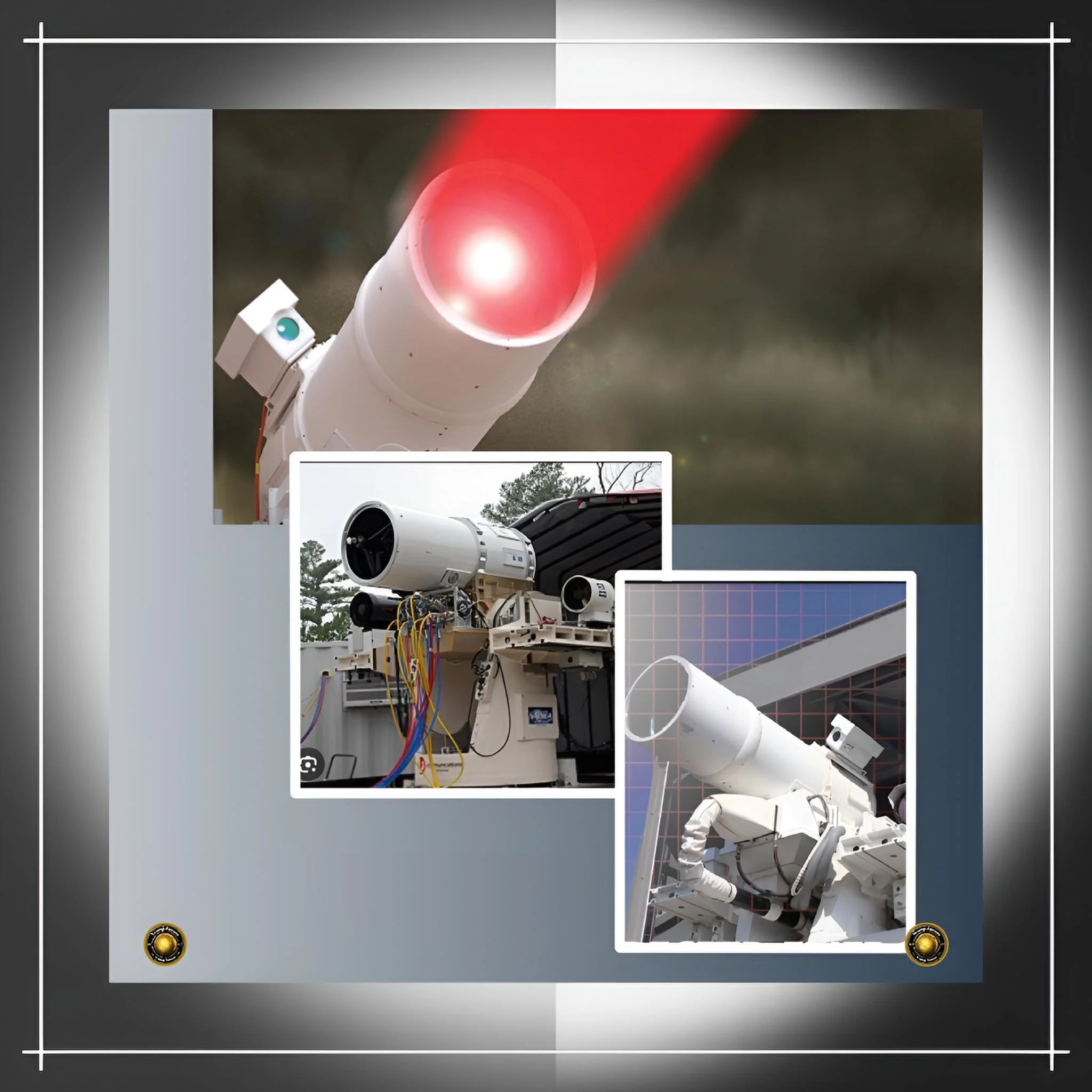
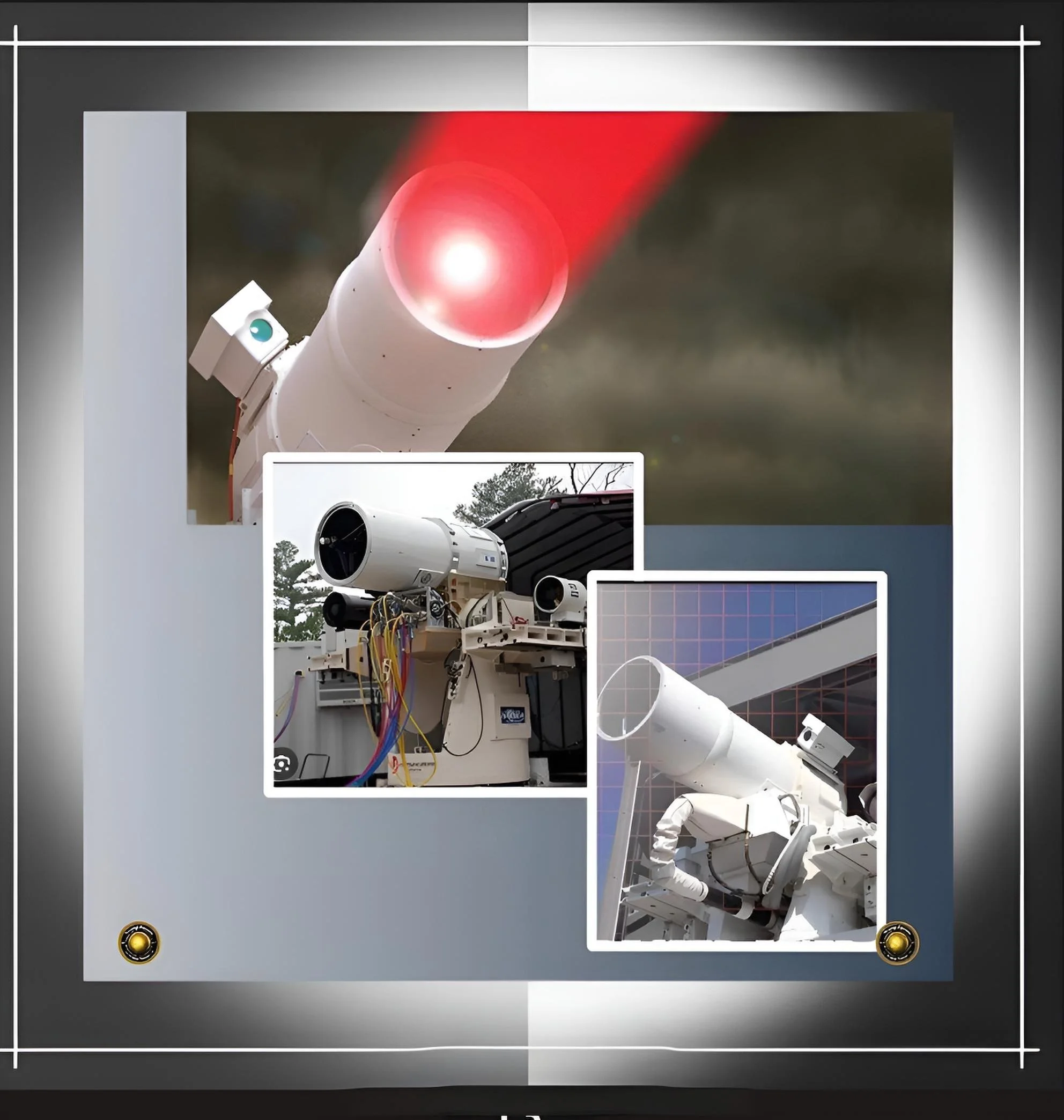
The trajectory of directed energy weapon development has accelerated demonstrably within the past eighteen months. The United States Navy's successful engagement of an aerial drone utilising the HELIOS laser system during fiscal 2024 operations marked a watershed moment—the first operationally validated strike by an advanced laser platform aboard active naval combat vessels. This achievement transcends mere technological accomplishment; it represents validation of operational concepts that defence planners have contemplated for decades.
The Department of Defence Directed Energy roadmap, updated as recently as May 2024, explicitly delineates a pathway toward megawatt-class systems by 2030. The intermediate milestones demand achievement of 500-kilowatt platforms by 2025-2030, representing a tripling of current operational power levels whilst simultaneously reducing platform weight and volume—a constraint that previously impeded shipboard integration.
The Congressional authorization of $679 million for production contracting of vehicle-mounted directed energy air-defence systems in fiscal 2026 signifies transition from prototyping toward operational fielding. The Army anticipates awarding production contracts for Stryker-mounted 50-kilowatt laser systems throughout 2026, representing the first instance of high-energy laser procurement moving beyond experimental acquisition frameworks.
The Sino-American Directed Energy Competition: Asymmetric Innovation and Technological Convergence
China's November 2024 public disclosure of the Hurricane 3000 high-power microwave system, unveiled during the Zhuhai Air Show and subsequently displayed during September 2025 military commemorations, illuminates the accelerating technological competition within the electromagnetic domain. Norinco developer Yu Jianjun's assertions that the Hurricane 3000 achieves effective engagement ranges exceeding three kilometres against unmanned aerial systems represent a direct technological challenge to American systems.
The Leonidas platform, considered operationally mature within the United States military, demonstrates effective ranges approximating two kilometres—placing it dimensionally inferior to acknowledged Chinese capabilities.
More significantly, China's demonstrated mastery of distributed beam coherence technology—synchronising seven vehicle-mounted transmission platforms achieving beam synchronisation tolerances of 170 picoseconds—suggests that Chinese engineers have surmounted technical obstacles that the United States and its allies continue confronting.
The ability to converge multiple microwave transmission arrays with such precision introduces theoretical feasibility for space-based anti-satellite applications generating gigawatt-class power concentrations. This capability addresses precisely the strategic vulnerability that American defence planners identify as existential within Indo-Pacific conflict scenarios.
Russia's modernisation initiatives, including the Peresvet airborne high-energy laser and ongoing Ranets-E and Rosa-E microwave development programs, ensure that American technological advantages face progressive erosion across multiple directed energy modalities.
The Russian Federation's August 2022 deployment of Kosmos 2558 satellite-based radiofrequency weapon signifies that Moscow recognises identical strategic imperatives regarding space-based electromagnetic dominance.
The Operational Integration Imperative: Transforming Doctrine Amid Technological Maturation
The integration of directed energy weapons into layered defence architecture introduces operational complexity substantially exceeding conventional weapons employment. Naval vessels equipped with HELIOS systems must simultaneously optimise thermal dissipation capacity, energy generation capacity, engagement prioritisation algorithms, and target geometry calculations absent from traditional air-defence frameworks.
The installation of Aegis Combat System software modifications aboard five Arleigh Burke-class destroyers (DDG-81, DDG-89, DDG-122, DDG-124, DDG-127) enabling operational control of integrated laser systems represents institutional commitment toward comprehensive doctrine reformation.
The heterogeneous integration of directed energy modalities—laser systems for precision engagement, high-power microwave platforms for wide-area denial and electronic infrastructure disruption, acoustic hailing devices for communication and psychological effect—demands cognitive frameworks substantially divergent from practised weapons employment procedures.
Military organisations historically demonstrate institutional resistance toward doctrine reformation; yet the operational efficacy of directed energy systems appears sufficient to overcome such resistance.
Medical Consequences and Ethical Governance: The Deferred Reckoning
Whilst military planners celebrate technological achievements, critical medical and ethical dimensions remain inadequately addressed. The long-term physiological consequences of millimeter-wave radiation exposure remain substantially characterised only through short-duration military volunteer testing. The Active Denial System, despite extensive testing protocols involving approximately 15,000 volunteer exposures, demonstrates medical complications including superficial skin burns, blister formation, and pain responses exceeding predicted parameters.
Extended exposure scenarios, particularly among vulnerable populations including those with pre-existing dermatological conditions or metabolic disorders, remain entirely unexplored.
Acoustic weapons deployment has generated documented cases of permanent hearing loss and persistent tinnitus, particularly among personnel operating systems or positioned within proximity zones during operational employment. The psychological impact of invisible, inaudible weapon effects generates substantial public anxiety amplified by cultural narratives regarding radiation-based technologies and their invisible contamination potential.
The discrimination principle fundamental to international humanitarian law requires that military operators distinguish between combatants and non-combatants and maintain proportionality constraints. Directed energy weapons' invisible operational characteristics and psychological effects introduce substantial likelihood of misidentification, generating legal and ethical violations attendant to operational deployment.
The Inevitable Electromagnetic Future: Strategic Implications and Governance Imperatives
Directed energy weapons have transitioned irreversibly from theoretical consideration toward operational maturity. The United States maintains commanding technological advantage, yet that advantage faces progressive erosion as competitors commit substantive resources toward capability development. The critical strategic pathway demands enhanced transparency regarding testing protocols, establishment of international regulatory frameworks governing directed energy employment in non-combatant contexts, and urgent scholarly and policy attention toward long-term physiological consequences.
The electromagnetic spectrum will unquestionably constitute the central competition domain throughout the coming decades. The challenge confronting strategic planners consists not in preventing this inevitable evolution but rather in shaping it toward outcomes reconciling military effectiveness with humanitarian constraints upon violence.