Understanding Domestic Violence Against Men: A Global Perspective on Changing Gender Dynamics - Part 1 series
Foreword
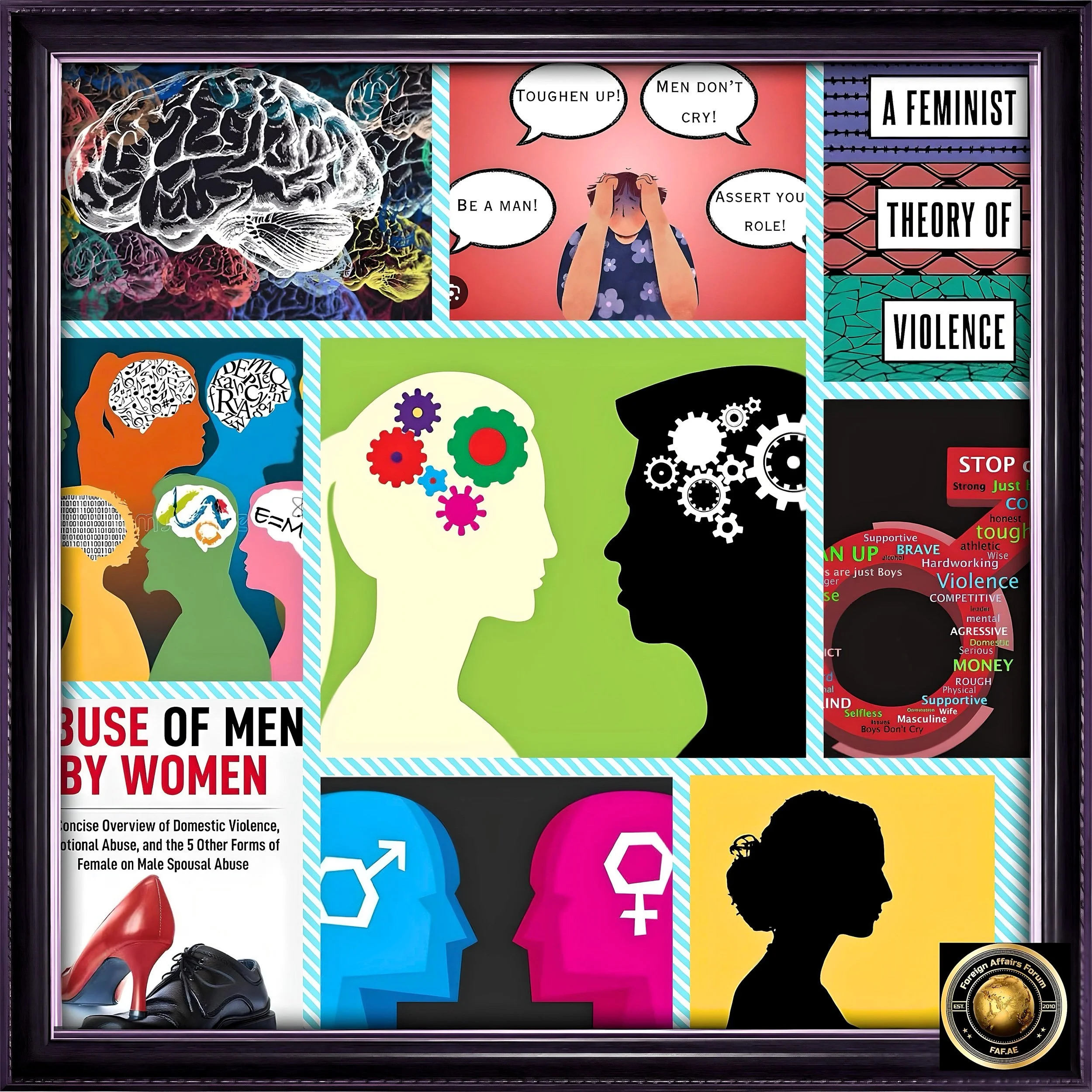
Ann Silvers, a licensed mental health counselor and relationship coach based in Washington State, presents her seminal work, “Abuse OF Men BY Women: It Happens, It Hurts, and It’s Time to Get Real About It.”
FAF rigorously examines a largely neglected dimension of domestic violence, offering critical insights into the dynamics of gender-based abuse.
Silver brings a dual perspective to her analysis: as a counselor who has treated male and female victims of abuse, and as a survivor of intimate partner violence.
Her research effectively dismantles three pervasive myths regarding male victimization: the notions that such abuse is non-existent, trivial, or devoid of significant consequences.
The significance of Silvers' work lies in its challenge to sociocultural narratives that frequently overlook or even rationalize abusive behaviors by women towards men—behavior that would attract widespread condemnation if the roles were reversed.
Citing the Centers for Disease Control and Prevention's 2022 report, Silvers reveals that approximately one in two men will experience intimate partner violence within their lifetime, with data indicating that rates of psychological aggression, physical violence, and contact sexual violence are nearly equal across genders.
Notably, recent statistics illustrate that 5.5% of men and 4.5% of women reported experiencing physical violence from a partner in the preceding year.
Regional Variations in Domestic Violence Patterns
Western Nations
In Western countries, overall domestic violence rates tend to be lower relative to other global regions.
Comprehensive international data show intimate partner violence lifetime prevalence rates of 20% in Western Europe, 25% in North America, and 23% in Australasia.
However, persistent underreporting of male victimization remains a significant issue, frequently exacerbated by social stigma.
In the United States, approximately 7.8% of men report experiencing intimate partner violence compared to 23% of women.
The statistics in Germany mirror these trends, with 10.3% of men affected.
However, actual prevalence rates likely reflect substantial underreporting—some regions report only 3% of domestic violence incidents being reported to law enforcement.
Pacific Nations
The Pacific region exhibits some of the highest domestic violence rates globally. Reports indicate that the prevalence of intimate partner violence in certain Pacific Island countries surpasses 60%, with Kiribati at 68%, Fiji at 64%, and the Solomon Islands also at 64%.
Cultural practices, such as “bride price” systems, contribute to maintaining victims in abusive environments.
Unique challenges in the Pacific include a paucity of formal support services, particularly in rural areas where about 80% of the population resides, coupled with a pronounced cultural acceptance of violence that reinforces patriarchal power structures.
Eastern Nations and Traditional Societies
In Eastern Europe and Central Asia, domestic violence trends are influenced by transitional economies and entrenched gender norms.
Countries such as Ukraine and Moldova report higher rates of domestic violence, while certain traditionally conservative nations exhibit lower rates that likely reflect significant underreporting rather than actual prevalence.
In India, domestic violence against men is alarmingly high, with approximately 52% of men reporting experiences of violence from intimate partners, in contrast to 33% of women.
This statistic challenges prevailing Western assumptions regarding gendered patterns of violence.
Countries in the Middle East and North Africa report a lifetime prevalence rate of 31% for domestic violence, wrestling with legal frameworks that often fail to acknowledge marital rape or psychological abuse.
Changing Times and Evolving Gender Dynamics
Impact of Modernization on Violence Patterns
Empirical research indicates that modernization produces complex effects on domestic violence dynamics.
While advancements in education, legal reform, and women’s empowerment have curtailed certain forms of violence, modernization also introduces new stressors that may heighten domestic violence risks:
Positive effects include heightened awareness of domestic violence, enhanced legal protections, increased financial autonomy for women, and the promotion of egalitarian gender norms that contest patriarchal structures.
Conversely, when redefined traditional gender roles prompt some men to utilize violence as a means of reasserting control, the risk of violence can escalate.
Additionally, urbanization often undermines extended family support systems, rendering victims more susceptible to maltreatment.
Cultural Factors and Changing Norms
Cultural norms play a pivotal role in shaping both the prevalence and public perception of gender-based violence.
Research indicates that nations with similar cultural contexts exhibit analogous patterns of gender-based violence, highlighting the interplay between cultural factors and abuse prevalence.
Traditional gender roles, which endorse male dominance and female submissiveness, persist in influencing global violence patterns. However, as these roles evolve, new behavioral dynamics emerge.
Recent studies indicate that women who economically outperform their male partners may inadvertently escalate tensions, suggesting a need for deeper exploration into these complex interactions.
Men as Victims: A Shift in Understanding Gender Dynamics in Domestic Violence
The acknowledgment of male victimization within the context of domestic violence marks a pivotal advancement in the discourse around gender dynamics.
Recent statistics indicate that 24% of domestic violence victims in the United States are men. Moreover, psychological aggression emerges as the predominant form of abuse men endure, impacting nearly half of the male population.
Male victims encounter distinctive barriers, including feelings of shame, a pervasive fear of being disbelieved, and apprehensions regarding the potential loss of parental contact.
Research by Ann Silvers delineates seven modalities of partner abuse affecting men: physical, verbal, sexual, financial, legal/administrative, spiritual, and emotional/psychological.
This analysis illustrates that such abuse transpires across various gender configurations, thereby challenging conventional assumptions about the demographics of perpetrators and victims.
Conclusion
The Necessity for a Comprehensive Framework
The shifting paradigms of gender roles and the multifaceted nature of domestic violence necessitate a culturally informed, nuanced approach that acknowledges both the established reality of women as the predominant victims globally and the emerging recognition of male victimization.
Ann Silvers' work provides critical insights into this phenomenon, documenting not only the prevalence and implications but also the unique challenges that male victims face within the domestic violence spectrum.
As societal norms continue to evolve, the landscape of domestic violence becomes increasingly intricate.
Western nations must confront the complexities of changing gender dynamics while ensuring robust support for all victims. Concurrently, Pacific and Eastern nations grapple with the dual exigency of addressing traditionally elevated violence rates alongside pressures of modernization.
The path forward lies in developing culturally sensitive interventions aimed at addressing the root causes of violence while providing comprehensive support to all victims, irrespective of gender.
This advanced comprehension posits that effective domestic violence prevention strategies must transcend reductive gender binaries, engaging with the intricate interplay of cultural norms, economic determinants, and shifting social structures that shape violence patterns across diverse global contexts.