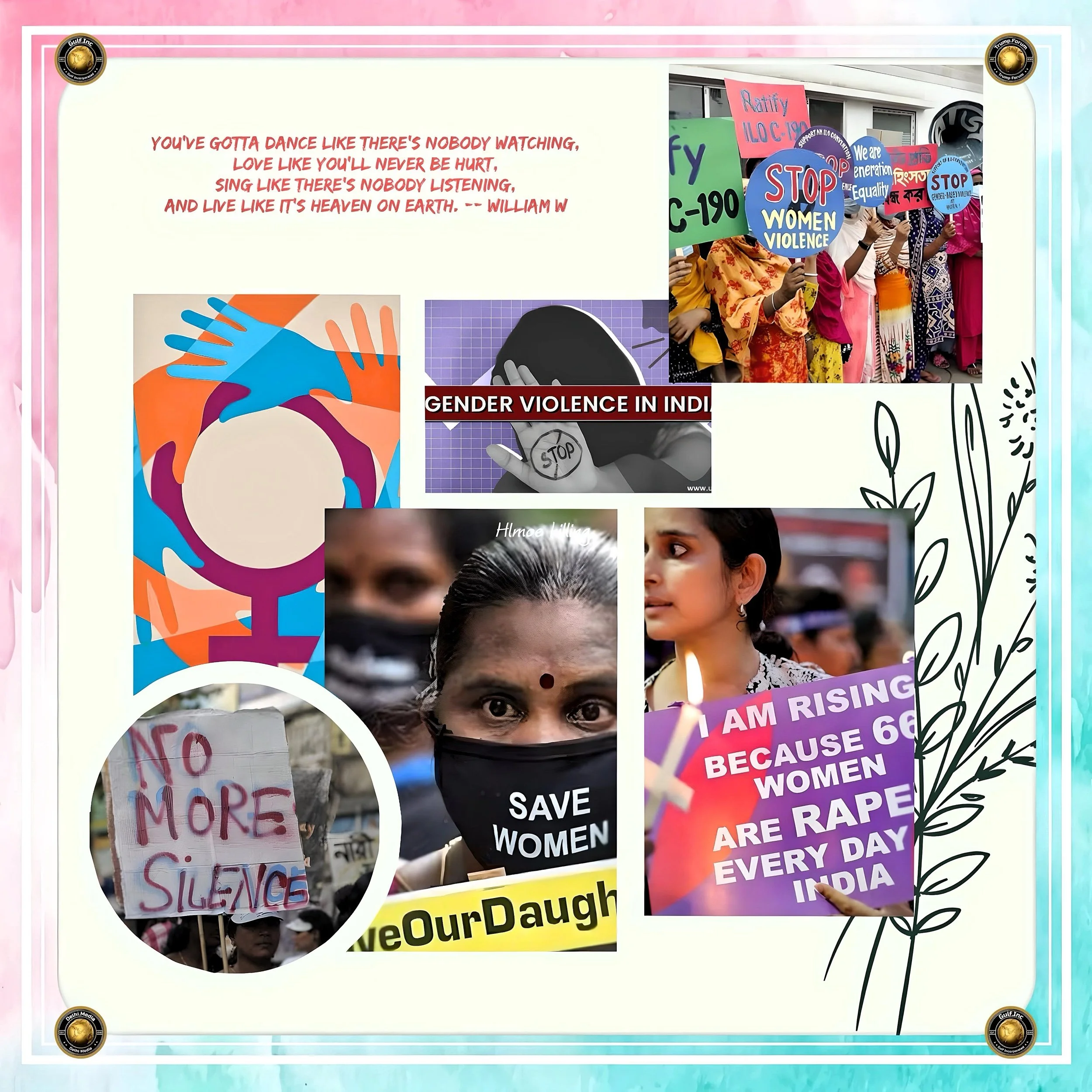
Swastika.Media- Analysis of Societal Norms Impacting Gender-Based Violence in Nations: Honor Killings - Multifaceted Perspective - Part 3
Introduction
Countries with low and medium safety indices for women confront persistent challenges rooted in entrenched societal norms that facilitate gender-based violence (GBV).
These detrimental practices are perpetuated by structural inequalities, patriarchal systems, and cultural traditions that undermine women’s autonomy and safety.
Predominant Harmful Societal Norms
The most pervasive norms driving GBV revolve around male entitlement and control over women’s bodies and lives.
Empirical research across twelve countries in Africa, Latin America, the Caribbean, the Pacific, and the Indo-Pacific has identified ten core harmful beliefs that underpin violence against women and girls.
These beliefs include the expectation for women to be submissive to male family members across all facets of life, leading to rigid gender roles where physical violence is utilized as a punitive measure when women deviate from these prescribed norms.
Patriarchal social structures are foundational to gender inequality in many regions, particularly in southern Africa.
Here, the perpetration of violence against women is intricately linked to norm systems, practices, and deeply rooted discrimination.
These structures normalize coercive male control, with studies indicating that 80% of young individuals in Latin America and the Caribbean report witnessing their male peers monitoring their partners through mobile phones and social media.
Traditional harmful practices, often defended through cultural, religious, or superstitious justifications, continue to infringe upon women's rights in numerous countries.
These include female genital mutilation/cutting (FGM/C), prevalent in 28 countries across Africa and parts of the Middle East and Asia; early and forced marriages; dowry-related violence; honor killings; and various forms of sexual violence rationalized by cultural norms.
The persistence of son preference manifests in devastating implications, including sex-selective abortions, female infanticide, and severe neglect of female children. India exemplifies this issue, exhibiting an alarming disparity of 63 million fewer women than warranted by demographic standards, alongside 21 million girls categorized as “unwanted.”
Inter-caste and Inter-religion Marriage: A Complex Dilemma
The characterization of intercaste and inter-religion dating and marriage as either a "curse" or a "boon" is intricate, deeply intertwined with cultural, social, and political factors. In various societies, especially within South Asia, such unions are often perceived as threats to traditional norms, resulting in considerable backlash. Conversely, in other contexts, they are increasingly recognized as progress towards social inclusivity.
Social Stigma and Resistance
Intercaste and inter-religion marriages frequently face stigma in several nations, particularly in South Asia. The 2011 census of India revealed that only approximately 5.8% of marriages were intercaste, with rural areas exhibiting heightened resistance.
Couples often endure social ostracism, familial pressure, and even extreme violence, including honor killings.
The National Crime Records Bureau of India recorded an increase in honor killings from 25 in 2019 to 33 in 2021, with actual figures likely much higher.
Honor killings, while a serious issue with historical roots in tribal customs and societal norms, remain a concern in India.
These acts are often driven by the belief that a victim's behavior has brought dishonor to the family or community, leading to violence, often perpetrated by male family members against women.
While statistics from 2021 to 2025 would be the most relevant, detailed, specific and comprehensive data on honor killings is often not readily available, due to underreporting and societal factors.
In Nepal, intercaste marriages remain taboo, yielding fears of social ostracism among most families. Couples often face harassment, forced separation, and systemic discrimination.
In Pakistan, intercaste marriages among non-elite classes carry significant social disapproval, further heightening the risk of violence and honor-based crimes against women.
Nations Ensnared in Traditional Norms
Numerous countries and regions continue to be entrenched in conventional norms
India
Despite legal frameworks like the Special Marriage Act of 1954, couples encounter bureaucratic obstacles, social exclusion, and violence. Moreover, certain state governments have enacted restrictive laws, and adherence to Supreme Court directives aimed at safeguarding these unions lacks timely enforcement.
Nepal
Although intercaste marriage is gradually gaining acceptance, strong social resistance persists, despite government incentives to promote such unions.
Pakistan
Intercaste marriage is largely unacceptable outside of upper-class enclaves, escalating the risks of violence for women involved.
Israel
Interfaith marriages are exceedingly rare and are not recognized by state authorities unless there is a conversion. Marriages between Jews and non-Jews face substantial social and religious barriers.
Saudi Arabia
nterfaith marriages are stringently restricted, particularly for non-Muslims, due to the state's stringent interpretation of Islamic law.
Zoroastrian Communities (India and diaspora)
These communities impose prohibitions against interfaith marriage, strictly regulating access to religious venues.
Consequences of Adherence to Traditional Norms
Adherence to these outdated norms precipitates significant negative repercussions:
Social Isolation
Couples and their offspring often find themselves excluded from family and community events, resulting in profound feelings of loneliness and alienation.
Violence and Honor Killings
Couples may face threats, harassment, and potential murder at the hands of their own families or communities.
Discrimination in Employment and Housing
Individuals involved in intercaste or inter-religion unions may encounter systemic discrimination that adversely affects their economic opportunities and living conditions.
Psychological Stress in Intercaste and Inter-religion Relationships
The enduring pressure and fear associated with intercaste and inter-religion relationships significantly impact mental health, resulting in elevated levels of depression and anxiety among affected couples.
Case Studies and Resilience
India
The tragic case of Kausalya and Shankar in Tamil Nadu exemplifies the extreme consequences of caste-based violence, where Shankar was murdered by Kausalya’s family for marrying outside their caste.
Conversely, the experiences of Tilakam and Kathir, who have been married for over 18 years, highlight resilience; they actively advocate for intercaste couples, demonstrating that success is possible despite societal pressures.
Nepal
In Nepal, despite government initiatives aimed at promoting intercaste marriages, many couples still encounter significant social and familial rejection.
This is particularly acute for Dalit women, who often lack support systems if their upper-caste spouses abandon them.
Pakistan
Honor-based violence remains prevalent in Pakistan, particularly against women engaged in intercaste marriages, with numerous reports of violence and killings linked to these unions.
While legal frameworks in countries like India, Nepal, Pakistan, Israel, and Saudi Arabia permit intercaste and inter-religion marriages, cultural and social resistance continues to foster conflict.
Notably, movements among youth and civil society are emerging to challenge entrenched norms and promote inclusivity.
Cultural and Religious Justification of Violence
Historical and religious ideologies often validate the physical punishment of women, framing it within the context of male ownership and family honor. Systems that uphold "family honor" perpetuate violence against women deemed to compromise familial reputation through their marital choices.
These honor-based frameworks contribute to an environment where such violence is not merely tolerated but sometimes encouraged by community norms.
The social legitimization of domestic violence persists, often compelling victims to withdraw complaints due to familial reconciliation pressures.
This normalization is exacerbated when women internalize justifications for domestic violence, reflecting a broader societal pattern that privileges patriarchal power dynamics.
Policy Measures to Combat Gender-Based Violence
Countries are increasingly acknowledging the necessity of comprehensive, multi-sectoral strategies to address gender-based violence (GBV).
Legislative and Policy Frameworks
Robust legal reforms are crucial to combat GBV, with over 104 of 190 economies now implementing laws targeting domestic violence.
However, the efficacy of these statutes is contingent upon the establishment of adequate implementation mechanisms, with less than 40% of countries meeting the necessary criteria for effective enforcement.
The RESPECT framework, introduced by the WHO in 2019, constitutes a pivotal tool, focusing on seven evidence-based strategies designed to prevent violence against women.
These strategies prioritize relationship skill-building, community empowerment, cultural norm challenge, and the provision of educational and life skills.
Efforts are underway globally to create specialized responses, including dedicated police units, gender-focused courts, and integrated support services.
For example, Peru's model of coupling specialized police forces with medical and legal support has demonstrably reduced instances of GBV.
Community-Based Prevention Programs
Grassroots organizations play a fundamental role in community mobilization as a prevention strategy.
Approaches like SASA!, developed by Raising Voices, address power imbalances within communities, employing phased initiatives that engage various stakeholders, including law enforcement and healthcare professionals.
Educational interventions targeting youth, such as Canada’s Fourth R program and the Safe Dates initiative in the U.S., have shown promise in mitigating dating violence among adolescents through randomized controlled trials.
These programs emphasize healthy relationship skills and bystander intervention.
Initiatives focused on male engagement are crucial, as they seek to redefine masculine norms and involve men as allies in the fight against GBV.
Programs like the Pacific Women’s Network Male Advocacy Programme illustrate effective strategies for fostering positive male involvement in health responses.
International Cooperation and Support
Multilateral frameworks are crucial for coordinated action against GBV.
The Commonwealth has outlined specific measures, including the elimination of discriminatory gender laws, establishment of specialized police units, increased funding for support services, and the integration of educational initiatives designed to counter misogyny.
The UN Trust Fund to End Violence against Women has collaborated with 70 civil society organizations globally to delineate ten strategic pathways aimed at preventing violence against women and girls.
This initiative underscores the pivotal role of women's rights organizations, which possess critical insights and tools necessary for societal restructuring.
Influence on Regional Development with a Focus on Women's Safety
Empirical evidence indicates that nations prioritizing women's safety and gender equality are reaping substantial gains in their overall development outcomes, effectively creating regional models that resonate with neighboring jurisdictions.
Economic Development Implications
Research illustrates a positive correlation between women's economic rights and economic growth. Spatial analysis suggests that approximately 75% of the spillover effects derived from women’s economic rights extend to adjacent countries.
Such findings highlight the significance of collaborative engagements among neighboring nations concerning women’s rights, which can yield region-wide benefits through interlinked economic, social, and cultural dynamics.
Notably, higher-income countries tend to capitalize more on women's economic rights compared to their low-income counterparts, indicating that reaching a certain threshold of development enhances the returns on investments in gender equality.
Countries exhibiting advanced levels of women’s economic empowerment serve as exemplary models that shape regional development trajectories.
Regional Leadership Models
Rwanda serves as a prominent case study, demonstrating how prioritization of gender equality can catalyze national transformation.
The country has made remarkable strides in economic and social domains, empowering traditionally marginalized women and girls through enhanced access to financial resources, land ownership, and employment opportunities.
Rwanda’s legislative framework includes robust measures designed to elevate women's capabilities while dismantling barriers to their participation in socio-economic activities.
The Nordic countries offer another illustrative model, wherein systematic approaches to gender equality have established regional benchmarks.
The Nordic gender equality framework integrates comprehensive gender equality policies, welfare legislation with explicit gender impact assessments, and robust anti-discrimination legal frameworks complemented by accessible enforcement mechanisms.
These nations consistently rank among the highest globally on women’s safety indices, with Denmark, Sweden, and Finland regularly featured at the forefront of the Women, Peace and Security Index.
Australia’s Global Leadership
Australia is at the forefront of global advancements in workplace gender equality, following the enactment of the Workplace Gender Equality Amendment Act of 2025.
This pioneering legislation mandates that large employers, those with 500 or more employees, establish and meet specific gender equality targets.
Employers are required to select three targets from a set of 19 quantitative and action-oriented objectives, with non-compliance resulting in public identification and exclusion from governmental contracts.
Spillover Effects and Regional Influence
Nations that prioritize women’s safety generate beneficial spillover effects that extend to neighboring regions through various channels.
Economic research indicates that enhancements in gender equality within one country can yield up to 75% spillover effects in adjacent nations, facilitated by mechanisms such as foreign direct investment, international trade, and social and cultural interconnections.
Emerging regional cooperation initiatives aim to bolster women’s access to economic opportunities.
The MENA-OECD Competitiveness Programme has played a pivotal role in advancing women’s economic empowerment for over 15 years, guiding member countries towards improved conditions for women's labor market participation in alignment with OECD gender equality standards.
The data reinforces that countries implementing comprehensive strategies to combat gender-based violence and prioritize women's safety are not only ameliorating conditions domestically but also establishing regional development paradigms that stimulate broader transformative processes.
Achieving sustainable change necessitates unwavering political commitment, adequate resource allocation, and meticulous coordination between governmental bodies, civil society organizations, and international stakeholders.