Analyzing America’s Foreign Policy Future: A Strategic Reckoning After Trump
Executive Summary
FAF presents a sophisticated analysis of American foreign policy at a critical juncture, examining how Trump’s second term has fundamentally altered the international landscape and challenging conventional thinking about what comes next.
The piece argues that the United States can no longer return to familiar post-Cold War approaches and instead needs a comprehensive, “zero-based” review of its global strategy.
The End of Restoration Politics
Washington.Media sees a compelling case that Trump’s reelection shattered any illusion that his first presidency was merely an aberration.
Unlike his first term, where many traditional structures proved resilient, his second administration has systematically dismantled key elements of the post-war international order.
Secretary of State Marco Rubio’s blunt assessment that “the post-war global order is not just obsolete; it is now a weapon being used against us” captures the administration’s explicit intent to break existing arrangements rather than merely reform.
The Biden administration’s successful foreign policy restoration between 2021 and 2025 now appears as an interregnum rather than a permanent return to normalcy.
When Biden declared “America is back,” the world largely believed him, and U.S. allies rallied around American leadership, particularly in response to Russia’s invasion of Ukraine.
However, this success may have reduced the urgency for more fundamental strategic reform.
Trump’s Disruptive Second Term: From Chaos to System Destruction
The analysis of Trump’s second-term foreign policy reveals a more systematic approach to disruption than during his first presidency.
The “Liberation Day” tariffs of April 2025 exemplify this shift.
Unlike his ad hoc trade policies, these measures imposed a comprehensive 125% tariff on China and baseline 10% tariffs on most other countries, including close allies like Japan, South Korea, and Vietnam.
The resulting global market crash and subsequent Geneva truce revealed the administration’s willingness to use economic coercion indiscriminately and its tactical limitations.
Trump’s first 100 days of his second term were marked by unprecedented executive action, with 143 executive orders—more than any modern president.
These actions encompassed massive tariff implementations, federal workforce reductions, withdrawal from international organizations, and cuts to foreign aid exceeding 90%.
The administration also shuttered key institutions, such as USAID, the Millennium Challenge Account, Voice of America, and Radio Free Europe/Radio Liberty.
The Alliance System Under Strain
The article’s analysis of alliance relationships highlights a fundamental tension in Trump’s approach.
Historically, the U.S. alliance system paired security guarantees with privileged market access, creating mutually beneficial arrangements for allied development.
Trump’s protectionist turn strikes at the core of this bargain, as the trade deficits he abhors were often benign byproducts of these strategic partnerships.
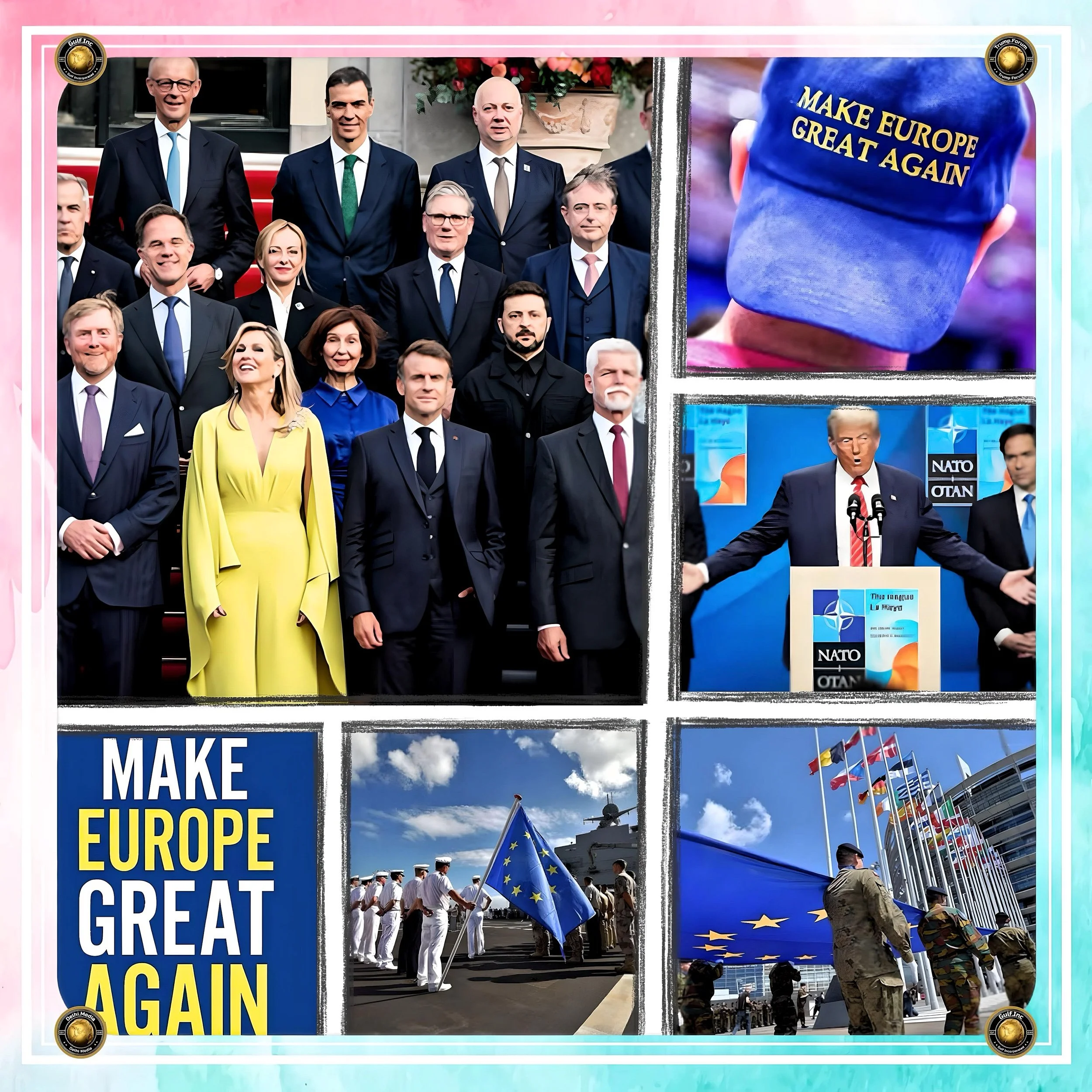
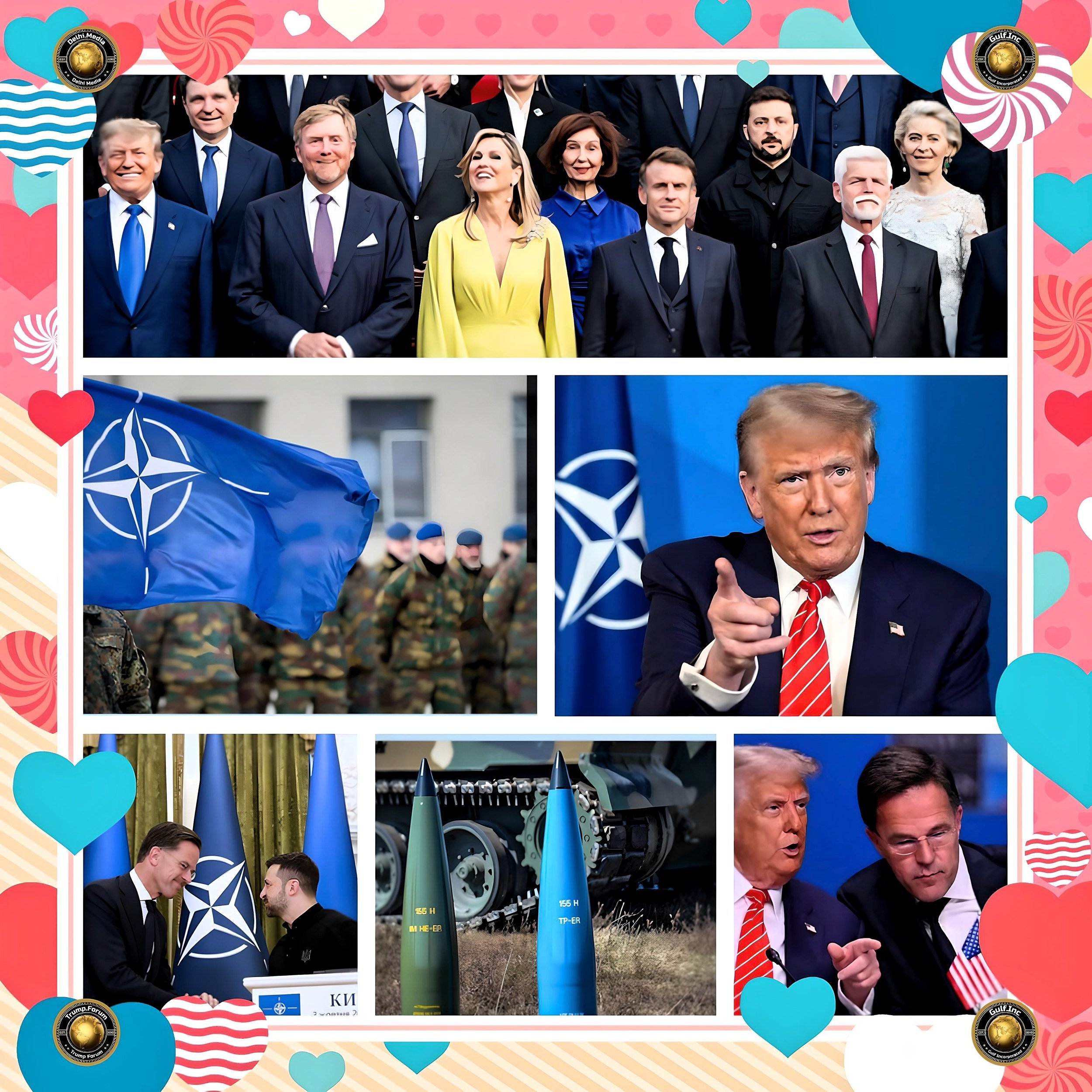
The impact extends beyond economics. Trump’s erratic approach to allies—including threats to invade them and demands for dramatically increased defense spending—has accelerated trends toward strategic autonomy.
European allies, in particular, have begun investing more heavily in independent defense capabilities and exploring alternative arrangements.
Rather than viewing this as problematic, the authors suggest it may create opportunities for more sustainable burden-sharing arrangements.
The China Challenge and Multipolar Reality
Trump’s China policy reveals the administration’s transactional rather than strategic approach to great power competition.
Despite appointing China hawks like Marco Rubio to key positions, Trump appears more interested in bilateral deal-making than systematic competition.
This disconnect has created strategic confusion, with unclear signals about Taiwan’s security and America’s broader Indo-Pacific commitments.
The emergence of a multipolar world order represents perhaps the most significant structural change facing American strategists.
Unlike the post-Cold War unipolar moment, this multipolarity will be complex, with prominent roles for the United States and China but also significant power wielded by an increasingly autonomous Europe, a recalcitrant Russia, and an ever-more-powerful India.
This reality demands new approaches that work with, rather than against, these underlying power shifts.
The Case for Zero-Based Strategic Review
FAF central approach —a “zero-based” review of American foreign policy—draws from accounting practices that require justifying every expense from scratch.
If applied to foreign policy, this approach would challenge fundamental assumptions about American interests, values, and global role.
Several traditional strategic concepts warrant reexamination.
The longstanding focus on preventing hostile domination of Eurasia may be less relevant in an era when technological ecosystems—AI, clean tech, quantum computing—could prove more consequential than geographic control.
This shift might elevate the importance of regions like Africa and Southeast Asia, whose demographic advantages create opportunities for digital economic growth.
Similarly, the United States’ role as the preponderant provider of global public goods deserves scrutiny.
While defending global commons like shipping lanes has been a guiding principle, a zero-based review might identify areas where other countries could accept greater responsibility, allowing the U.S. to prioritize its most vital missions.
Reimagining Alliances and Partnerships
Washington. Media proposes transforming alliances from primarily security-focused arrangements to platforms for comprehensive cooperation across economic, technological, and climate domains.
This evolution would align partnerships more closely with domestic American interests while addressing long-term competition with China.
New alliance bargains might prioritize countries with the most excellent strategic alignment and focus on industrial policy harmonization, critical supply chain cooperation, and aligned technology standards.
This transformation could enable the United States to evolve from a wholesale security provider to a security enabler, with allies assuming greater responsibility for conventional deterrence.
At the same time, America provides advanced capabilities, intelligence, and operational integration.
Such an approach would be particularly relevant in Europe, where allies have significantly enhanced their defense capabilities during the Ukraine conflict.
Constraints and Opportunities
The analysis acknowledges significant constraints on American power that any future strategy must address.
The U.S. military faces readiness challenges, debt service costs exceed defense and Medicare spending, and Trump’s cuts have reduced federal workforce capacity.
In this context, attempting to maintain global primacy through traditional means may not be feasible or sustainable.
However, these constraints also create opportunities.
The American public’s long-standing dissatisfaction with overseas interventions and the country’s global role suggests potential support for a more restrained approach.
A zero-based review could better align strategy with public preferences, potentially creating more durable domestic support for international engagement.
The Path Forward
The article concludes with a reference to Dean Acheson’s memoir “Present at the Creation,” which chronicled the post-World War II order-building effort.
Acheson explained that his generation’s task was “to create half a world, a free half, out of chaos without blowing the whole to pieces in the process”.
Today’s challenge is different but equally formidable: creating a sustainable American role in a multipolar world where the U.S. remains powerful but no longer dominant.
The authors argue that this moment represents a scarce opportunity to be “present at the creation” of a new international order.
Unlike the post-Cold War period, when American power seemed unassailable and existing institutions appeared permanent, today’s disruption creates space for fundamental reassessment.
The key is approaching this task strategically rather than reactively, with a clear vision rather than mere opposition to Trump’s approach.
Implications for American Strategy
This analysis suggests that the next administration—whether Democratic, traditional Republican, or Trump's successor—will inherit a fundamentally transformed international environment.
The familiar tools of American statecraft will need updating, and traditional approaches to alliance management, economic engagement, and global governance will require reimagining.
The challenge extends beyond policy mechanics to questions of identity and purpose.
If America can no longer assume its preferences will automatically become global norms, how should it define its interests and engage with other powers?
The answer may lie not in abandoning American leadership but in reimagining it for a world where influence must be earned rather than assumed.
The article’s call for a zero-based review represents more than an academic exercise—it reflects the reality that incremental adjustments will be insufficient for the challenges ahead.
Whether American leaders embrace or resist this opportunity may determine America’s global role and the broader trajectory of the international order in the coming decades.