Key Accomplishments of Trump’s Visit to the UAE: Strategic and Economic Milestones
Introduction
President Donald Trump’s visit to the United Arab Emirates (UAE), the final stop on his Middle East tour, marked a pivotal moment in bilateral relations, with significant advancements in technology, defense, and economic collaboration.
The trip underscored a renewed commitment to transactional diplomacy, leveraging Gulf investments in the U.S. while securing access to critical technologies for the UAE.
Below is a detailed analysis of the key accomplishments and their implications, per Dubai.Forum
AI Chip Deal and Technology Framework Agreement
Preliminary Agreement on Advanced AI Chips
A cornerstone of Trump’s visit was a preliminary agreement allowing the UAE to import 500,000 of Nvidia’s most advanced AI chips annually, starting in 2025.
This deal, expected to last through 2027 (with potential extensions to 2030), will support the UAE’s ambitious goal of becoming a global AI hub.
Allocation Structure
20% (100,000 chips/year) allocated to G42, the UAE’s state-backed tech firm, which is backed by Abu Dhabi’s sovereign wealth fund Mubadala and U.S. private equity firm Silver Lake.
The remaining 80% is reserved for U.S. companies like Microsoft and Oracle, contingent on establishing data centers in the UAE.
Strategic Significance
The deal triples or quadruples the UAE’s computing power compared to previous restrictions under the Biden administration, enabling the construction of advanced data centers.
It positions the Gulf region as a third global AI power center alongside the U.S. and China, with the UAE leading regional efforts.
Technology Framework Agreement
During Trump's visit, the U.S. and UAE finalized a technology framework agreement, formalizing commitments to secure technology collaboration. Key provisions include:
Security Protections
Mutual pledges to safeguard advanced technologies, addressing U.S. concerns about diversion to adversaries like China.
Alignment with U.S. Export Controls
The agreement aligns with Trump’s reversal of Biden-era restrictions on AI chip exports, prioritizing Gulf partnerships over broader export bans.
Military and Defense Cooperation
$1.457 Billion Arms Deal
The UAE secured approval for a major arms sale, including
Six CH-47F Block II Chinook helicopters ($1.32 billion) for heavy-lift logistics and troop deployment.
F-16 sustainment components ($130 million) to enhance multi-role air operations.
Implications
Strengthens the UAE’s defense capabilities amid regional tensions, particularly with Iran.
Reinforces the UAE’s reliance on U.S. military technology despite diversifying partnerships with China and Russia.
Political Challenges
The deal faced scrutiny in the U.S. due to Trump’s business ties with UAE entities, including a $2 billion crypto investment linked to his ventures.
Lawmakers raised concerns about potential conflicts of interest, though the sale proceeded.
Diplomatic Honors and Strategic Reaffirmation
Order of Zayed Award
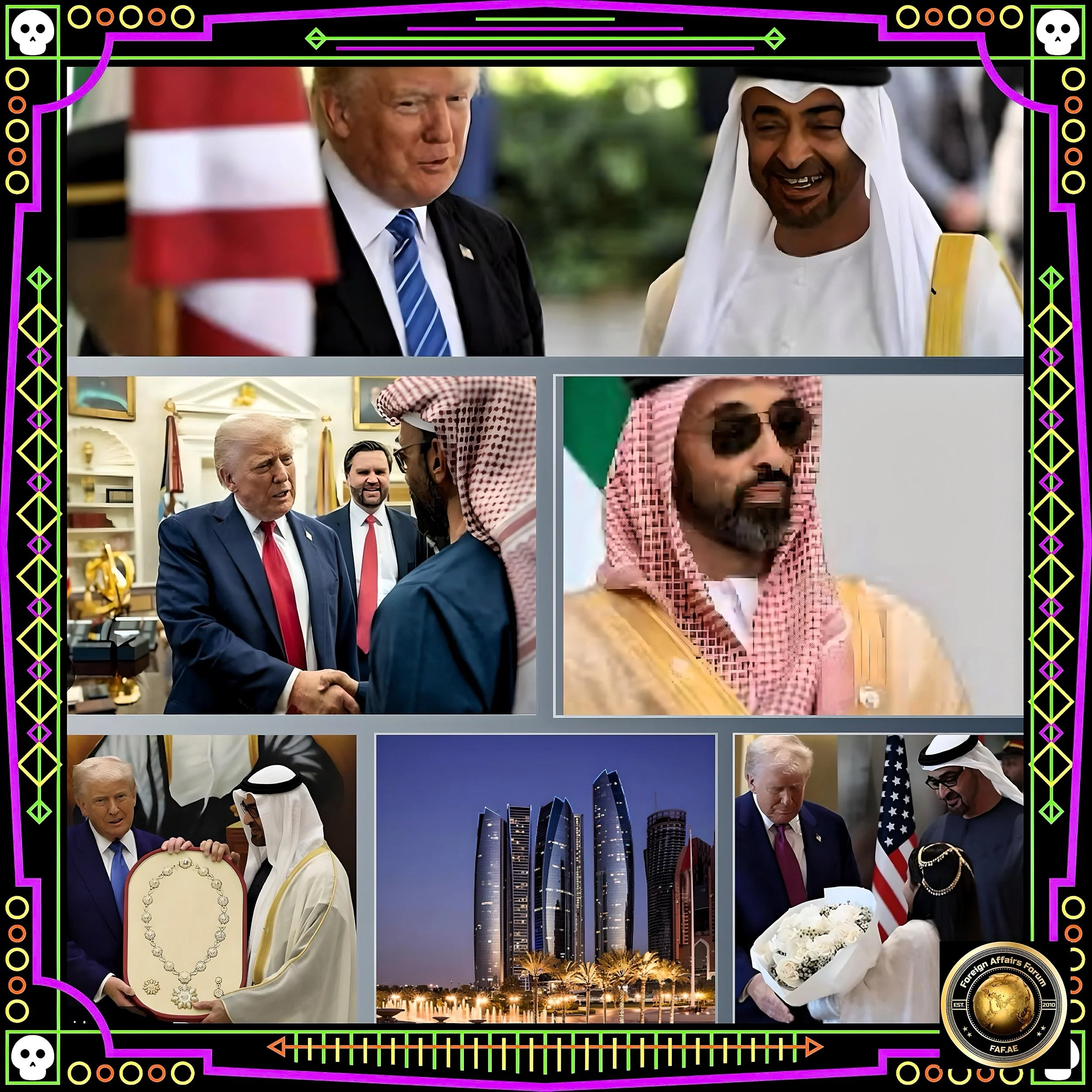
During a ceremony at Qasr Al-Watan, Trump was bestowed the Order of Zayed, the UAE’s highest civilian honor.
The award, presented by UAE President Sheikh Mohamed bin Zayed Al Nahyan, symbolizes the deepening bilateral relationship.
State Dinner and High-Level Meetings
State Dinner: Trump participated in a ceremonial reception at the Sheikh Zayed Grand Mosque and a state dinner, emphasizing cultural and political alignment.
Strategic Discussions
Talks focused on regional stability, including the UAE’s advocacy for a two-state solution in Gaza and its opposition to Israeli military actions, though these were secondary to economic deals.
Economic Investments and Trade
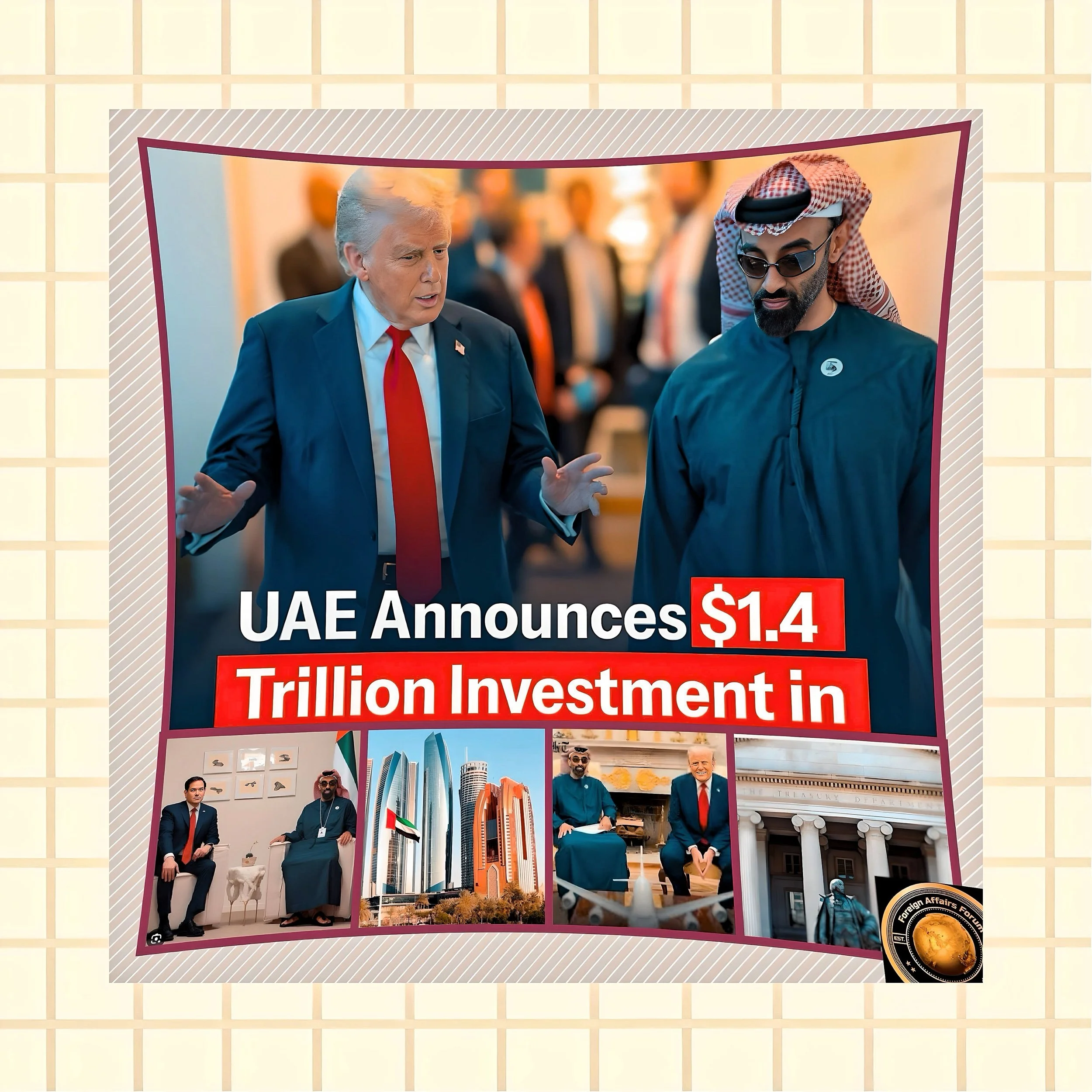
$1.4 Trillion UAE Investment Pledge
The UAE reaffirmed its commitment to invest $1.4 trillion in the U.S. over the next decade, targeting sectors such as:
Artificial Intelligence
Infrastructure development and semiconductor production.
Clean Energy
Sustainable industrial projects and green technology partnerships.
Manufacturing
Expansion of aluminum production, including a new smelter- the first U.S. facility in 35 years.
Boeing and Qatar Deals
While not directly UAE-focused, Trump’s preceding deals in Saudi Arabia ($600 billion) and Qatar ($42 billion in arms sales, including Boeing aircraft) set the stage for UAE negotiations, reinforcing Gulf-U.S. economic interdependence.
Regional and Geopolitical Implications
UAE as a Middle East Power Broker
The visit highlighted the UAE’s role as a bridge between the U.S. and Iran, with Trump expressing hope for UAE mediation in de-escalating nuclear tensions.
However, the UAE’s balancing act with China and Russia remained a subtext as Abu Dhabi seeks to reduce reliance on the U.S. in an unstable region.
Competitive Dynamics with China
The technology framework and chip deal are part of a broader U.S. strategy to counter China’s influence in the Middle East.
By granting the UAE access to advanced semiconductors, the U.S. aims to create a counterweight to Chinese tech dominance in AI.
Challenges and Criticisms
Domestic Opposition in the U.S.
National Security Concerns
Critics argue that the chip deal risks diverting technology to China and undermining U.S. export controls.
Ethical Scrutiny
Trump’s business ties to UAE entities, including a $2 billion crypto investment, raised conflict-of-interest allegations.
UAE’s Strategic Diversification
The UAE’s investments in the U.S. and China reflect a pragmatic approach to global partnerships, driven by skepticism about long-term U.S. commitment to the region.
Conclusion
A Transactional Triumph
Trump’s UAE visit exemplified his transactional foreign policy, prioritizing economic gains and strategic partnerships over traditional diplomacy.
The AI chip deal and technology framework agreement cemented the UAE’s role as a key U.S. ally in countering China’s tech ambitions.
At the same time, the $1.4 trillion investment pledge bolstered Trump’s domestic narrative of economic success.
However, lingering concerns about security risks and ethical conflicts underscore the complexities of this approach.
Future collaborations will hinge on balancing U.S. security interests with the UAE’s ambitions to emerge as a global tech leader- a dynamic poised to reshape Middle Eastern geopolitics and the global AI landscape.