The Historical Foundations of U.S. Interest in Greenland: Strategic Imperatives and Resource Ambitions
Introduction
The United States’ longstanding interest in Greenland, spanning over 150 years, is rooted in its strategic Arctic location, untapped resource wealth, and evolving geopolitical rivalries.
From 19th-century expansionist visions to Cold War militarization and contemporary great-power competition, Greenland has remained a focal point of American strategic calculus.
FAF report traces the historical trajectory of U.S. ambitions in Greenland and analyzes how shifting global dynamics and resource needs have shaped policy decisions.
Early Expansionist Ambitions (1867–1916)
William Seward’s Post-Alaska Aspirations
The U.S. formally considered acquiring Greenland in 1867, shortly after Secretary of State William H. Seward negotiated the Alaska Purchase from Russia.
Seward commissioned a report titled A Report on the Resources of Iceland and Greenland (1868), which extolled Greenland’s fisheries, mineral potential, and “unusual healthfulness” while framing its acquisition as a step toward compelling Canada to join the U.S.
Though Congress rejected Seward’s broader territorial ambitions, this marked the inception of Greenland’s perceived value as a strategic asset.
The 1910 Barter Proposal and the Danish West Indies
In 1910, U.S. Ambassador to Denmark Maurice Francis Eagan proposed a triangular exchange: the U.S. would cede Mindanao and Palawan to Germany in return for Northern Schleswig, while Denmark would transfer Greenland and the Danish West Indies to the U.S.
Though this scheme collapsed, it set a precedent for linking Greenland to Caribbean interests.
The 1916 Treaty of the Danish West Indies formalized the U.S. purchase of the Virgin Islands. Secretary Robert Lansing agreed not to oppose Danish claims to Greenland, a concession that later complicated U.S. sovereignty arguments.
World War II and the Occupation of Greenland (1940–1945)
Preemptive Occupation Amid Nazi Threat
Following Germany’s 1940 invasion of Denmark, the U.S. invoked the Monroe Doctrine to occupy Greenland, fearing Nazi exploitation of its cryolite mines (critical for aluminum production) and weather stations.
In April 1941, U.S. Coast Guard personnel landed under the guise of “volunteers” to avoid violating neutrality laws, and Ambassador Henrik Kauffmann signed a defense agreement without Danish government approval.
This marked the first physical U.S. military presence, establishing Bluie West One and other bases that formed part of the North Atlantic Airbridge.
The Kauffmann Agreement and Post-War Tensions
The 1941 agreement allowed indefinite U.S. basing rights, contingent on mutual consent to terminate—a clause Denmark interpreted as ending with WWII, while the U.S. extended it to Cold War threats.
Denmark sought to renegotiate post-1945, but U.S. strategists viewed Greenland as essential for countering Soviet bombers, leading to the 1951 Greenland Defense Agreement and the construction of the Thule Air Base.
Cold War Militarization and Nuclear Strategy (1946–1991)
The 1946 Purchase Offer and Strategic Reassessment
In December 1946, Secretary of State James Byrnes offered Denmark $100 million in gold for Greenland, arguing ownership would simplify defense logistics and shield Denmark from Soviet criticism.
The Joint Chiefs of Staff deemed Greenland “completely worthless to Denmark” but vital for U.S. security, citing its midpoint location between Washington and Moscow. Danish Foreign Minister Gustav Rasmussen rebuffed the offer, prioritizing sovereignty over financial gain.
Thule Air Base and Project Iceworm
The 1951 Defense Agreement cemented Thule Air Base’s role as a linchpin of U.S. nuclear strategy. Built secretly under Operation Blue Jay (1951–1953), Thule hosted B-52 bombers and the Ballistic Missile Early Warning System (BMEWS).
Concurrently, Project Iceworm (1959–1967) saw the U.S. Army construct Camp Century, a subterranean ice city housing nuclear reactors and covert plans for mobile missile sites under Greenland’s ice cap.
Though abandoned due to ice instability, these efforts underscored Greenland’s centrality to U.S. deterrence doctrine.
Modern Strategic Renewal (2019–Present)
Trump’s Annexation Push and Rare Earth Politics
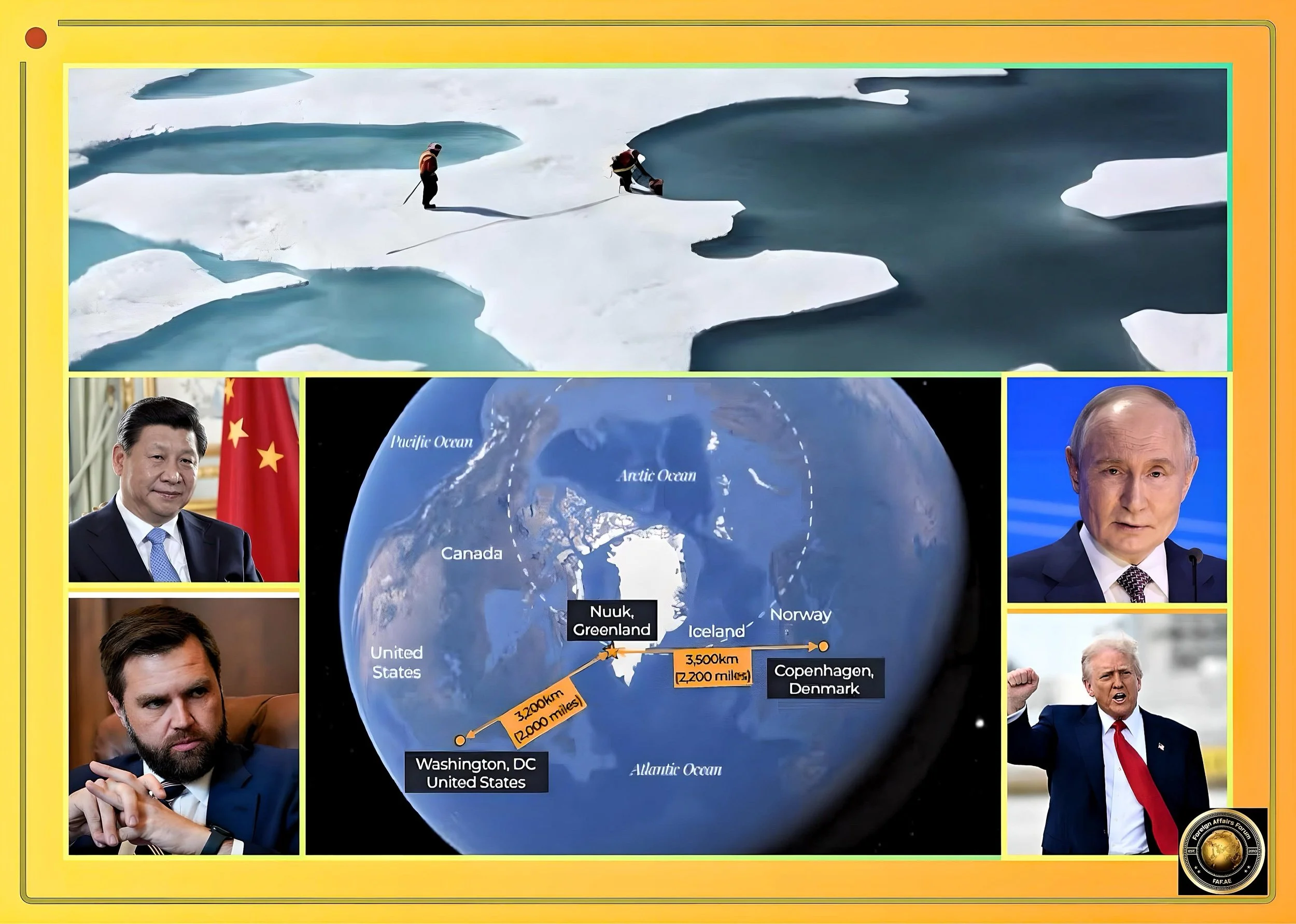
President Donald Trump’s 2019 offer to purchase Greenland—reiterated post-2024 election—revived Seward-era expansionism, driven by Greenland’s rare earth element (REE) deposits and China’s growing Arctic investments.
Vice President JD Vance’s 2025 Greenland visit highlighted the Pituffik Space Base’s upgraded role in space surveillance and missile defense, while U.S. concerns over Chinese mining ventures like the Kvanefjeld project intensified.
Indigenous Rights and Environmental Costs
Greenland’s Inuit communities have consistently resisted external control, from the 1953 forced relocation of Thule tribes for base expansions (compensated only in 2003) to modern opposition to extractive projects.
The U.S.-Denmark 2025 defense pact, including a $14.6 billion Arctic package, seeks to balance sovereignty claims with Greenlandic aspirations for independence.
Conclusion: Greenland’s Enduring Geopolitical Currency
The U.S. pursuit of Greenland reflects a continuum of strategic priorities: countering rivals (first Nazi Germany, then the USSR, now China), securing energy and mineral resources, and dominating Arctic transit routes.
While overt annexation attempts have faltered, enduring basing rights and defense partnerships ensure Greenland remains a de facto U.S. stronghold.
As climate change unlocks the Arctic’s economic potential, historical patterns suggest Greenland will continue to embody the intersection of ambition, power, and sovereignty in U.S. foreign policy.