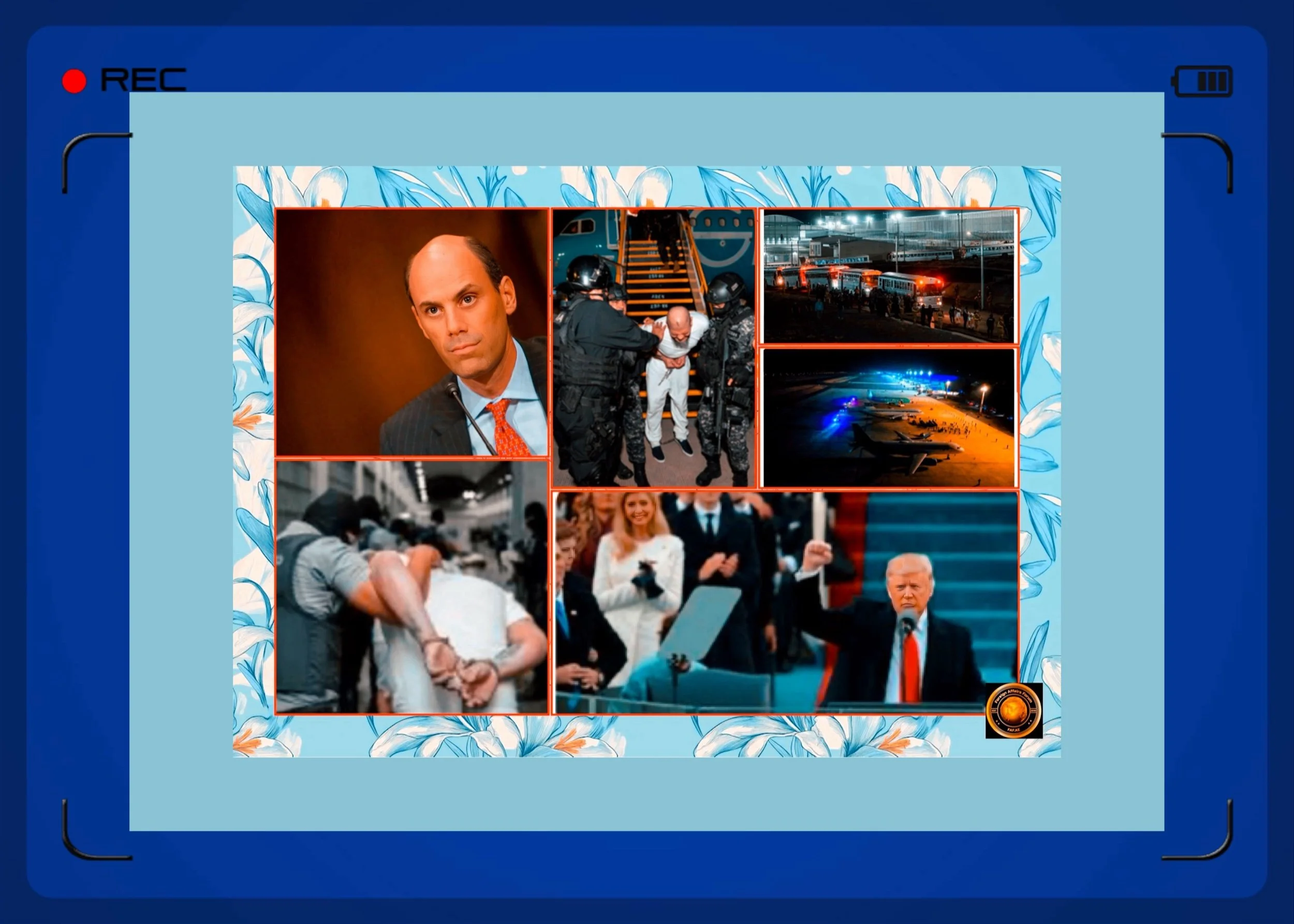
US Supreme Court Ruling on the Alien Enemies Act: Due Process Requirements Amid Controversial Deportations
Introduction
On April 7, 2025, the U.S. Supreme Court delivered a pivotal 5-4 decision allowing President Trump to continue using the 1798 Alien Enemies Act for rapid deportations of alleged Venezuelan gang members while simultaneously mandating due process protections.
This ruling represents a complex legal development with significant implications for executive power, immigration enforcement, and civil liberties.
The Supreme Court’s Decision and Its Implications
The Supreme Court lifted a lower court’s temporary restraining order that had paused deportations under the Alien Enemies Act since March 15.
While allowing deportations to resume, the Court established critical procedural requirements moving forward. The majority ruled that individuals facing deportation under the Act “must receive notice” of their impending removal and be given “an opportunity to contest their removal.”
The Court stated, “The notification must be provided within a reasonable timeframe and in a manner that enables them to genuinely pursue habeas relief in the appropriate venue before their removal takes place.”
The 5-4 decision featured an unusual alignment, with conservative Justice Amy Coney Barrett joining the three liberal justices in dissent.
In a scathing dissent, Justice Sonia Sotomayor wrote that “the Government’s conduct in this litigation poses an extraordinary threat to the rule of law” and that “We, as a Nation and a court of law, should be better than this.”
The Court’s decision primarily turned on the venue—ruling that challenges must be filed in Texas, where detainees were held, rather than Washington, DC.
Notably, the Court did not resolve the underlying question of whether Trump’s application of the Act was valid.
The Alien Enemies Act of 1798: Historical Context and Powers
The Alien Enemies Act is one of America’s oldest active laws. It was enacted in 1798 when the United States anticipated war with France.
It was part of a package of laws known as the Alien and Sedition Acts, which were designed to tighten restrictions on foreign-born Americans and limit speech critical of the government.
This extraordinary law grants the president sweeping powers to order the detention and deportation of “subjects of the hostile nation or government” without following standard legal processes. The Act can be invoked under two specific conditions:
During a “declared war” between the United States and a foreign nation/government
When “any invasion or predatory incursion shall be perpetrated, attempted, or threatened against the territory of the United States” by a foreign nation or government
Before Trump’s invocation, the Act had only been used three times in U.S. history—all during formally declared wars.
It was employed during the War of 1812, World War I, and most notably during World War II when approximately 120,000 people of Japanese descent were imprisoned without trial.
People of German and Italian ancestry were also interned during that period.
Trump’s Invocation and the March 2025 Deportations
On March 14, 2025, President Trump signed Presidential Proclamation 10903, invoking the Alien Enemies Act based on the claim that the Venezuelan gang Tren de Aragua was “perpetrating, attempting, and threatening an invasion or predatory incursion” against U.S. territory.
The proclamation directed government agencies to “apprehend, restrain, secure, and remove every Venezuelan migrant, 14 or older, deemed part of Tren de Aragua” who lacked U.S. citizenship or permanent residency.
The following day, Judge James Boasberg of the U.S. District Court for the District of Columbia issued a temporary restraining order prohibiting deportations under the Act.
Despite this judicial directive, the administration proceeded with deportations, sending 261 Venezuelans to El Salvador, with 137 removed explicitly under the Alien Enemies Act.
The deportees were detained at El Salvador’s Maximum Security Terrorism Confinement Center (CECOT).
El Salvador’s President Nayib Bukele publicly acknowledged receiving the deportees, tweeting that 238 were associated with Tren de Aragua and 23 with MS-13.
Following Judge Boasberg’s restraining order, Bukele posted “Oopsie…too late” with a laughing emoji, which several Trump administration officials reposted.
The Controversial Basis for Identifying Gang Members
The factual basis for determining gang affiliation has emerged as one of the most contentious aspects of these deportations.
While the administration has stated that tattoos were not the exclusive factor in deportation decisions, government documents revealed that officials used tattoos and attire as indicators of gang membership.
Several concerning cases have been reported
Jorge Barrios, a professional soccer player, was allegedly deported because of a tattoo depicting a soccer ball with a crown (resembling Real Madrid’s emblem) and a hand gesture that signifies “I love you” in sign language.
Andry José Hernández Romero, a deported Venezuelan makeup artist, had crown tattoos inscribed with “Dad” and “Mom” on his wrists, which immigration officials cited as establishing “reasonable suspicion” of ties to Tren de Aragua.
The Venezuelan government has forcefully denied connections between the deportees and gang activity.
Interior Minister Diosdado Cabello stated, “Not a single deportee appears on the organizational chart of the now-extinct Tren de Aragua organization.”
A “60 Minutes” investigation reportedly found that “the vast majority of those sent to the Salvadorian prison have no apparent criminal convictions or even criminal charges”.
Tren de Aragua: The Gang at the Center of the Controversy
Tren de Aragua (“train from Aragua” in Spanish) was founded in 2014 in the Tocorón prison in Venezuela’s Aragua state.
The name is attributed to a union of railroad workers who were building a railroad connection between Caracas and Aragua. This criminal organization has been cited by the Trump administration as posing a significant threat to U.S. security.
A Victory for Trump or Civil Liberties?
Both sides have claimed aspects of the ruling as victories:
The Trump administration celebrated the decision, with the President posting: “The Supreme Court has upheld the Rule of Law in our Nation by allowing a President, whoever that may be, to be able to secure our Borders, and protect our families and our Country, itself. A GREAT DAY FOR JUSTICE IN AMERICA!”.
Homeland Security Secretary Kristi Noem issued a stern warning to migrants in the U.S. unlawfully: “leave now or we will arrest you, lock you up and deport you”.
Meanwhile, civil liberties advocates emphasized the Court’s mandating of due process protections.
Lee Gelernt, an attorney with the ACLU, stated: “We are disappointed that we will need to start the court process over again in a different venue, but the critical point is that the court rejected the government’s remarkable position that it does not even have to give individuals meaningful advance notice to challenge their removal under the Alien Enemies Act.
That is a big victory”. Skye Perryman, president of Democracy Forward, similarly noted: “Today’s ruling affirms what we have long known: the Trump administration acted unlawfully when it removed people from this nation with no process”.
Conclusion
Ongoing Legal Challenges and Constitutional Questions
The Supreme Court’s ruling represents a significant but preliminary step in what promises to be continued legal battles over the application of the Alien Enemies Act.
While deportations may resume for now, they must include procedural safeguards that the administration initially bypassed. The most fundamental questions—whether the Act can legitimately be applied outside of declared war and whether the Venezuelan gang truly constitutes an “invasion”—remain unresolved.
As these cases proceed in Texas courts, deeper constitutional questions about executive power, due process rights for non-citizens, and the proper interpretation of centuries-old laws in modern contexts will continue to be hotly contested.
The final verdict on whether this represents a victory for aggressive immigration enforcement or for civil liberties protections remains to be written.