The Israel-Hamas Paradox and the Shifting Tactics of Militias: Unintended Consequences and the Emergence of Ghassan Al-Duhaini, an ISIS affiliate head of clan
Executive Summary
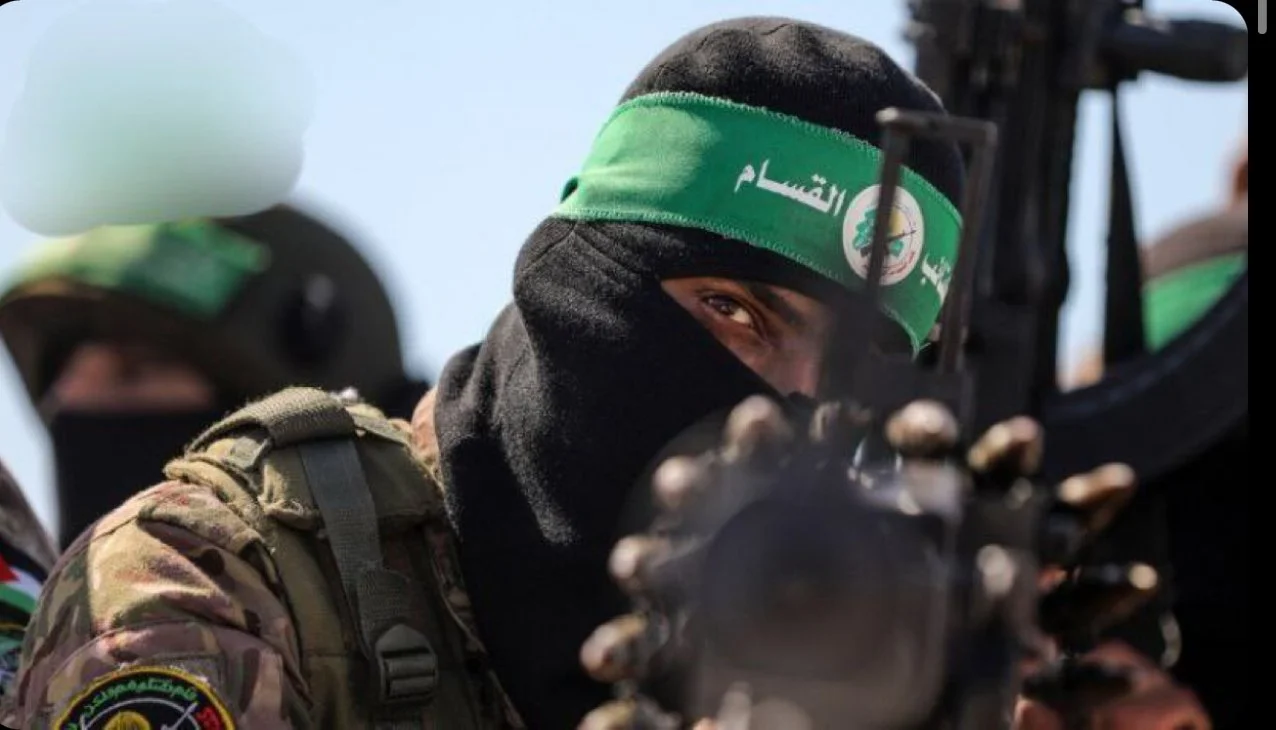
Israel’s historical strategy of bolstering Islamist groups in Gaza during the 1970s and 1980s as a counterweight to the secular PLO inadvertently catalyzed the rise of Hamas, transforming a manageable social network into a formidable militant force resistant to external control.
This pattern of short-term tactical expediency yielding long-term strategic blowback recurs in the current arming of anti-Hamas clans, exemplified by Yasser Abu Shabab’s Popular Forces militia, which Netanyahu publicly acknowledged in June 2024 as a means to preserve Israeli lives.
Analysts highlight structural vulnerabilities—tribal fissures, limited manpower, and dependence on Israeli protection—rendering these proxies susceptible to internal collapse or Hamas elimination, as evidenced by Abu Shabab’s death in a Rafah clash.
The militia approach, akin to Israel’s failed South Lebanon Army proxy, legitimizes Hamas’s narrative of anti-collaboration resistance while fragmenting Gaza’s security landscape, fostering instability rather than sustainable alternatives to Islamist governance.
Scholarly assessments underscore a persistent Israeli statecraft contradiction: pursuing proxy empowerment without addressing political legitimacy deficits, thereby risking the emergence of even more radical successors amid stalled U.S.-brokered peace initiatives.
This cycle demands recalibration toward diplomatic frameworks over militarized proxies to avert recurrent counterproductive outcomes.
Introduction
There are indeed significant parallels between Israel’s historical role in strengthening the Muslim Brotherhood (Hamas’s predecessor) and its current strategy of arming anti-Hamas militias, both demonstrating a recurring cycle of short-term tactical gains producing long-term strategic blowback.
Israel’s Original Role in Hamas’s Rise
The historical record shows that Israel directly contributed to Hamas’s emergence as a counterweight to the Palestine Liberation Organization (PLO).
During the 1970s and 1980s, Israeli military governor Brigadier General Yitzhak Segev openly acknowledged Israel’s role: “We extend some financial aid to Islamic groups via mosques and religious schools in order to help create a force that would stand against the leftist forces which support the PLO.”
Specifically, Israel provided financial assistance to Ahmed Yassin’s Muslim Brotherhood network (al-Mujamma al-Islamiya), the precursor to Hamas, from the 1970s through the mid-1980s.
This support continued even into the early phases of the First Intifada.
The strategy was deliberate: Israeli authorities believed they could use Islamic groups as enforcers against Palestinian nationalism, assuming they could maintain control over an organization they were helping to strengthen.
Hamas formally announced its founding in December 1987, transforming from the Brotherhood’s social network into an armed resistance movement.
The irony is profound: Israel’s attempt to divide Palestinian opposition by strengthening Islamic groups against secular nationalism ultimately created an entity far more resistant to Israeli control and more committed to armed struggle than the PLO it sought to contain.
As one analysis notes, this represents “one of the prototypic examples of how decades of a failed Israeli strategy resulted in blowback: the emergence of Hamas as a formidable resistance movement.”
The Current Gaza Militia Strategy: Repeating the Pattern
Fast forward to 2024-2025, and Israel has pursued a strikingly similar approach: arming and supporting local clans and militias to counter Hamas.
The strategy involves providing weapons (many seized from Hamas), vehicles, and logistical support to tribal leaders like Yasser Abu Shabab.
Prime Minister Netanyahu publicly acknowledged this in June 2024, stating that Israel had “activated” clans in Gaza opposed to Hamas, claiming the policy “saves the lives of Israeli soldiers.”
However, analysts argue this strategy contains the seeds of similar unintended consequences.
Israel formation of next terrorist clan leader to fight hamas
Ghassan Al-Duhaini has been appointed as the new leader of the Israeli-backed Popular Forces militia in Gaza following Yasser Abu Shabab’s death on December 4, 2025.
Previously the deputy commander and head of the group’s armed wing, the Counter-Terrorism Service, Al-Duhaini was wounded in the same Rafah clash that killed Abu Shabab but has since been documented rallying militia members and boosting morale.
Israeli media, including The Jerusalem Post, confirmed his ascension, noting his role in operations to “clear Rafah of terror” shortly before the incident.
Al-Duhaini’s background raises significant concerns, as he has been linked to former ISIS affiliates and Salafi-jihadi groups like Jaysh al-Islam, with past involvement in drug smuggling from Egypt.
Hamas and Israeli critics, including opposition figures like Yair Lapid, have long accused the Popular Forces of ISIS ties, a charge amplified by Al-Duhaini’s promotion amid the group’s accusations of aid looting and collaboration.
Analysts view this leadership transition as further evidence of Israel’s militia strategy’s fragility, potentially accelerating the proxy’s collapse given internal vulnerabilities and Hamas targeting.
The Fundamental Problem with Proxy Militia Strategies
Research from the Washington Institute notes that these militias face inherent following structural weaknesses
(1) Tribal loyalties and internal divisions outweigh their hostility toward Hamas.
(2) Tribals small size and limited support base make them incapable of posing a sustained challenge to Hamas.
Abu Shabab’s militia, despite Israeli support, numbered only a few hundred fighters against Hamas’s thousands.
When Abu Shabab was killed, senior Israeli Army Radio officials cited the failure of the South Lebanon Army as a cautionary precedent, warning that “their fate is inevitable, that is, death.”
The South Lebanon Army (SLA) example is instructive
Israel spent 22 years arming and commanding this militia, yet it collapsed within weeks when Israel withdrew in 2000.
Over half the SLA’s 2,500 soldiers surrendered or fled, and Israel’s abandonment of its militia signaled to regional allies that Israel could not be trusted, a message that resonates in the region to this day.
How the Current Strategy is Backfiring
An analysis from Egypt’s Al-Ahram describes Israel’s militia strategy as fundamentally counterproductive.
Inadvertent Hamas Legitimization
By arming rival militias accused of looting humanitarian aid and collaborating with Israel, Israel inadvertently provided Hamas with a platform to portray its crackdown on these groups as heroic anti-collaboration efforts.
Instead of weakening Hamas politically, the militia strategy has allowed Hamas to reinforce its narrative as the only legitimate Palestinian authority.
Fracturing Rather Than Stabilizing Security
The proliferation of armed militias has destabilized Gaza’s security structure rather than creating stability.
These groups engage in internal conflicts, clan disputes, and opportunistic looting—exactly what occurred when Abu Shabab was killed during what Israeli sources described as an “internal clash.”
Strategic Vulnerability
The relationship is fundamentally asymmetrical. As Hamas’s message to Abu Shabab illustrated—“As we told you Israel won’t protect you”—these militias depend entirely on Israeli protection but lack the legitimacy or resources to sustain themselves independently.
The Contradiction in Israeli Statecraft
Contradictions Israeli diplomacy is well-founded.
Scholars note that Israel’s counterterrorism and military strategy repeatedly fail to account for the law of unintended consequences.
The pattern appears consistent:
(1) Israel identifies a tactical threat (PLO in the 1980s, Hamas today)
(2) Israel creates or arms a proxy force as an alternative power center
(3) The proxy force either becomes uncontrollable or fails to achieve political objectives
(4) The original threat emerges even stronger and more radicalized by the conflict
One analysis frames this as “a disastrous miscalculation”: Israel’s military campaign against the PLO in the 1980s ended up enabling the rise of both Hamas and Hezbollah.
The article warns that current military operations against Hamas are likely to “create a new generation of Hamas sympathizers and recruits” and may enable the rise of even more extreme organizations like Islamic Jihad or al-Sabarin.
Expert Assessments
Michael Milshtein, a former Israeli military intelligence officer, observed regarding Abu Shabab’s death: “The writing was on the wall… whether he was killed by Hamas or in some clan infighting, it was obvious that it would end this way.”
This suggests that Israeli military planners are aware of the strategy’s inherent limitations yet continue pursuing it.
Experts emphasize that tactical victories through militias come at the cost of long-term strategic damage.
As one geopolitical analysis notes: “If Israeli reprisals are too harsh, they might be a recipe for disaster in the long run… tactical victory will most certainly bring a very unpleasant strategic blowback.”
Conclusion
There is a troubling parallel. Israel’s current militia strategy in Gaza mirrors its approach toward Hamas’s predecessor organization in the 1980s: identifying a short-term tactical need, providing military and financial support to local actors, and failing to account for the long-term consequences of empowering fractious, ungovernable, and ultimately unreliable proxy forces.
Abu Shabab’s death exemplifies this pattern’s endpoint—the militia leader lacked the capacity to survive without Israeli protection, yet his very presence undermined rather than strengthened Israeli strategic objectives.
The pattern suggests that absent a fundamental change in approach—one emphasizing political settlement over military proxies—Israel may be repeating a strategy that has historically produced outcomes opposite to those intended.