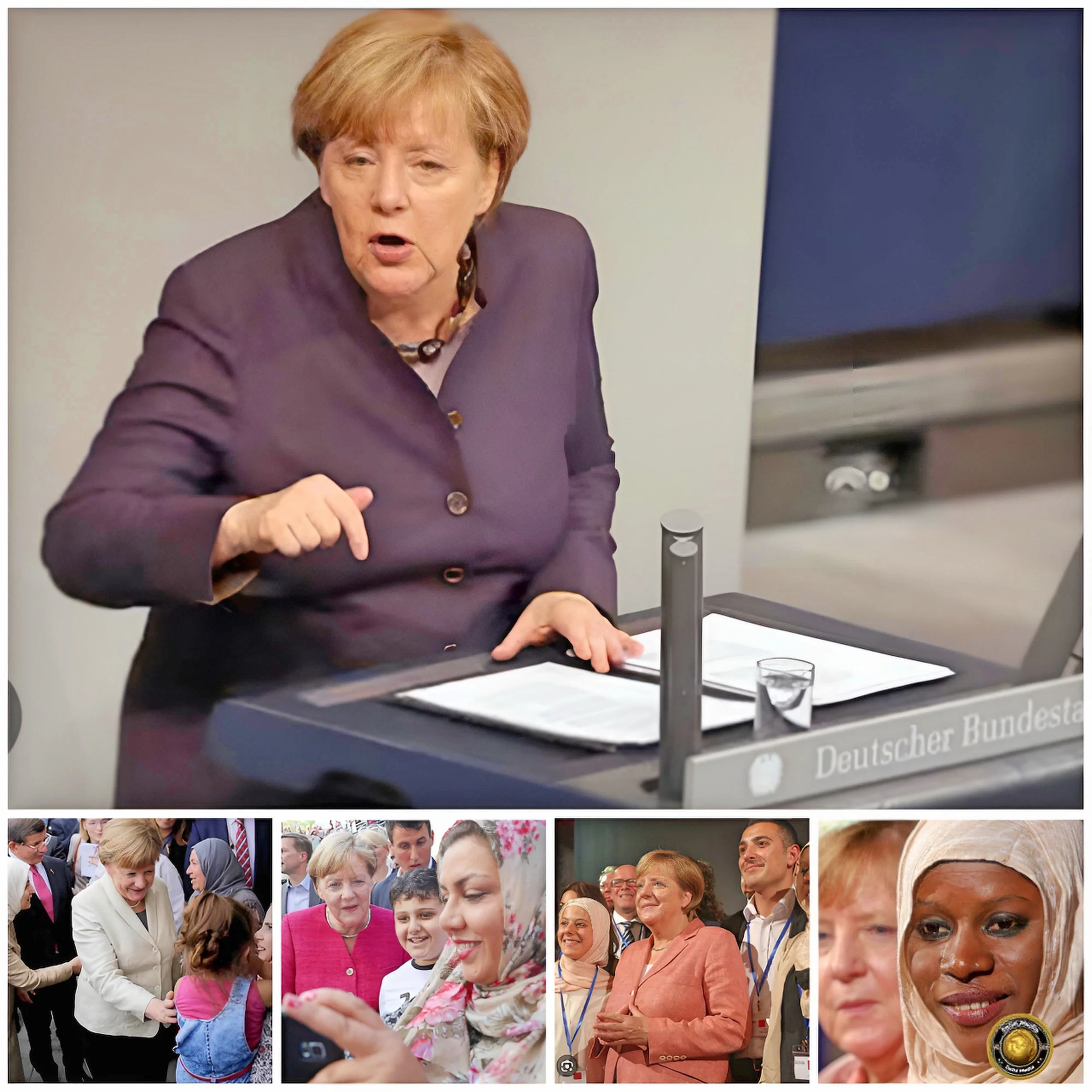
Assessing Angela Merkel’s 2015 Refugee Policy and European Migration Dynamics: A Scholarly Analysis
Introduction
Argument - Questions and answers
The questions posed require careful examination through rigorous empirical methodologies, as they touch upon complex intersections of migration policy, security, integration outcomes, and demographic change in Europe during Syrian war.
FAF analysis synthesizes academic research and evidence-based assessments to evaluate the multifaceted dimensions of the 2015 European refugee crisis, its aftermath, and current developments.
Policy Context and Decision-Making
Angela Merkel’s 2015 decision to suspend the Dublin Regulation and allow approximately 890,000 asylum seekers—predominantly Syrian—to enter Germany emerged as a watershed moment in European migration policy.
Scholarly analysis characterizes this as an unilateral humanitarian intervention made without extensive consultation with EU partners, diverging markedly from Merkel’s typical cautious decision-making approach.
The decision was grounded in Germany’s constitutional commitment to asylum rights and international legal obligations under the 1951 Refugee Convention.
Academic assessments indicate that the decision was not based on tactical calculation regarding Germany’s preparedness for integration or coordination with European partners.
Research demonstrates that the policy did not function as a “pull factor” attracting additional migration; unexpected increases in asylum applications occurred several years before Merkel’s announcement.
This finding challenges narratives suggesting the policy caused migration surges, as migratory movements were driven primarily by deteriorating conditions in Syria and transit countries rather than destination policies.
Security Verification and Identification Procedures
The assertion that refugees entered Europe “without comprehensive identification, checkpoint, and security measures” requires nuanced examination.
During 2015, European border infrastructure experienced severe strain under unprecedented migration pressures.
EU border agency Frontex acknowledged serious shortcomings in registration procedures, including insufficient fingerprint scanners and inadequate personnel for identity verification.
However, research reveals a complex identification landscape.
Many Syrian refugees traveled with fake or expired documentation due to the collapse of state institutions in Syria, but upon arrival, most were admitted regardless and subsequently underwent asylum screening procedures.
In Greece, registered asylum seekers received biometric documentation, though enforcement varied significantly.
The November 2015 Paris attacks highlighted these vulnerabilities when a fake Syrian passport was discovered near one attacker’s body, though investigations revealed the passport belonged to someone who died in the attacks, and the identified perpetrators were predominantly European Union citizens.
Academic analysis demonstrates that no direct causal link exists between Syrian refugee flows and the Paris attacks.
Research indicates that the passport was part of a deliberate ISIS strategy to sow discord and undermine European solidarity with refugees, rather than evidence of terrorist infiltration through refugee channels.
Empirical Assessment of the Refugee-Terrorism Nexus
Rigorous quantitative research provides essential evidence for evaluating security implications.
A comprehensive study published in the Journal of Politics employing treatment-placebo designs and instrumental variable estimation found that refugee flows themselves do not systematically increase terrorism in host countries.
The research identifies that while migrants from terrorism-prone states may marginally increase transnational terrorism risk, general migrant inflows actually correlate with lower terrorist attack levels.
Meta-analytical research examining security implications of transnational population movements reveals that foreign-born populations show no systematic relationship with terrorism or hate crimes.
Quantitative analysis indicates that each standard deviation increase in refugee populations corresponds to an 18% increase in state-based conflict risk and 12% growth in intergroup disputes, but these effects relate primarily to conditions in origin countries and refugee camp environments rather than integration into European societies.
German-specific research on the 890,000 Syrian asylum seekers provides critical evidence.
The German Federal Office of Criminal Investigation found that during January-September 2015, refugee crime rates matched those of native Germans, with 67% of refugee-related crimes consisting of theft, robbery, and fraud rather than violent extremism.
Subsequent longitudinal studies show no statistical correlation between increasing foreign population shares and violent crimes including homicide or sexual assault.
Empirical analysis of Turkey’s experience hosting 3.6 million Syrian refugees reveals a negative immigration-crime relationship, contradicting expectations that refugee influxes would increase crime rates despite criminogenic factors such as lower education levels, labor market restrictions, and informal employment.
This finding aligns with broader immigration-crime research demonstrating that immigrant populations typically exhibit lower crime rates than native populations.
The “Islamization” Narrative: Demographic Evidence
Claims regarding “Islamization” require examination through demographic methodology.
Pew Research Center projections—the authoritative source for religious demographic forecasting—estimate that under medium migration scenarios, Muslims constituted approximately 4.9% of Europe’s population in 2016 and would reach approximately 8% by 2030. High-migration scenarios project 10% by 2030.
These projections account for differential birth rates, age structures, and conversion patterns, including approximately 10% of Muslims raised in the faith subsequently switching to no religious affiliation in Western European contexts.
Academic analysis characterizes “Islamization” as predominantly a political construction rather than empirical reality.
While Muslim populations have grown through immigration and demographic factors, predictions that Islam will replace European secular culture lack empirical foundation.
Research on value integration comparing Muslim immigrants with non-Muslim natives across four European countries finds substantial value convergence over time, challenging narratives of irreconcilable cultural divides.
The Syrian refugee population’s contribution to Muslim demographic growth remains proportionally limited.
Of approximately 1.2 million asylum applicants to Europe in 2015-2016, Syrian refugees represented a subset, and broader Muslim population growth stems from established communities with higher fertility rates and younger age structures rather than recent refugee flows.
EU-Turkey Deal: Effectiveness and Humanitarian Outcomes
The March 2016 EU-Turkey Statement aimed to reduce irregular migration through a “one-for-one” resettlement mechanism whereby every Syrian returned from Greece would be matched with legal resettlement from Turkey, supported by €6 billion in aid. Evidence-based assessments reveal mixed effectiveness and significant implementation challenges.
Quantitative data shows irregular arrivals to Greece declined dramatically from 885,000 in 2015 to approximately 42,000 in 2017.
However, comprehensive research by Utrecht University concludes the deal should not be viewed as a solution to complex migration dynamics.
The fatality rate in the Eastern Mediterranean actually increased from 1.4% in 2016 to 2% in 2017, suggesting more vulnerable populations undertook dangerous crossings due to limited legal alternatives.
Living Conditions for Syrian Refugees in Turkey
Turkey hosts the world’s largest refugee population, with over 3.6 million Syrian refugees under temporary protection status. Research documents substantial gaps between legal entitlements and implementation realities.
While temporary protection regulations grant access to healthcare, education, and work permits, these benefits remain difficult to access outside major cities.
Empirical studies reveal deteriorating conditions and coercive pressures.
Syrian refugees face arbitrary arrest, detention under inhumane conditions, forced repatriation, residential restrictions limiting access to employment, and systematic violence including hate crimes.
Turkish government policies restricting Syrian residence in specific neighborhoods and provinces serve to degrade quality of life and indirectly coerce return.
Research indicates these conditions fail to meet humanitarian standards and violate non-refoulement principles.
The €6 billion Facility for Refugees in Turkey has been partially disbursed, with €1.664 billion contracted for 48 projects as of September 2017, but only a fraction actually disbursed.
EU auditors found insufficient cost analysis and concerns regarding sustainability and value for money.
Human rights organizations criticize the arrangement for enabling EU externalization of asylum responsibilities while Turkey’s treatment of refugees contravenes international protection standards.
European Integration Programs: Evidence of Effectiveness
Assessing whether EU integration measures contributed to terrorism requires examining integration program effectiveness and security outcomes separately.
Comprehensive indicator-based assessments of refugee integration frameworks across 14 EU countries reveal substantial variation and persistent shortcomings.
Research identifies that only five EU countries provide long-term language instruction beyond intermediate proficiency, and most lack quality criteria for language courses including trained teachers and targeted curricula.
Housing support is limited, with temporary provisions available in only three countries (Sweden, Lithuania, Slovenia), while eight countries impose restrictive wait periods and eligibility rules.
Labor market integration faces obstacles including non-recognition of foreign qualifications, discrimination, and bureaucratic barriers.
Quantitative longitudinal studies demonstrate that well-designed integration programs produce positive outcomes across multiple dimensions.
Swiss research using difference-in-differences analysis found that comprehensive integration reforms significantly improved employment probability, income levels, language skills, and reduced social isolation among provisionally admitted refugees compared to control groups.
German longitudinal data tracking Syrian refugees shows employment rising from minimal levels at arrival to significant proportions five years later, with German language literacy increasing from 1% to 44%.
However, research also identifies integration obstacles that perpetuate marginalization. Prolonged asylum processing times exceeding one year correlate with increased risks of mental health disorders, reduced trust in institutions, and integration difficulties.
Detention-like conditions in reception centers, residential restrictions, and inadequate mental health support create barriers to successful integration.
Integration Programs and Terrorism: Establishing Causality
The proposition that EU integration measures caused terrorism requires rigorous causal analysis.
No credible empirical evidence supports this claim.
Research demonstrates that perpetrators of major European terrorist attacks between 2015-2017 were predominantly second-generation European citizens or radicalized Europeans, not recent refugees.
Academic analysis identifies that Europe’s terrorism challenge stems primarily from radicalized European Muslims and foreign fighters returning from Syria and Iraq, sustained by extremist networks predating the 2015 refugee crisis.
The Brookings Institution notes that thousands of European citizens traveled to join ISIS, representing a far greater security threat than refugee populations.
Poor integration of established Muslim communities—characterized by socioeconomic marginalization, discrimination, and alienation—creates environments conducive to radicalization over time.
Quantitative research on refugee reception conditions reveals that extended detention periods, harsh living conditions, and inadequate integration support increase risks of mental health problems, institutional distrust, and social alienation.
However, these outcomes manifest as integration challenges rather than terrorism.
The causal pathway from inadequate integration to terrorism remains empirically unsupported, as terrorist networks recruit primarily from marginalized second-generation immigrants rather than recent refugee populations.
Syria’s Current Stability and Refugee Return Dynamics
Following the December 2024 fall of the Assad regime, assessments of Syria’s readiness for refugee return reveal profound fragility and structural barriers.
UNHCR guidance states Syria is not yet safe for return, recommending only voluntary, informed repatriation.
As of April 2025, approximately 400,000-690,000 Syrian refugees have returned from neighboring countries, with an additional 885,000-1 million internally displaced persons returning to home areas.
However, comprehensive field research conducted between December 2024 and February 2025 across Syria, including over 4,300 interviews, identifies six critical barriers to sustainable return:
Infrastructure devastation
Fourteen years of conflict destroyed homes, schools, healthcare facilities, water and electricity systems, rendering many areas uninhabitable.
Economic collapse
Syria requires at least $1 trillion for reconstruction, with 90% of the population living below the poverty line. Limited employment opportunities and collapsed livelihoods prevent economic reintegration.
Service deficiencies
Degraded public services including education (millions of children out of school), healthcare (hospitals operating without supplies), and water management create public health crises.
Housing, land, and property challenges
Widespread destruction and unclear property rights complicate housing access for returnees
Safety and security concerns
Continuing violence, Israeli bombardment, and governance uncertainties threaten stability.
Governance fragmentation
The Syrian transitional government faces capacity constraints, and uncertainties regarding transitional justice and human rights accountability persist.
UNHCR surveys indicate that while approximately 25% of refugees in neighboring countries express return intentions, the significant majority cite continued safety concerns, lack of services, and limited economic opportunities as barriers preventing near-term return.
Experts warn that premature large-scale returns risk overwhelming fragile local systems and undermining early recovery gains.
EU and Turkish Return Facilitation Policies
Neither the EU nor Turkey has implemented systematic programs for facilitating voluntary refugee return to Syria or granting permanent residency status as of late 2025.
The 3RP (Regional Refugee and Resilience Plan) incorporates a return preparedness component ensuring structured, inter-agency approaches for voluntary, safe, and dignified returns while maintaining support for refugees and host communities.
However, actual implementation remains nascent given Syria’s instability.
Turkey has adopted coercive measures including forced deportations, residential restrictions, and degraded living conditions designed to pressure Syrian returns.
These policies violate international protection standards and fail to ensure voluntary, safe repatriation.
The EU continues funding programs in Syria contingent on governance improvements, including humanitarian assistance and development support, but large-scale return facilitation awaits stability demonstration.
Permanent residency pathways remain extremely limited.
Turkey’s temporary protection framework does not provide permanent residence or citizenship pathways for Syrian refugees.
In the EU, residency and citizenship acquisition face restrictive provisions, with beneficiaries of subsidiary protection (as distinguished from recognized refugees) experiencing particularly unfavorable conditions regarding residency permits and naturalization.
Family reunification faces administrative barriers, financial requirements, and lengthy processing times across most EU countries.
Scholarly Methodologies for Assessing Migration Dynamics
Rigorous scholarly analysis of migration’s social, political, and security implications employs multiple complementary methodologies:
Quantitative Approaches
Quasi-experimental designs: Difference-in-differences analysis, instrumental variable estimation, and treatment-placebo designs enable causal inference regarding migration policy impacts.
These methods exploit natural experiments where migration policies or refugee flows vary across time or geography, allowing comparison between treatment and control groups.
Longitudinal cohort studies
Panel data tracking refugee populations over multiple years measure integration outcomes including employment, income, language proficiency, social networks, mental health, and institutional trust.
German and Dutch longitudinal studies following Syrian refugee cohorts provide gold-standard evidence on integration trajectories.
Meta-analysis and systematic reviews
Aggregating findings across multiple studies enables identification of consistent patterns and effect sizes regarding security implications, integration outcomes, and demographic trends. Meta-analytical techniques assess heterogeneity across studies and publication bias.
Comparative indicator-based assessments: Frameworks like the National Integration Evaluation Mechanism (NIEM) develop standardized indicators across legal frameworks, policy provisions, implementation, and collaboration dimensions, enabling cross-national benchmarking of integration policy effectiveness.
Demographic projection modeling
Pew Research Center and other demographic institutes employ cohort-component methods incorporating fertility rates, mortality patterns, age structures, migration scenarios, and religious switching to project population compositions.
These models specify assumptions transparently and produce multiple scenarios (zero, medium, high migration) to bound uncertainty.
Qualitative and Mixed-Methods Approaches
In-depth interviews and focus groups
Qualitative research captures refugee experiences, integration barriers, and social dynamics that quantitative measures cannot fully represent.
The Norwegian Refugee Council’s study included over 4,300 interviews across Syria providing nuanced understanding of return challenges.
Document analysis
Systematic review of policy documents, legal frameworks, legislative texts, and implementation reports assesses policy coherence, legal compliance, and gaps between stated intentions and actual provisions.
Ethnographic fieldwork
Prolonged engagement with refugee communities, reception centers, and integration programs provides contextual understanding of lived experiences and implementation realities.
Comparative case study analysis
Cross-national comparisons of integration policies, outcomes, and institutional arrangements identify effective practices and contextual factors shaping success.
Empirical Data Sources
Rigorous research draws upon multiple complementary data sources.
Administrative registers
Social security records, employment databases, asylum applications, crime statistics, and demographic registries provide population-level quantitative data.
Specialized surveys
The Flow Monitoring Survey (IOM), German Socio-Economic Panel, Gallup World Poll, and dedicated refugee integration surveys generate representative data on refugee characteristics, experiences, and outcomes.
Global terrorism databases
The Global Terrorism Database (GTD) compiled by the National Consortium for the Study of Terrorism and Responses to Terrorism provides comprehensive incident-level data enabling quantitative analysis of terrorism patterns.
International organization data
UNHCR, IOM, Frontex, and Eurostat compile systematic data on refugee movements, asylum applications, border crossings, and resettlement.
Analytical Frameworks
Scholarly analysis employs several theoretical frameworks:
Integration theory
Multidimensional models conceptualize integration across economic (employment, income), social (language, networks), cultural (values, identity), and political (citizenship, participation) domains.
Capabilities approaches assess freedoms and resources enabling refugees to flourish.
Security studies frameworks
Rigorous analysis distinguishes between different security outcomes (state-based conflict, terrorism, intergroup violence, crime) and employs appropriate causal inference techniques for each.
Demographic transition theory
Understanding how population structures, fertility patterns, and migration interact requires grounding in established demographic frameworks.
Policy evaluation methodologies
Theory-based evaluation, process tracing, and outcome measurement assess whether policies achieve intended objectives and identify implementation barriers.
Conclusion
Synthesis and Scholarly Assessment
Evidence-based assessment reveals that Angela Merkel’s 2015 decision, while undertaken without comprehensive advance preparation, did not constitute a “mistake” from humanitarian and legal perspectives, as Germany fulfilled international protection obligations.
However, the decision occurred within a context of inadequate European coordination, insufficient integration infrastructure, and border management strains.
The assertion that the policy “ostensibly contributed to the rise of Islamization” lacks empirical foundation.
Demographic projections show modest Muslim population growth that predates the 2015 crisis and stems primarily from established communities rather than recent refugees. Cultural integration research demonstrates substantial value convergence over time.
Claims linking refugee flows to terrorism are empirically unsupported.
Rigorous quantitative research finds no systematic relationship between refugee populations and terrorism, with perpetrators of major attacks predominantly being radicalized European citizens.
The Paris attacks involved primarily EU nationals, and the Syrian passport discovered was fake, highlighting ISIS’s deliberate strategy to exploit anti-refugee sentiment.
The EU-Turkey deal achieved tactical migration reduction objectives but raised serious humanitarian and legal concerns.
Syrian refugees in Turkey face conditions failing international protection standards, including coercive pressures toward return, restricted mobility, and inadequate access to services. The deal exemplifies externalization strategies prioritizing European interests over refugee protection.
EU integration programs demonstrate highly variable effectiveness, with successful outcomes requiring comprehensive language training, mental health support, housing assistance, credential recognition, and labor market access.
However, many countries provide insufficient support, and prolonged asylum procedures with detention-like conditions create integration barriers.
No evidence supports claims that integration programs caused terrorism; rather, inadequate integration of established communities creates marginalization risks over generations.
Syria’s current conditions render large-scale refugee return premature and unsustainable without massive infrastructure investment, governance stabilization, and economic recovery.
Neither the EU nor Turkey has implemented systematic return facilitation or permanent residency programs, with Turkey employing coercive measures violating international standards.
Scholarly methodology for assessing these complex dynamics requires integrating quantitative causal inference, longitudinal cohort analysis, comparative policy evaluation, and qualitative fieldwork, grounded in transparent data sources and rigorous analytical frameworks.
This multidisciplinary approach enables evidence-based conclusions distinguishing empirical realities from political narratives, while recognizing legitimate policy challenges and humanitarian imperatives inherent in managing large-scale displacement.