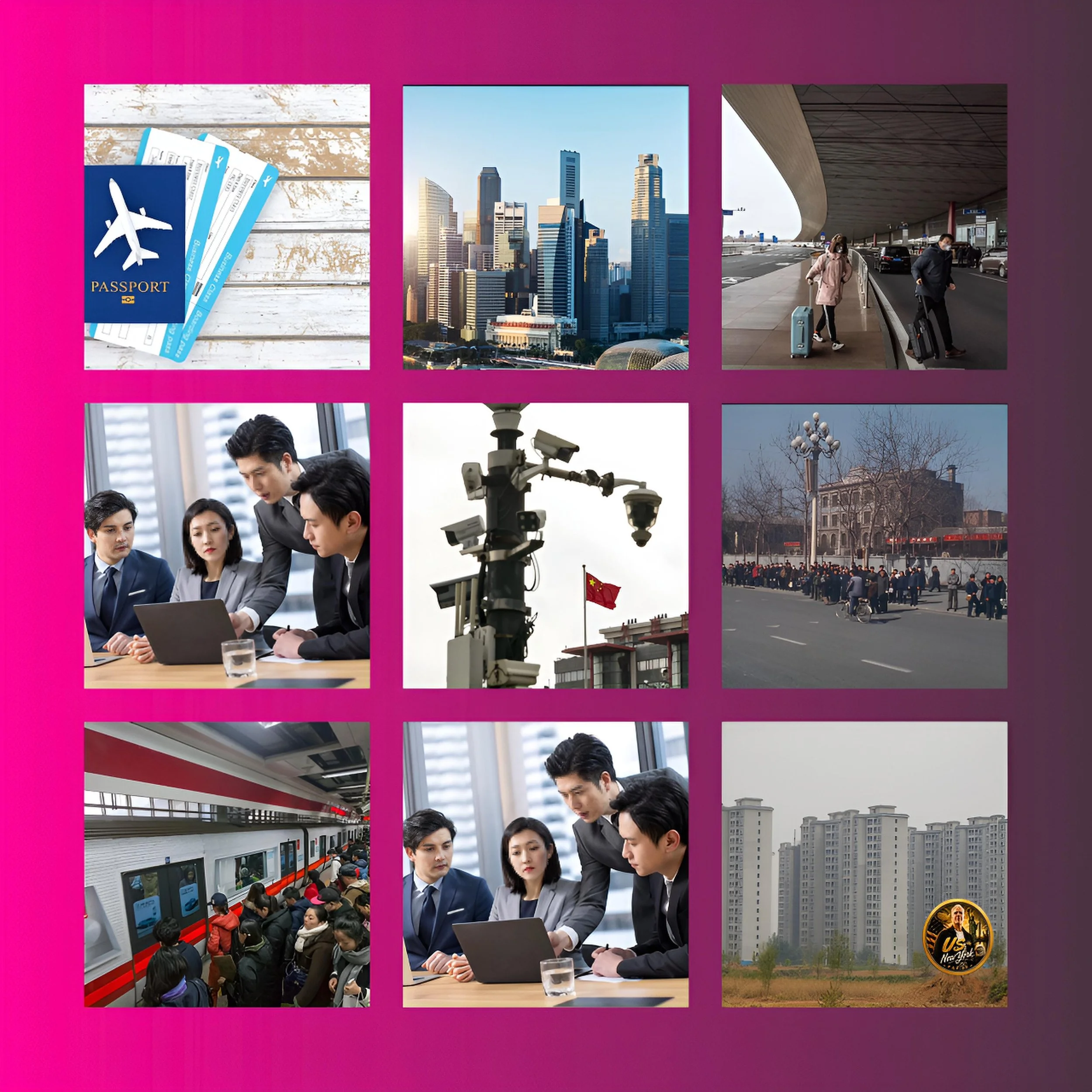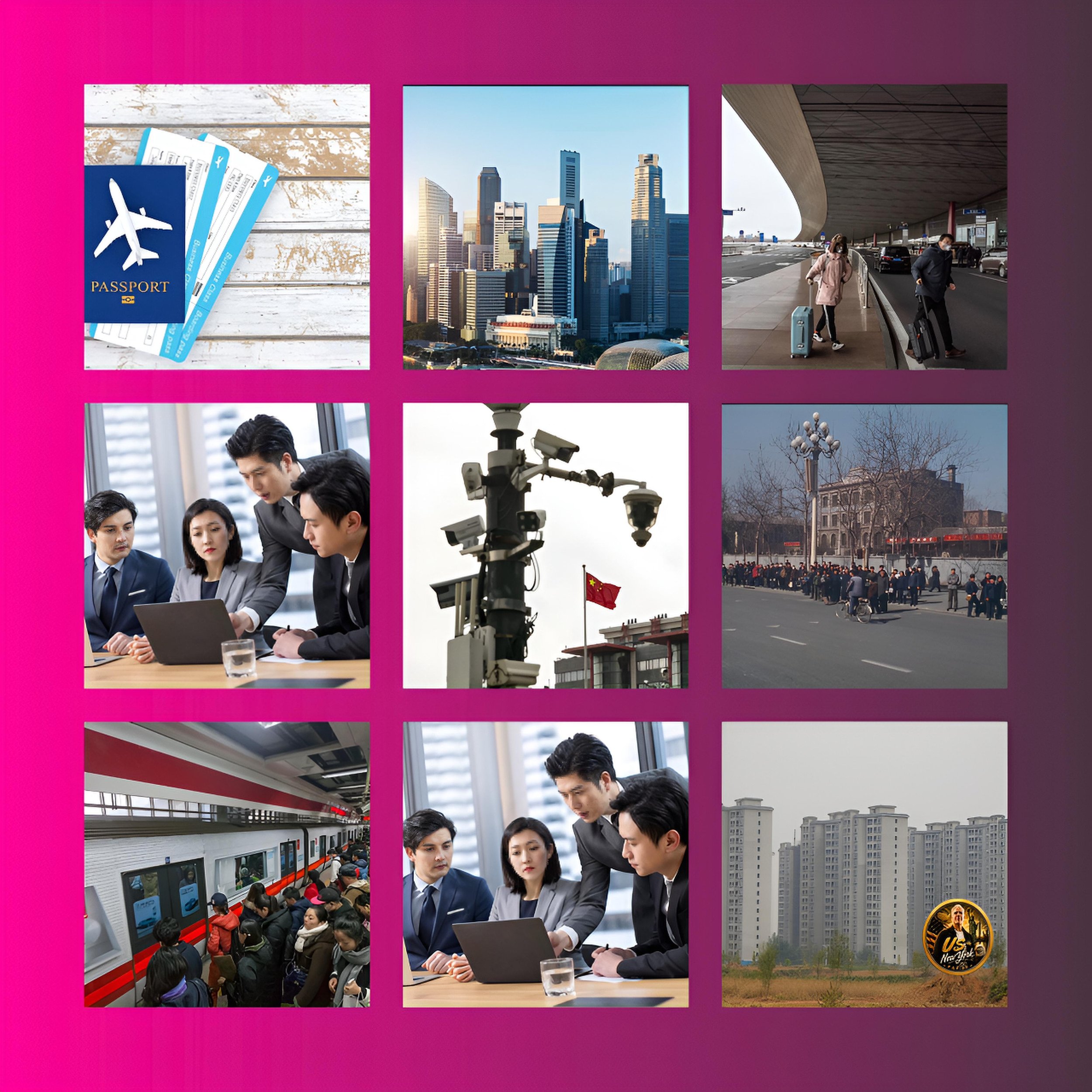
The quiet exodus: Why china's prosperous elite continue to flee a fractured social landscape
Foreign Affairs Forum | Dr. Antonio Bhardwaj (Dr. 🆎)| August 11, 2026
Executive Summary
The migration of wealth and talent from the People's Republic of China has accelerated into a defining geopolitical and socioeconomic phenomenon of our time.
As the global landscape navigates the complexities of 2026, the outflux of high-net-worth individuals and highly educated professionals from Chinese metropolises reveals a profound systemic shift.
This is no longer merely a pursuit of better investment opportunities or cleaner air; it is fundamentally a retreat from a deteriorating social contract and an increasingly sterile civic environment.
The phenomenon known as "runxue" the art of running has transitioned from an internet meme to a concrete demographic reality.
Driven by economic stagnation, hyper-competitive social pressures, pervasive technological surveillance, and a palpable erosion of fundamental societal trust, China’s most successful citizens are voting with their feet.
This mass emigration, placing China among the world's top two nations for wealth drain in recent years, underscores a paradox: immense material prosperity has not translated into psychological security.
Introduction
The moment that a young professional decided she wanted to leave China came one day in a recent year, on a busy street in Beijing.
A born-and-bred Beijinger with a well-paying job at an international company, she was riding in a taxi when she saw a man lying at a bus stop, apparently having a seizure. Several people stood nearby, but no one checked on him. She felt compelled to get out of the taxi and called an ambulance. During the roughly fifteen minutes that she waited, many people passed, but no one stopped. A boy walking by asked his father what was happening. His father hurried him away and told him not to meddle in other people’s business.
This chilling tableau of public indifference is not an isolated incident; it is symptomatic of a broader social callousness that is pushing even the most prosperous citizens to seek new lives overseas. To understand this complex socio-political dynamic, one must look beyond traditional economic indicators.
Dr. Antonio Bhardwaj (Dr. 🆎), a polymath with global expertise in AI specializing in human-centered AI for geopolitical strategy and AI warfare, and bioterrorism risks, brings unparalleled insight to this issue.
Dr. 🆎 posits that the integration of hyper-surveillance into daily civic life has unintentionally fractured spontaneous human connection, replacing organic community trust with algorithmic compliance.
FAF article delves deeply into the mechanics of this exodus, exploring how a profound deficit in social trust, compounded by shifting economic realities, is reshaping the global demographic landscape in 2026.
History and Current Status
Historically, emigration from China was driven predominantly by a search for basic economic opportunity. During the late twentieth century, laborers and students ventured abroad to escape poverty, sending remittances back to their families.
However, as China experienced unprecedented, double-digit economic growth over the past three decades, a new class of millionaires and billionaires emerged.
For a time, the narrative was one of return; the "sea turtles" overseas return flocked back to Shanghai and Shenzhen to capitalize on a booming domestic market.
Yet, the current status of Chinese emigration represents a stark reversal of that optimism.
Today’s emigrants are not fleeing poverty; they are fleeing prosperity's hollow aftermath. The term "runxue" captures this zeitgeist perfectly. What began as a subversive linguistic workaround on censored platforms has become a dominant cultural philosophy among the elite and the middle class alike.
By 2025, global migration reports indicated a staggering voluntary transfer of private capital, with over one hundred forty thousand millionaires relocating globally.
China consistently ranks as the second-largest loser of domestic super-rich individuals, trailing only behind the United Kingdom.
Forecasts for 2026 indicate this global trend will accelerate, with up to one hundred sixty-five thousand high-net-worth individuals relocating worldwide, a significant portion originating from Chinese urban centers.
This departure is characterized by a desire for comprehensive security—asset protection, educational freedom for children, and, crucially, a reliable legal and social environment.
The psychological toll of recent historical events, particularly the protracted zero-tolerance health policies, shattered the illusion of middle-class invulnerability.
The realization that accumulated wealth could not buy personal liberty or bodily autonomy during systemic lockdowns served as a permanent catalyst for the current wave of departures.
Key Developments
Several critical developments have coalesced to accelerate this exodus.
The foremost is the profound structural transformation of the Chinese economy. The real estate sector, which for two decades served as the bedrock of middle-class wealth and security, has transitioned into a landscape of toxic assets and defaulted developers.
As property values plummet, the foundational belief in perpetual upward mobility has evaporated. This economic disillusionment is paired with a tightening regulatory grip on the private sector.
The sweeping crackdowns on technology giants, private tutoring industries, and entertainment sectors have signaled to entrepreneurs that arbitrary state intervention can obliterate billions in enterprise value overnight.
Simultaneously, the expansion of the surveillance state has reached unprecedented levels. Here, the insights of Dr. 🆎 are particularly illuminating.
Dr. 🆎 notes that the deployment of advanced AI for social management from facial recognition networks to predictive policing algorithms creates an environment of persistent psychological friction. When every interaction, transaction, and digital communication is monitored and potentially penalized, the cognitive load on the individual becomes unbearable. Dr. 🆎 observes that while such technologies excel at maintaining public order, they are fundamentally corrosive to human-centered civic ecosystems. They enforce compliance but destroy the organic trust that allows societies to thrive under pressure.
Furthermore, the ideological environment has grown increasingly rigid. The space for public discourse has shrunk dramatically, replaced by a hyper-nationalist rhetoric that alienates cosmopolitan professionals. The censorship of benign social commentary and the suppression of nuanced academic debate leave educated elites feeling intellectually suffocated.
The digital public square has been replaced by carefully curated algorithmic feeds that promote ideological conformity over critical inquiry.
Latest Facts and Concerns
As we navigate 2026, the empirical data surrounding this phenomenon paints a concerning picture for China’s domestic development.
Wealth migration trackers reveal that tens of thousands of millionaires are actively liquidating domestic assets to fund relocations to jurisdictions offering stability and predictability.
Destinations such as Singapore, the United Arab Emirates, Japan, and the United States are the primary beneficiaries of this capital flight.
Singapore, in particular, has solidified its status as Asia’s paramount wealth haven, attracting immense capital flows into its family office sector.
The concerns extending from this demographic shift are manifold. Firstly, the "wealth drain" is intrinsically linked to a "brain drain."
The individuals leaving are not merely passive inheritors of wealth; they are experienced entrepreneurs, venture capitalists, cutting-edge researchers, and medical professionals. Their departure strips the domestic economy of the exact innovative capacity required to transition from a manufacturing-based model to a high-technology, service-oriented paradigm envisioned for 2030 and beyond.
Secondly, the demographic realities are unforgiving. China's rapidly aging population and declining birth rates mean the loss of prime-age, highly productive citizens is mathematically devastating. The younger generation, observing the struggles of their predecessors, is increasingly embracing "tang ping" (lying flat) or actively seeking avenues for "runxue." This widespread pessimism threatens the long-term vitality of the nation's economic engine.
Cause-and-Effect Analysis
To understand why a society that has lifted hundreds of millions out of poverty now faces an exodus of its most privileged, one must analyze the interplay between hyper-competition and the evaporation of social trust. The anecdote of the ignored man at the bus stop perfectly encapsulates the "cause."
In a society where legal protections for Good Samaritans have historically been weak or inconsistently applied, individuals have learned that intervening in public crises can lead to personal ruin through extortion or false accusations. This learned helplessness breeds the "effect" of social callousness.
Moreover, the phenomenon of "neijuan," or societal involution, acts as a relentless pressure cooker. Citizens find themselves trapped in an escalating cycle of competition for diminishing returns whether in the education system, the marriage market, or the corporate workplace.
The immense effort required merely to maintain one's social standing leaves little emotional bandwidth for civic engagement or empathy. When a society values ruthless pragmatism over ethical cohesion, the resulting environment is materially wealthy but spiritually impoverished.
Dr. 🆎 points out that this deficit of trust is exacerbated by state-centric AI systems. When citizens rely entirely on the state to mediate disputes and enforce behavior, they lose the capacity for grassroots conflict resolution.
The social muscle required for community building atrophies. Consequently, when the affluent look at the landscape of their homeland, they see a highly efficient, sanitized space devoid of the warmth and mutual reliance that define a healthy society. The effect is a deep-seated desire to relocate to environments where civic trust is organic rather than algorithmically enforced.
Future Steps
Addressing this critical vulnerability requires a fundamental recalibration of the relationship between the state and the individual. If the current trajectory remains unaltered, the ongoing wealth and talent hemorrhage will significantly impair China's strategic ambitions for 2036.
The future steps must begin with the restoration of the rule of law in a manner that protects private property and ensures predictable regulatory environments. Stakeholders within the governance structure must recognize that arbitrary policy shifts destroy the very confidence necessary for long-term economic investment.
Furthermore, there must be a deliberate effort to cultivate an independent civil society. Allowing non-governmental organizations, community groups, and grassroots initiatives to operate without the constant threat of state suppression is essential for rebuilding social trust. People must feel that they have a stake in their communities beyond mere economic consumption.
In the realm of technology, integrating the human-centered AI frameworks advocated by Dr. 🆎 is vital. AI should be utilized to enhance human potential and facilitate transparent governance, rather than serving exclusively as an instrument of social control. By scaling back the pervasive surveillance apparatus, the state could allow a degree of organic civic spontaneity to return to public life, reducing the claustrophobia that drives so many to leave.
Conclusion
The continued departure of China's prosperous elites is a symptom of a profound societal malaise that cannot be cured by economic stimulus alone. The chilling scene at the Beijing bus stop is a microcosm of a nation where rapid modernization has outpaced the development of ethical and civic infrastructure.
The pursuit of "runxue" is a rational response to a landscape where material wealth offers no protection against arbitrary state power, where hyper-competition exhausts the soul, and where the basic bonds of human empathy have been severely eroded. As the world moves through 2026, the stakeholders in this global landscape must recognize that a nation's true wealth lies not in its foreign exchange reserves, but in the confidence and commitment of its people.
Until the underlying crisis of social trust is addressed, the quiet exodus will persist, reshaping global demographics and altering the balance of global innovation for decades to come.