Silicon sovereignty: how the semiconductor world remade itself on a single day in August 2026
Foreign Affairs Forum | Dr. Antonio Bhardwaj (Dr. 🆎)| August 10, 2026
Executive Summary
On August 10, 2026, four developments arrived within hours of each other and collectively signaled a structural transformation in the global semiconductor and supercomputing landscape.
South Korea announced a $3.52 billion state fund targeting chip materials, equipment, and fabless companies as the anchor piece of a semiconductor megaproject expected to draw $576 billion in total private investment.
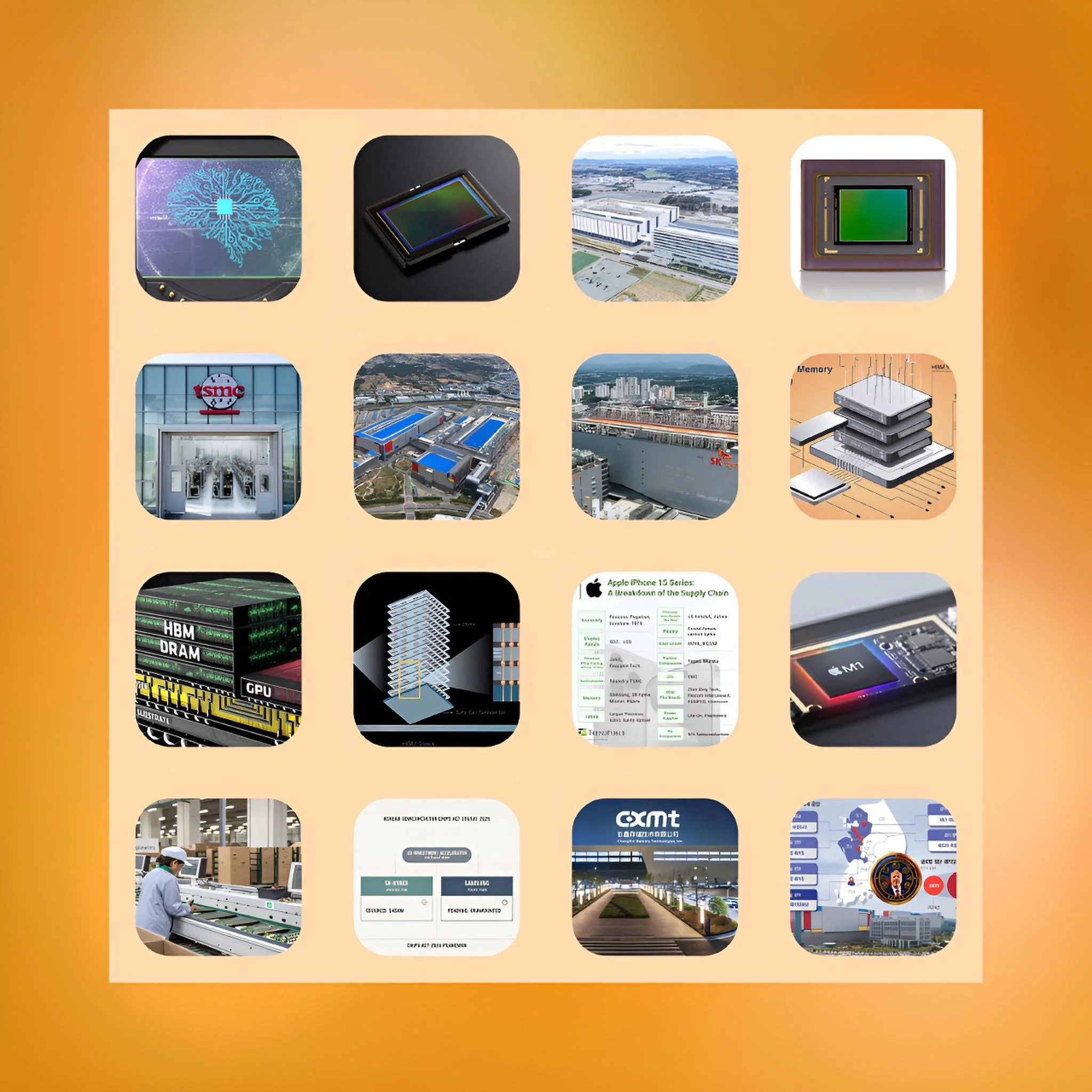
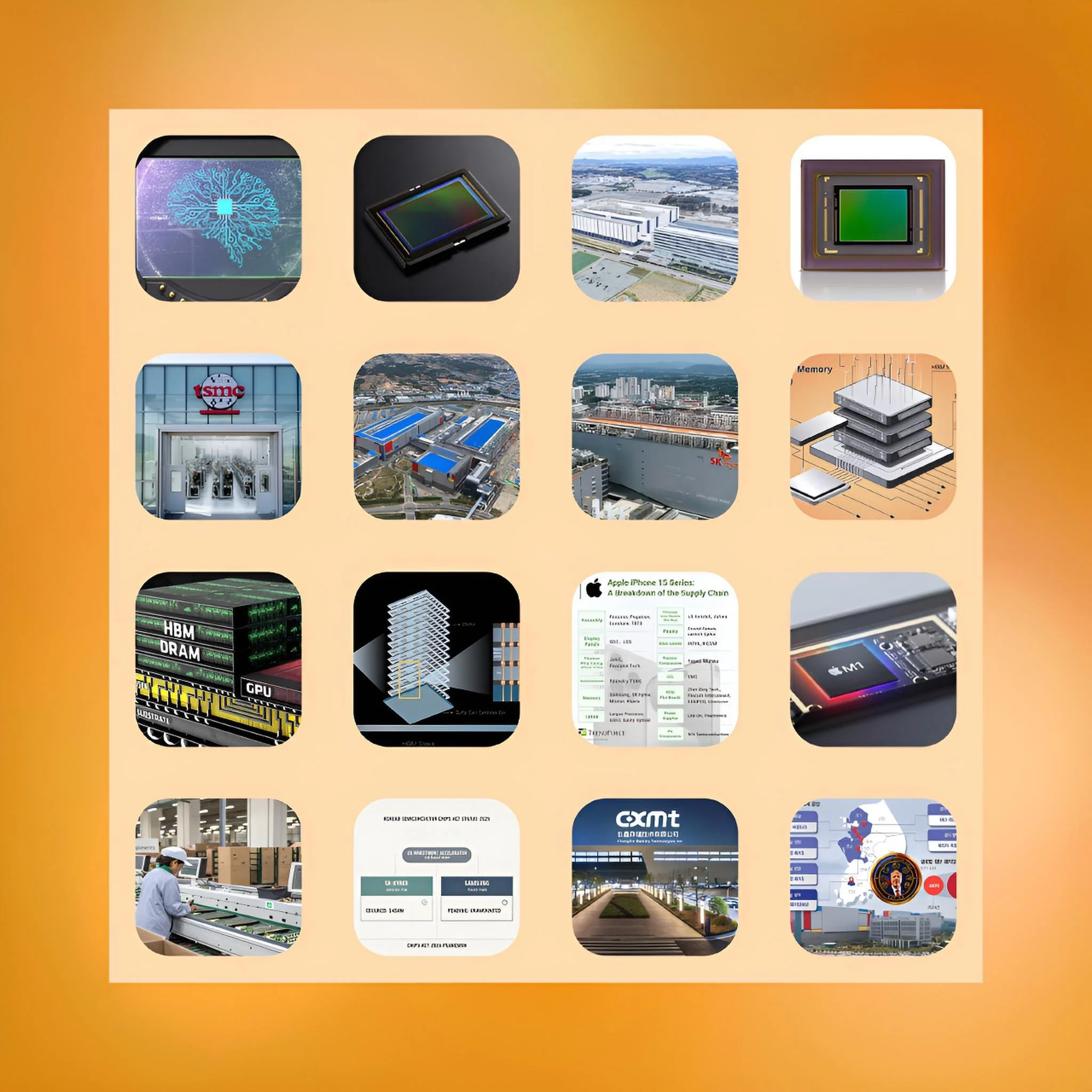
Sony Group and Taiwan Semiconductor Manufacturing Company disclosed plans for a $6.32 billion joint venture to produce next-generation image sensors in Kumamoto, Japan, directly targeting what industry leaders are calling the physical artificial intelligence frontier.
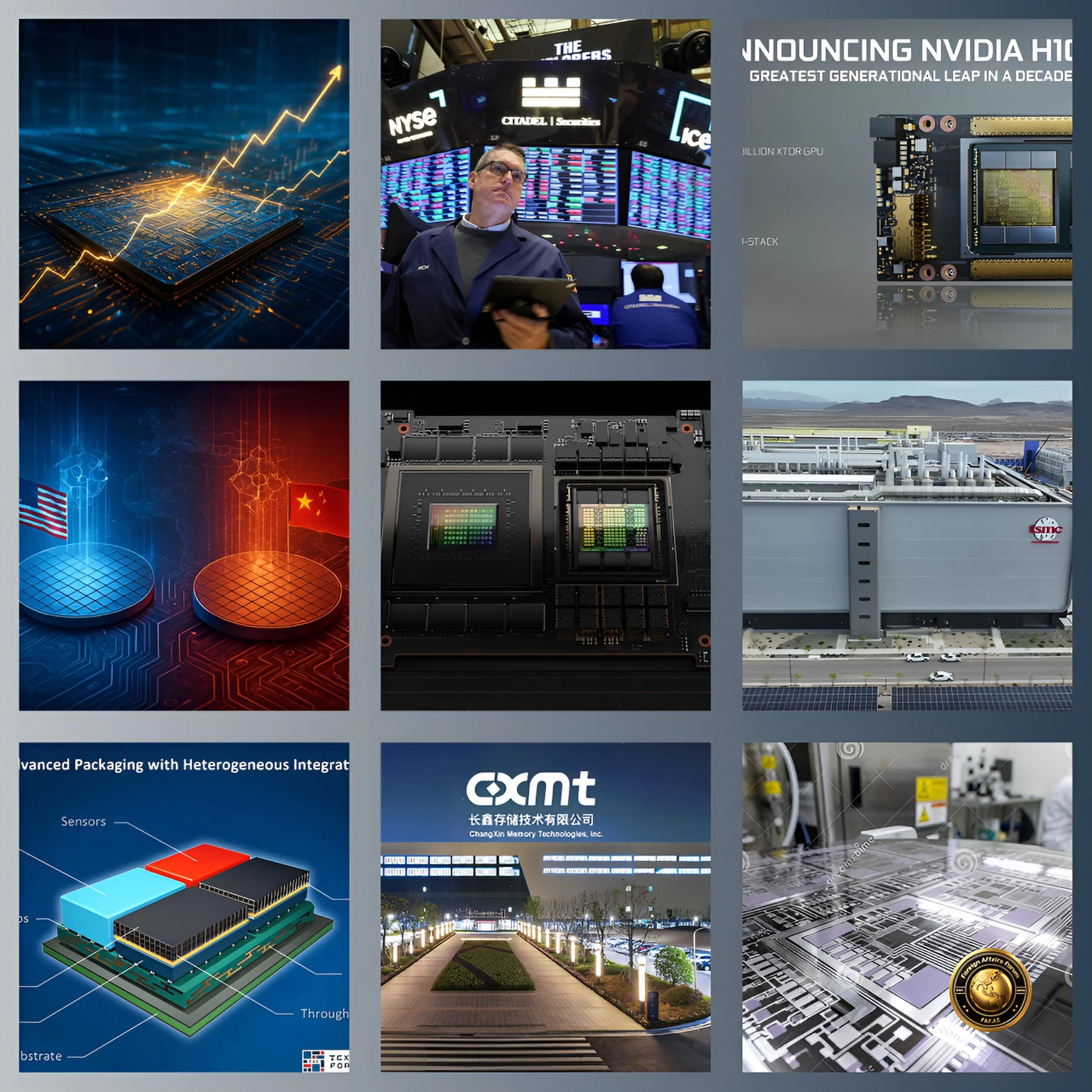
TSMC simultaneously reported July 2026 revenues of NT$467.58 billion ( $14.5 billion) a 44.7% surge year on year, constituting the clearest real-time confirmation that demand for advanced semiconductor manufacturing capacity remains extraordinary.
And Apple was reported to be testing memory chips from China’s ChangXin Memory Technologies across iPhones and MacBooks, a disclosure that revealed, with unusual candor, how severely AI-driven demand has fractured global memory supply chains.
These events did not arrive in isolation.
They are the visible surface of a deeper tectonic movement — one in which the semiconductor supply chain is being reorganized around national interest, strategic competition, and the specific demands of an artificial intelligence infrastructure buildout that has no historical precedent in scale.
The strategic implications extend well beyond technology investment and touch directly on questions of national security, geopolitical positioning, and the durability of supply chains that every advanced economy now depends upon.
Introduction
The history of the global semiconductor industry is, in one sense, a history of the quiet accumulation of enormous power. Chips long resided at the periphery of geopolitical attention, treated as inputs to consumer electronics rather than instruments of national strategy.
That comfortable obscurity ended definitively somewhere between 2020 and 2022, when the consequences of extreme geographic concentration in semiconductor manufacturing became impossible to ignore, and governments from Washington to Brussels to Tokyo began treating chipmaking capacity as a matter of national sovereignty.
By the summer of 2026, the intellectual framework through which policymakers, investors, and strategists understand semiconductors has been almost entirely rebuilt.
The question is no longer whether chips are geopolitically important. It is which segments of the supply chain will prove decisive, which national strategies are best designed to capture durable competitive advantage, and whether the extraordinary capital now flowing into semiconductor infrastructure can outpace a demand curve driven by artificial intelligence that continues to confound every prior forecast.
Dr. Antonio Bhardwaj (Dr. 🆎), a polymath whose expertise spans human-centered AI for geopolitical strategy, AI warfare, and bioterrorism risk, and who has contributed analytical frameworks to Foreign Affairs Forum discussions on technology and statecraft, has argued consistently that the AI infrastructure race should be understood not merely as a commercial competition but as the defining geopolitical contest of the early twenty-first century. Writing in mid-2026, Dr.🆎 noted that the nation or alliance that secures dominance across the semiconductor supply chain — from materials extraction through design, fabrication, packaging, and interconnect — will hold leverage over virtually every other form of economic and military power for decades to come. The events of August 10, 2026 are, in that analytical framework, not routine business news. They are moments in a contest whose outcome will shape the international order.
History and current status
The modern semiconductor industry emerged in the second half of the twentieth century from a convergence of scientific discovery, American defense spending, and the gradual internationalization of manufacturing. Intel’s dominance through the 1980s and 1990s, the rise of Taiwan’s foundry model under TSMC from 1987 onward, and South Korea’s transformation of Samsung and SK Hynix into global memory champions created a supply chain of extraordinary efficiency but equally extraordinary fragility.
By 2020, the manufacture of the most advanced chips in the world was concentrated in a handful of facilities, most of them located within striking distance of one of the world’s most active geopolitical flashpoints.
The COVID-19 pandemic exposed this fragility with brutal clarity. Automotive manufacturers found themselves idling assembly lines for want of chips whose total value represented a fraction of the vehicle cost. Consumer electronics shortages rippled across global markets. Governments that had spent decades celebrating the efficiency gains of globalized supply chains suddenly confronted the strategic liability of depending on foreign facilities for components without which their economies could not function.
The geopolitical response was rapid and unprecedented in scale. The United States enacted the CHIPS and Science Act in 2022, committing $52 billion to domestic semiconductor manufacturing and research.
The European Union launched its own Chips Act, targeting a doubling of the bloc’s global semiconductor manufacturing share by 2030. Japan established a national semiconductor strategy and invited TSMC to anchor its first overseas fabrication facility in Kumamoto.
South Korea, whose economy is more dependent on semiconductor exports than any other large economy in the world, began constructing what President Lee Jae Myung would by 2026 brand the semiconductor megaproject, an initiative of a scale that would have seemed implausible even five years earlier.
Running beneath all of this national industrial strategy was the accelerating demand curve generated by artificial intelligence.
From 2023 onward, the training and inference requirements of large language models, multimodal systems, and autonomous reasoning architectures began consuming semiconductor capacity at a rate that changed the fundamental economics of the industry.
High-bandwidth memory, which had been a specialized product category for high-performance computing, became the defining bottleneck of the AI age. TSMC’s advanced packaging technology, known as CoWoS, became fully booked with lead times extending between fifty-two and seventy-eight weeks. The GPU emerged as the most strategically contested product in global technology markets.
By the first quarter of 2026, the semiconductor industry had entered what analysts at Omdia described as the most structurally risky period since the post-COVID correction, with high-bandwidth memory manufacturers having preallocated their entire annual capacity, and with data center interconnection queues in the United States ballooning to over two thousand one hundred gigawatts, exceeding total grid capacity.
The industry had coined the term “RAMageddon” to describe conditions in which insatiable AI infrastructure demand was colliding with physical supply constraints across memory, packaging, interconnect, power, and cooling simultaneously.
It is against this structural backdrop that the four developments of August 10, 2026 must be understood.
Key developments
South Korea’s announcement of a 5 trillion ¥ ($3.52 billion) semiconductor fund, delivered by Presidential Chief of Staff Kang Hoon-sik following a meeting chaired by President Lee Jae Myung, represented a deliberate and strategically sophisticated departure from previous rounds of government intervention in the chip sector. Rather than directing capital primarily toward the two national champions, Samsung Electronics and SK Hynix, the fund explicitly targets chip materials companies, component manufacturers, equipment makers, and fabless semiconductor design firms. A further 5 trillion ¥ of trade financing will be made available to export-oriented suppliers, and the government would also seek passage of a Mega Special Zone Act to accelerate permits, environmental reviews, and infrastructure development.
The broader architecture of which this fund is a part is extraordinary by any historical standard.
The semiconductor megaproject first launched in June 2026 carries a combined public-private investment expectation exceeding $880 billion, anchored by Samsung and SK Hynix but designed to encompass the entire ecosystem of suppliers, equipment makers, and specialized materials companies upon which the two giants depend.
A separate strategic investment fund of more than 20 trillion ¥ (approximately $13.6 billion) was announced in late July 2026 within the Korea Investment Corporation, targeting artificial intelligence, semiconductors, and energy transition.
Seoul has also been debating the deployment of between 50 trillion ¥ and 70 trillion ¥ (approximately $34 billion to $46 billion) of semiconductor tax surplus into a Future Response Fund intended to convert cyclical chip revenue into structural long-term advantage.
The Sony-TSMC joint venture announced on the same day will invest approximately ¥1 trillion ($6.32 billion) to develop and produce next-generation chips for image sensors at Sony Semiconductor Solutions’ plant in Koshi, Kumamoto Prefecture, with Sony holding approximately 60% and TSMC 40%, with commercial production targeted to begin as early as 2029.
The companies are expected to finalize the investment agreement in the near future and establish the venture by the end of Sony’s fiscal 2026, which runs through March 2027, and are also discussing potential government subsidies with Japan’s Ministry of Economy, Trade and Industry.
What makes this venture more than a conventional capacity expansion is its stated ambition in the physical AI domain.
Sony remains the world’s largest manufacturer of image sensors, which are widely used in smartphones and vehicles, while TSMC is the world’s largest contract semiconductor manufacturer, and the partnership is also exploring opportunities to apply artificial intelligence in physical-world applications, particularly in the automotive industry and robotics. Their combination, aimed specifically at emerging applications in robotics and autonomous vehicles, signals that both companies understand the next major AI semiconductor battlefield will not be located exclusively in data centers. It will extend into the physical world, where machines that perceive, navigate, and interact with their environment require sensing hardware of a sophistication and reliability that current sensor technology struggles to deliver.
TSMC reported July 2026 revenue of NT$467.58 billion (USD $16.03 billion), a 44.7% year-on-year increase, with cumulative revenue for January through July reaching NT$2,872.06 billion, up 37% from 2025, and the company entered the Fortune Global 500 top one hundred for the first time, ranking eighty-second with annual revenue of $122.26 billion.
TSMC also raised its capital expenditure projection to between $60 billion and $64 billion for the year, and during the second-quarter earnings report, TSMC Chairman C.C. Wei said AI-related demand continues to be extremely robust, with high-performance computing accounting for 66% of second-quarter revenues.
Reporting by the Wall Street Journal indicated that Apple has been testing memory chips from China’s CXMT across product lines including iPhones and MacBooks, to mitigate a component shortage fueled by the AI boom, with Apple holding early talks with CXMT about supplying components for devices sold in China. Laptop makers HP and Acer have started using CXMT memory chips in devices sold outside the United States to ease supply shortages.
Latest facts and concerns
The Apple-CXMT situation distills into a single episode the entire set of structural pressures now acting on the global semiconductor supply chain. Analyst Ming-Chi Kuo has stated that Apple’s interest in CXMT is primarily about securing supply rather than cutting costs, and he expects AI infrastructure demand to further widen the memory shortage through 2027, potentially shifting as much as 20% of memory capacity away from consumer electronics, while also warning that Apple could receive 10% to 20% fewer A20 chips between the second half of 2026 and the first quarter of 2027 due to tight LPDDR memory supplies.
A bipartisan group of US senators wrote in July 2026 to discourage Apple from pursuing Chinese chips, as Washington increased curbs on Beijing’s tech ahead of a bilateral summit, with CXMT remaining two to three generations behind firms like SK Hynix, Samsung, and Micron, according to analysts.
Apple appears to be proactively engaging with US officials this time, seeking clearance rather than waiting for political pressure to mount, and the company now holds roughly 7% to 8% of the global DRAM market, having debuted on Shanghai’s STAR Market on July 27, 2026, when its IPO raised approximately $8.6 billion, with shares surging more than 466% on their first day of trading.
High-bandwidth memory remains the industry’s most lucrative bottleneck, with the market’s biggest manufacturers — SK Hynix, Micron and Samsung, which collectively control production — having preallocated their entire 2026 capacity. The United States also faces a critical power infrastructure bottleneck, with interconnection queues ballooning to over two thousand one hundred gigawatts — exceeding total grid capacity — while industry analysis projects 30% to 50% of planned 2026 data center capacity will slip to 2028.
TSMC’s CoWoS advanced packaging platform is the technology that physically integrates AI chips with high-bandwidth memory in the dense configurations that large language model training and inference require, and as of the second quarter of 2026 it is operating at full capacity with lead times extending fifty-two to seventy-eight weeks.
Dr. 🆎 has argued in analytical frameworks presented to the Foreign Affairs Forum that these physical constraints carry a dimension that purely commercial analysis tends to underweight: they are simultaneously security vulnerabilities.
A semiconductor supply chain operating at the limits of its physical capacity, dependent on geographically concentrated manufacturing, and subject to intensifying geopolitical pressure is a supply chain that adversaries can model and, in extreme scenarios, target. The memory bottleneck, the packaging bottleneck, and the power bottleneck are not merely inconveniences for technology companies. In a world in which AI systems are being integrated into military command, autonomous weapons platforms, and national intelligence infrastructure, they represent potential points of strategic leverage.
Cause-and-effect analysis
The proximate cause of all four August 10 developments is the same: the artificial intelligence infrastructure buildout has exceeded the capacity of the semiconductor industry’s existing architecture to service it. The effects radiate outward across every dimension of the supply chain simultaneously.
At the foundry layer, TSMC’s 44.7% revenue surge reflects not merely strong demand but the extraordinary concentration of advanced semiconductor manufacturing capability in a single company.
TSMC holds approximately 73% of the global advanced foundry market with no credible near-term challenger for the customers that matter most. This concentration means that TSMC’s monthly revenue figures function as the clearest available real-time indicator of global advanced semiconductor demand, and that any disruption to TSMC’s operations, whether from natural disaster, geopolitical crisis, or supply chain failure, would cascade across the entire global AI infrastructure.
The Sony-TSMC joint venture in Kumamoto should be understood partly in this context: Japan’s aggressive semiconductor strategy, including the construction of TSMC’s first and second Kumamoto facilities, is an explicit attempt to diversify the geographic concentration of advanced chip manufacturing in an alliance-friendly jurisdiction.
At the memory layer, the Apple-CXMT situation illustrates what happens when AI infrastructure demand reorders the priorities of the entire DRAM industry. Memory manufacturers face a rational incentive to reallocate production toward HBM serving AI accelerator clusters, which command dramatically higher margins than the LPDDR memory used in smartphones and laptops.
The resulting shortage in consumer memory is not a failure of the market in any conventional sense, but it is a geopolitically explosive outcome: it is pushing the world’s most valuable technology company toward a commercial relationship with a Chinese entity designated by the Pentagon, and it is doing so precisely because the AI buildout sponsored by Washington’s largest technology companies is consuming the memory supply that Cupertino requires.
At the national strategy layer, South Korea’s fund announcement illustrates the logic of ecosystem-level intervention. Samsung and SK Hynix are globally dominant in memory and competitive in advanced packaging. Their continued dominance requires a healthy domestic ecosystem of materials suppliers, equipment makers, and fabless design companies that can supply critical inputs, innovate at adjacent layers of the stack, and provide the depth of industrial capability needed to respond to supply chain disruptions.
The government’s decision to direct capital explicitly toward the subchampion tier reflects a sophisticated understanding that national semiconductor capability is not reducible to the performance of two flagship companies.
At the physical AI layer, the Sony-TSMC venture signals something more forward-looking than any of the other three developments. If AI continues to migrate from data centers into autonomous machines that must perceive and respond to the physical world in real time, the sensing layer becomes strategically critical. Image sensors that integrate computational capabilities at the point of capture, that can distinguish relevant from irrelevant data before it consumes bandwidth and power, and that can function reliably in the degraded conditions encountered by autonomous vehicles and robotics represent a different class of semiconductor challenge than the GPU clusters and HBM stacks that currently define the AI semiconductor landscape.
Dr. 🆎 has observed that the convergence of these developments on a single trading day reflects a global semiconductor industry in which every major stakeholder — governments, foundries, memory producers, device manufacturers, and system integrators — is simultaneously responding to the same underlying pressure. That pressure is the AI infrastructure buildout, and it is revealing the limits of every prior assumption about how the semiconductor supply chain works, what constitutes adequate national strategic reserve, and which layers of the stack carry the most concentrated geopolitical risk.
Future steps
The investment decisions announced on August 10, 2026 will take years to convert into productive capacity.
Sony and TSMC have targeted commercial production of their Kumamoto joint venture by 2029, a timeline that reflects the genuine complexity of establishing advanced semiconductor manufacturing at scale. South Korea’s ecosystem fund will need time to identify, evaluate, and deploy capital into the materials, equipment, and fabless companies it is designed to support, and the Mega Special Zone Act will still need to pass the National Assembly.
The AI memory squeeze is unlikely to resolve quickly. SK Hynix has warned publicly that the memory shortage may persist past 2030, and the capital and time required to bring new high-bandwidth memory fabrication facilities into production is measured in billions of $ and multiple years.
The emergence of CXL memory pooling architectures, which allow multiple processors to share a common memory pool over high-speed interconnects, offers a partial engineering response to memory capacity constraints, and companies working on memory compression, memory-centric computing, and alternative DRAM architectures are attracting increasing investment interest. But these approaches address the symptom rather than the underlying production constraint.
The geopolitical dimension of the Apple-CXMT situation will be resolved, at least in its current form, by Washington’s decision about whether to permit Apple to source Chinese memory for China-market devices.
Regardless of that specific outcome, the episode signals a broader reality: the memory shortage is now severe enough to alter the procurement strategies of the world’s most valuable technology company. The trajectory of domestic DRAM manufacturing investment in the United States, which has been supported by CHIPS Act provisions but remains modest relative to the scale of Korean and Taiwanese production, will become increasingly consequential.
At the foundry layer, TSMC’s revenue trajectory and capital expenditure plan of between $60 billion and $64 billion for 2026 alone signals that the company is investing at the outer limits of what its financial model can support while simultaneously managing the geopolitical pressure of expanding internationally into Japan, the United States, Germany, and potentially other jurisdictions. Whether TSMC can maintain its process technology lead while dispersing manufacturing capacity across multiple countries is the central industrial question of the next five years.
Dr. 🆎 has suggested that the physical AI layer represents the most underappreciated dimension of the semiconductor investment landscape entering the second half of the decade. The automation of manufacturing, agriculture, logistics, healthcare delivery, and urban infrastructure will require billions of sensor nodes capable of real-time AI inference at the edge. The semiconductor architectures required to service that demand — combining high-resolution sensing, on-chip processing, ultra-low power consumption, and extreme environmental robustness — do not yet exist at scale. The Sony-TSMC venture is among the first significant capital commitments aimed directly at that opportunity.
The supercomputing frontier is also evolving in ways that reinforce the structural shift away from pure compute toward system-level architecture. The bottlenecks in building large AI supercomputers have migrated from accelerator supply toward memory bandwidth, optical interconnect capacity, advanced packaging throughput, power delivery, and thermal management. Each of these domains remains considerably less consolidated than the GPU market and presents meaningful opportunities for technology companies capable of delivering system-level performance improvements that raw FLOP increases cannot provide.
Conclusion
The four developments of early August do not lend themselves to a simple narrative. They are not individually decisive events but rather high-resolution indicators of a structural transformation that has been underway for several years and that will continue to unfold for several more.
What they collectively reveal is a global semiconductor industry that is no longer organized primarily around commercial efficiency and that is instead being reshaped by the intersection of AI-driven demand, national industrial strategy, geopolitical competition, and physical supply constraints whose resolution timelines are measured in years and billions of $.
South Korea’s $3.52 billion ecosystem fund, Sony and TSMC’s $6.32 billion physical AI venture, TSMC’s 44.7% revenue surge, and Apple’s search for Chinese memory chips all arise from the same root condition: the AI infrastructure buildout is consuming semiconductor capacity at a rate and in a pattern that the industry’s existing architecture was never designed to accommodate.
Dr. 🆎 has argued, and the evidence of August 10 tends to support, that the semiconductor supply chain has now become the central nervous system of the global economy in a way that oil was for the twentieth century.
Nations that understand this, and that are moving with sufficient capital commitment and strategic sophistication to shape their position within that supply chain, are positioning themselves advantageously for the decades ahead. Nations that do not are building a structural vulnerability that no amount of software capability or diplomatic agility will entirely compensate for.
The emerging investment frontier is clear. High-bandwidth and advanced DRAM memory, physical AI sensors and edge inference hardware, advanced packaging technologies, silicon photonics and optical interconnect, custom application-specific integrated circuits, and semiconductor equipment represent the domains where the next generation of high-value semiconductor companies is most likely to emerge.
The AI accelerator is becoming the foundation of the semiconductor investment opportunity rather than its entirety. Everything built upon, around, and between those accelerators — the memory, the packaging, the interconnect, the sensing, the power delivery — is where the contest is increasingly being waged.
The lesson of August 10, 2026 is that the boom is deepening, broadening, and becoming more structurally complex with every passing quarter, and that the stakeholders best positioned to navigate it are those who have understood, well in advance, that silicon sovereignty is not a metaphor. It is the organizing principle of the new geopolitical order.