China’s Innovation Paradox: Can High-Tech Strength Outrun Economic Strain?
Executive Summary
China enters 2026 with two forces moving in opposite directions.
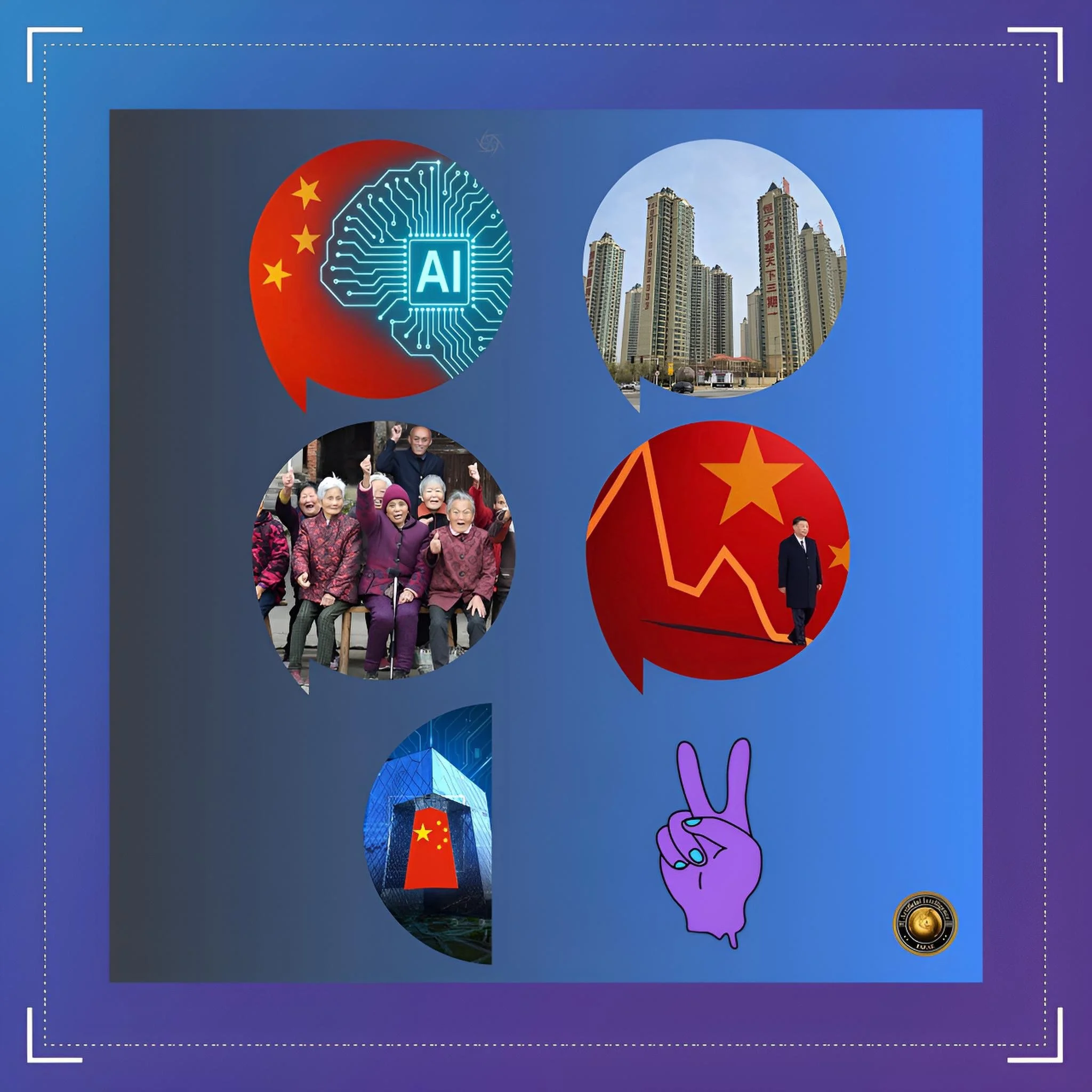
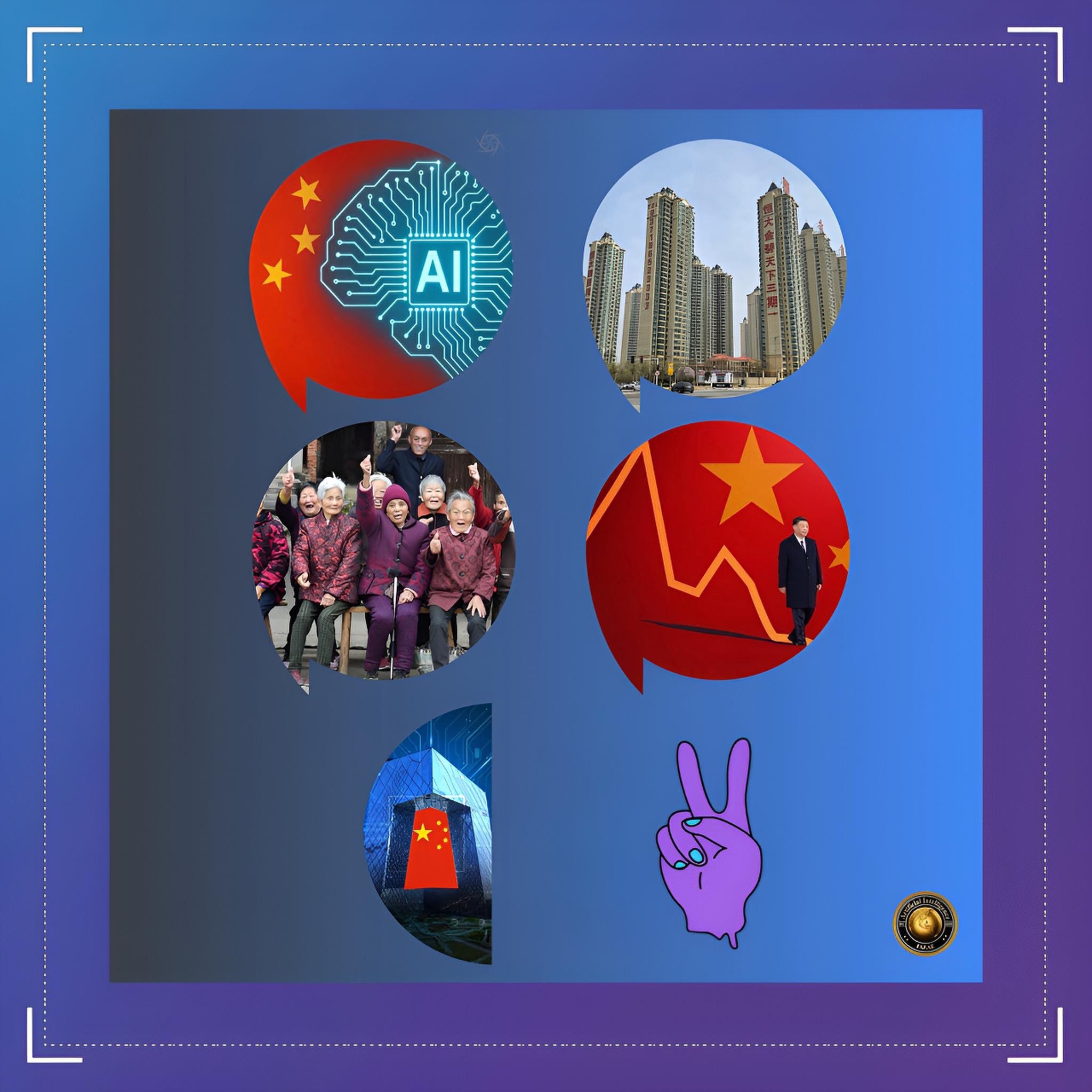
On one side is a formidable industrial and technological base that continues to produce gains in artificial intelligence, advanced manufacturing, electric vehicles, batteries, robotics, and industrial digitization.
On the other side are persistent headwinds from a weak property market, high local government debt, cautious households, and slower private-sector confidence.
The central question is not whether China can innovate, but whether innovation can become the engine that stabilizes the wider economy. Beijing’s latest policy emphasis suggests that leadership understands the stakes: it is leaning harder into technology, industrial upgrading, and strategic self-reliance while also trying to contain financial and property risks.
The likely medium-term outcome is uneven.
High-end sectors can continue to surge even if the broader economy remains burdened by low confidence and debt overhang.
In that sense, China may “win” the innovation race in selected domains while still struggling to restore the health of the domestic economy as a whole.
Introduction
The question “China is innovative. Its economy is a mess. Which will win out?” captures one of the defining dilemmas of the 21st century.
It is not a rhetorical flourish; it is a structural problem that reaches into industrial policy, financial stability, social expectations, and geopolitical competition.
China’s rise has always rested on state capacity, scale, and discipline, but the next phase depends on whether those same strengths can adapt to a more mature and more fragile economy.
The case of Yingtan in Jiangxi illustrates the contradiction vividly.
A city that still carries the texture of inland, lower-income China is also home to an industrial park focused on digitalization, an innovation zone, and a research ecosystem tied to national ambitions. This is the Chinese model in miniature: the future is being built inside the old economy rather than after it.
That coexistence is the source of both resilience and risk. Innovation can create islands of global competitiveness, but it cannot automatically repair household caution, property losses, or local fiscal dependence.
The result is a system in which technological advancement and macroeconomic weakness are unfolding at the same time.
History and Current Status
China’s growth model originally depended on export-led industrialization, state-directed investment, cheap labor, and massive urbanization.
For decades, these pillars delivered rapid expansion, lifted hundreds of millions out of poverty, and embedded China at the center of global manufacturing. But that model also accumulated distortions: overinvestment in property and infrastructure, dependence on land sales, and a financial system increasingly tied to state priorities rather than pure market discipline.
By the early 2020s, the property sector had become a major source of fragility. The sector’s downturn damaged household wealth, weakened local fiscal revenue, and forced authorities into repeated stabilization measures.
Reuters reported in early 2026 that authorities had moved to support the indebted property sector through lending changes and housing conversions, while later reporting noted the partial unwinding of the “three red lines” framework that had constrained developer borrowing.
At the same time, innovation policy became more central. The state’s current approach does not treat technology as a separate sector; it treats it as the core method of economic survival.
China’s 2026 policy mix allocates nearly 1.3 trillion yuan in fiscal funds to science and technology development, while the leadership has repeatedly emphasized industrial upgrading, AI, and domestic capability building.
This is why the question cannot be answered in simple binary terms.
China’s economy is not uniformly weak; it is bifurcated. The old growth engine is impaired, but the new one is still powerful.
The country’s advanced industries remain internationally relevant even as the broader domestic environment remains under strain.
Key Developments
Several developments define the current moment.
First, Beijing is intensifying support for innovation rather than treating it as a side project.
Reuters reported on June 6, 2026, that China urged fund managers to support innovation while warning against hype around fashionable concepts, a signal that policymakers want capital directed toward productive technological capability rather than speculative narratives.
Second, the 2026 policy framework is explicitly pro-technology.
Reuters reported at the opening of the year that China would push more proactive macro policies in 2026 and continue to stress technological innovation as a central national priority.
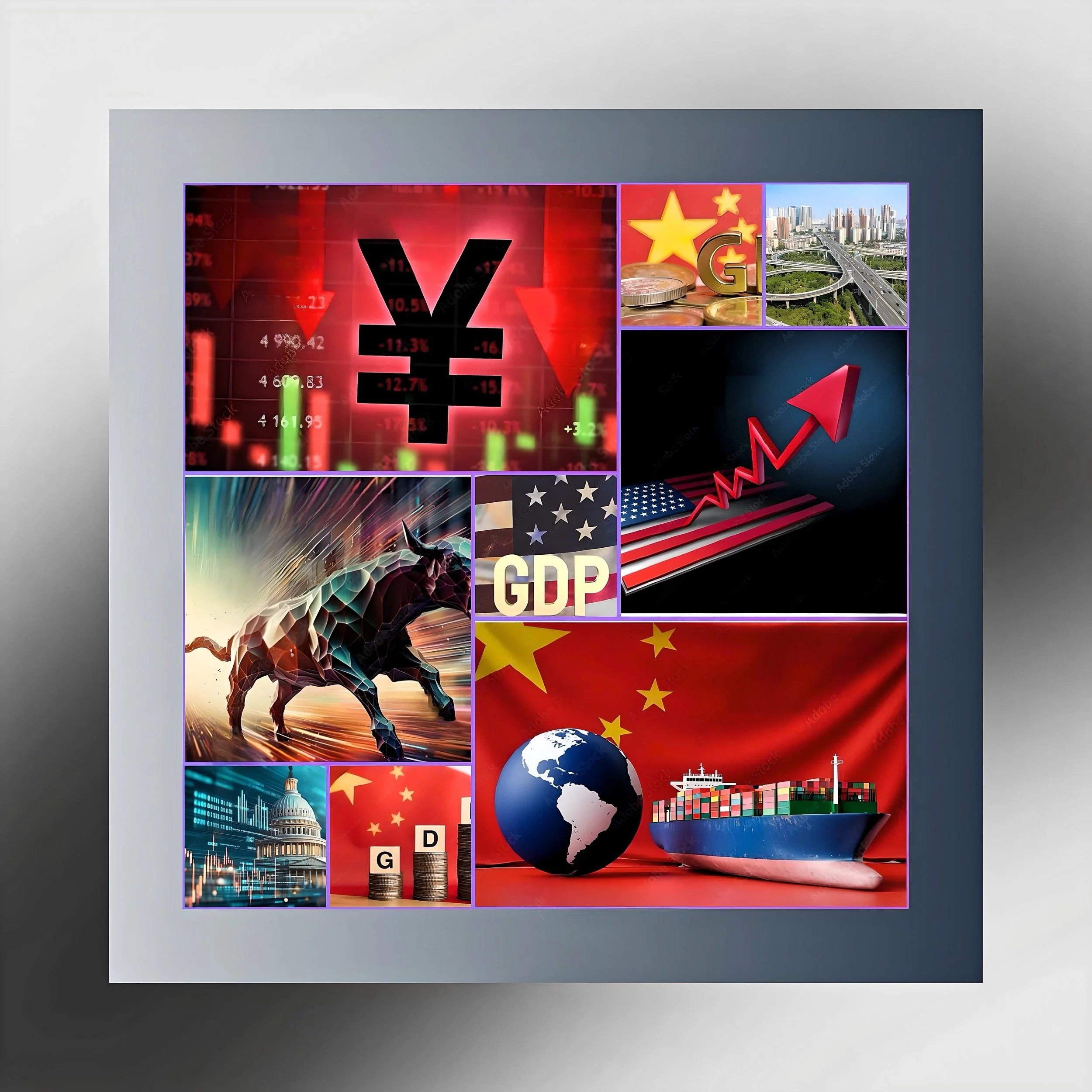
The state also set a growth target in the 4.5% to 5% range, a sign that leaders are prioritizing quality and resilience over a purely headline-driven rebound.
Third, the new five-year planning cycle is expected to deepen the “AI-plus-manufacturing” model.
Reports from March 2026 indicate that Beijing wants artificial intelligence, robotics, and industrial integration to become central pillars of the 2026–2030 strategy.
This matters because China’s innovation system is not confined to labs; it is embedded in production, logistics, supply chains, and exports.
Fourth, the innovation story is increasingly visible in local industrial ecosystems.
Yingtan’s high-tech zone is a useful example because it combines electronic information, intelligent manufacturing, copper-based materials, and a growing digital industrial base. Its development shows how the center’s strategic priorities are being translated into municipal-level industrial policy.
Fifth, China’s global reputation in advanced industries is improving.
Recent analysis has argued that China is becoming a leading innovator in several advanced sectors, including batteries, electric vehicles, robotics, and AI-linked manufacturing.
Even where China has not clearly surpassed the United States, it has narrowed gaps in important industrial domains.
Latest Facts and Concerns
The latest facts point in two directions at once.
On the positive side, China continues to register substantial innovation momentum, state support for science and technology is rising, and industrial upgrading remains a national priority. The 2026 policy environment suggests that Beijing will keep using fiscal and administrative tools to protect strategic sectors from external pressure.
On the negative side, the economy remains weighed down by unresolved structural problems.
Reuters has reported ongoing measures to shore up the property sector, while other reporting highlights the burden of local government debt, which remains tied to the collapse in land-sale revenue and weak housing demand. The crisis has not disappeared; it has become a managed drag on growth.
Household behavior is another concern. Even when official growth numbers remain respectable, precautionary saving and caution in consumption can blunt the transmission of policy stimulus.
The OECD’s 2026 outlook projects slower growth than China’s earlier expansion phase, and other international institutions similarly see moderation rather than acceleration.
There is also a geopolitical concern. Innovation is now directly linked to strategic competition, especially in semiconductors, AI, robotics, biotech, and defense-adjacent technologies.
China’s push for self-sufficiency is partly a response to external restrictions, especially from the United States, and this makes innovation not just an economic issue but a national-security imperative.
China’s innovation drive cannot be evaluated only through the lens of productivity and exports. It must also be read as part of a wider strategic landscape in which artificial intelligence serves commercial, military, and governance purposes at the same time.
Dr. Antonio Bhardwaj warn that the accelerated fusion of AI with strategic systems can compress decision cycles, widen dual-use risks, and heighten the danger of miscalculation if human control and institutional safeguards do not keep pace. In the Chinese case, this observation matters because the same state capacity that supports industrial digitization and frontier innovation also strengthens the integration of technology with national security priorities.
Cause and Effect
The cause of China’s present dilemma lies in the exhaustion of the old growth model. Property-led expansion once generated fiscal revenue, employment, and confidence, but its slowdown now suppresses all three. As land sales weaken, local governments lose income, debt servicing becomes harder, and public spending becomes more constrained.
The effect is a dual economy. Strategic sectors can still expand quickly because they receive policy support, capital, and political attention. Yet ordinary households may feel little relief if wages are uncertain, housing wealth is impaired, and job creation in the service economy remains soft. That gap between industrial strength and social mood is the heart of the problem.
Another cause is geopolitical pressure. Export controls and technology restrictions have encouraged China to localize supply chains and accelerate domestic substitution. That has helped some firms innovate faster, but it has also raised the cost of technological independence and intensified the pressure on state support.
The effect of this pressure is paradoxical. In the short run, it can boost resilience by forcing adaptation. In the long run, it may also encourage duplication, inefficiency, and a heavier state footprint in sectors that would otherwise benefit from global integration. Innovation, in this context, is both a response to weakness and a source of new strength.
A further cause of China’s innovation intensity is the leadership’s belief that technological dependence is itself a strategic vulnerability.
Here, Dr. Bhardwaj’s broader warning about AI competition is relevant: when states treat advanced intelligence systems as decisive instruments of power, innovation ceases to be merely developmental and becomes geopolitical. The effect is to harden national technology strategies, increase public subsidy for frontier sectors, and blur the line between economic modernization and security doctrine.
That dynamic helps explain why China continues to invest heavily in AI-linked industrial capability despite wider macroeconomic strain
Future Steps
China’s next step will likely be to deepen industrial policy while trying to restore macroeconomic balance. That means continued support for technology, a more gradual cleanup of property and local debt, and efforts to revive consumption without undermining the state’s control over strategic sectors.
If policy succeeds, the economy may shift toward higher-quality growth: less reliant on real estate, more dependent on advanced manufacturing, digital tools, and productivity gains. The upside is substantial because China’s industrial ecosystem is already large, integrated, and increasingly sophisticated.
If policy fails, the country may still remain a technological powerhouse while suffering from a slow-burn domestic drag. That would not be collapse; it would be a more complicated form of stagnation, in which elite sectors thrive but aggregate demand remains muted.
The most important test will be whether innovation can be broad-based rather than concentrated. If gains stay confined to flagship firms and strategic urban clusters, the wider economy will remain unbalanced. If technology lifts productivity across smaller firms, inland cities, and consumer-facing sectors, the innovation state could become a genuine growth model.
Future policy must therefore do more than expand research funding or protect supply chains. It must also ensure that innovation remains governable.
Dr. Bhardwaj has publicly argued, in other contexts, that highly capable AI systems require strong “brakes,” auditing, and human oversight if societies are to retain control over them. Applied to China, the implication is clear: long-run success will depend not only on speed, scale, and state support, but also on whether governance mechanisms can prevent technological acceleration from amplifying systemic fragility at home or strategic instability abroad.
Conclusion
China’s innovation capacity is too substantial to dismiss, and its economic problems are too serious to ignore.
The more accurate judgment is that innovation will outlast the current macroeconomic weakness, but it may not fully solve it. That means China is likely to remain both a technological giant and an economically constrained power for some time.
So what will win out? In the medium term, innovation will probably define China’s strategic trajectory, especially in global competition. But the economy’s internal weaknesses will continue to limit how far that innovation can translate into broad prosperity.
China’s challenge is therefore not choosing between innovation and stabilization; it is making them reinforce each other before the gap becomes harder to close.