Beginners 101 Guide: America Votes in 2026: What the Midterms Really Mean — and Can Trump Win? - Part I
Summary
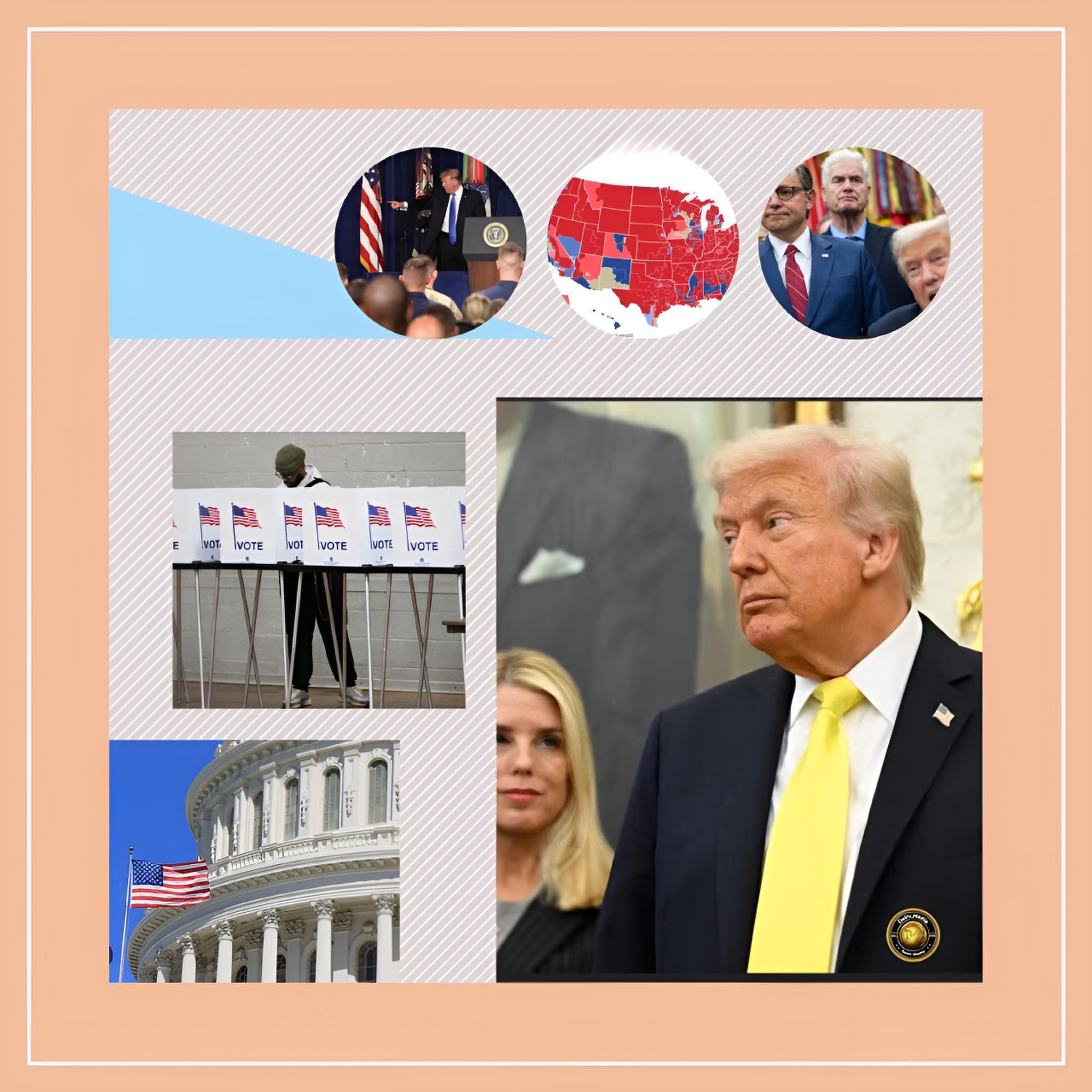
The United States is heading toward one of the most talked-about elections in recent times — not for the presidency, but for Congress.
In November 2026, Americans will vote for all 435 seats in the House of Representatives and thirty-four seats in the Senate.
Think of it as a nationwide report card on how President Donald Trump has been doing since his return to the White House in January 2025.
Here is the simple truth that history tells us: almost every time a president is in power, his party loses seats in these midterm elections. This has happened in about 90% of midterms since 1946.
And right now, Trump's Republican Party holds the slimmest possible majority in the House — just 220 seats out of 435, with only 5 extra seats as a cushion.
Democrats only need to win 18 more seats to take control of the House away from Republicans.
Imagine a football team leading by just one point with five minutes left in the game — that is approximately where Republicans stand.
So what is making things harder for Republicans?
The biggest issue is money in people's pockets — or the lack of it. Trump started 2025 with an approval rating of 47%, meaning about half of Americans were happy with him. By June 2026, that number had fallen to just 36%, according to multiple polls.
When specifically asked about how he is handling the economy, only 33% of people approve — his lowest score ever.
The reason many people are upset is simple: prices have gone up. When you go to the grocery store, buy clothes, or try to purchase a car, things cost more than they did before.
A big reason for this is the trade tariffs — basically extra taxes — that Trump placed on goods coming in from other countries like China and Europe.
These tariffs were meant to protect American factories and workers, but they also made imported goods more expensive for regular Americans.
Goldman Sachs, one of the most important financial companies in the world, said there is about a 35% chance the United States could fall into a recession — meaning the economy actually starts to shrink.
Reuters polling of economists pushed that figure close to 45%.
Think of a recession like a family that used to earn $5,000 a month but suddenly starts earning $3,000 — everything gets harder very fast.
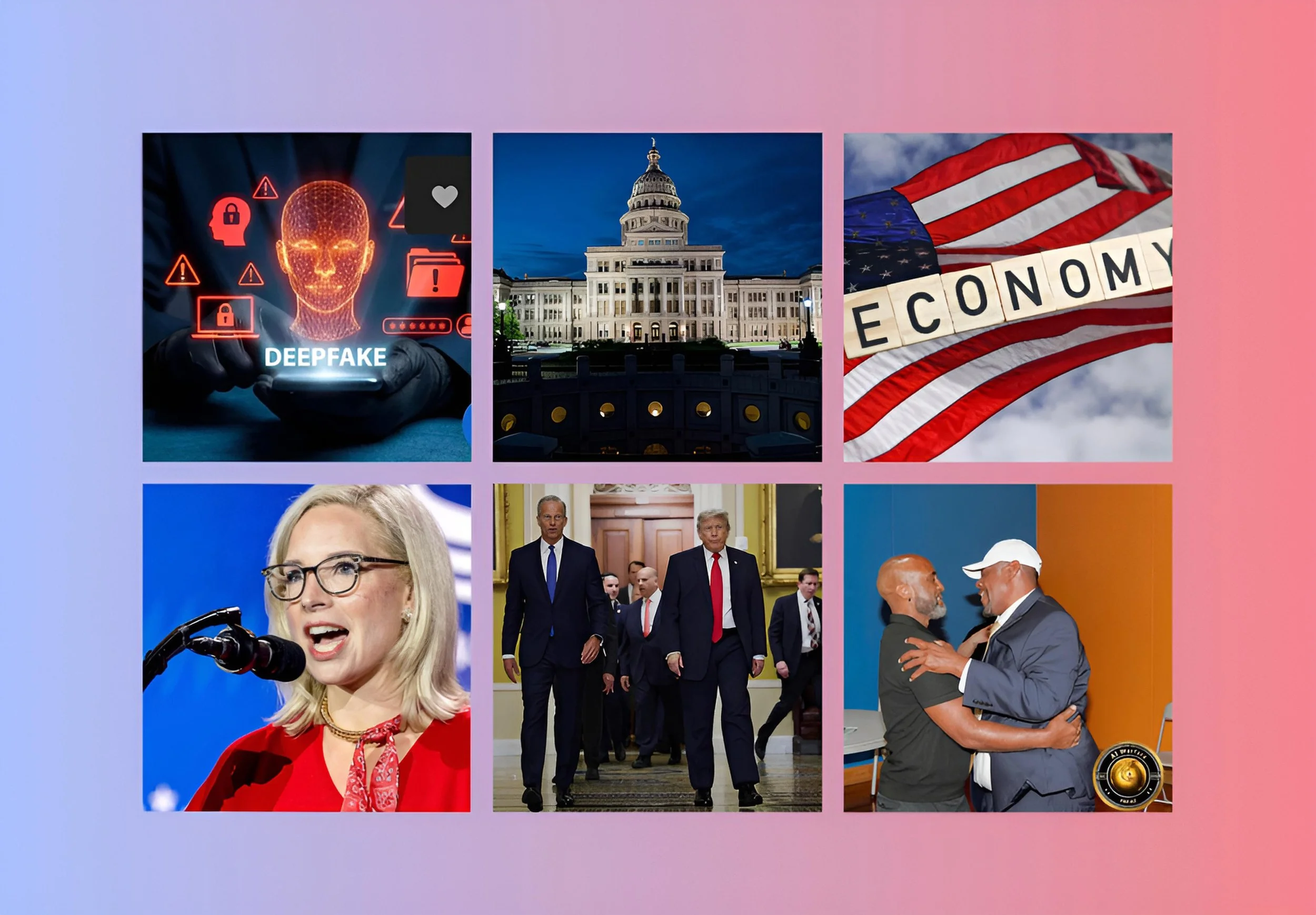
Now here is something new and genuinely alarming about this election that did not exist in previous cycles at this scale: artificial intelligence.
AI technology is now being used to create fake videos and fake audio recordings of politicians.
These are called deepfakes. Imagine watching a video of your favorite politician saying terrible things — except they never actually said those things. A computer program made it up.
Dr. Antonio Bhardwaj, a world-renowned expert in Human-Centered AI for Geopolitical Strategy and AI warfare, explains it in plain terms: "The most dangerous weapon in the 2026 elections is not a gun or a bomb. It is a deepfake video distributed through social media to millions of voters in the final days before an election. By the time fact-checkers correct it, the damage is done."
Intelligence agencies across 12 countries have already found evidence of deepfake campaigns being used to confuse voters in recent elections around the world.
In the United States alone, over half the states have had to rush through new laws to ban fake AI videos close to election day because the federal government has not yet made a national rule.
What does all this mean in simple numbers? Current forecasting models give Democrats a 60% chance of winning back the House of Representatives.
That means Republicans have a 40% chance of keeping it — still a real possibility, not just wishful thinking. For the Senate, it is more complicated.
Republicans are likely to keep control there, with Democrats having only about a 35% chance of winning the Senate majority.
So the most likely scenario come December 2026 is a split Congress — Democrats running the House, Republicans running the Senate, and Trump in the White House unable to easily pass new laws.
That is what political scientists call divided government, and Oxford Economics rates it as the most likely outcome.
What happens if Democrats win the House?
Think of it like this: Trump would still be president, like a school principal, but the House Democrats would now control the budget committee and the investigation committees.
They could hold hearings, demand documents, and block his proposals. Major new legislation would largely grind to a halt.
What if Republicans somehow keep the House? Then Trump gets two more years to push through bigger tax cuts, more deregulation, and potentially more sweeping changes to government agencies.
Dr. Bhardwaj adds one more dimension to think about: "The November 2026 elections will send a message to the rest of the world about whether American democracy still has the ability to self-correct when citizens are unhappy with their leadership. Countries from Beijing to Brussels are watching closely. The result will influence everything from trade negotiations to security alliances for years to come."
The bottom line is this: history, the economy,
and the mood of voters all point in the same direction — toward significant Republican losses in November 2026, most likely enough to flip the House to Democratic control.
Trump personally is not on the ballot, but his record is. And with approval ratings at their lowest point since he returned to power, his party faces an uphill climb between now and election day.
Whether that climb proves too steep will depend on how the economy performs in the next 5 months, whether AI-driven disinformation clouds the information landscape, and whether Democrats can turn widespread discontent into actual votes.
America is at a political crossroads, and the world is watching.