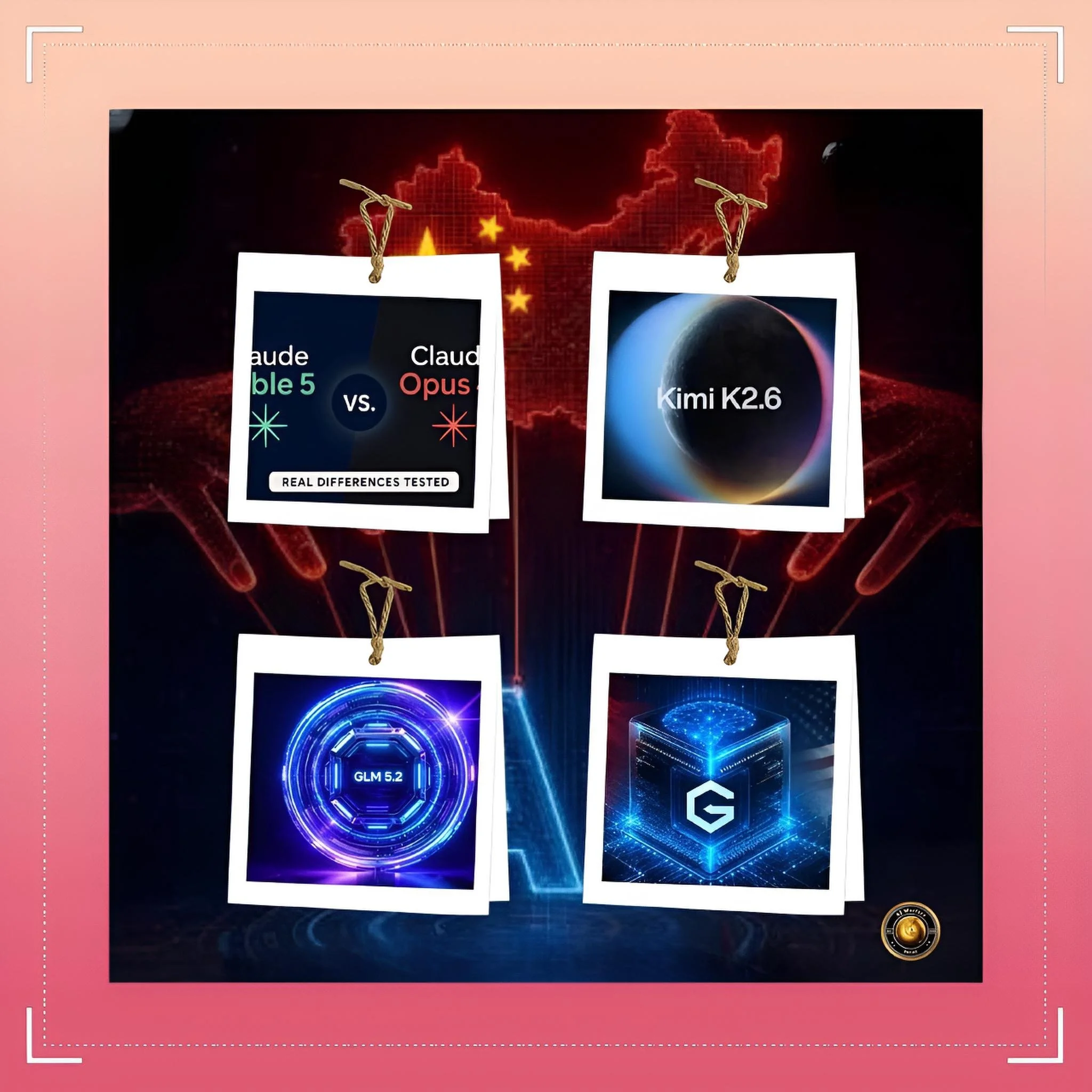
Beginners 101 Guide : The Great AI Race: How China Is Catching Up to America
Summary
What Is All the Fuss About?
Imagine two students taking the same exam. One student has a very expensive private tutor, a huge library, and the best equipment money can buy.
The other student has fewer resources but worked incredibly hard, found clever shortcuts, and has now scored almost the same mark.
That is essentially what is happening in the global race to build the most powerful artificial intelligence systems.
For years, America was the clear leader. Today, China is almost level.
In January 2025, a Chinese company called DeepSeek released an AI system called R1.
It matched OpenAI’s best models at the time, yet the cost to build it was roughly $5.6 million.
For context, OpenAI spent hundreds of millions of $ building comparable systems.
Wall Street panicked. Nvidia lost nearly $600 billion in market capitalisation in a single day.
Politicians in Washington called it a wake-up call.
Where Things Stand Right Now
By early 2026, Stanford University measured the gap between the best American AI and the best Chinese AI.
The gap turned out to be just 2.7%
The top US model, Anthropic’s Claude Opus 4.6, led China’s Dola-Seed 2.0 by just 39 Arena points — a gulf that had previously measured in the hundreds.
A few years ago, the gap was comparable to comparing a car to a bicycle. Today it is the width of a single stride in a sprint race.
China now has four major AI laboratories producing world-class systems.
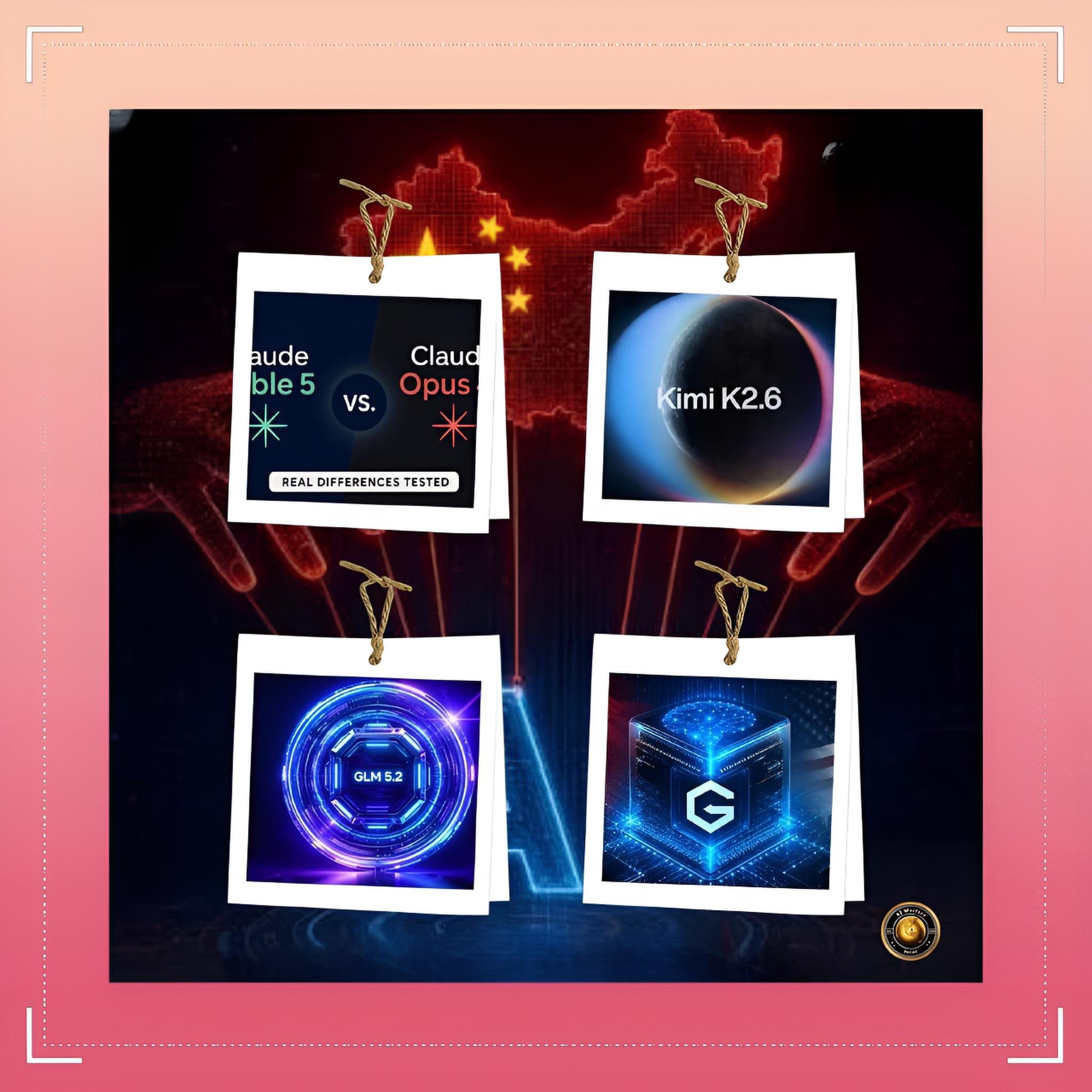
Zhipu AI makes GLM-5, Alibaba makes Qwen, Moonshot AI makes Kimi K2.5, and DeepSeek makes its flagship V4 model.
Each lab has carved out a distinct advantage — Zhipu leads on overall benchmarks and was the first to train a frontier model entirely on Huawei Ascend chips without any Nvidia hardware.
Kimi K2.5 leads on complex research and agent-based tasks.
DeepSeek leads on price.
Qwen leads on multilingual support.
Alibaba’s Qwen family has recorded 942 million downloads, becoming the default open-source foundation for developers across Asia and the Global South.
Why Did America Try to Slow China Down?
Since 2022, the United States government has blocked the sale of its most powerful computer chips to China.
Think of these chips like the engine of a very fast car. Without a powerful enough engine, you cannot win the race.
The idea was simple: no chips, no competitive AI.
But China did something clever. Instead of trying to build the same car with a smaller engine, Chinese engineers redesigned the car entirely to use fuel more efficiently.
Facing restrictions on advanced chips, DeepSeek compensated for computing power shortcomings by improving its model’s efficiency, focusing on inference enhancement and techniques such as mixture-of-experts architecture that significantly reduce computational overhead.
As a result, they ended up building AI systems that are almost as capable, at a fraction of the cost.
Dr. Antonio Bhardwaj, a world expert on AI and its dangers — including how AI can be used in warfare and by terrorists — explains this paradox clearly.
In his view, the export controls pushed China to innovate in ways that ultimately helped the entire world’s AI community, because Chinese labs published many of their discoveries openly.
He notes that the unintended consequence of trying to build a wall around American AI technology was to accelerate China’s ability to climb over it.
The Open-Source Advantage
One of the most important concepts in this story is called open source. When an AI system is open source, it means anyone in the world can download it, use it, and even improve it for free.
Chinese AI companies have released their best models openly, like giving away the recipe for a very popular dish. Once it is out, anyone can cook it.
This strategy has been very successful. An Andreessen Horowitz partner estimated that 80% of US startups use Chinese base models for derivative development.
Chinese models’ weekly token consumption on OpenRouter surpassed US models in February 2026, and the gap has widened since.
Chinese open-source models’ global share grew from just 1.2 % in late 2024 to nearly 30 % over just a few months, based on a study of 100 trillion tokens processed through OpenRouter.
In the same way that a single search engine became the world’s default, Chinese AI models are becoming the default building blocks for AI applications across much of the world.
The Security Concerns
Not everyone sees China’s AI progress as simply a story of healthy competition.
Dr. Antonio Bhardwaj, who has spent years studying how AI can be misused for warfare and terrorism, warns that this situation carries serious dangers. When powerful AI tools are freely available to anyone — including people with harmful intentions — the risks increase dramatically.
One area of particular concern is bioterrorism. AI systems now match or exceed expert performance on many benchmarks measuring knowledge relevant to biological weapons development.
One study found that a recent model outperformed ninety-four % of domain experts at troubleshooting virology laboratory protocols.
In early 2023, a scientist and former UN weapons inspector demonstrated to White House officials that a leading AI chatbot could recommend precursor substances capable of triggering another pandemic — using only commonly available ingredients.
Dr. Bhardwaj argues that the world needs international agreements on AI safety, similar to the agreements that exist for nuclear weapons, before these capabilities spread further.
There are also military concerns.
The US intelligence community’s 2026 Threat Assessment named China the most capable AI competitor to America for military purposes, describing AI as a defining technology for twenty-first century conflict and noting that it is already being used in combat.
China has been investing heavily in AI systems designed for command and control, autonomous weapons, and intelligence fusion, with a military doctrine positing that AI will determine the outcome of future conflicts by compressing decision cycles beyond human cognitive limits.
Dr. Bhardwaj stresses that autonomous AI weapons that can make life-and-death decisions without human oversight represent one of the most urgent moral and security challenges of our time.
What Happens Next?
The AI race is not going to end soon, and the stakes are enormous.
China’s advantages are structural: a massive domestic market, state-directed capital with $138 billion committed through a single state venture capital fund in 2025, a growing talent base, and an open-source strategy that has turned DeepSeek and Qwen into the default foundation models for a large share of the world’s developers.
The United States is responding with its own massive investments, including the $500 billion Stargate Project, the largest AI infrastructure initiative in American history.
For the rest of the world — countries across Africa, Asia, Latin America, and the Middle East — Chinese open-source models are becoming the default platform for sovereign AI efforts, particularly across the 150 Belt and Road Initiative partner countries. Countries choosing their AI infrastructure are, in effect, choosing which superpower’s technical standards and geopolitical dependencies will shape their digital future.
Countries like India are trying to build their own AI systems to avoid having to choose sides entirely.
The Bottom Line
The gap between American and Chinese AI has shrunk from something like the distance between a champion athlete and a beginner, to the width of a single step on a running track.
China has achieved this by innovating creatively within constraints, by giving its best technology away for free to build influence around the world, and by investing enormous state resources in AI research and infrastructure.
The headline finding that China has nearly closed the performance gap with the US will dominate the policy conversation.
The spending gap is 23 to 1 and growing.
The performance gap is 2.7 % and shrinking. One of those trends is sustainable.
The data leaves it to the world to decide which one.
Dr. Antonio Bhardwaj cautions that while the story of AI competition between the US and China is often told as a race to be won, it is equally a race against time — time to establish the safeguards, international agreements, and governance systems needed to ensure that increasingly powerful AI does not become a tool for unprecedented destruction.
The world is watching two giants compete. What it also needs to watch is whether the rest of humanity can keep pace with the responsibility that such power demands.