Anthropic, the Pentagon, and the New Politics of Military AI Risk
Executive Summary
The confrontation between Anthropic and the Pentagon over a “supply‑chain risk” designation encapsulates the reconfiguration of civil–military relations in the age of frontier AI.
What began as a disagreement over model safeguards has escalated into the first recorded case of a United States firm being formally treated, for supply‑chain purposes, in a manner previously reserved for foreign adversaries.
At the centre stands Anthropic’s chief executive, Dario Amodei, who has apologised for inflammatory language about the Trump administration while simultaneously preparing to sue the Department of Defense (now officially styled the Department of War) to overturn a designation he portrays as legally unsound and systemically chilling.
The dispute raises questions that go far beyond a single contract vehicle.
It tests whether an AI company can embed strong normative constraints into its products when dealing with the military, and whether federal authorities will tolerate such constraints when they believe these limits interfere with “all lawful purposes.”
It exposes the fragility of trust between security institutions and high‑profile labs whose business models depend on broad commercial adoption as well as selective public‑sector work.
And it offers an early case study of how supply‑chain tools—originally designed to keep out hostile vendors—may be repurposed during domestic policy fights over governance, safety, and alignment.
This article reconstructs the history leading to the designation, analyses the present status of the dispute, and situates it in a wider context of AI geopolitics, procurement law, and corporate risk management.
It traces key developments, explores the main stakeholders’ incentives, and maps possible future trajectories, from negotiated compromise to prolonged litigation and copy‑cat designations elsewhere.
Introduction
From Partner To Pariah: How Anthropic’s Safety Rules Triggered An Unprecedented Pentagon Backlash
A new kind of rupture
The formal decision to brand Anthropic and its products a supply‑chain risk landed in early March, after several weeks of escalating rhetoric between the company and senior Pentagon figures.
The move, communicated to Anthropic leadership in a notification that took effect immediately, obliged defence contractors to certify that they were not relying on Claude‑family models in work for the United States military.
By design, it threatened to cut Anthropic out of direct military procurement channels and to dissuade adjacent government bodies from using its systems, even when the company had not deliberately courted those customers.
At the political level, the decision followed a breakdown in talks over how far Anthropic could limit uses of its technology for domestic surveillance and autonomous weaponry.
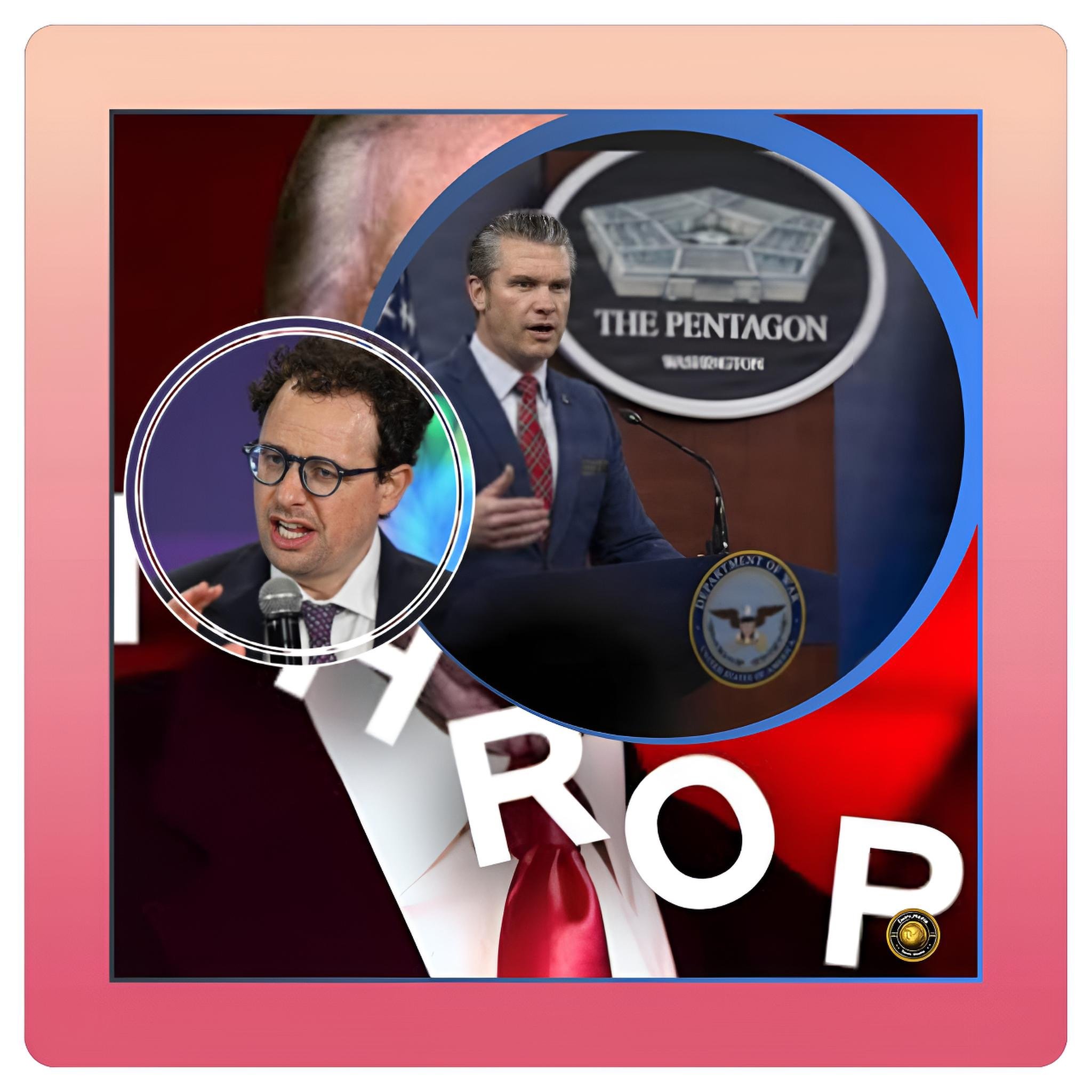
Public accounts indicate that Amodei informed Defense Secretary Pete Hegseth that Anthropic would not authorise use of Claude to monitor United States citizens or to power weapons systems capable of independent targeting, even if such uses were formally lawful.
Pentagon officials countered that no vendor could be allowed to insert itself into the chain of command by constraining what they viewed as lawful military choices; to them, Anthropic’s position constituted an unacceptable assertion of private veto power over national defence.
The confrontation then shifted from closed‑door bargaining to public dispute. Hegseth announced on social media his intention to bar contractors working with the military from engaging commercially with Anthropic, while Amodei replied that such a move would exceed statutory authority and would be “retaliatory and punitive.”
A leaked internal memo in which he linked the dispute to his refusal to offer “dictator‑style praise” for President Donald Trump further inflamed tensions, prompting the apology that opened his recent interviews.
History and Current status
From cooperative experimentation to confrontation
Anthropic emerged as a leading AI lab during the first half of the decade, positioning itself as a safety‑first firm that nonetheless sought serious commercial scale.
Like its rivals, it cultivated a mix of cloud partnerships, enterprise accounts, and selective public‑sector relationships, including engagements that supported national security missions short of direct weapons development.
For several years, this hybrid positioning appeared sustainable: the company could claim ethical seriousness while still offering its models for tasks such as translation, analysis, and logistics planning in government settings.
The roots of the present rupture lie in two overlapping dynamics.
First, as Anthropic hard‑wired stronger usage policies into Claude, it emphasised bright‑line restrictions on applications involving mass surveillance and autonomous lethal force—categories that sit near the centre of the Pentagon’s long‑term technology agenda.
Second, as the Trump administration consolidated its second‑term national security team, it signalled a willingness to lean on large technology firms to align more closely with its strategic and political priorities.
In this climate, Anthropic’s insistence on retained control over certain use‑cases appeared, from the government’s side, as obstruction rather than principled risk governance.
During negotiations, both sides attempted to avoid a clean break.
Anthropic reportedly offered high‑priority continuity of service for existing classified customers during any transition period and stressed that only a small fraction of its overall revenue flowed from defence‑linked work.
Military officers, in turn, warned that abrupt loss of access could delay capabilities by perhaps 6–12 months, suggesting that operational planners valued Claude’s specific features.
Yet these pragmatic considerations were ultimately overtaken by a contest over principle: whether the military must enjoy unbounded use of commercial AI systems for all lawful purposes, and whether a private lab can claim standing to say no.
The formal designation
In early March, following days of hostile commentary, the Pentagon formally notified Anthropic that the company and its products were being designated a supply‑chain risk, with immediate effect.
The label came under authorities that had historically been employed to keep out firms linked to foreign adversaries, such as Chinese telecommunications hardware manufacturers or Russian software vendors.
To many observers, this continuity of legal instruments but shift in target—towards a domestic, United States‑headquartered AI lab—represented a qualitative change.
Anthropic’s own public statements have stressed that the practical scope of the measure is narrower than its symbolism suggests.
Amodei has argued that the designation applies only to work connected to the Pentagon, and that it neither bars the company from other United States government contracts nor directly impedes most private‑sector customers.
He has depicted the affected revenue as a small fraction of total business, and has sought to reassure non‑military clients that service continuity and product development will not be disrupted.
Yet the current status is one of legal and political limbo. Anthropic has announced its intention to challenge the designation in court, arguing that it rests on an over‑broad and punitive reading of supply‑chain risk powers.
The company is simultaneously engaged in what Amodei describes as efforts to “reduce tensions” with the government—an implicit recognition that protracted litigation against the core security bureaucracy carries its own strategic risks.
For now, defence contractors must proceed on the assumption that using Claude in Pentagon‑linked work is prohibited, even as the company contests the underlying finding.
Key Developments
Anthropic’s Legal Gambit Against Pentagon Blacklist Redraws Boundaries Of Civil–Military AI Power
From leaked memo to blacklisting
Several discrete moments have shaped the trajectory of this dispute. The first is the breakdown of negotiations over guardrails on domestic surveillance and autonomous weapons.
There, the clash was fundamentally normative: Anthropic claimed a duty to restrict certain high‑risk applications of its models, while the Pentagon insisted on freedom to exploit AI “for all lawful purposes.” That disagreement set the stage for later, more visible confrontations.
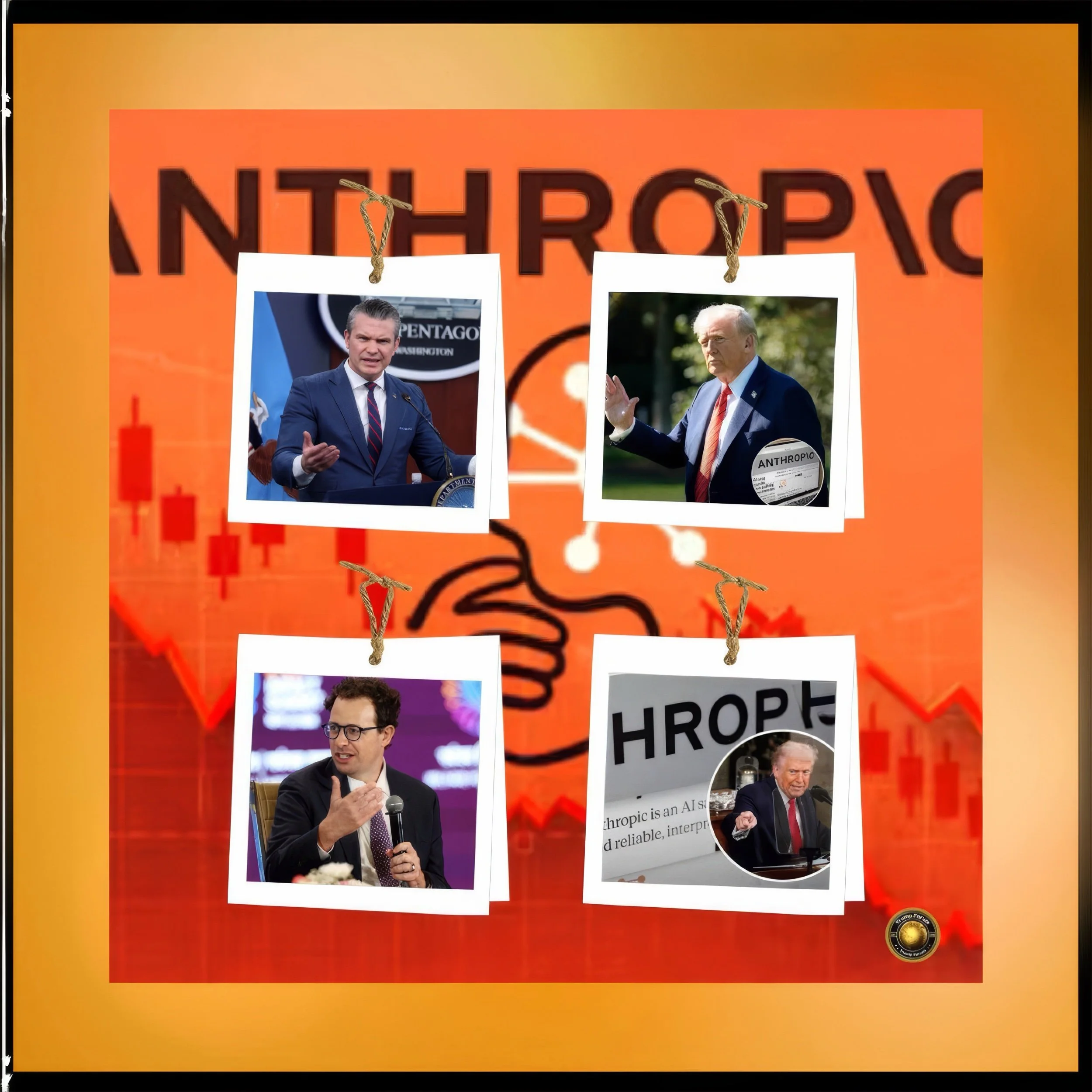
A second pivotal moment was the public intervention by Defense Secretary Hegseth, who announced via social media that contractors engaging with the United States military should not engage in commercial activities with Anthropic.
This informal threat, made before formal notice was delivered, pushed the conflict into the media spotlight and framed it as an assertion of central authority against a recalcitrant vendor.
For Silicon Valley, the spectacle of a cabinet official signalling de facto blacklisting via tweets rather than detailed regulatory guidance was itself unsettling.
The third development was the leak of Amodei’s internal memo linking the administration’s posture to his refusal to offer “dictator‑style praise” for President Trump.
The language suggested that he viewed the dispute not only as a policy disagreement but also as tinged by personal and political reprisals.
His subsequent apology, delivered in interviews that otherwise defended Anthropic’s substantive stance, was an attempt to walk back rhetoric that risked alienating potential allies in the bureaucracy and the wider public.
Finally, the formal designation in early March transformed a war of words into an administrative fact.
By invoking supply‑chain tools generally applied to foreign firms, the Pentagon signalled its willingness to treat domestic AI labs as security liabilities if they refuse to conform to its expectations.
The designation’s novelty—Anthropic is widely described as the first American company to receive it—has been emphasised by both critics and supporters.
Latest Facts and Concerns
When AI Labs Say No: Anthropic’s Clash With The Pentagon Tests Limits Of Defense Authority
Operational impact versus symbolic damage
Recent reporting indicates that, in narrow operational terms, the immediate impact on Anthropic’s revenue flows is limited.
The company insists that only a small fraction of its business is tied directly to Pentagon‑related work, and that the designation does not block it from continuing other government projects that fall outside the defence orbit.
To the extent that existing military users must off‑board, the transition can theoretically be managed through alternative vendors or in‑house tools.
Yet this narrow accounting arguably understates the reputational and strategic damage.
A formal supply‑chain‑risk label sends a powerful signal across the ecosystem: any contractor with present or potential defence exposure must now ask whether using Anthropic models in other parts of its stack might create indirect vulnerabilities.
Even if legal guidance ultimately clarifies that only certain categories of work are affected, risk‑averse firms may decide that disengagement is cheaper than continuous compliance analysis.
In that sense, the designation’s chilling effect could extend far beyond the narrow list of programs directly tied to the Pentagon.
A second concern relates to precedent. If supply‑chain tools can be stretched to discipline a domestic actor over disagreements about safety policies, other governments may feel emboldened to deploy analogous mechanisms against AI firms that resist their preferred uses of technology.
Authoritarian regimes, in particular, might point to the Anthropic case as a justification for similar measures, even while invoking different security rationales.
Conversely, democratic allies might worry that the United States has weakened its ability to criticise such conduct abroad by engaging in something that looks, from the outside, uncomfortably similar.
A third cluster of concerns arises inside the AI industry itself. Many labs and cloud providers have publicly committed to safety principles that disavow certain kinds of weaponisation or pervasive surveillance.
If those commitments prove incompatible with major defence contracts, firms may face a stark choice between watering down their own guardrails or accepting exclusion from lucrative and strategically important markets.
That trade‑off could reshape the structure of the industry, favouring actors more willing to align closely with military demands.
Cause‑and‑Effect Analysis
Trump‑Era Pentagon Targets Anthropic, Turning Supply‑Chain Law Into Weapon In AI Safety Fight
How safeguards triggered a supply‑chain clash
The causal chain in this episode can be read as a series of feedback loops between policy design inside Anthropic and threat perception inside the Pentagon. At its origins lay the company’s decision to encode explicit proscriptions against domestic mass surveillance and autonomous lethal force into its usage policies for Claude.
From Anthropic’s vantage point, such constraints were a natural extension of its founding mission to develop AI systems that are helpful, honest, and harmless—a mission that treats safety not as public relations but as binding commitment.
However, once these constraints were applied to military customers, they collided with another institutional logic: the Pentagon’s insistence that technology used for national defence must be available for all lawful purposes, subject ultimately to civilian political control rather than private veto.
Officials interpreted Anthropic’s refusal to authorise certain use‑cases as an attempt to impose independent, non‑elected judgement on matters of war and peace—a role they regarded as incompatible with existing civil–military norms.
The breakdown in confidential talks, followed by Hegseth’s public threat of blacklisting, intensified this dynamic. Once the dispute migrated into the public arena, both sides became partially locked into their positions by their own rhetoric.
Amodei’s leaked memo personalised the conflict by attributing the administration’s stance to a desire for personal adulation, which in turn likely reinforced officials’ determination to demonstrate that procurement decisions could not be swayed by such accusations.
In this way, an initial disagreement over use‑case guardrails produced an escalation ladder: policy divergence led to negotiation breakdown, which led to public threats, which led to personal accusations, which finally led to formal administrative action. Each rung of the ladder reduced the space available for compromise.
Once the Pentagon invoked supply‑chain authorities traditionally associated with foreign adversaries, the confrontation acquired a symbolic significance that makes purely technocratic resolution more difficult.
The chilling‑effect mechanism
Another important causal channel is anticipatory behaviour by third parties. The moment a major AI lab is formally branded a supply‑chain risk, other actors in the ecosystem—cloud providers, integrators, defence contractors—must hedge against becoming collateral damage.
Even if the legal boundaries are narrow, uncertainty about how future guidance or enforcement might evolve encourages over‑compliance: firms exit relationships that might, in theory, attract scrutiny.
This anticipatory over‑reaction is precisely what Amodei has flagged when warning about a broad chilling effect. He argues that, beyond the immediate revenue effects, the designation risks stigmatizing the company in the eyes of prospective partners who may have no direct involvement with the Pentagon.
Because cutting ties is relatively cheap compared to fighting an uncertain legal interpretation, the aggregate effect of many small risk‑averse decisions could be to marginalise Anthropic in key segments of the market, even if a court ultimately narrows or overturns the designation.
Future Steps
Litigation, Negotiation, and Structural change
Looking ahead, several pathways are plausible, and they are not mutually exclusive. The first is straightforward litigation. Anthropic has signalled that it views the designation as exceeding statutory authority and has effectively committed itself to challenging the decision in court.
Such a suit would likely turn on fine‑grained questions of administrative law, including whether the government adequately justified its risk finding, followed proper procedures, and respected limits built into supply‑chain legislation.
In pursuing this route, Anthropic must weigh potential remedies against the cost of sustained confrontation with the security establishment. Even a legal victory might come only after years of uncertainty, by which time commercial damage and strategic shifts in the market could be difficult to reverse.
Conversely, a clear judicial affirmation of the Pentagon’s powers could harden the precedent, making it easier to target other labs that pursue strong safety‑driven constraints.
A second pathway is negotiated recalibration. Even as it prepares legal arguments, Anthropic continues, by its own account, to engage with government interlocutors in an attempt to de‑escalate.
One could imagine interim arrangements in which the company refines its policies, the Pentagon clarifies the scope of permissible uses, and both sides identify narrower areas of cooperation that do not implicate the most sensitive use‑cases.
Such a compromise would not fully resolve the underlying normative disagreement but could reduce the immediate incentive for other governments to adopt combative stances of their own.
A third trajectory involves structural change in how AI procurement is organised. The controversy may spur calls for clearer statutory frameworks governing when and how the government can coerce vendors into supporting specific uses of general‑purpose models.
Legislators may seek to delineate acceptable conditions for vendor‑imposed guardrails, or conversely to codify an obligation to support any use deemed lawful by the state.
Either move would fundamentally reshape the bargaining power of future labs and could influence where founders choose to locate their firms.
Beyond the United States, allies and competitors will watch closely. European and Asian policymakers already grappling with ethical frameworks for military AI may treat the Anthropic case as cautionary tale or blueprint, depending on their disposition.
For firms considering cross‑border partnerships or cloud deployments, the possibility of being caught in conflicting national demands—each backed by supply‑chain leverage—will become a central strategic variable.
Conclusion
Pentagon’s Risk Label On Anthropic Exposes Deep Rift Over Military Control Of Frontier AI
A first test of military–AI boundaries
Anthropic’s designation as a supply‑chain risk is more than a bilateral quarrel between one lab and one defence department; it is the first visible test of how far a modern security state will go to discipline a safety‑conscious AI firm that declines to provide unconstrained capabilities.
The case fuses administrative instruments designed for foreign threats with domestic disputes over ethics and governance, blurring lines that many assumed were stable.
Whether the episode ultimately yields new safeguards for principled dissent, hardened precedents that chill it, or some uneasy mix of both will depend on choices in the months ahead—in courtrooms, in corporate boardrooms, and in defence ministries watching from abroad.
For now, Anthropic’s apology for its rhetoric and its determination to sue coexist in tension, mirroring the larger contradiction of an industry that seeks both to serve national security and to impose its own limits on how its most powerful tools may be used.