Executive summary
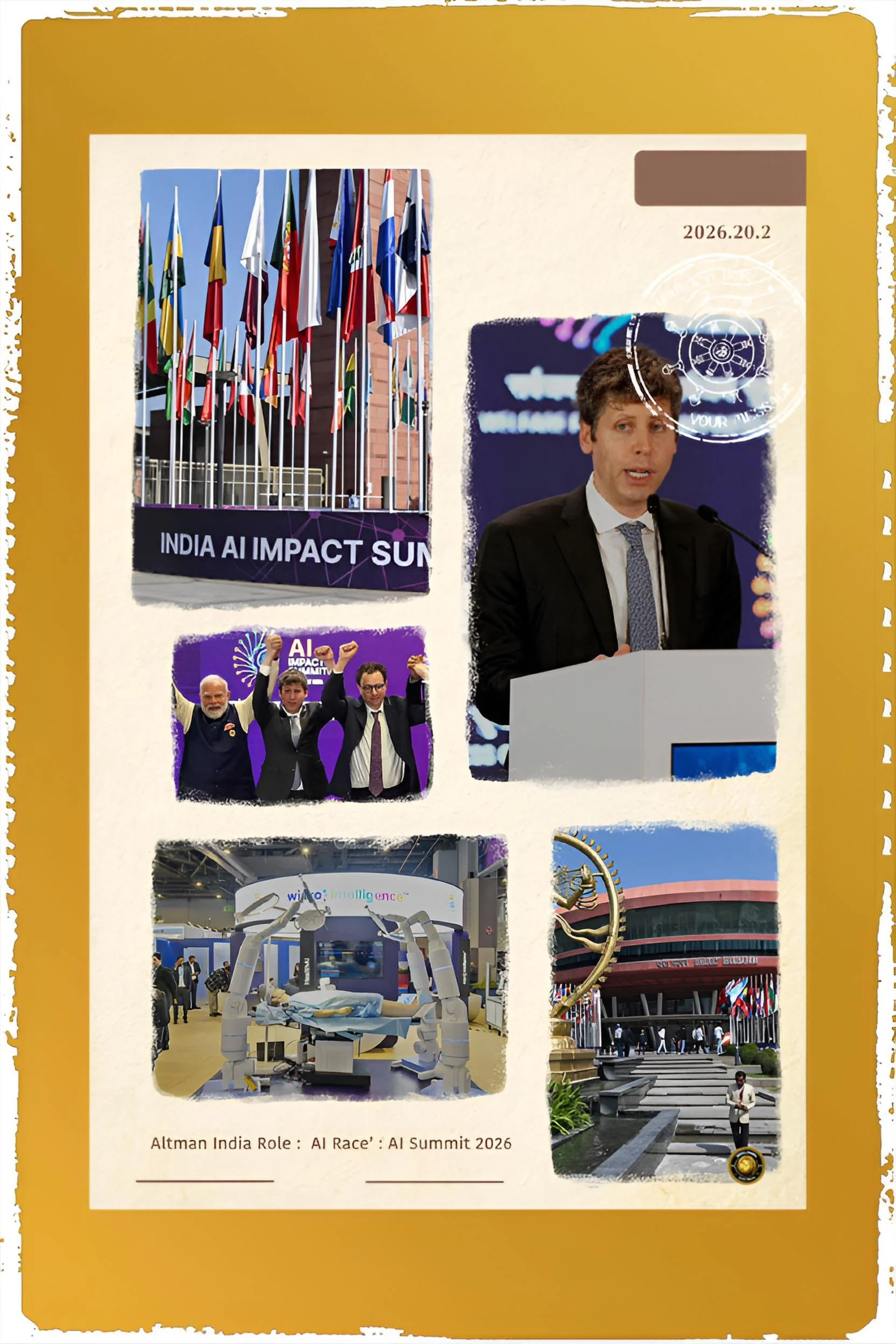
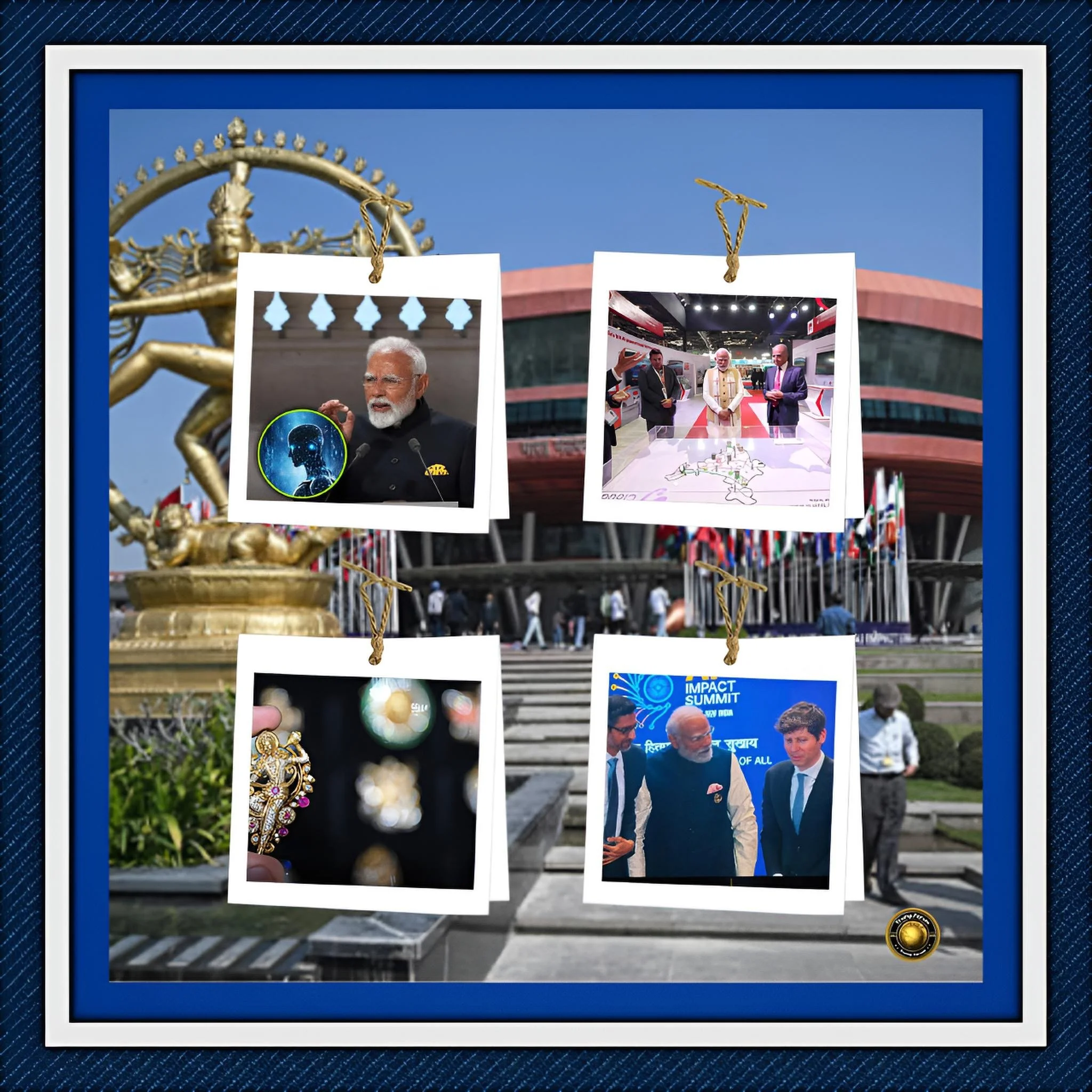
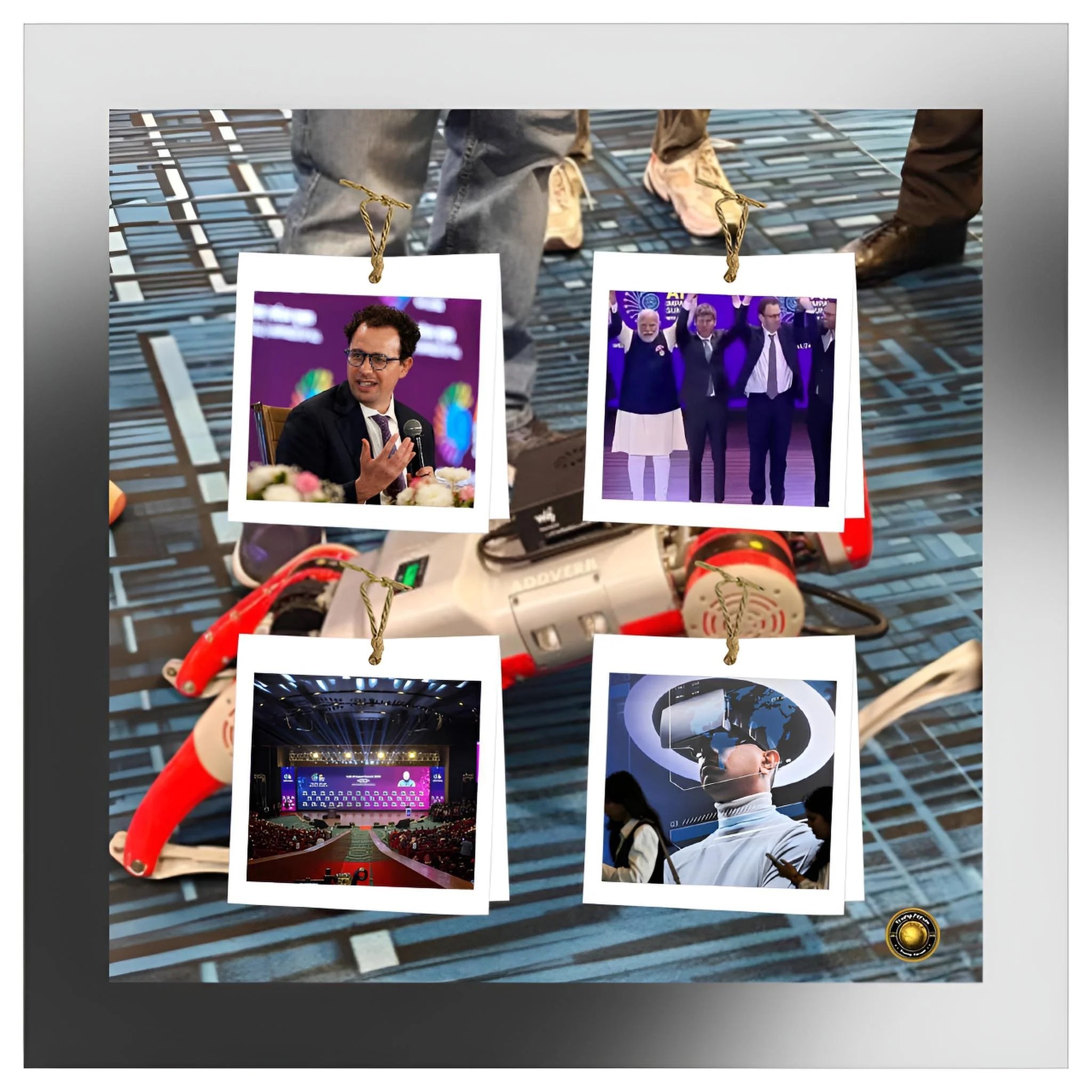
Prime Minister Narendra Modi gave an important speech at the India AI Impact Summit 2026 in New Delhi.
He spoke about the big chances and big dangers that come with artificial intelligence. He said AI is a “transformative” force, like nuclear power in the last century, and that the real question is what humans choose to do with it right now.
Modi gave a new plan called the MANAV vision. He also called for AI to be used as a global “common good”, not kept only by a few rich countries or big companies.
He warned about deepfake videos and fake audio made by AI and suggested that online content should have authenticity labels, like food packets have nutrition labels.
His speech shows how India wants to use AI for development at home and to play a bigger role in the world.
Introduction
AI as a choice, not a fate
Modi began by saying that AI is changing human history. He compared it to nuclear power, which can light cities or destroy them.
In the same way, AI can improve lives or cause great harm.
He said the key question is not “What will AI do in the future?” but “What will we do with AI today?”.
This means he does not see AI as something that automatically leads to a good or bad future.
He says humans must guide it. If AI goes in the wrong direction, it can bring disruption and destruction. If it is given the right direction, it can give powerful solutions for health, farming, education and many other areas.
This way of thinking opens the door for strong government action and international rules.
History and current status
From India Stack to AI mission
Modi’s speech builds on India’s digital story. Over the last decade, India has built a set of platforms known as the India Stack: Aadhaar identity numbers, UPI instant payments, DigiLocker for documents and digital health IDs.
These tools let the government send money directly to people’s bank accounts and let small shops take digital payments using only a phone.
Now India is adding AI on top of this digital base.
The IndiaAI Mission aims to set up large computer centres (with many GPUs), build national AI models, share thousands of datasets and support startups.
Modi said India is building a “resilient ecosystem” from semiconductors and chip‑making to quantum computing and secure data centres.
He often says India has three big strengths: diversity, demography and democracy.
Diversity means many languages and cultures. Demography means a young population.
Democracy means open debate and elections.
He argued that if an AI model works well in India’s complex environment, it can work anywhere in the world.
Key developments
MANAV vision and democratising AI
A main part of the keynote was the MANAV vision for AI. MANAV stands for Moral and Ethical Systems, Accountable Governance, National Sovereignty, Accessible and Inclusive, Valid and Legitimate.
In simple terms, Modi wants AI that:
(1) follows moral rules and does not unfairly hurt people;
(2) has clear responsibility when things go wrong;
(3) respects each country’s control over its data and systems;
(4) is easy to use for ordinary people, not just experts;
(5) is based on solid evidence and accepted by society.
For example, a welfare system using AI to decide who gets benefits should be tested for bias and should have a way for people to appeal decisions.
A face‑recognition system in public places should not be used without strong laws and oversight.
Modi also said AI must be democratised. He said AI should be a tool for inclusion and empowerment, “particularly for the Global South”.
He argued that AI will only truly benefit the world if its benefits are shared, not locked up in a few countries or companies.
For this reason he praised open code and “shared development”, so that “millions of young minds” can work with AI and make it safer.
Latest facts and concerns
Deepfakes, trust and children
One of Modi’s strongest warnings was about deepfakes.
These are fake videos, images or audio clips made with AI that look or sound real. He said they are already destabilising open societies, because people cannot easily tell what is true and what is false.
To fight this, he suggested authenticity labels.
He said that, just like we see nutrition labels on food in the physical world, digital content should carry labels that show if it is original or made by AI.
This could be done using watermarks or other marks built into images, videos and audio.
In theory, this would help viewers decide what to trust, especially during elections or crises.
Modi also spoke about children. He said that just as a school syllabus is carefully planned, the AI space should be “child‑safe and family‑guided”.
He worries that children might be exposed to harmful content or manipulative tools if AI is left unregulated.
This connects with debates in other countries, like France, about limits on social media for those under 15.
At the same time, Modi highlighted positive facts.
He said the summit saw three Indian companies launch their own AI models and apps, showing local talent and creativity.
He noted that India is adding GPUs and sharing more than 7,500 datasets and 270 AI models as national resources under an AI fund, to help startups and researchers.
Cause and effect
How the speech tries to shape the future
Modi’s keynote tries to link several goals that may not always fit neatly together.
First, he wants rapid AI growth in India, built on big public platforms and private innovation.
The cause here is a belief that AI can boost development and government capacity.
The effect he wants is higher growth, better welfare delivery and a stronger global role for India.
Second, he wants to keep control.
Deepfake threats and child safety worries give political reasons for stricter rules and monitoring.
Authenticity labels and child‑safe AI spaces are his tools for this.
The cause is fear of chaos and manipulation; the effect he seeks is restored trust and continued public support for digital programmes.
Third, he wants India to be a leader for the Global South.
By pushing the idea of AI as a “global common good”, and by talking about democratising AI, he tries to speak for countries that fear being left behind by rich nations.
The cause is unequal access to compute and models; the effect he wants is a fairer share of AI benefits and more voice for poorer states in global rule‑making.
Fourth, he wants sovereignty.
By stressing national sovereignty in MANAV and talking about chips, quantum computing and data centres, he signals that India should not rely only on foreign infrastructure.
The cause is worry about foreign control over key technologies; the effect is more domestic capacity and bargaining power.
Future steps
What needs to happen next?
Modi’s speech points to several next steps. India will need detailed rules and institutions to put MANAV into practice.
This means deciding exactly how to ensure accountability for AI decisions, how to protect data, how to measure inclusion and how to test AI systems before they are used in public services.
On deepfakes, India will need technical tools and legal rules for authenticity labels.
This will involve working with platforms, media houses and other governments to agree on watermark standards and labelling rules. It will also mean educating citizens to look for such labels and not to share suspicious content.
On AI growth, India will have to keep investing in GPUs, data centres and open datasets, while also making sure that these do not increase energy use and emissions too much.
On jobs and skills, it will have to track how AI changes work and respond with new training programmes and safety nets.
At the global level, India will likely push for AI to be discussed at the UN, G20 and other bodies, with a focus on access for poorer countries, common safety rules and shared research. If it can back its words with real offers – for example, shared compute or open multilingual models – it will have more influence.
Conclusion
PM Modi’s keynote at the India AI Impact Summit 2026 is both a promise and a warning. It promises an AI future where India uses its digital strength, young population and democratic system to build tools that help not only its own citizens but also the wider Global South. It warns that without strong values, careful rules and honest labels, AI could weaken trust, hurt children and deepen inequality.
He offers the MANAV vision as a compass and calls for AI as a global common good, with open skies for innovation but human hands firmly on the reins.
Whether this vision becomes reality will depend on many choices in the next few years: how India writes its laws, how it treats criticism, how it shares benefits at home and abroad, and how it uses its new status as a major voice in AI debates.
If India manages to turn these ideas into fair, transparent and effective practice, this speech may be remembered as a key moment when a large democracy tried to steer AI toward inclusion and responsibility.
If not, it risks becoming an example of how grand words about “democratising AI” can coexist with growing concentration of power in the hands of states and big tech.