From Nazi Doctors to Modern Agents: How a Psychiatrist's Warning About Power Became America's Immigration Crisis
Summary
What a Nazi Psychiatrist Learned and Why It Matters Now
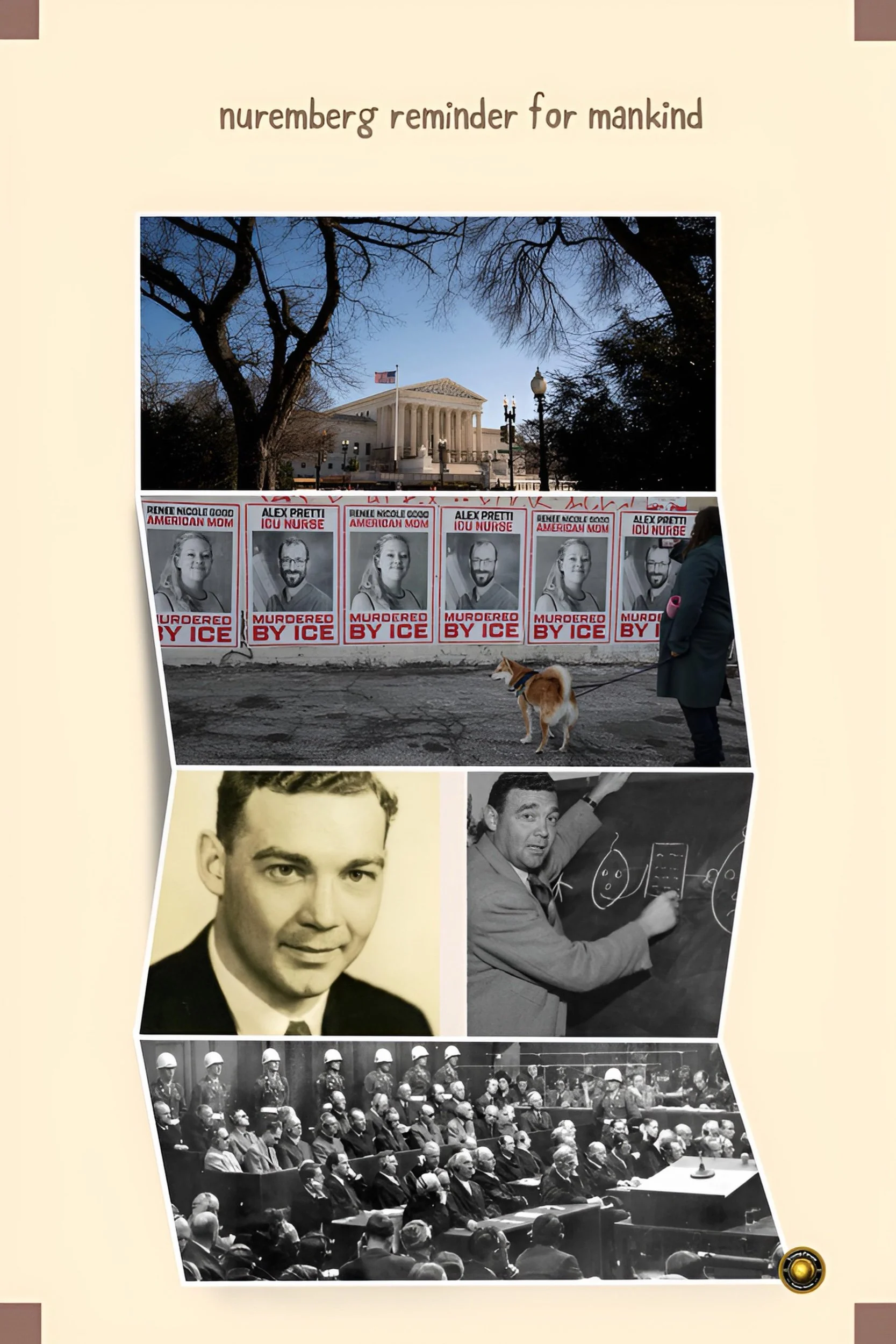
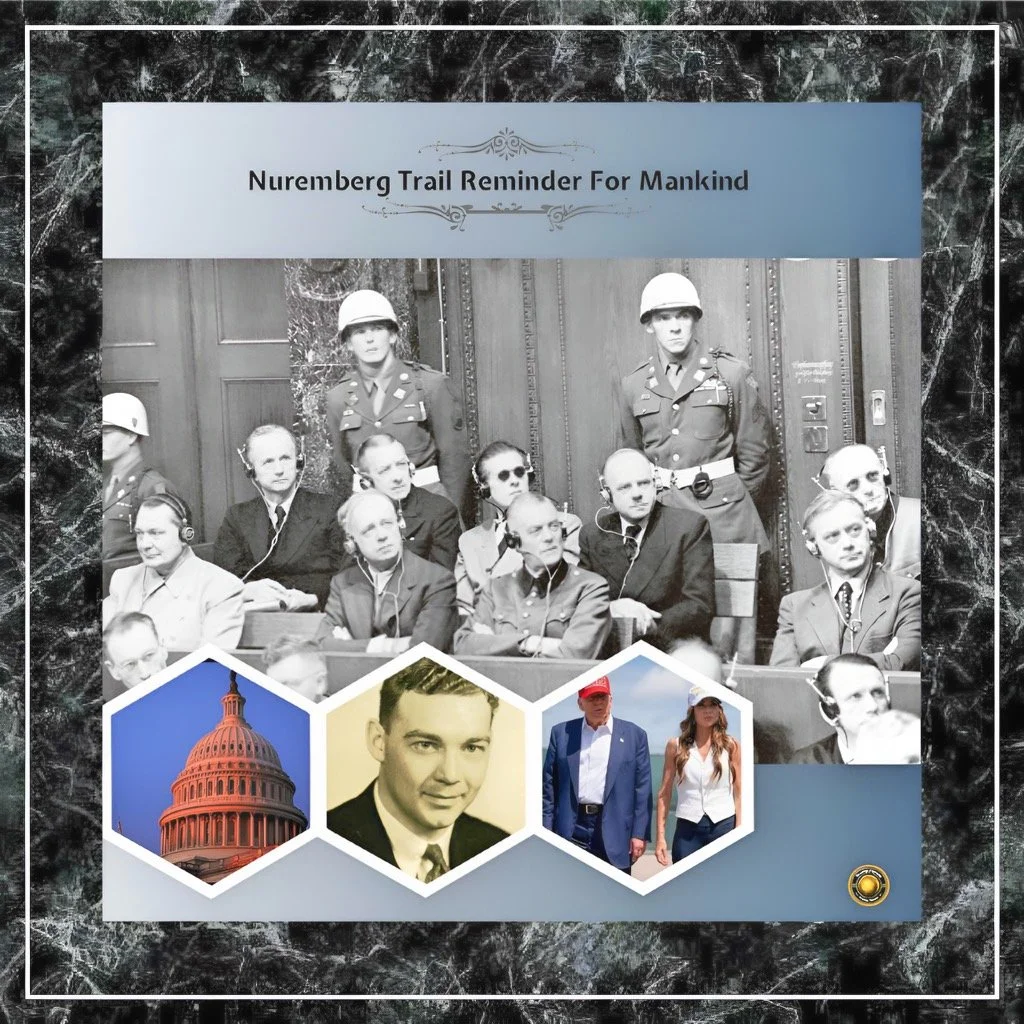
After World War II ended in 1945, the United States government wanted to understand why Nazi leaders committed such terrible atrocities. They sent an Army psychiatrist named Douglas Kelley to examine 22 captured Nazi leaders, including Hermann Göring (Hitler's second-in-command) and other top officials.
Kelley spent 5 months interviewing these men. He gave them psychological tests. He read their personal documents. After all this investigation, Kelley reached a shocking conclusion: these Nazi leaders were not insane, not uniquely evil, not mentally ill in any way that distinguished them from ordinary people.
Instead, Kelley found they were what he called "ambitious climbers"—ordinary people willing to "climb over the backs of half the people in their country to subjugate the other half." They were selfish. They wanted power. They were skilled at manipulating other people's emotions and fears. But they were not unique monsters. Kelley wrote: "Their personality patterns indicate that, while they are not socially desirable individuals, their likes could very easily be found in America."
This warning haunted Kelley for the rest of his life. He died on January 1, 1958, by his own hand, tormented by the realization that similar ambitious, manipulative people existed everywhere—including America—and could do similar terrible things if they gained control of governmental institutions.
Kelley's Core Discovery
Evil Is Often Just Ambition Plus Power
Historian Jack El-Hai wrote about Kelley's findings in his 2013 book "The Nazi and the Psychiatrist." El-Hai extended Kelley's warning, noting that American politicians in the 1940s—segregationists like Theodore Bilbo and Eugene Talmadge—used the same tactics as Hitler: exploiting racial divisions, manipulating voter fear, and using government power to consolidate personal authority.
The key insight: the Nazi leaders were not uniquely twisted or psychologically different. They were men who discovered that if you control government institutions, and if you manipulate people's emotions about "us versus them" categories (race, ethnicity, religion), and if you eliminate checks on your power, you can perpetrate systemic evil whilst ordinary bureaucrats simply follow orders and feel they are just doing their jobs.
A Psychiatrist's Mechanism
How Ordinary People Perpetrate Evil
Philosopher Hannah Arendt studied the trial of Adolf Eichmann (a Nazi bureaucrat who organized Holocaust logistics) in 1961 and coined the term "banality of evil.”
Her insight: Eichmann was not a sadistic monster. He was an ordinary bureaucrat who processed documents, coordinated transportation, and maintained records. He performed his job competently whilst never confronting the human consequences of his administrative decisions. Arendt concluded that evil in modern systems operates through bureaucratic fragmentation: distributing responsibility across enough ordinary people performing routine tasks, so that no individual needs to feel personally culpable for the aggregate horror.
This mechanism explains how 6,000 trained bureaucrats perpetrated the Holocaust.
Each person had a role. Transportation officials moved people per order. Administrative officials processed paperwork per statute. Police commanders arrested per directive. Camp administrators maintained facilities per procedure. None of these people perceived themselves as perpetrators. Each performed their job. But the system, taken whole, constituted systematic atrocity.
The Supreme Court's Immigration Decision and Nuremberg's Lesson
On September 8, 2025, the U.S. Supreme Court made a quiet but consequential decision. The Court voted 6-3 to allow immigration police to stop people based on how they look, what language they speak, and what kind of job they have. A lower court judge (Maame Ewusi-Mensah Frimpong) had said this was racial profiling and unconstitutional. But the Supreme Court overruled her—without explaining their reasoning.
Only 1 justice, Brett Kavanaugh, wrote an explanation. He argued that ethnicity can be "one factor among many" in deciding whether to stop someone for immigration questioning.
Here is the problem: when a lower court judge banned racial profiling for 2 months, ICE arrests dropped by 66 percent. This proves the profiling was the system—that the "one factor among many" was actually the only factor that mattered.
Why This Connects to Nuremberg
At Nuremberg, Nazi defendants tried to defend themselves by saying: "I was just following orders." The court rejected this defense. The court said: even if a superior ordered you to commit atrocities, you bear personal responsibility for obeying an unlawful order.
This principle became foundational to international law: individuals cannot hide behind "just following orders" or "administrative necessity."
The Supreme Court's immigration decision inverts this principle. Justice Kavanaugh's opinion frames racial profiling as lawful order-following.
Officers can now stop people based on appearance and language because "one factor among many" justifies it. Each officer claims to exercise legitimate judgment. No single officer perceives themselves as perpetrating discrimination. But the aggregate effect is systematic racial profiling.
The Institutional Capture Mechanism Kelley Warned About
Kelley identified a pattern in how dictatorships emerge in democracies: ambitious leaders systematically dismantle checks on their power. Specifically, they:
(1) Install loyalists in judicial positions—judges appointed who defer to executive authority
(2) Subordinate independent agencies to executive control—removing institutional autonomy
(3) Replace career officials with loyalists—those who resist unlawful orders get fired
(4) Eliminate legislative constraint—use emergency authority to bypass Congress
(5) Obstruct external oversight—deny information access to investigators
All 5 steps occurred in America between January and September 2025.
Step 1
Judicial Capture
The Trump administration appointed 3 Supreme Court justices. Now, 6 conservative justices defer to executive immigration authority.
They issued the Noem decision through the "shadow docket" (emergency orders without written explanation), preventing lower courts from understanding its scope.
Step 2
Agency Subordination
In February 2025, an executive order subordinated "independent" agencies to White House control. The Office of Information and Regulatory Affairs now approves all independent agency decisions.
Step 3
Personnel Replacement
Through "Schedule F" reclassification, career officials can be fired at will if they resist unlawful orders. Immigration judges deemed insufficiently supportive of deportations have been fired.
Step 4
Legislative Bypass
Emergency declarations and executive orders bypass the congressionally established priorities. Congress tries to constrain ICE, but executive action circumvents constraints.
Step 5
Obstruction of Oversight
Congressional members tried to visit ICE detention facilities in January 2026.
ICE refused to disclose facility locations. Congress filed an emergency lawsuit—the judge refused to intervene. Congressional oversight is now blocked.
The Six Mechanisms of Institutional Evil
Kelley and Arendt identified how bureaucratic systems enable ordinary people to perpetrate systematic evil:
First, reclassification. In July 2025, ICE issued a memo reclassifying all undocumented immigrants as "arriving aliens" (regardless of how long they lived in the US).
This administrative label—trivial semantically but consequential legally—meant they could be detained automatically without a judge's discretion. Historical precedent: Nazis reclassified Jews as "arrivals" ineligible for normal legal protection, enabling ghetto confinement and worse.
Second, procedural legitimacy. When a system claims to exercise "procedural objectivity" (one factor among many), it achieves a discriminatory effect whilst allowing each actor to claim legitimate judgment. No officer is "racist"—they are following procedure. But the procedure itself is prejudiced.
Third, loyalist installation. Expand the workforce 120 percent in one year, hiring loyalists whose primary commitment is to executive authority rather than institutional integrity.
Career officials who resist unlawful orders are replaced. Result: institutional apparatus transforms from a constraint on power into an instrument of power.
Fourth, appellate reversal. District judges issue protective orders. Appellate courts immediately stay them. The system breaks: judges realize their orders will be violated and overruled.
They capitulate preemptively.
Fifth, obstruction of oversight. Deny Congress access to detention facilities. Use procedural law to prevent judicial enforcement of congressional authority. External accountability mechanisms collapse.
Sixth, violence normalization. Immigration agents pepper-spray peaceful protesters—federal judge issues injunction. Appellate court stays it. Agents continue. Violence becomes routine when accountability fails.
The Historical Parallel
At Nuremberg, accountability worked: Nazi officials were tried, convicted, and executed.
The trials established that institutional position and bureaucratic order-following provide no shield from responsibility.
This principle—that individuals cannot hide behind institutional roles—constrained state violence for decades.
By contrast, contemporary immigration enforcement operates under the presumption of immunity. ICE officials violate 96 court orders without consequence.
Judges cannot enforce their own orders. Appellate courts reverse protective decisions without explanation.
Congress cannot access information. The accountability mechanism has collapsed.
Why This Matters: Incremental Evil
Kelley warned that democracies fail incrementally, not explosively.
It is not dramatic coups but gradual norm erosion, institutional subordination, and bureaucratic normalization.
In Nazi Germany, the transformation from legal discrimination to genocide occurred over 2 years, not overnight:
(1) March 1933: Legislature subordinated to the executive
2) June 1933: Legal profession purged
(3) 1935: Nuremberg Laws institutionalize racial classification
(3) By 1938: Genocide machinery established
In America, between January and September 2025:
(1) February: Independent agencies subordinated to the executive
(2) June: Schedule F enables civil service purge
(3) September: Supreme Court allows racial profiling (Noem)
(4) January 2026: Congressional access denied, 96 court orders violated
The timeline is identical.
The mechanism is identical.
The difference: will American institutions (Congress, courts, citizens) recognize and arrest the erosion?
Or will normalization proceed until accountability mechanisms cease functioning entirely?
What Comes Next?
Restoring accountability requires: Congress using appropriations authority; states implementing sanctuary policies; courts resisting appellate pressure; civil society documenting abuses.
Whether these mechanisms function depends on whether institutions retain sufficient independence and political will to resist normalization.
Kelley's ultimate conclusion: Democracies fail not when evil men seize power, but when ordinary ambitious people systematically dismantle institutional checks whilst decent people habituate to norm violations.
The critical window is short. Once evil becomes a bureaucratic routine, democratic restoration becomes immeasurably harder.