Europe's Big Test: Can It Pay for Its Own Security?
A Union Under Pressure
The European Union wants to be strong in a dangerous world. It wants to help Ukraine, protect its own borders, support farmers, help poorer regions and build better industries. It also wants a clear voice in talks about the war with Russia. All these goals cost money, and the twenty-seven member states do not agree on how much to spend or who should pay.
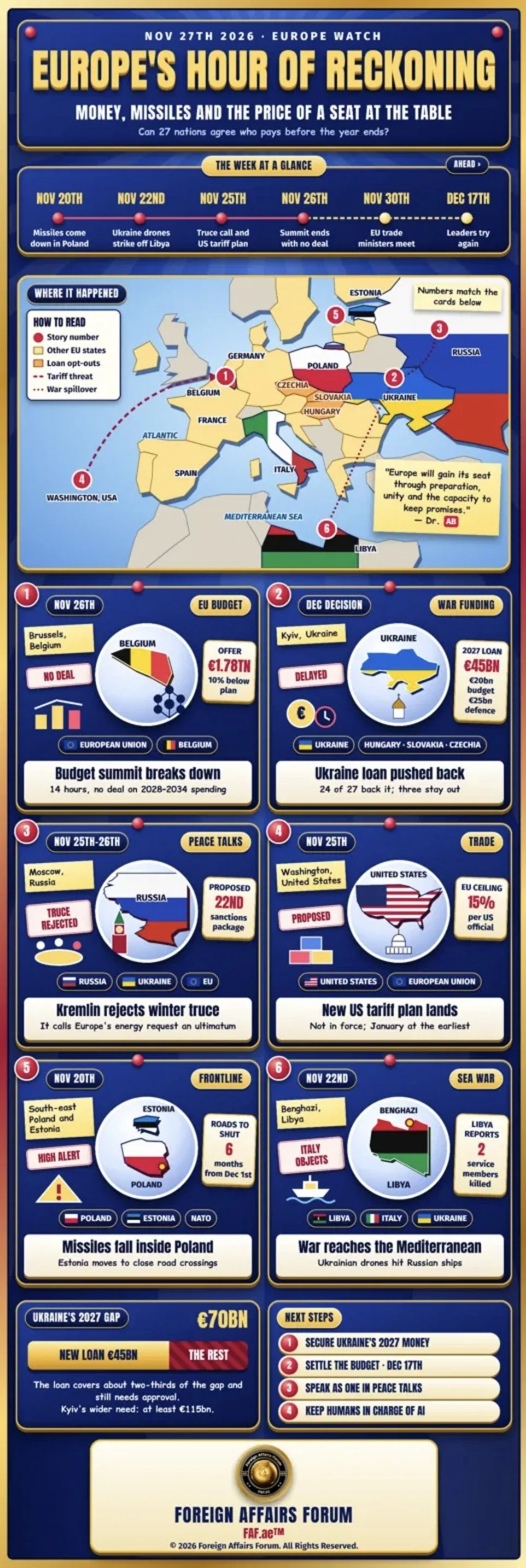
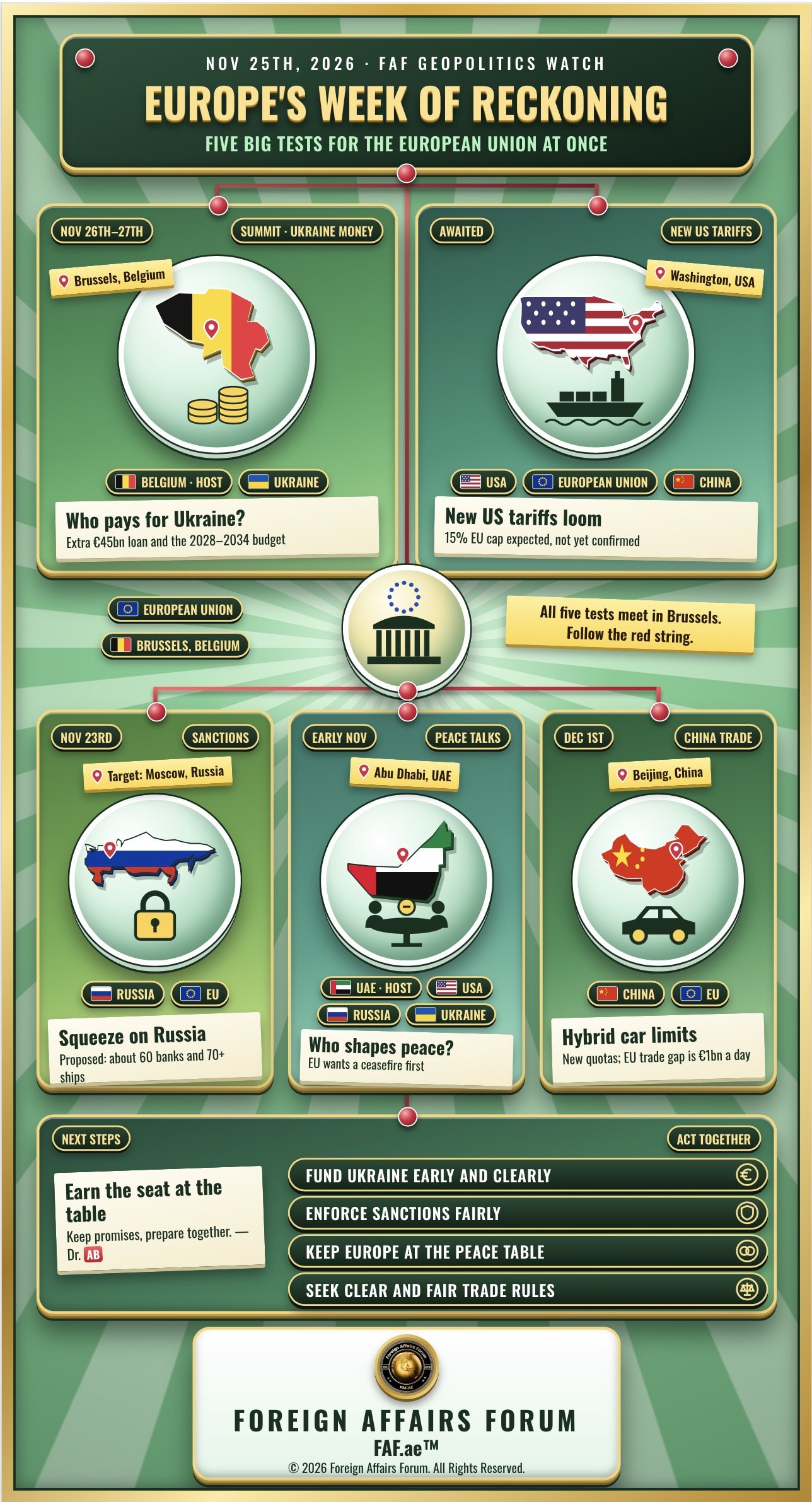
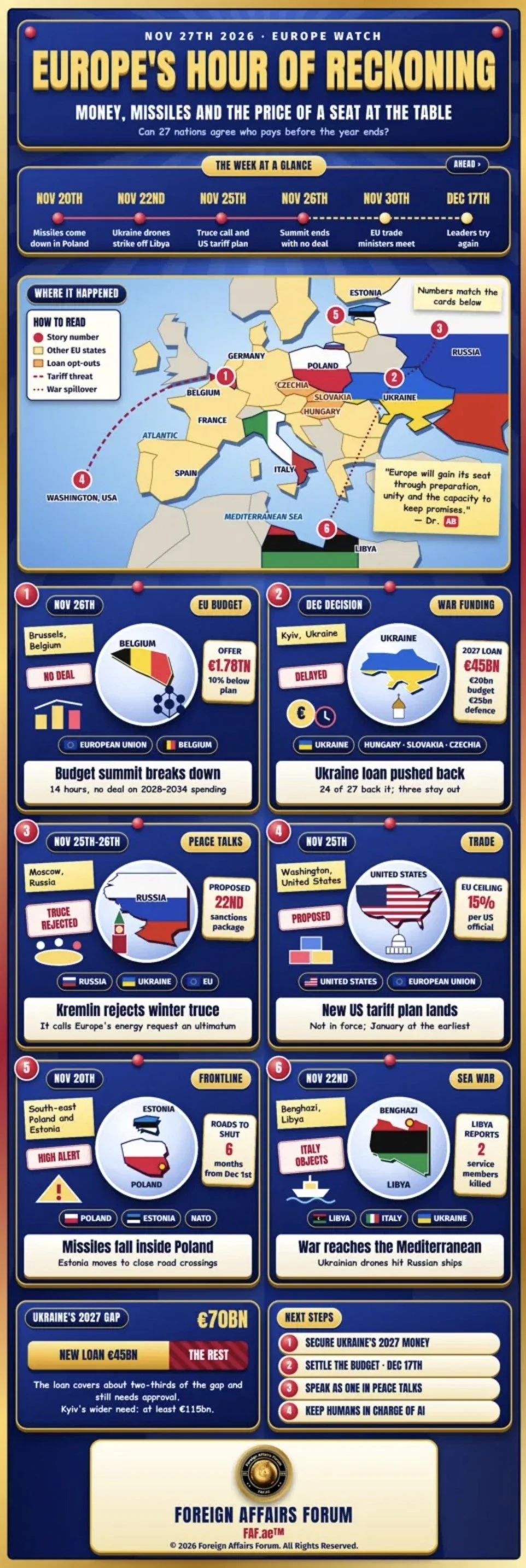
This problem became very clear at a special summit in Brussels. Leaders met to discuss the next seven-year budget. After fourteen hours, the meeting ended on Nov 26th without a deal. A second day had been planned, but it was cancelled. A major loan for Ukraine was also pushed to December.
At the same time, Europe faced other serious problems. Russia rejected a European call to stop attacks on Ukraine's energy system during winter. The United States proposed new tariffs that could affect European goods. Ukrainian drones struck Russian ships near Libya. Italy warned that the war should not spread across the Mediterranean.
"Security needs more than strong words," says Dr. 🆎. "Leaders must be able to pay for their choices, explain them to citizens and keep their promises when pressure rises."
How Europe Reached This Point
The European Union has used long-term budgets since 1988. These budgets set spending limits for several years. They help governments, farmers, researchers and local regions plan ahead. They also create hard arguments, because each country wants a fair result for its own people.
The current budget period began in 2021. The main budget was worth about €1,216 billion in current prices. Europe also created a recovery fund of about €807 billion after the pandemic. To pay for part of this response, the union borrowed money together. This showed that Europe could take bold action during a crisis.
Common borrowing also created future bills. German Chancellor Friedrich Merz has said that interest costs of more than €150 billion will affect the next budget. Europe must repay past debt while paying for new needs.
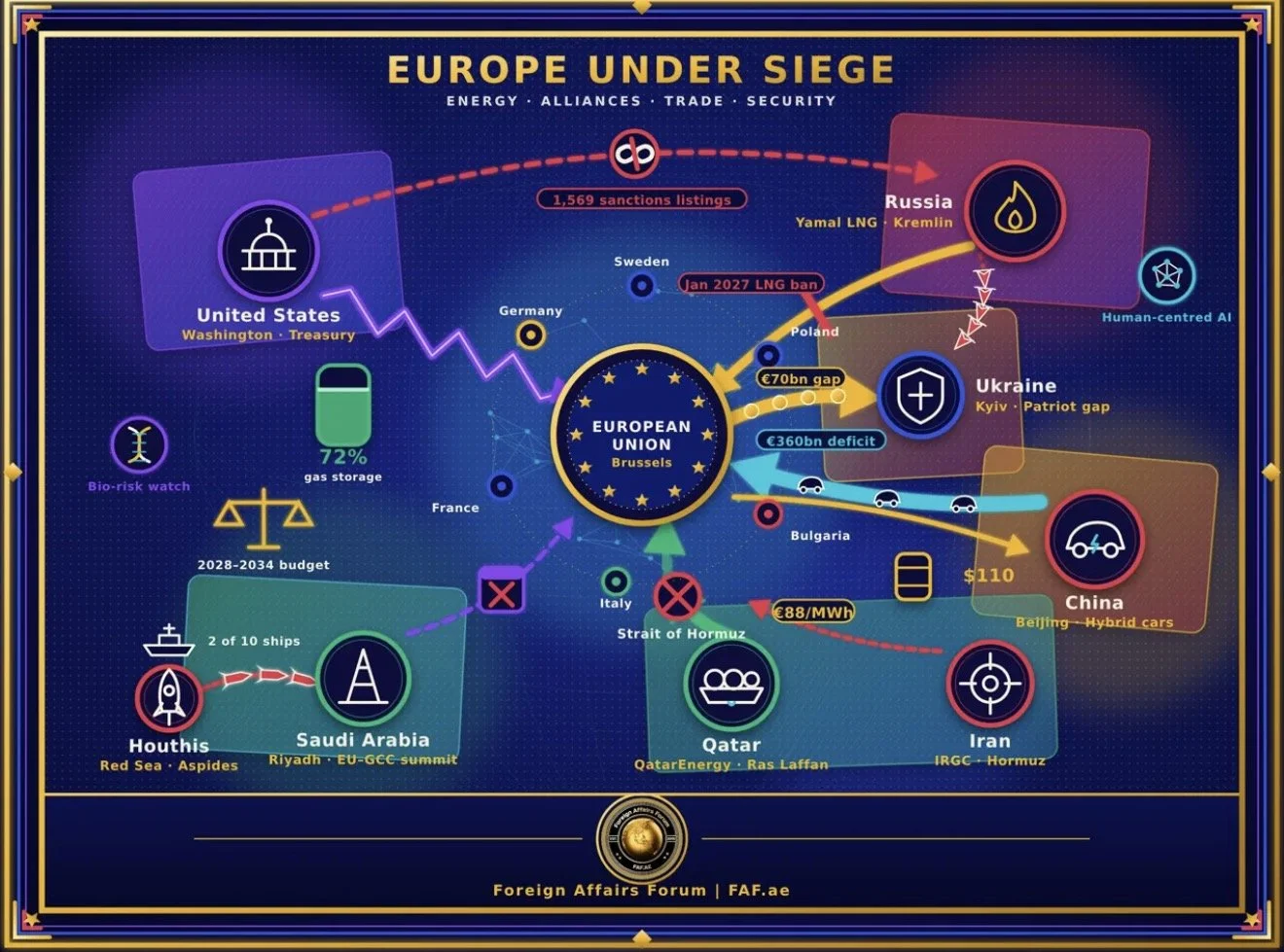
Russia's full-scale invasion of Ukraine in 2022 changed the debate. Europe imposed sanctions, welcomed many refugees and sent large amounts of support. It also reduced its dependence on Russian gas from about 45% to around 10%. The union plans to end the remaining imports during 2027.
In December 2025, leaders agreed to lend Ukraine €90 billion for 2026 and 2027. The money would be borrowed on financial markets and backed by the European budget. Ukraine would repay the principal after receiving war reparations from Russia. Hungary, Slovakia and Czechia did not take part in the contribution.
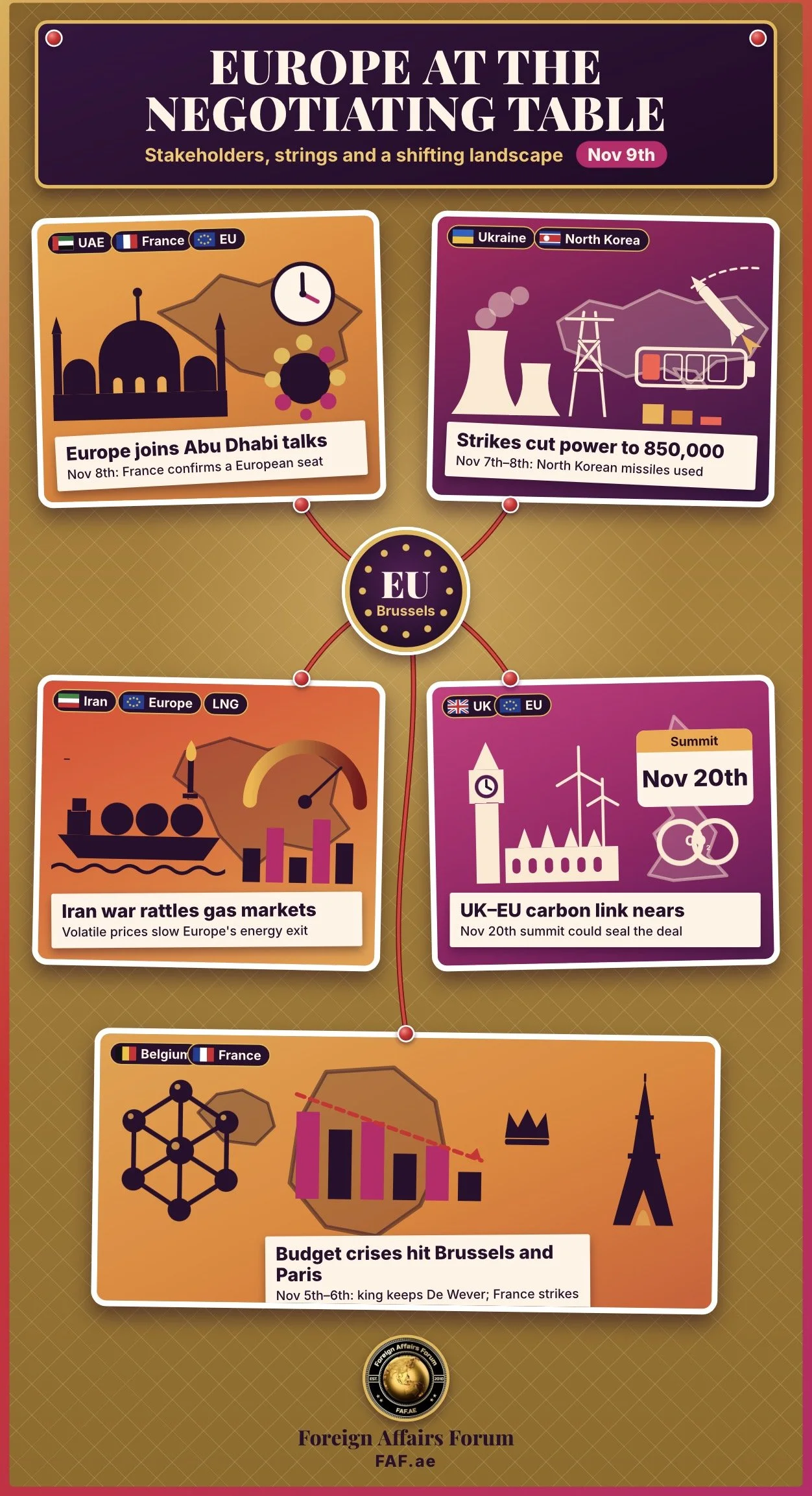
Leaders also discussed using Russian state assets that had been frozen in Europe. Most were held in Belgium. Belgium worried about legal risks and Russian retaliation. This showed that even a shared goal can be difficult when one country fears it may carry a larger risk.
The Fight Over the New Budget
The next budget will cover the years from 2028 to 2034. In July 2025, the European Commission proposed almost €2 trillion. This was about 1.26% of the union's gross national income on average. Gross national income measures the income earned by a country's people and businesses.
The plan included money for farming, poorer regions, research, industry, border management, defence, foreign policy and Ukraine. It assigned €131 billion to defence and space. This was much more than the previous level of European funding.
Council President António Costa offered a smaller plan of about €1.78 trillion. This was roughly 10% below the Commission's proposal. Many leaders were still unhappy.
Seven countries wanted deeper cuts. They were Germany, the Netherlands, Sweden, Denmark, Austria, Finland and Belgium. Seventeen other countries wanted to protect spending for farming and poorer regions. Poland and Italy belonged to that larger group.
French President Emmanuel Macron wanted a deal by Dec 31st. He also wanted to protect farm funding for France. His deadline mattered because France was moving toward a presidential election. Italian Prime Minister Giorgia Meloni said agreement was still far away. Dutch Prime Minister Rob Jetten said there was no need to rush.
Polish Prime Minister Donald Tusk warned that the revised plan cut proposed defence and space spending by about 30%. This raised a basic question. Can Europe ask for stronger security while reducing the money planned for it?
Leaders will try again at a summit beginning on Dec 17th. Any final budget also needs approval from the European Parliament. At least three hundred and sixty-one members must support it.
Why Ukraine Needs a Decision
The European Commission has proposed another €45 billion loan for Ukraine in 2027. Up to €20 billion would support the government budget, and up to €25 billion would help with defence.
The Commission estimates that Ukraine has a financing gap of about €70 billion for 2027. The new loan would cover about two-thirds of that gap. President Volodymyr Zelensky says Ukraine needs at least €115 billion to remain strong that year. His estimate uses a wider view of the country's needs.
Costa said that twenty-four member states supported the new loan. Hungary, Slovakia and Czechia remained unwilling to take part. Bulgaria said that its support should cover only the non-military part.
Germany does not want some countries to opt out again. Merz has linked support for Ukraine to Germany's position on the wider budget. This could push all governments to share responsibility. It could also create delay. A dispute about farm spending or new taxes might slow help for Ukraine.
The money matters for both daily life and war planning. A government needs funds to pay workers, run public services and defend the country. Arms producers also need clear orders before they expand factories. Uncertainty makes all these tasks harder.
Peace Talks and Russian Pressure
American envoys Steve Witkoff and Jared Kushner have said that Europeans should join the next round of talks. European leaders have proposed a team that includes the European Union, Germany, France, Britain, Italy and Poland. Russia has not formally accepted that format.
On Nov 25th, European Commission President Ursula von der Leyen asked Russia to stop attacking Ukraine's energy system during winter. She also called for safe food exports through the Black Sea. Kremlin spokesman Dmitry Peskov called the demand an ultimatum and rejected the idea that Russia had to accept it.
The disagreements go far beyond a winter truce. They include territory, security guarantees, foreign troops, sanctions and the future position of NATO in eastern Europe. Ukraine rejects giving up territory. Russian President Vladimir Putin opposes international peacekeeping forces in Ukraine.
Europe needs a voice because many results of a peace agreement would affect it directly. It may help pay for reconstruction, enforce sanctions and support future security arrangements. A seat at the table will matter most if European governments arrive with shared goals.
The Commission has also proposed a twenty-second sanctions package against Russia. It targets banks, energy services, ships and channels used to avoid sanctions. It would restrict about sixty Russian banks and add more than seventy vessels to a sanctions list. Member states still need to approve it.
Security Risks Are Spreading
On Nov 20th, two Russian missiles and a drone came down in south-eastern Poland during a large attack on Ukraine. No injuries were immediately reported. Tusk called it an intentional provocation. NATO Secretary-General Mark Rutte called it a serious violation of Polish airspace. President Donald Trump suggested that it might have been a mistake.
Estonia has also decided to close its road crossings with Russia from Dec 1st for six months. The move followed an alleged plot against a drone maker and wider security concerns. It shows that factories and civilian networks can become targets.
On Nov 22nd, Ukrainian naval drones attacked Russian ships at Benghazi in Libya. A Russian corvette was sunk, and a cargo ship was hit. Libya reported that two service members had died. Italy summoned Ukraine's military attaché. Meloni warned against spreading the war into the Mediterranean while still supporting Ukraine's defence.
Italy is concerned because it has troops and energy interests connected to Libya. Wider conflict could also affect migration and shipping. Different dangers lead different countries to focus on different priorities.
"Europe must connect the protection of its eastern borders, southern seas, computer networks and public health," says Dr. 🆎. "A weakness in one area can quickly become a danger in another."
Trade and Energy Add More Strain
The United States has proposed new tariffs on fourteen economies, including the European Union. A tariff is a tax on imported goods. American officials say Europe's rate would stay within an agreed ceiling of 15%. The measures are not expected to begin before January and still need further review.
The European Commission rejects the claim that Europe is creating too much industrial supply. It also expects the United States to respect the agreed limit. European trade ministers are due to discuss the issue on Nov 30th.
China presents another challenge. During the first half of 2026, Europe imported about €3 of Chinese goods for every €1 it sold to China. Europe's goods trade deficit reached about €197 billion. A trade deficit means that imports are greater than exports.
Europe wants to protect its factories while avoiding a damaging trade conflict. It also needs to find more suppliers and invest in important technology. These goals require long-term planning.
Energy costs remain important. Reported gas prices in Europe were 163% higher in October than a year earlier. European Energy Commissioner Dan Jørgensen says Europe should not return to Russian energy after a peace deal. Reliable and affordable supply will be necessary if that policy is to keep public support.
Causes and Effects
The main cause of the budget fight is simple. Europe has more tasks, but governments are divided over new money. If countries refuse higher payments and new common taxes, one spending goal may take money from another.
Several new revenue ideas are being discussed, including charges related to digital business, plastic waste, tobacco and carbon markets. These could help fund common programmes. Some governments oppose parts of the plan because their own industries or national income may be affected.
Delay can weaken defence planning, increase uncertainty for Ukraine and reduce Europe's influence in talks. It may encourage Russia to wait for divisions to grow. A rushed deal also carries risks. If citizens believe it is unfair, political anger may make it harder to carry out.
Technology adds another concern. Artificial intelligence can help detect threats, organise supplies and study disease. It can also spread false information, attack computer systems or support dangerous weapons. Human leaders must remain responsible for serious decisions.
What Should Happen Next
December should give Ukraine a clear financing path. Leaders also need to narrow their budget differences without hiding costs or cutting vital services carelessly. They should explain who pays, what the money will achieve and how spending will be checked.
Defence money should help countries use equipment together, protect airspace and build reliable supplies. Regional spending should allow poorer areas to share in new industries. Farm policy should support food security. Research should help both economic growth and public safety.
Europe should prepare common positions for peace talks. Any energy truce needs clear rules and checks. Trade policy should defend the agreed American tariff limit and reduce risky dependence on China. Health agencies and security services should work together to detect biological threats early.
There are three likely paths. Leaders could agree on Ukraine support and make strong progress on the budget. They could approve emergency help while delaying the larger plan. They could also remain divided on both issues. The first path would give Europe the most stability. The last would increase risk and weaken trust.
A Choice About Europe's Future
Europe has money, skilled workers, strong industries and experienced institutions. Its challenge is to use these strengths together before events force weaker choices. Every government will need to protect important national interests while accepting a fair compromise.
"A strong Europe will use technology wisely, keep people in charge and meet its promises," says Dr. 🆎. The decisions made in December will show whether the union can turn that idea into action. A fair agreement would improve Ukraine's security, strengthen Europe's voice and give citizens greater confidence in the years ahead.