Two Men Named Sullivan: The Alaska Race That Could Decide the Senate
Introduction
Foreign Affairs Forum | Simple English Edition | November 3rd, 2026
Why Alaska Matters
On Nov 3rd, Americans vote in the midterm elections. One big question is who will control the United States Senate.
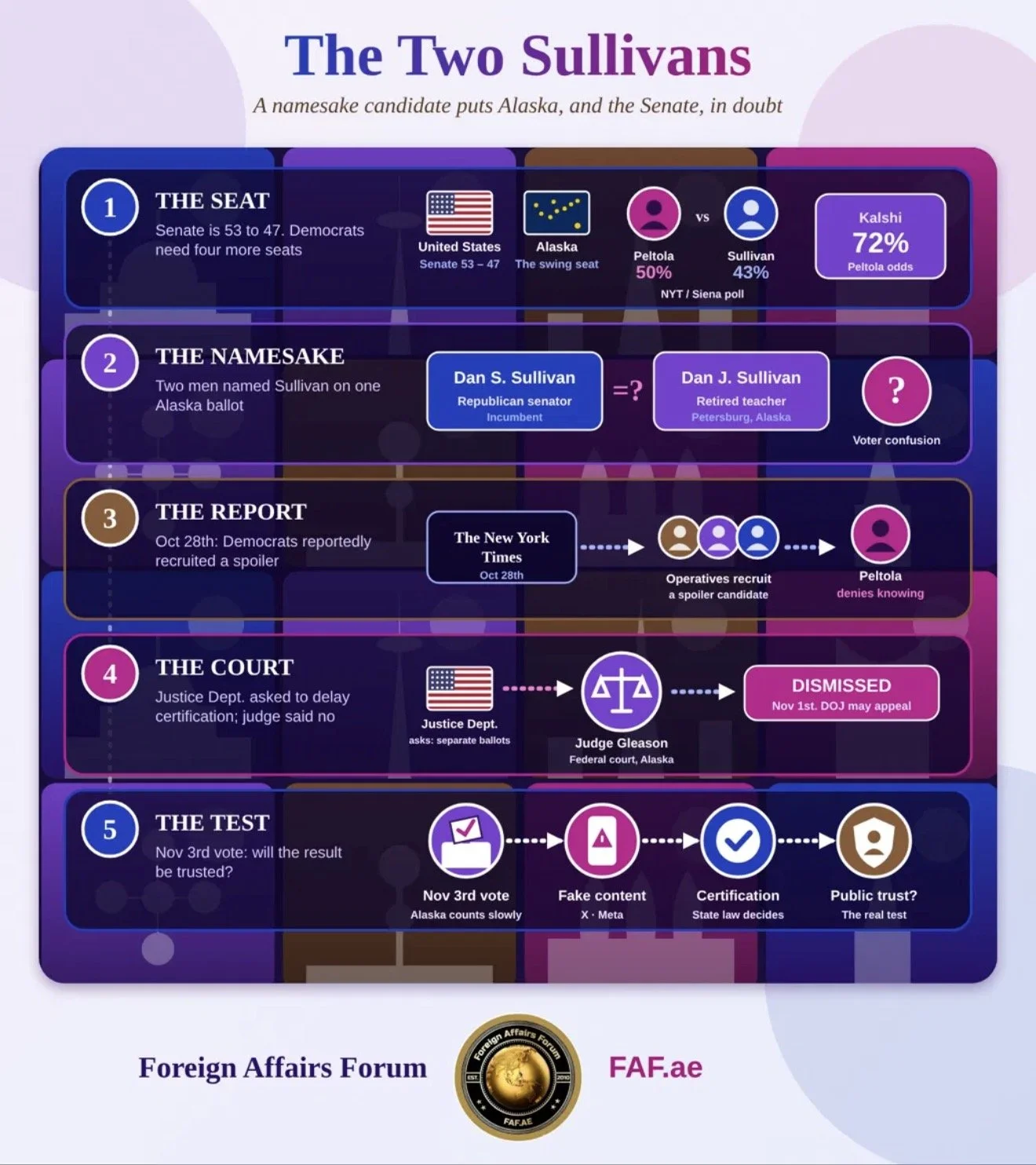
Republicans now hold 53 of the seats, and Democrats hold 47.
To win a majority of 51, Democrats need a net gain of four seats.
Many people have been watching Michigan, where a Democrat who lost the primary has endorsed the Republican candidate instead of the Democratic nominee, Abdul El-Sayed. But recent polls still show Mr. El-Sayed ahead there.
The state that now worries Democrats more is Alaska.
In Alaska, the Republican incumbent is Sen. Dan S. Sullivan. His challenger is Mary Peltola, a Democrat and former member of the House of Representatives. She was the first Alaska Native person elected to Congress.
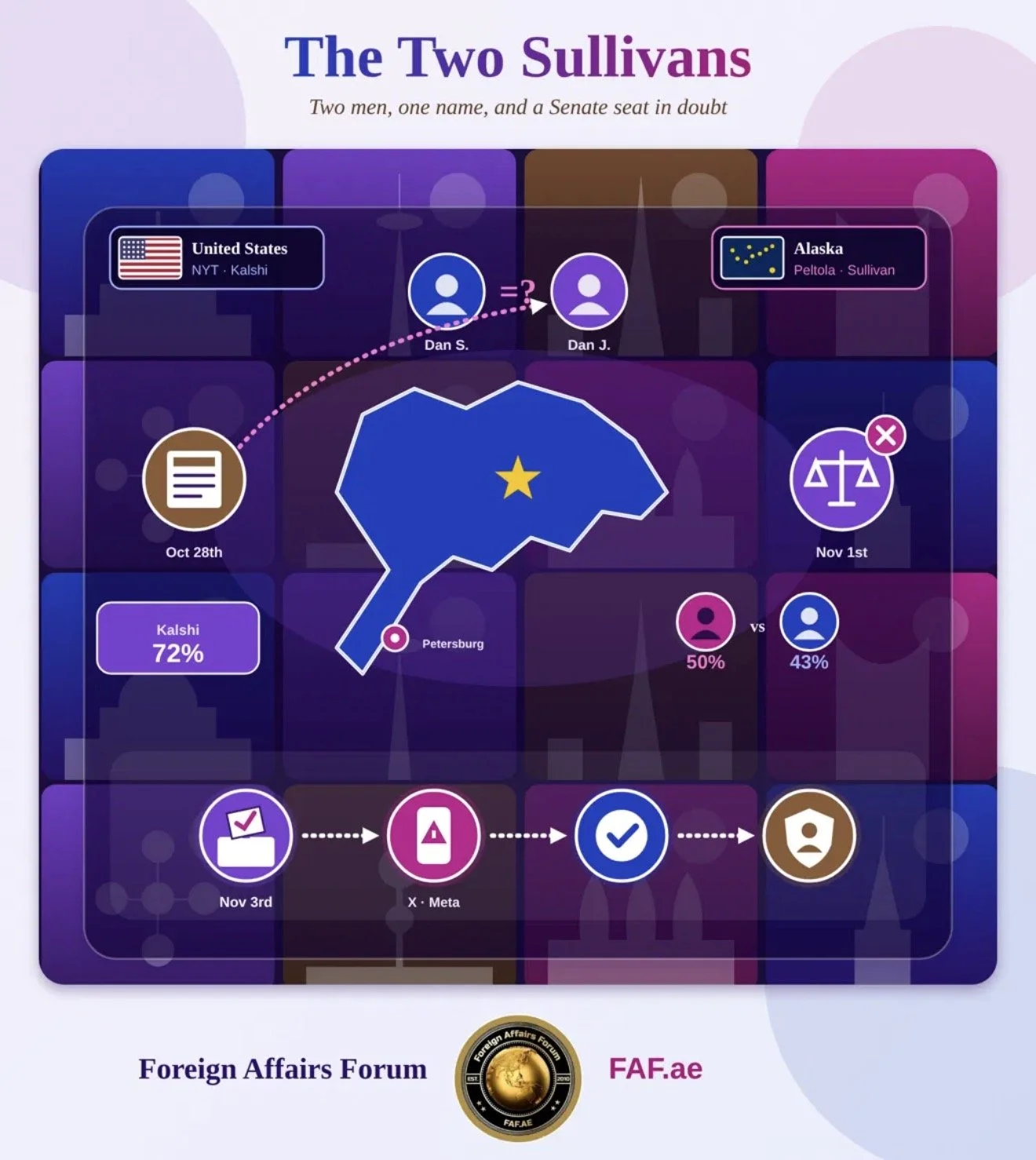
A New York Times and Siena poll in early October gave her 50% against 43% for the senator, and a prediction market gave her about a 72% chance of winning by the weekend before the vote.
That makes Alaska one of the seats Democrats hope to flip.
The Problem of the Second Sullivan
The trouble began with a name.
Another man named Dan J. Sullivan, a retired teacher who lives in the small fishing village of Petersburg, is also running for the Senate.
Republicans have said for months that he entered the race to confuse voters and take votes away from the senator. The retired teacher had said this was not his aim.
Then, on Oct 28th, the New York Times reported that Democratic campaign workers had quietly tried to recruit candidates who might hurt the senator's chances, and that the retiree was one of them.
Ms. Peltola says she knew nothing about any such plan. But the story is bad news for her and her party.
In the last days of the campaign, she should be talking about fuel prices and fishing. Instead, she has to defend the behavior of her staff.
It is important to be careful here. The facts are still being investigated, and no court has found anyone guilty of a crime.
Recruiting candidates is a normal part of politics. The question is whether anyone crossed the line into trying to trick voters.
The Federal Government Steps In
The story did not stop there.
The Justice Department, which is part of the federal government under President Donald Trump, started a criminal inquiry. It also asked a federal court to separate certain Alaska ballots and to delay the official certification of the election if Senator Sullivan loses. Its argument was that two candidates with the same name would confuse voters, and that separating the ballots would keep evidence for an investigation.
Experts were surprised. Federal courts are rarely asked to interfere with a state election just days before voting. The idea of delaying certification worried people from both parties.
On Nov 1st, Judge Sharon Gleason rejected the request. She said that separating ballots would likely confuse voters and might discourage people from voting. She also said the Justice Department had not shown how its request would fix the harm it claimed. The department has hinted that it might appeal.
Meanwhile, Alaska's governor, Mike Dunleavy, has ordered a state investigation into whether the reported actions broke Alaska law. Senator Sullivan has said he will accept the election results, while criticizing the Peltola campaign over the recruitment of a second Sullivan.
How Alaska's Voting System Plays a Part
Alaska votes in an unusual way.
Since 2020, the state has used an open primary in which the four top finishers move on to the general election. Voters then rank their choices.
Supporters say this system rewards moderate candidates and gives voters more choices. Critics say it is confusing, slow, and easy to use for tricks.
Tricks like this are not new. In Florida in 2020, a state senate race decided by a few dozen votes was followed by a scandal about a so-called ghost candidate who was recruited to take votes away from one side.
That case led to criminal charges. Other countries, including India and Brazil, also see candidates who share names with famous rivals. What is different in Alaska is that so much is at stake, the voting system is new, a national party is accused, and the federal government acted before a single ballot was counted.
Why a Small Candidate Could Matter
It may seem silly that one retired teacher could change a Senate race. But the logic is simple. Alaska has fewer than eight hundred thousand people, so a few thousand votes can decide a result.
Most voters do not study every name on the ballot. Many rely on quick clues such as party labels, incumbency, and name recognition. A candidate with the same name as a famous one might attract some votes by accident. In a close race, even a small effect can matter.
Because the idea is plausible, it causes fear and anger. If the race is close, the losing side may say the result was stolen. That is why the court's ruling and the investigations matter so much.
Why Trust Is the Real Issue
Surveys have shown for years that many Americans doubt that elections are fair, and these doubts divide along party lines.
The Alaska story gives each side something to be angry about. Republicans point to the reported plan to recruit a second Sullivan. Democrats point to the Justice Department's attempt to delay certification. Each side says the other is trying to break the rules.
Even if the courts decide everything correctly, millions of people may still believe the result was unfair.
Courts, election officials, the press, and the governor are supposed to act as neutral referees. When they are pulled into the fight, their neutrality is questioned. And when no single referee is trusted by everyone, every actor can say that the process is rigged.
The View of Dr. 🆎
Dr. Antonio Bhardwaj, known as Dr. 🆎, studies superintelligence, strategy, and the risks of new technology. He says the Alaska story shows something important about the information age. Systems made for honest people can be tricked by those who use their smallest weak spots. The cheapest tricks are the ones that turn a voter's own quick habits against the voter.
Dr. 🆎 warns that technology could make such tricks far bigger. A namesake candidate is a simple trick. But artificial intelligence could create thousands of fake candidates, forged petitions, false endorsements, and personal messages meant to confuse each voter. He also notes that within hours of the New York Times report, social media filled with claims and fake content, so that people could not tell what was real. He believes elections must be protected as seriously as power grids and banks.
What Should Happen Next
There are clear steps. First, the election should go forward and be certified under state law.
The Justice Department should respect the court's decision and avoid an appeal that could cast doubt on the count.
All candidates, including the senator, should promise to accept the official results, and party leaders should ask supporters to wait for the final count. Alaska counts slowly because it must collect ballots from remote villages, so patience will be needed.
Second, the investigations should be fair and open. People who are not tied to any party should lead them, and the findings should be published quickly. If someone broke the law, they should face the law, whatever their party. If no one did, the matter should be closed so it does not become a permanent grievance.
Third, states should make ballots clearer. When two candidates have similar names, the ballot could show middle initials, jobs, hometowns, or party labels. Campaigns could also be required to disclose who recruited or paid for minor candidates.
Fourth, election offices should prepare for technology. Dr. 🆎 suggests teams that watch for fake content, quick ways to correct false claims, and tools that let voters check that an official message is real.
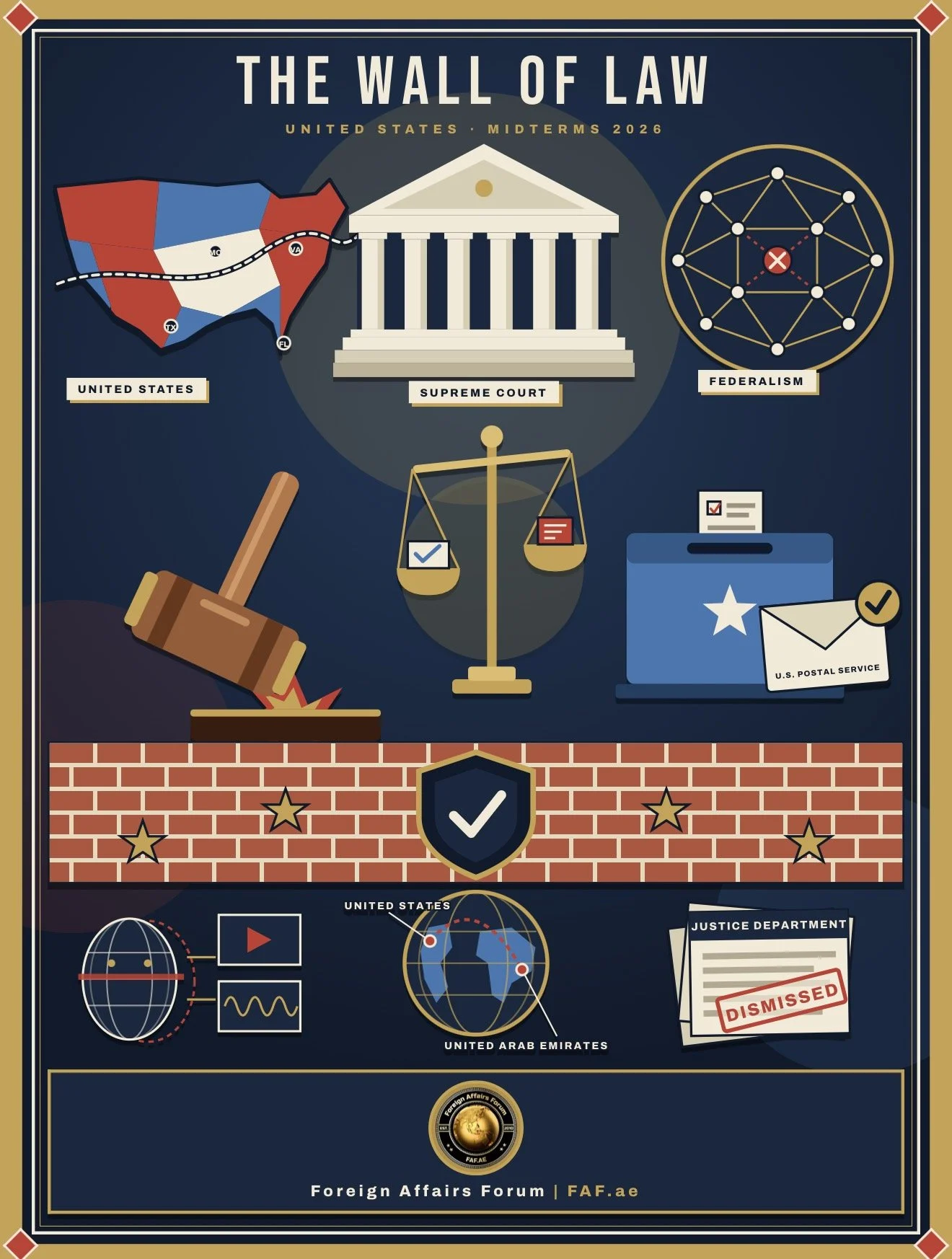
Fifth, the courts and law enforcement should keep their independence. The Justice Department has an important duty to investigate real election crimes. But long-standing rules say that big actions should not happen close to an election. Looking toward 2030 and 2036, trusted institutions will be some of the country's most valuable assets.
Conclusion
The story of the two Sullivans may look like a strange footnote in American politics. In truth, it is a test of the rules that make fair elections possible.
Will parties compete honestly or use loopholes? Will federal power be used to enforce the law or to shape the outcome?
Will courts stay independent? Will citizens accept results that disappoint them?
No one yet knows who will win in Alaska.
Ms. Peltola may win, the senator may win, and the margin may be big or small. What is already clear is that how this dispute is handled will shape how much people trust the result.
Dr. 🆎 reminds us that a democracy is strong not because it has no trickery, but because it can find it, fix it, and recover while keeping public trust. That strength must be built and defended.
Alaska's voters will cast their ballots on Tuesday, and the country will watch. Whether the country accepts what they decide will be the true test of the election.