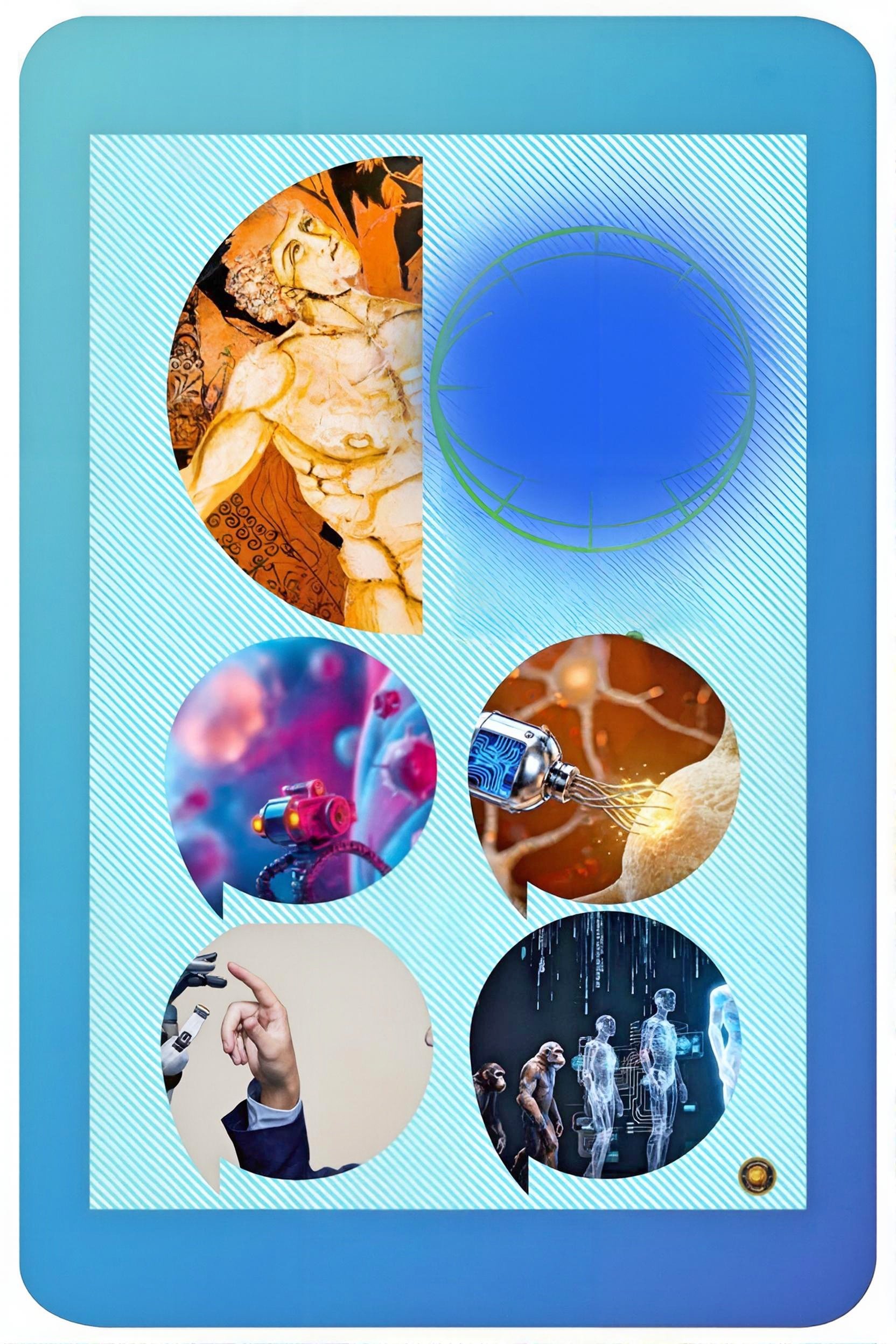
AI Breaks the Barrier—Science and Robots Enter Realms Once Forbidden to Mankind
Executive Summary
The Great Gamble—Can Humanity Control AI Before AI Controls Discovery?
The year 2026 marks a watershed moment wherein artificial intelligence traverses the Rubicon between theoretical potentiality and tangible operational reality, fundamentally recalibrating humanity's capacity to interrogate nature's deepest secrets whilst simultaneously embedding itself into the corporeal machinery of industrial civilization.
Within biological and chemical domains, AI-guided discovery accelerates at exponential velocity—AlphaFold 3's generative architecture now surpasses physics-based methodologies by approximately fifty percent in predicting drug-molecule interactions, whilst DeepMind's GNoME system has expanded stable materials by an order of magnitude, equating to approximately eight hundred years' worth of conventional human-led discovery compressed into mere computational cycles.
Concurrently, physical AI systems—fused vision-language-action models coupled with edge computing and reinforcement learning—transition from laboratory curiosities to production-grade deployments, manifesting in autonomous drone swarms conducting structural inspections, humanoid robots executing dexterous manufacturing tasks, and self-optimizing infrastructure networks.
This convergence promises revolutionary dividends in drug discovery, climate modelling, renewable energy systems, and disaster response logistics.
Yet beneath this promissory surface lurks formidable peril: autonomous systems operate with opaque decision-making architectures; liability frameworks remain juristically nebulous; safety certifications lag behind deployment velocity; reproducibility crises plague scientific literature; and the concentration of computational resources perpetuates asymmetric advantages among technologically hegemonic entities, exacerbating global inequities.
The determinative question confronting 2026 is not whether AI will redefine science and physical systems—evidence suggests this transformation is inevitable—but rather whether governance mechanisms, ethical frameworks, and international protocols can crystallize sufficiently to ensure such metamorphosis serves humanity's collective flourishing rather than narrow particularistic interests.
Introduction
Silicon Awakens—AI Breaches the Laboratory Door and Changes Everything Forever
The synthesis of artificial intelligence with scientific endeavour and mechanical autonomy constitutes perhaps the most consequential technological convergence of the contemporary epoch.
Throughout centuries of epistemological struggle, humanity has pursued understanding through patient empiricism, painstaking hypothesis refinement, and iterative experimentation—processes constrained fundamentally by cognitive bandwidth, computational limitations, and temporal scarcity.
Conversely, artificial intelligence systems—trained upon inconceivably vast datasets, capable of pattern recognition transcending human intuitive grasp, and amenable to parallel processing across distributed infrastructure—promise to liberate scientific inquiry from such constraints.
Meanwhile, the embedding of AI within robotic substrates, autonomous vehicles, and intelligent infrastructure ushers forth machines that perceive their environments with crystalline fidelity, reason about physical dynamics with calculative precision, and execute complex action sequences with minimal human intervention.
This dual trajectory—accelerated discovery coupled with embodied autonomy—portends an era wherein the laboratory bench and the factory floor become indistinguishable from one another, wherein the generation of knowledge and its immediate application occur in quasi-simultaneous cycles, and wherein the traditional boundary separating scientific investigation from production engineering dissolves entirely.
The implications reverberate across every dimensional axis: pharmacological therapeutics will be synthesized from purely computational scaffolding; materials with heretofore non-existent properties will materialise from AI-predicted architectures; climate systems will be modelled with fidelity sufficient to guide civilisational adaptation; and autonomous swarms will orchestrate tasks previously considered the exclusive province of human dexterity and judgment.
Simultaneously, this transformation introduces categorical risks: unprecedented concentrations of algorithmic authority; potential decoherence between AI-generated findings and empirical validation; ambiguities regarding liability when autonomous systems inflict harm; and the prospect of scientific literature contamination through AI-synthesised artefacts masquerading as human-derived insights.
History and Current Status
From Code to Cosmos—The Unstoppable Rise of Algorithmic Science
The genealogy of AI in scientific discovery traces to the mid-twentieth century's foundational work in computational logic and neural networks, yet the transition toward operational efficacy remained tardily incremental.
The watershed moment crystallised in May 2020, when DeepMind unveiled AlphaFold 2, a deep learning system that revolutionised protein structure prediction by attaining accuracy rivalling experimental crystallography—a fifty-year-old problem suddenly dissolved through algorithmic ingenuity.
Within three years, the same system had generated structural predictions for the entirety of humanity's known proteome—approximately two hundred million proteins—rendered openly accessible through comprehensive databases and disseminated globally at negligible cost.
This singular achievement catalysed an avalanche of subsidiary breakthroughs: AlphaFold Multimer enabled prediction of multi-protein complexes; generative variants permitted prediction of protein-ligand binding geometries; and proprietary successors incorporated antibody-antigen interaction modelling with fifty percent improvement over traditional physics-based approaches.
Concurrently, materials science witnessed its own algorithmic renaissance. In late 2023, GNoME—a graph neural network architecture developed by DeepMind—examined the combinatorial space of inorganic crystals and generated predictions for two point two million novel stable crystal structures, alongside identification of approximately three hundred eighty thousand flagged as particularly thermodynamically stable.
The predictive fidelity exceeded prior algorithmic approaches by nearly one hundred percent, with independent synthesis experiments validating roughly seven hundred thirty-six of the predicted materials' stability.
In climate science, AI emulators now execute Earth system simulations at velocities surpassing traditional physics-based models by factors of one hundred to sixteen hundred, operating competently on single-GPU infrastructure whilst maintaining fidelity within tolerable error bounds.
Robotics advancement paralleled these achievements. Vision-language-action models—neural architectures integrating visual perception, natural language comprehension, and motor control prediction—matured sufficiently for deployment in warehousing, manufacturing, and infrastructure inspection contexts.
Drone swarms equipped with AI perception systems now execute autonomous structural surveys, condensing months of analytical work into minutes, whilst autonomous guided vehicles navigate manufacturing facilities with minimal human supervision.
As of January 2026, production-grade robotics systems exhibit quality control parity with conventional manufacturing technologies, enabling enterprise-scale deployment previously confined to prototypical stages.
The transition from research curiosity to operational deployment accelerated dramatically throughout 2025, with major technology corporations and specialised robotics enterprises initiating commercial offerings of autonomous systems suitable for hazardous environments—aerial inspection of high-voltage transmission lines, confined-space structural diagnostics, and maritime infrastructure surveillance.
Key Developments
Breakthrough Tsunami—How AI Just Compressed 800 Years of Materials Science Into Months
The cardinal breakthroughs crystallising within 2026's initial weeks warrant enumeration. Google DeepMind announced Genesis, a multi-institutional collaborative framework with the United States Department of Energy explicitly designed to apply frontier AI methodologies to materials synthesis, fusion energy confinement prediction, and quantum simulation.
This partnership signals governmental recognition that AI-driven scientific acceleration constitutes essential national infrastructure deserving substantial capital allocation.
Lawrence Berkeley National Laboratory's AutoBot—an autonomous robotic laboratory system—demonstrates the maturation of physical experimentation conducted entirely under algorithmic governance, wherein machine learning systems iteratively refine synthesis protocols in real-time, evaluating outcomes and adjusting experimental parameters without human intermediation.
Within pharmacological contexts, Aqemia and cognate biotech enterprises have operationalised physics-guided generative models that combine quantum-inspired computational frameworks with machine learning, producing molecular candidates that exist beyond the historically-explored chemical space whilst simultaneously satisfying developability constraints.
These platforms transition AI in drug discovery from pattern-recognition within extant molecular libraries toward de novo invention within thermodynamically feasible but previously undiscovered territories.
AlphaFold 3's open-source accessibility, released subsequent to the 2024 Nobel Prize award, catalysed a proliferation of derivative platforms—Boltz-2, Pearl, and bespoke institutional variants—each optimising the fundamental architecture for specific molecular categories or specialised prediction objectives.
CRISPR-edited agricultural plants are entering field trial phases with demonstrable yield enhancements, wherein AI-guided mutagenesis protocols optimise root architecture for drought resilience and nutrient uptake efficiency.
Cell-free biomanufacturing platforms, augmented by machine learning optimisation algorithms, now produce biopharmaceutical proteins and enzymes through modular, freeze-dried systems deployable at point-of-care localities, circumventing traditional fermentation infrastructure. In climate modelling, SamudrACE represents a landmark achievement—the first coupled atmosphere-ocean emulator capable of generating multi-century simulations exhibiting stable climate dynamics whilst accurately reproducing emergent phenomena including El Niño patterns and seasonal precipitation teleconnections.
Latest Facts and Concerns
The Reproducibility Catastrophe—Why AI Science Could Be Quietly Destroying Everything
The contemporary moment presents a paradoxical landscape wherein unprecedented technical capability intersects with profound institutional fragility.
Data substantiates remarkable advances: nearly half of surveyed AI researchers acknowledge utilising AI for hypothesis generation, portending methodological normalisation; proprietary drug discovery programmes have elevated thirteen AI-designed molecular candidates into human clinical trials; autonomous drones now routinely conduct infrastructure inspections across six continents; and humanoid robots are undergoing deployment trials in manufacturing facilities, rehabilitation centres, and healthcare contexts. Simultaneously, troubling asymmetries surface.
Less than thirty percent of AI researchers share test datasets accompanying published research; fewer than five percent provide source code; and approximately seventy percent acknowledge personal inability to reproduce colleagues' reported findings despite operating within identical subfields.
This reproducibility crisis—wherein the scientific literature increasingly comprises unreplicable artefacts—threatens to contaminate discovery pipelines with spurious findings, particularly deleterious when downstream applications depend upon reliability validation.
Corporations demonstrate pronounced hesitancy regarding AI deployment in consequence-critical domains; nearly half of surveyed pharma researchers categorically reject AI-generated hypotheses for fear of opacity and uninterpretable decision-making architectures.
Infrastructure operators confront regulatory lacunae: whilst the aeronautical regulator (FAA) proposes frameworks for autonomous drone operations beyond visual line-of-sight, implementation remains incipient and geographically fragmented.
Liability frameworks remain fundamentally unresolved—should a robotic system cause injury, responsibility attribution remains juristically ambiguous across autonomous vehicles, industrial robots, surgical systems, and drone operations.
The proliferation of AI-synthesised scientific content introduces novel contamination vectors wherein machine-generated research artefacts infiltrate scientific repositories, potentially undermining literature integrity through undetectable fabrications. Internationally, governance structures diverge dramatically: the European Union's AI Act mandates stringent certification for high-risk applications, whilst American regulatory approaches remain fragmented across state-level initiatives lacking federal coordination, and certain jurisdictions maintain minimal oversight infrastructure entirely.
The concentration of computational resources requisite for training frontier models remains asymmetrically distributed amongst wealthy institutions, perpetuating global inequities wherein developing-world researchers lack access to tools that have become practically essential for competitive participation in discovery frontiers.
Cause-and-Effect Analysis
The Cascade Begins—How One AI Success Breeds a Hundred New Catastrophes
The mechanistic chain whereby AI catalyses discovery acceleration commences with algorithmic capacity for vast pattern recognition.
Proteins numbering in the millions represent combinatorial possibilities effectively infinite to human analytical capacity; yet neural networks trained upon structural databases rapidly identify regularities invisible to unaided cognition, compressing exploration timescales from decades to minutes.
Consequentially, drug candidates amenable to development emerge with frequency previously impossible, accelerating pharmacological pipelines towards clinical validation. Within materials science, the multiplication effect proves more dramatic: GNoME's predictions expanded the stable materials database by factors exceeding ten, directly cascading into availability of novel lithium-ion conductors, photonic semiconductors, and catalytic substrates previously unknown to materials scientists.
This multiplication of candidate materials necessitates physical validation—whence autonomous robotic systems enter the causal chain. Synthesis attempted by human chemists operates at rates measured in experiments-per-week; algorithmic control enables parallel high-throughput synthesis at rates exceeding dozens-of-candidates-per-day, rapidly filtering theoretical predictions toward experimental confirmation.
Climate modelling exhibits analogous dynamics: conventional physics-based simulations require computational infrastructure commensurate with national laboratory budgets; AI emulators enable equivalent fidelity within institutional or even personal computing budgets, democratising access to sophisticated predictive capabilities.
This accessibility cascade amplifies research velocity—universities lacking supercomputing budgets now participate meaningfully in climate science research previously accessible only to continental laboratories. Reciprocally, these triumphs generate second-order consequences demanding attention.
Exponential acceleration of discovery cadences pressurises regulatory systems designed for slower innovation tempos—pharmaceutical approval timelines established when drug development required seven-to-ten-year timescales prove increasingly misaligned with AI-generated candidates arriving in accelerated cohorts.
Autonomous systems introduce operational dependencies: failure of AI perception systems could cascade through drone fleets, generating systematic failures of infrastructure monitoring across vast geographies.
The displacement of human experimentalists threatens workforce sustainability within research enterprises—if algorithmic systems execute experimentation more efficiently, human scientific labour becomes economically marginalised, potentially hollowing technical expertise pipelines.
Misalignment between AI capability and empirical validation introduces epistemological peril: models trained upon historical data generate predictions bounded by training distributions, yet discoveries most scientifically valuable frequently involve phenomena qualitatively distinct from precedent, whereupon algorithmic predictions may systematically mislead.
Future Steps
The Governance Race Against Time—Stopping AI Before It Stops Listening to Humans
Remediation of these cascading complexities demands multidimensional intervention coordinating technical innovation with institutional reformation. Within scientific domains, community standards for reproducibility must crystallise—mandating comprehensive code sharing, dataset accessibility, detailed hyperparameter documentation, and independent replication protocols as preconditions for literature acceptance.
Explainable AI methodologies embedding physical laws as inductive biases will enhance reliability: incorporating conservation principles, thermodynamic constraints, and fundamental physical symmetries directly into neural architectures forces predicted systems toward physically-plausible solutions, substantially mitigating hallucinations and erroneous outputs characteristic of unconstrained generative systems.
Hybrid quantum-AI paradigms merit accelerated investment—quantum computers excel at certain classes of molecular simulation problems intractable via classical approaches; coupled with classical neural networks optimising sampling efficiency, such hybridisation promises exponential computational advantages.
Infrastructure globalisation and equitable access programs must prioritise underrepresented geographies; cloud-based research platforms furnishing subsidised access to frontier models could democratise discovery participation, narrowing the artificial advantages currently accruing to well-resourced institutions.
Governance frameworks require urgent harmonisation. International treaties establishing common standards for AI safety in high-consequence domains—autonomous weapons systems, medical devices, critical infrastructure—would reduce fragmentation pressures currently forcing vendors toward lowest-common-denominator safety standards. Regulatory sandboxes—controlled environments permitting algorithmic experimentation under rigorous oversight—could enable learning-by-doing in governance, wherein authorities develop competence through supervised deployment trials preceding widespread rollout.
Organisational governance must emphasise human-AI collaboration rather than algorithmic autonomy: maintaining human experts in decision-making loops for consequence-critical applications ensures retention of epistemic accountability whilst permitting algorithmic assistance. Workforce transitions deserve proactive planning—retraining initiatives converting displaced experimental scientists toward roles emphasising experimental design, result interpretation, and conceptual innovation would leverage human comparative advantages in abstract reasoning whilst automating low-level procedural tasks.
Corporate liability frameworks must crystallise, allocating responsibility unambiguously and mandating insurance mechanisms guaranteeing compensation when autonomous systems inflict harm. Energy efficiency improvements in AI training and inference merit sustained priority—current systems require computational infrastructure producing substantial carbon footprints; architectural innovations reducing training requirements would democratise access whilst ameliorating environmental burdens.
Conclusion
At the Abyss's Edge—2026 Decides Whether AI Liberates or Enslaves Humanity's Future
The convergence of artificial intelligence with scientific discovery and physical automation constitutes an irreversible transformation, wherein humanity's relationship to knowledge production and material implementation undergoes fundamental restructuring.
The evidence substantiating AI's revolutionary potential proves overwhelming: protein structures once requiring years of crystallographic labour now materialise within hours; stable materials numbering in the millions now await experimental synthesis; climate simulations previously inaccessible beyond national laboratories now execute competently on modest infrastructure; and robotic systems exhibit dexterity and autonomy once reserved entirely to human artisanal expertise.
These triumphs presage civilisational benefits measurable in improved pharmaceutical therapeutics, enhanced energy efficiency, resilient infrastructure, and accelerated solutions to climatological crises. Simultaneously, the precipice upon which humanity stands proves demonstrably perilous. The temptation toward autonomous algorithmic governance—deploying AI systems without human oversight in consequence-critical domains—risks catastrophic failures when trained systems encounter novel phenomena outside their training distributions.
The concentration of computational resources in technologically dominant jurisdictions threatens further stratification of global scientific capacity, potentially widening already-distressing asymmetries between developed and developing-world research institutions.
The reproducibility crisis threatening to contaminate scientific literature warns of epistemological corruption wherein false findings propagate through discovery pipelines, multiplying downstream damage. The absence of clarity regarding liability when autonomous systems cause harm creates moral hazard incentivising premature deployment without adequate safety validation.
Nonetheless, these perils prove surmountable through judicious institutional design, resolute international cooperation, and commitment to equity principles. The scientific and engineering communities must enact reproducibility standards with enforcement mechanisms; governance structures must harmonise around common safety principles whilst permitting jurisdictional variation appropriate to local contexts; human expertise must remain central to consequence-critical decision-making; and developing-world researchers must receive systematic support enabling meaningful participation in AI-driven discovery frontiers.
The threshold between transformation enabling human flourishing and degradation imperilling civilisational stability remains fundamentally a question of governance, not technology. The machines themselves exhibit only instrumental value—vectors for human intention and institutional design.
Whether 2026 shall be remembered as the year wherein AI universally distributed knowledge and empowered humanity toward sustainable flourishing, or as the prologue to Promethean tragedy wherein accelerated power outpaced wisdom, depends not upon algorithmic capacity but upon collective human choice.
The determinant variable resides not in silicon but in society.