India’s AI Readiness In 2026 Explained In Simple English
Executive summary
India in 2026 is moving quickly toward using AI in many areas, but it is still catching up with the world’s top AI powers. The country is changing its electricity policy to produce much more power, with more clean energy and more nuclear plants, so that homes, factories, data centres, and AI computers have enough reliable electricity.
At the same time, the government is building big computer systems with thousands of GPUs so that Indian companies, students, and researchers can train AI models at low cost.
India has the building blocks: a huge population, fast 5G networks, growing data‑centre capacity, and a national AI programme. But it still has problems: power shortages in some regions, weak electricity companies, complex data rules, and too few highly trained AI experts. India is not fully “AI ready” yet, but it is clearly moving in that direction.
Introduction
Why electricity and AI are linked
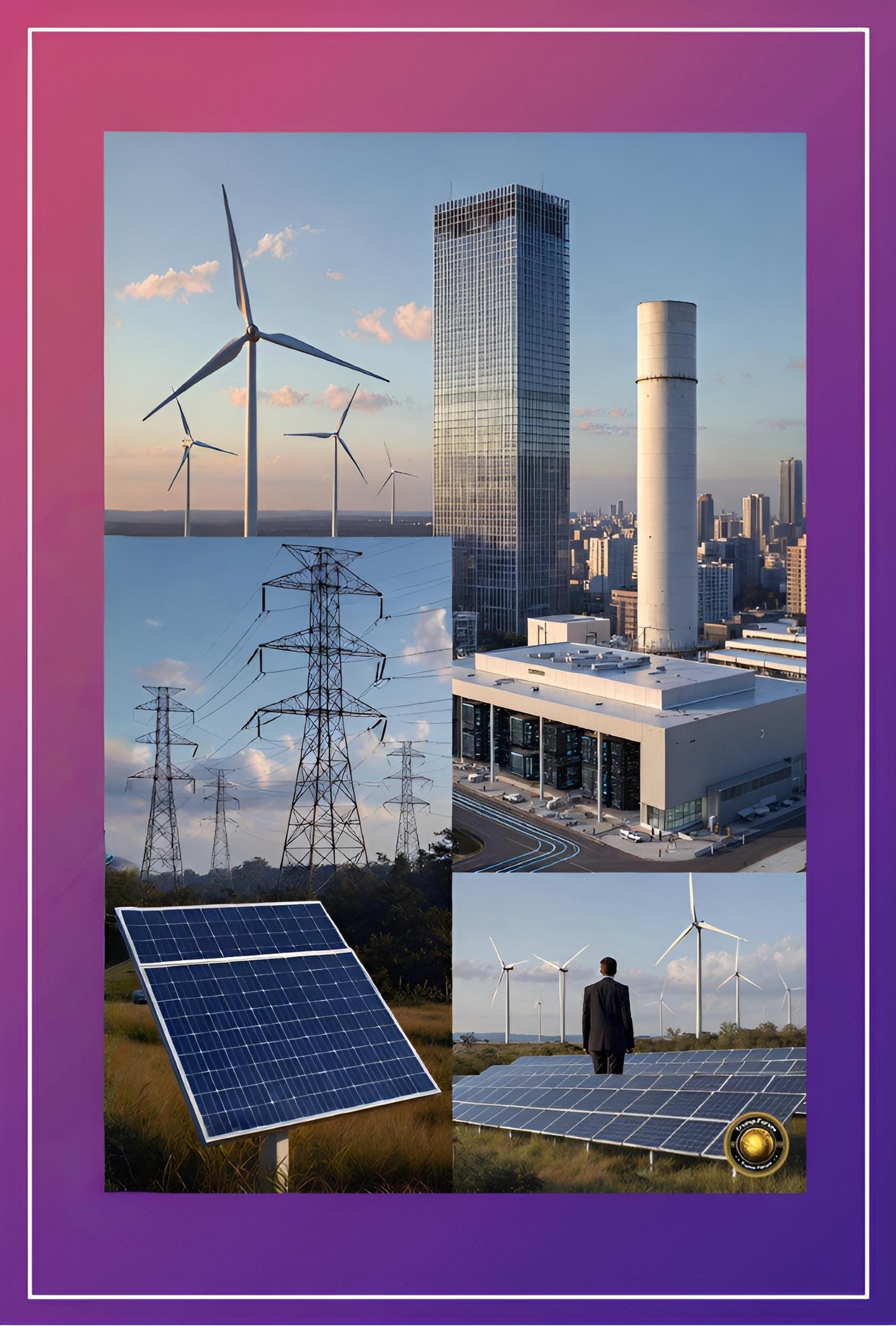
AI needs three things to grow: data, computing power, and electricity. Modern AI models run on special chips called GPUs. These chips sit in large buildings called data centres. Data centres use a lot of electricity, 24 hours a day. If power is unreliable, too expensive, or very polluting, AI development becomes harder and less attractive.
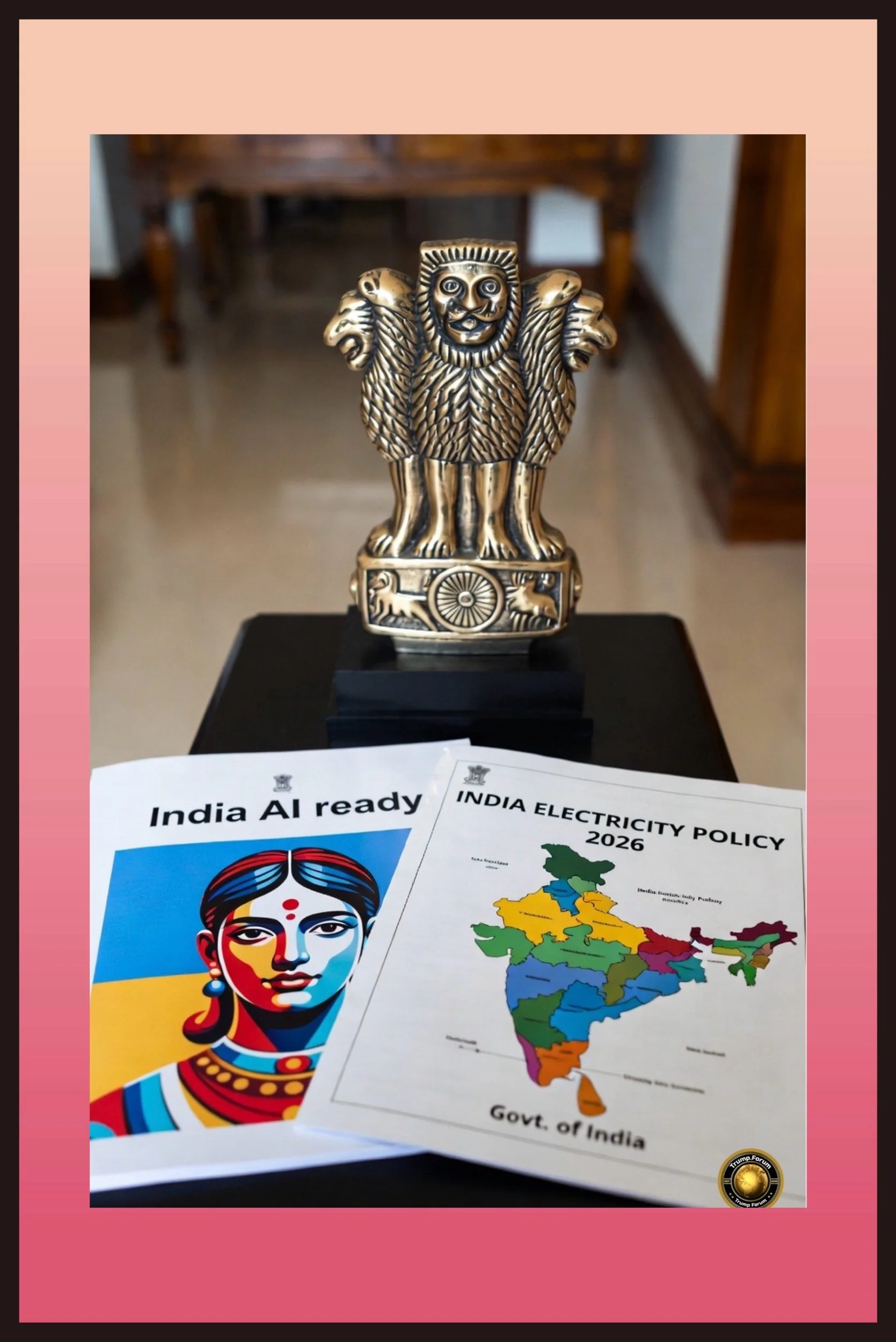
India’s government understands this link. It has published a new draft National Electricity Policy for 2026 that plans for much higher electricity use as the economy grows. It expects average annual use per person to increase from about 1,460 kWh in 2024‑25 to around 2,000 kWh by 2030 and more than 4,000 kWh by 2047.
This rise includes not just homes and factories, but also cloud services, data centres, and AI computing.
At the same time, India has launched the IndiaAI Mission, which funds AI research, provides cheap access to GPUs, builds data platforms, and supports training programmes so that more people can work with AI.
Short history and current state of India’s electricity system
For many years, India struggled to provide enough electricity. Blackouts were common, and many villages were not fully connected.
The National Electricity Policy of 2005 and later plans focused on adding power plants, mostly coal and some gas, and on fixing the finances of state‑run electricity companies.
In the 2010s, India began to push hard for renewable energy, such as solar and wind, setting big targets like 175 GW of renewables by 2022 and higher levels by 2030. This was part of its plan to reduce emissions and meet climate commitments.
But coal remained the main source of power, because it is cheap and can supply steady electricity. Distribution companies stayed weak, losing money due to high losses and poorly designed tariffs.
By early 2026, the government accepted that the old policy from 2005 was outdated. It released the Draft National Electricity Policy 2026 and a long‑term Power Vision 2047.
These documents focus on three big goals: enough power for everyone, cleaner energy, and affordable prices.
Key changes in electricity policy that matter for AI
One major change is a strong shift towards nuclear energy. India now plans to expand nuclear capacity from about 8.8 GW to around 100 GW by 2047, more than 11 times higher.
Nuclear plants can run almost all the time and do not produce CO2 when generating power. That makes them useful for supplying data centres and AI clusters that need steady power.
The policy also talks about new technologies like small modular reactors and using old coal‑plant sites for new nuclear units.
Another change is faster growth in renewable energy and storage. India wants a very high share of solar and wind in its installed capacity by 2026‑27 and 2031‑32, supported by batteries and pumped‑hydro storage to handle times when the sun is not shining or the wind is not blowing.
This matters because India’s data‑centre industry is growing fast, with capacity expected to double from 0.9 GW in 2023 to about 2 GW by 2026, pushed by data‑localisation rules and rising Internet use.
Connecting these centres to clean, reliable power will shape how “green” India’s AI sector looks.
The policy also talks about improving the finances of distribution companies, reducing losses, and making tariffs more stable and fair, so that businesses—including cloud and AI companies—can get predictable power prices and better service quality.
New facts about networks, data centres, and AI compute
India’s telecom network has improved a lot.
By early 2025, almost every district had 5G coverage, with nearly 250 million 5G users and over 469,000 5G base stations.
The total number of Internet subscribers was close to 970 million, and broadband users were over 940 million, making India one of the leaders in mobile data usage. This wide network is important for rolling out AI services in rural health, online education, and farm advisory apps.
Data‑centre policy has also become a serious topic. In 2020, the government drafted a data‑centre policy and later gave large data centres “infrastructure status,” which makes it easier to get long‑term loans.
Many states, like Maharashtra, Tamil Nadu, Telangana, and Uttar Pradesh, offer cheaper land, lower power tariffs, and quicker approvals to attract data‑centre projects. Because of these policies and data‑localisation rules, India’s data‑centre market is expected to grow steadily, with more than 100 new centres projected by the mid‑2020s.
On the AI‑compute side, the IndiaAI Mission has moved from paper to practice. The mission set aside more than $1.3 billion over five years, with about 44% of that for compute infrastructure.
MeitY invited companies to provide AI compute and cloud services through a central portal. Many big players, such as Jio, Tata Communications, Yotta, and others, joined this effort.
The original goal was to make 10,000 GPUs available. By early 2025, the minister in charge said this would rise to about 18,693 GPUs, offered at roughly $1.2 per hour, which is far cheaper than the global market rate of around $2.5–$3 per hour.
Later government updates talked about 38,000 GPUs being deployed under the mission. Outside government, analysts estimate total national GPU capacity above 34,000 units by mid‑2025, though these chips are spread across many providers.
Data law and its effects on AI
India passed the Digital Personal Data Protection Act in 2023 and has been working on detailed rules since then. These rules decide when companies can send personal data outside India, which countries are allowed, and which “Significant Data Fiduciaries” must store specific data only within India.
For AI, this has two sides. On the positive side, data‑localisation pushes firms to build servers and data centres within India, which supports jobs, infrastructure investment, and local AI development.
Domestic startups and researchers may get better access to local data, including through planned government data platforms.
On the negative side, unclear rules and wide government discretion can scare off some investors and make it harder, especially for small companies, to design systems that follow the law. Too many limits on data flows may also slow AI progress because large, varied datasets are needed to train strong models.
Some experts also warn that localisation may not improve privacy if government agencies keep broad legal powers to demand data from local firms. There have already been cases where servers of state‑run telecom companies were hacked, even though they were subject to localisation rules. This shows that where data is stored matters less than how it is protected.
Cause and effect: Putting the pieces together
Several clear cause‑and‑effect links help explain India’s AI‑readiness story.
Growing demand for electricity is both a driver and a result of AI adoption. As more people come online and as data‑localisation policies push data processing into India, data centres use more power.
More AI applications in industry and government mean more servers, which further raise electricity demand. In turn, if the power system fails to keep up—through blackouts or very high prices—investors may move AI work to other countries, even if India offers cheap GPUs.
The push for nuclear and renewables is meant to solve this problem in a climate‑friendly way. If India manages to build 100 GW of nuclear capacity and meet its renewable‑capacity targets, it can support data‑centre loads without locking in too much coal.
If it fails, AI will depend heavily on coal‑fired power, which may draw criticism from trading partners and climate activists and may also raise future carbon‑cost risks.
Subsidised AI compute changes who can participate in AI. In rich countries, building or renting thousands of top GPUs is expensive, so only big tech companies normally train very large models. India’s low GPU‑hour price opens doors for startups, university labs, and smaller firms.
They can experiment, fail, and try again without going bankrupt. However, because the total GPU pool is still much smaller than that of the US or China, India will most likely build strong models in chosen areas—such as Indian languages, agriculture, and public‑service chatbots—rather than trying to match the biggest frontier labs on every dimension.
Data‑localisation and DPDPA rules, if designed well, can help domestic AI. They can provide a steady flow of local data and push more cloud capacity into India. But if rules are too strict or too vague, they can create confusion and cost.
Small firms may have to spend scarce money on lawyers and compliance instead of on product development.
International collaborations may become harder if cross‑border data flows are blocked.
Finally, the rapid spread of 5G and broadband makes it possible to deliver AI‑enabled services to hundreds of millions of users. Apps that offer voice‑based help to farmers, local‑language tutoring to students, or decision support to doctors all rely on fast, low‑latency networks. Without them, AI would stay confined to a handful of big cities.
Connectivity does not, on its own, create advanced AI labs, but it does create markets for AI products, which in turn attract talent and investment.
Future steps India needs to take
To become truly AI ready, India needs to execute on several fronts at the same time.
In electricity, it must actually build the power plants, storage assets, and grid lines described in policies.
This means speeding up clearances, improving financial health of distribution companies, and planning special zones where data centres and AI clusters can connect directly to reliable, preferably green, power.
State‑level data‑centre policies need to be better aligned with national electricity plans, so that incentives for cheap power do not undermine DISCOM finances.
In AI compute, India should work toward connecting its many GPU clusters into something like one large national AI supercomputer, instead of leaving them scattered.
This requires high‑speed fibre links, smart scheduling software, and clear rules about who gets access, at what priority, and under what conditions.
It also needs to watch out for over‑dependence on imported chips and foreign software frameworks, and gradually support domestic hardware and open‑source tools.
In data policy, India should refine DPDPA rules to give companies predictability. Clear conditions for cross‑border data transfers, well‑defined localisation triggers, and strong cyber‑security standards would help both privacy and innovation.
Sector regulators should use localisation carefully, with strong reasons and sunset reviews, rather than as a default.
In skills, many more people must be trained in AI‑related fields.
The IndiaAI Mission already talks about FutureSkills and training public servants, but the challenge is to improve teaching quality in universities, update curricula quickly, and create apprenticeship‑like programmes that connect graduates with real projects. Otherwise, hardware and policy will move faster than human talent.
Conclusion
Is India AI ready?
In 2026, India is part‑ready, not fully ready. On the positive side, it has: a clear long‑term electricity plan that aims for higher use and cleaner power; one of the world’s fastest 5G rollouts and very high mobile‑data usage; a serious national AI mission with thousands of GPUs at low cost; and data‑centre policies that have attracted real investment.
On the negative side, it still faces: fragile electricity distribution companies; delays in adding enough renewables and storage; big gaps in human capital; and a data‑protection framework that is still being filled in, creating uncertainty for AI builders.
India is clearly in the global second tier today, as Bengio suggested, but it is one of the few countries in that tier with the size, political will, and institutional capacity to move up.
Whether it succeeds will depend on implementing its electricity policy, turning its scattered GPUs into real computing power, and training enough people to use AI in ways that serve its own society, not just foreign platforms