Celebrating Erasmus: 38 Years of Transforming Lives Across Europe and Beyond
Introduction
This week marks a significant milestone in European educational history as we celebrate the extraordinary impact of the Erasmus programme, which has been transforming lives for nearly four decades.
Since its official launch on July 1, 1987, Erasmus has evolved from a modest student exchange initiative into one of the European Union’s most successful and iconic programmes.
A Historic Beginning with Enduring Vision
The Council formally adopted the Erasmus program on June 15, 1987, after a challenging development process that began with pilot student exchanges from 1981 to 1986.
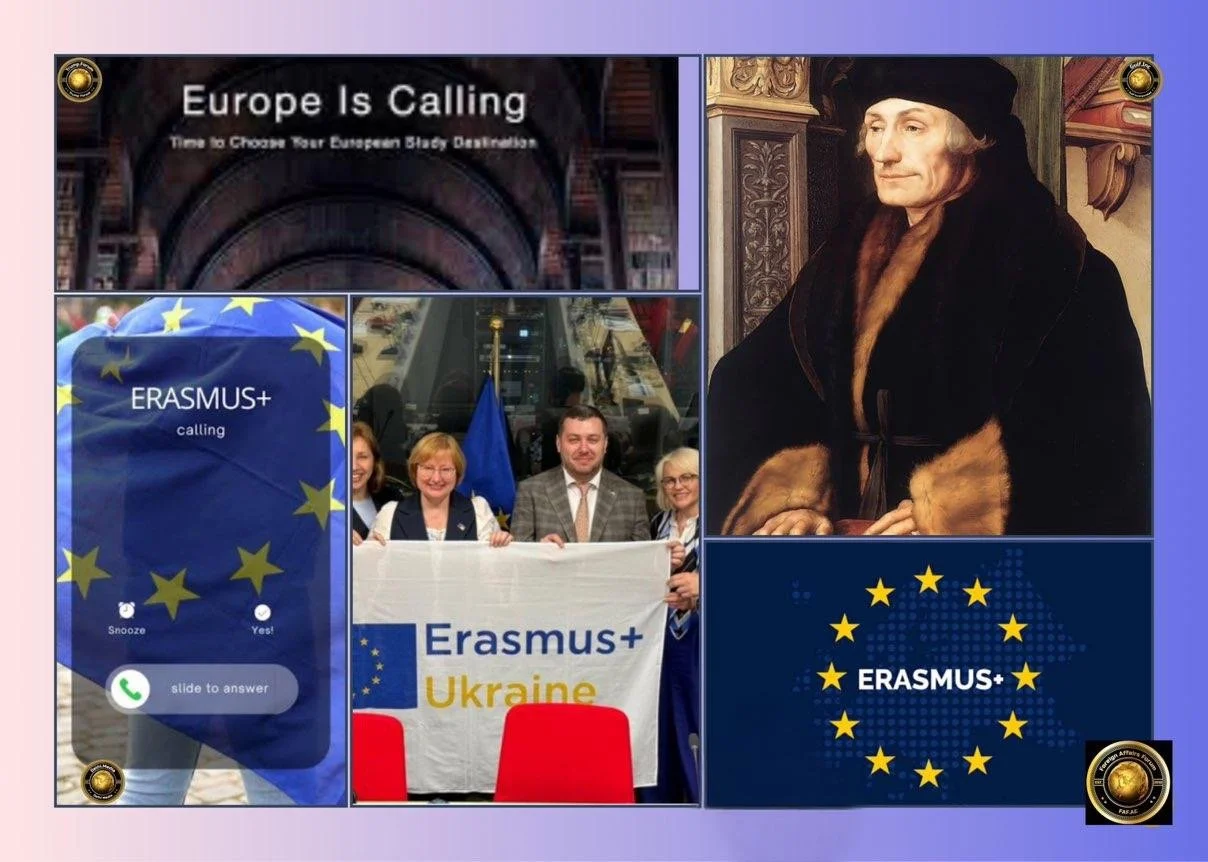
Named after the Dutch philosopher Desiderius Erasmus of Rotterdam, who traveled extensively across Europe during the Renaissance to teach and study at various universities, the programme embodies the spirit of cross-cultural learning and intellectual exchange.
The name also serves as an acronym for the European Community Action Scheme for the Mobility of University Students.
The programme’s early years were marked by significant obstacles, including resistance from member states with established exchange programmes and budget disputes that led to legal challenges in the European Court of Justice.
Despite these challenges, the programme launched with just 3,244 students in its first year, setting the foundation for what would become a transformative force in European education.
Remarkable Growth and Evolution
From its humble beginnings, Erasmus has experienced extraordinary growth, reaching over 16 million participants since 1987.
The programme has undergone several evolutionary phases, beginning as a standalone initiative (1987-1994), then becoming part of the broader Socrates programme (1995-2006), and finally integrating into the Lifelong Learning programme (2007-2013).
In 2014, it transformed into Erasmus+, encompassing education, training, youth, and sport sectors under a single framework.
Recent milestones demonstrate the programme’s continued expansion and impact.
By 2024, over 15 million people had participated in Erasmus+ activities, and the programme now supports nearly €5 billion in funding for 2025, representing a 6.5% increase from the previous year.
The programme’s scope has dramatically broadened from its original focus on university students to vocational education, adult learning, youth work, and sports.
Comprehensive Impact Across Communities
Educational and Professional Transformation
The transformative power of Erasmus+ extends far beyond traditional academic boundaries.
Research demonstrates that over 70% of former Erasmus+ students understand their career aspirations better after their international experience.
The programme’s impact on employability is particularly striking.
Eighty percent of participants found employment within three months of graduation, and 72 percent credit their abroad experience with helping them secure their first job.
The programme addresses critical skills gaps in the modern economy by focusing on soft and interdisciplinary skills development that businesses increasingly demand.
Nine Erasmus+ alums actively use the skills and experiences gained abroad daily, demonstrating the programme’s lasting professional relevance.
Studies show that participants are half as likely to experience long-term unemployment as those without international experience, with their unemployment rate remaining 23% lower five years after graduation.
Cultural Exchange and European Identity
Erasmus+ serves as a powerful catalyst for intercultural understanding and European integration.
More than 90% of participants improve their ability to work and collaborate with people from different cultures and develop a stronger sense of European identity.
This cultural impact is particularly pronounced among students who were initially less convinced about the European Union or studied in culturally different countries.
The programme’s reach extends across diverse educational sectors, supporting traditional university students and adult learners engaged in lifelong learning initiatives.
In 2018 alone, the programme supported over 850,000 students, apprentices, teachers, and youth workers, including 40,000 teachers and school staff, 148,000 vocational education learners, and 155,000 young people and youth workers.
Community Enrichment and Social Impact
The programme’s influence extends into local communities through various volunteer and social engagement activities.
Erasmus+ participants contribute significantly to community development through volunteer projects that address local challenges while promoting intercultural understanding and social cohesion.
These activities help revitalize community life and provide fresh perspectives for residents.
The economic impact is equally substantial, with international students contributing billions to host economies.
In 2019, the financial impact of Erasmus students reached €3.7 billion in Spain alone.
European cities have adapted their cultural and gastronomic offerings to accommodate international students, creating more cosmopolitan environments that benefit entire communities.
Current Celebrations and Future Initiatives
2025 Celebration Activities
The current celebration period coincides with several significant Erasmus+ events throughout 2025.
The upcoming #ErasmusDays 2025, scheduled for October 13-18, will focus on the theme “Live our Values, Inspire the Future,” highlighting the six fundamental values of the European Union: human dignity, freedom, democracy, equality, the rule of law, and human rights.
In 2024, this celebration involved 10,112 events across 60 countries, demonstrating the programme’s global reach and community engagement.
Various specialized events occur throughout the year, including the 6th Edition of the Polytechnic University of Coimbra’s Erasmus+ Global Week, which occurred from May 19-23, 2025, and focused on “Internationalisation at Home.”
These events provide platforms for sharing best practices, fostering international cooperation, and celebrating the diverse experiences of programme participants.
Inclusive Growth and Access
The program (2021-2027) emphasizes increased inclusivity and accessibility for individuals with fewer opportunities.
This focus aligns with the Council recommendation on ‘Europe on the Move,’ which sets ambitious targets for increasing mobility and participation, especially for underrepresented groups.
The programme promotes diversity, environmental sustainability, digital education, and civic engagement through specific funding opportunities and awareness initiatives.
A Legacy of Transformation
As we celebrate this week, which is dedicated to Erasmus, we acknowledge a programme that has fundamentally transformed European education and society.
From its challenging beginnings in 1987 to its current status as a €5 billion initiative reaching millions annually, Erasmus+ exemplifies the power of educational exchange to build bridges, foster understanding, and create lasting positive change.
The programme continues to evolve, supporting new cooperation models, advancing the Blueprint for a European degree, and enhancing automatic recognition of learning qualifications across borders.
Through its comprehensive approach to learning mobility, intercultural exchange, and community engagement, Erasmus+ remains a cornerstone of European integration and a hope for global understanding.
This week's celebration of Erasmus represents more than commemorating past achievements; it reflects our collective commitment to continuing this transformative journey that empowers individuals, enriches communities, and builds a more connected, understanding world for future generations.