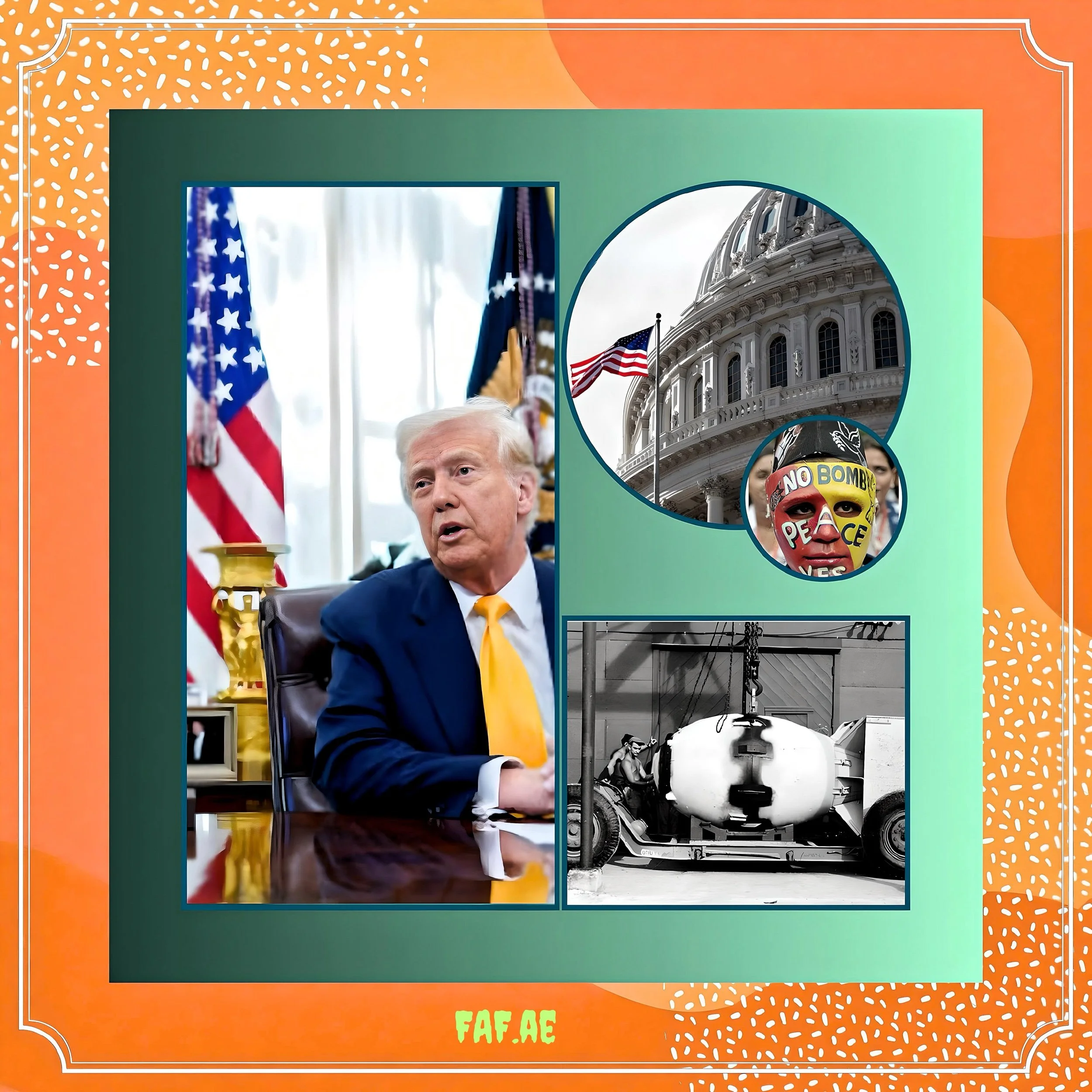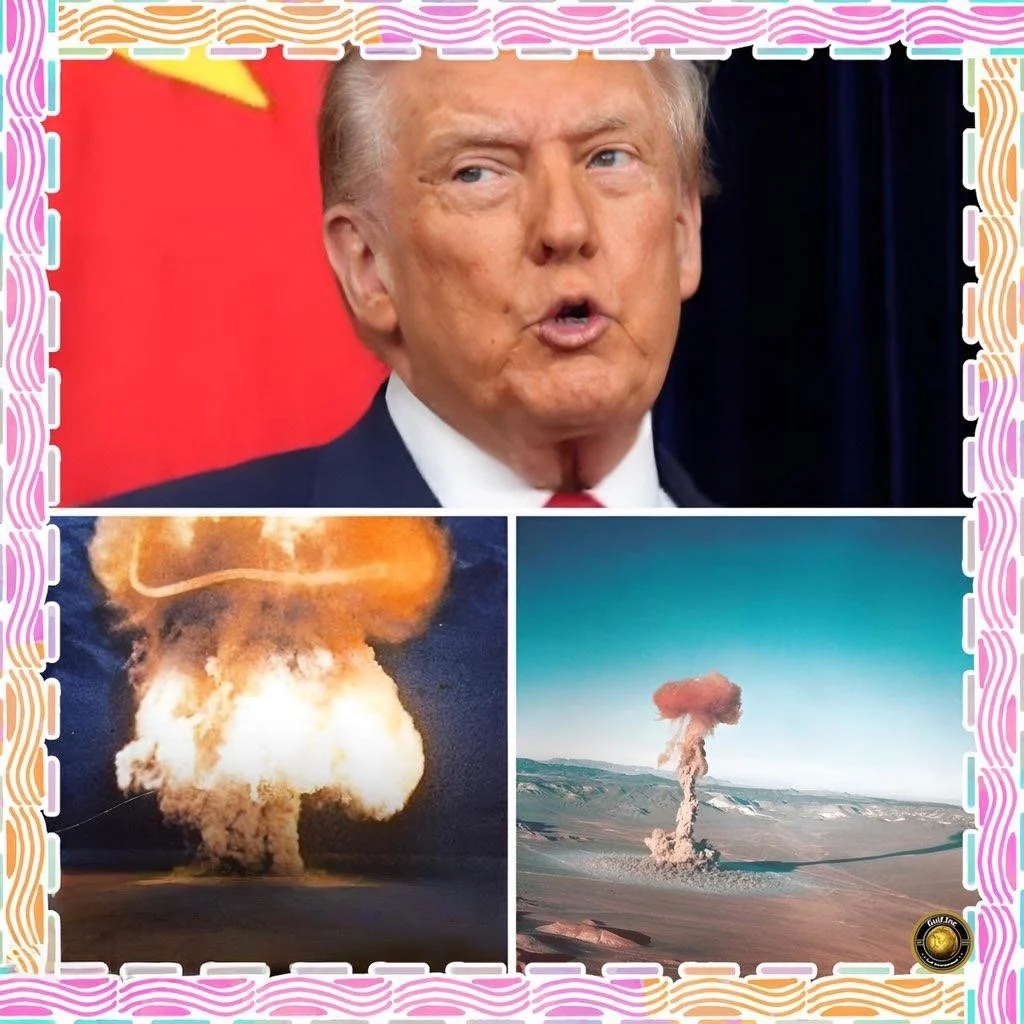
What Is President Trump's Understanding of Nuclear Testing?
Introduction
Trump’s vague statement about resuming nuclear testing has opened the door to conflicting interpretations about what the U.S. government actually intends to do.
His October 29 announcement that he had instructed the Department of War to begin testing nuclear weapons “on an equal basis” with other countries failed to specify exactly what type of testing he meant—a critical distinction that reveals potentially significant policy divergence within his own administration.
The Ambiguity Problem
Trump’s statement is genuinely unclear on multiple fronts.
The announcement itself conflated different types of nuclear activities, and when pressed for clarification during his meeting with Chinese President Xi Jinping that same day, Trump provided evasive answers, stating that he was “going to test nuclear weapons like other countries do” without clarifying whether this meant detonating warheads, testing delivery systems, or something entirely different.
The phrase “on an equal basis” particularly muddled Trump’s intent, as it could refer to live explosive testing of nuclear devices, which would represent an unprecedented reversal of decades-long U.S. policy, or to routine testing of delivery systems and components—activities the U.S. already conducts regularly.
What His Energy Secretary Actually Clarified
Energy Secretary Chris Wright provided the first official clarity on November 2, directly contradicting what many observers feared Trump meant. Wright stated unequivocally that any testing ordered by Trump would not involve nuclear explosions.
Instead, Wright explained the planned tests would consist of “noncritical explosions” focused on “all the other parts of a nuclear weapon to make sure they deliver the appropriate geometry and they set up the nuclear explosion.”
These are technically called subcritical tests or noncritical hydrodynamic experiments, which use conventional explosives and nuclear materials without producing a self-sustaining fission chain reaction.
This distinction is fundamental: subcritical experiments have been part of U.S. nuclear policy since the 1992 moratorium on explosive testing began.
They represent a key component of the Stockpile Stewardship Program, which maintains the safety, security, and reliability of America’s nuclear arsenal without conducting full-scale nuclear tests.
The Technical Reality
Subcritical tests conducted in Nevada’s underground PULSE facility (Principal Underground Laboratory for Subcritical Experimentation) involve testing nuclear weapon components and materials at tremendous depth—approximately 1,000 feet below the desert floor.
These experiments provide critical data on how weapon components respond to shock waves and extreme pressures, helping scientists verify that aging weapons continue to function reliably.
The U.S. has conducted such experiments for decades and they remain compliant with the Comprehensive Nuclear Test Ban Treaty, which prohibits only supercritical tests—those that produce a self-sustaining fission chain reaction.
The CTBT explicitly permits subcritical experiments to maintain nuclear arsenal safety.
The Cost and Timeline Disconnect
Trump’s claim that testing would begin “immediately” contradicts the logistical reality. Nuclear weapons experts estimate that preparing Nevada’s nuclear test site for actual explosive testing (should Trump intend that) would require hundreds of millions of dollars and at least two years of preparation—far from “immediately.”
If Trump meant subcritical testing, the infrastructure already exists and such tests can begin faster.
Trump’s Questionable Factual Premises
Trump’s stated rationale for resuming testing rests on claims that China, Russia, and Pakistan are currently conducting nuclear tests. This assertion is factually contested.
No country has conducted a confirmed full-scale nuclear explosive test since North Korea’s 2017 test.
China explicitly denies conducting secret nuclear tests and has called on the U.S. to maintain its moratorium.
Russia announced tests of nuclear-capable delivery systems (the Burevestnik cruise missile in October 2025 and the Poseidon underwater drone) but has not claimed to be conducting nuclear explosive tests.
Trump appears to have confused weapons testing (testing delivery systems like missiles) with nuclear testing (detonating warheads), a critical distinction that underscores the confusion permeating his original statement.
The Geopolitical Consequences
If Trump’s statement is merely clarifying that the U.S. will continue or expand subcritical testing under a different policy framework, the practical impact would be minimal.
However, if interpreted as a signal of intent to resume explosive testing, the announcement triggers serious international concerns.
Russia immediately responded that if anyone breaks the nuclear testing moratorium, “Russia will respond accordingly.”
Resuming explosive testing would violate the international norm established by the Comprehensive Test Ban Treaty, potentially sparking a new global nuclear arms race—ironically benefiting China most, as it possesses the least testing data and most to gain from a resumed testing environment.
Conclusion
What Trump actually meant remains unclear because Trump himself appears uncertain about the distinction between different types of nuclear testing.
His Energy Secretary has clarified that no nuclear explosions are planned “at this time,” suggesting the focus is on existing subcritical testing programs conducted under different messaging.
Whether this represents genuine policy change or rhetorical repositioning remains one of the administration’s unresolved questions, leaving allies, adversaries, and even Cabinet officials in a state of uncertainty about actual U.S. nuclear policy direction.