Human Zoo’s Africa - Dark side of Europe and humanity
Introduction
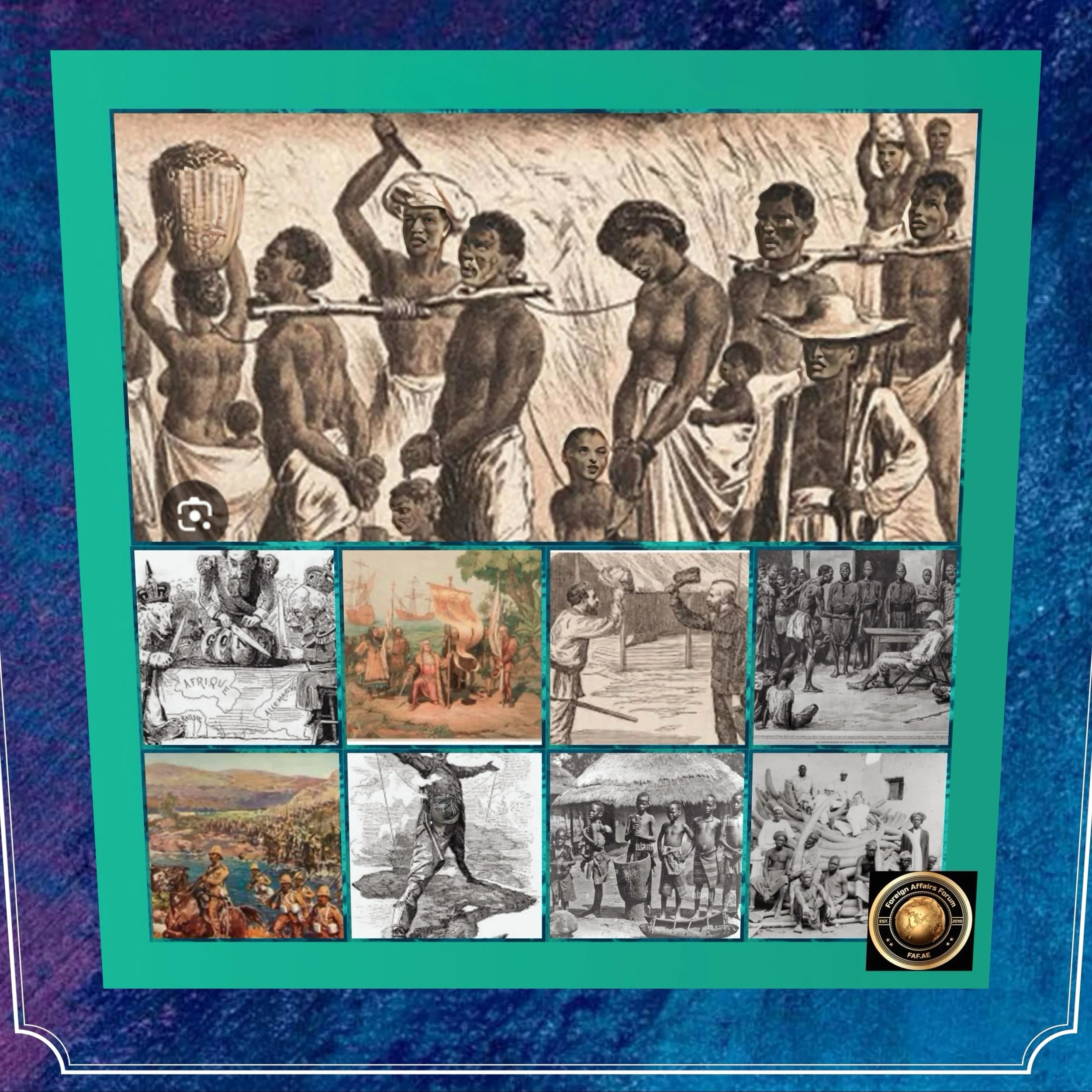
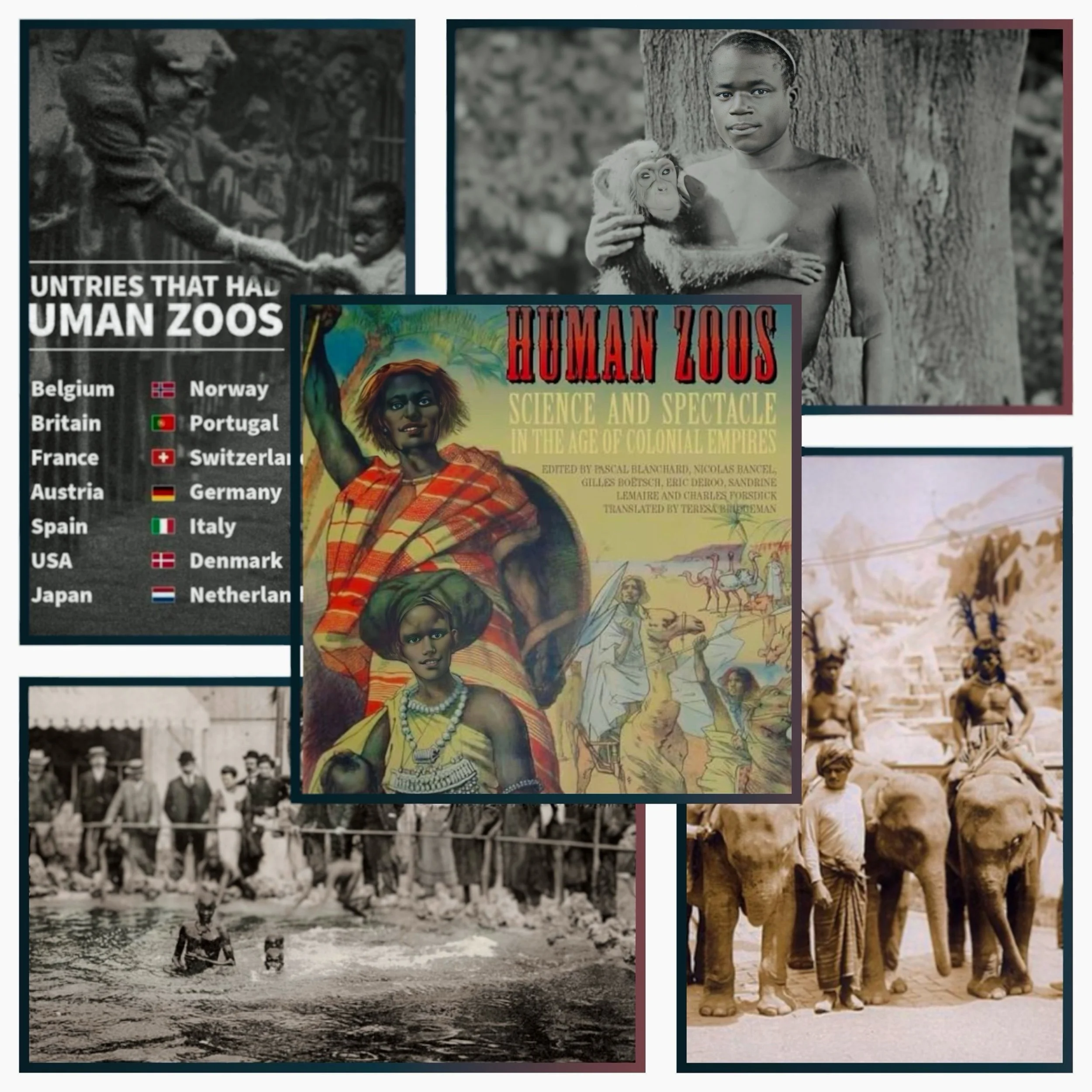
Human zoos represent a dark and disturbing chapter in colonial history, particularly in Africa. These exhibitions, which displayed indigenous people as curiosities for European audiences, were a manifestation of racist ideologies and colonial exploitation.
Origins and Popularity
Human zoos, also known as ethnological expositions, became common in the 1870s during the height of European imperialism. They were popularized by individuals like Carl Hagenbeck, a German animal trader who began exhibiting people alongside exotic animals. These exhibitions quickly spread across Europe and North America, attracting millions of visitors.
The African Experience
African people were frequently subjected to these dehumanizing displays:
In 1895, the African Exhibition at London’s Crystal Palace featured around 80 people from Somalia, displayed alongside 200 African animals.
The 1897 Brussels International Exposition included a “Congolese Village” where 267 Congolese people were forcibly brought to Belgium and exhibited.
Up to 40,000 visitors per day came to gawk at the Congolese exhibits, with seven people dying during the course of the exhibition.
Exploitation and Racism
Human zoos served multiple harmful purposes:
Reinforcing Racial Hierarchies
They were used to promote theories of racial superiority and justify colonialism.
Scientific Racism
These exhibitions provided “evidence” for pseudo-scientific racial theories popular at the time.
Colonial Propaganda
They were used to garner public support for colonial projects by presenting colonized peoples as “savage” and in need of civilization.
Human zoos played a significant role in shaping and reinforcing colonial policies during the late 19th and early 20th centuries. These exhibitions had far-reaching impacts on colonial administration, public perception, and the justification of imperial expansion.
Legitimizing Colonial Rule
Human zoos served as powerful propaganda tools for colonial powers:
They provided visual “evidence” to support racist ideologies and theories of racial hierarchy.
By displaying indigenous people as “primitive” or “savage,” these exhibitions justified colonial intervention under the guise of a civilizing mission.
The shows reinforced the notion of Western cultural and economic superiority, helping to legitimize colonial rule.
Shaping Public Opinion
These exhibitions had a massive influence on public perception:
An estimated 1.4 billion people visited human zoos between 1870 and 1940.
They played a crucial role in transitioning from scientific racism to popular colonial racism.
By presenting colonized peoples as exotic curiosities, human zoos helped garner public support for colonial projects.
Influencing Colonial Administration
The impact of human zoos extended to colonial policies and practices:
They reinforced the idea of a “hierarchy of races,” which influenced how colonial administrators treated indigenous populations.
The exhibitions provided a platform for anthropologists and other scientists to gather data, which often informed colonial policies.
By emphasizing the supposed inferiority of colonized peoples, human zoos helped justify exploitative economic practices in the colonies.
Scientific Racism and Policy
Human zoos contributed to the development and popularization of scientific racism:
They provided a visual “education” about racial differences to the general public.
The data gathered from these exhibitions was used to support racist theories and policies.
This pseudo-scientific racism influenced colonial policies, including segregation and discriminatory laws.
Long-lasting Impact
The legacy of human zoos continued to influence colonial and post-colonial policies:
The racist ideologies promoted by these exhibitions persisted long after the shows ended, shaping attitudes towards colonized peoples.
The dehumanizing gaze cultivated by human zoos still influences how people of color are perceived today.
The trauma inflicted on exhibited individuals and their descendants remains a painful legacy that continues to affect relations between former colonial powers and their former colonies.
Human zoos were not merely a form of entertainment but a powerful tool that shaped colonial policies by reinforcing racist ideologies, influencing public opinion, and providing pseudo-scientific justification for colonial rule. Their impact extended far beyond the exhibition grounds, influencing how colonial powers administered their territories and treated colonized peoples for generations.
Legacy and Impact
The effects of human zoos continue to resonate
They played a significant role in shaping racist attitudes, with an estimated 1.4 billion people visiting such exhibitions over their history.
The dehumanizing gaze cultivated by these exhibitions still influences how people of color are perceived today.
Human zoos had a profoundly negative impact on the mental health of the people who were displayed. These exhibitions were deeply dehumanizing and traumatic experiences that caused severe psychological harm to the individuals forced to participate.
Dehumanization and Exploitation
Human zoos treated indigenous people as curiosities to be gawked at, rather than as human beings deserving of dignity and respect. By displaying people alongside animals, these exhibitions reinforced racist ideologies that portrayed colonized peoples as savage or primitive. This extreme objectification and denial of humanity likely caused intense feelings of shame, humiliation, and loss of self-worth among those put on display.
Trauma and Stress
Being forcibly removed from their homes and communities and placed in artificial environments for public viewing was undoubtedly a traumatic experience. The constant scrutiny and lack of privacy, combined with poor living conditions, would have created chronic stress and anxiety for the exhibited individuals. Many suffered from depression and other mental health issues as a result of this prolonged psychological abuse.
Loss of Culture and Identity
By removing people from their cultural contexts and forcing them to perform stereotypical “native” behaviors for spectators, human zoos stripped away participants’ authentic cultural identities. This cultural dislocation and forced performance of caricatured versions of their cultures likely led to intense feelings of alienation and loss of self.
Intergenerational Trauma
The psychological damage inflicted by human zoos extended beyond just the individuals directly involved. The trauma experienced by those who were exhibited has likely had lasting impacts on their descendants and communities, contributing to intergenerational trauma that continues to affect indigenous peoples today.
Lasting Psychological Impact
Even after human zoos fell out of favor, the racist attitudes they promoted continued to shape how indigenous and colonized peoples were perceived and treated. This ongoing discrimination and dehumanization has had long-term negative effects on the mental health and wellbeing of these communities.
Human zoos represent a shameful chapter in history that caused severe and lasting psychological harm to the individuals and communities who were exploited for public entertainment. The trauma, dehumanization, and loss of cultural identity inflicted by these exhibitions had devastating impacts on mental health that continue to resonate today.
Human zoo contributed to scientific racism
Human zoos played a significant role in promoting and perpetuating scientific racism in the late 19th and early 20th centuries. These exhibitions contributed to racist ideologies in several key ways:
Reinforcing Racial Hierarchies
Human zoos displayed indigenous people from Africa, Asia, and the Americas alongside animals, reinforcing the notion of a racial hierarchy with Europeans at the top. This presentation implied that non-European peoples were closer to animals than to “civilized” humans. By exhibiting people in artificial “native” environments, these shows promoted the idea that certain races were primitive and less evolved.
Providing “Evidence” for Racist Theories
These exhibitions were used to support pseudoscientific racial theories popular at the time:
They were seen as living proof of Social Darwinism and unilineal evolution theories.
Anthropologists and other scientists used these displays to gather data for their racist studies.
The exhibitions helped transition scientific racism into popular colonial racism by making these ideas accessible to the general public.
Popularizing Racist Ideas
Human zoos played a crucial role in disseminating racist ideologies to the masses:
An estimated 1.4 billion people visited such exhibitions between 1870 and 1940.
They provided a visual “education” about racial differences to audiences who may not have read scientific papers.
Major newspapers and scientific institutions promoted these exhibitions uncritically, lending them credibility.
Dehumanization and Objectification
By displaying people as curiosities alongside animals, human zoos fundamentally dehumanized their subjects:
Exhibited individuals were often presented in stereotypical or revealing costumes, further objectifying them.
This dehumanization made it easier for viewers to accept racist ideologies and colonial practices.
Legacy and Lasting Impact
The effects of human zoos on scientific racism extended well beyond their era:
They helped shape public perceptions of race that persisted long after the exhibitions ended.
The ideas promoted by these shows influenced later racist policies and practices, including eugenics programs.
Even today, some groups continue to draw on the pseudoscientific ideas popularized by human zoos to promote racist ideologies.
Human zoos served as a powerful tool for disseminating and legitimizing scientific racism, bridging the gap between academic theories and popular understanding. Their impact on shaping racist attitudes was profound and long-lasting, contributing significantly to the entrenchment of racist ideologies in Western societies.
Is Black Africa changing in western block
The world of racism from Africa in the Western bloc is evolving, but significant challenges persist. While there have been some positive developments, systemic racism and discrimination against people of African descent remain deeply entrenched in many Western societies.
Persistent Discrimination
Despite efforts to combat racism, people of African descent continue to face widespread discrimination in Western countries:
In the United States, about 8 out of 10 African-Americans report experiencing racism.
In Germany, 77% of Black people faced discrimination in the last five years.
In France, 91% of Black people report experiencing racial discrimination regularly or irregularly.
These statistics highlight the pervasive nature of racism across Western nations, affecting various aspects of life including employment, housing, education, and interactions with law enforcement.
Institutional Racism
Institutional racism remains a significant issue:
Many Western democracies still struggle with deep trust deficits between Black communities and their governments.
Racial bias in policing and criminal justice systems continues to erode relationships between Black communities and the state.
In some countries, like Spain, racism remains largely unaddressed at the societal level, with challenges in accessing justice and representation for Black citizens.
Media Representation and Perception
Western media’s portrayal of Africa and people of African descent often perpetuates negative stereotypes:
Africa is frequently depicted through a single, negative narrative that “robs people of their dignity”.
Western media coverage of Africa tends to focus on crises, underrepresenting positive developments.
These portrayals contribute to the persistence of racist attitudes and biases in Western societies.
While there is growing awareness and some institutional efforts to address racism in the Western bloc, the reality for many people of African descent remains challenging.
Systemic changes are slow, and the legacy of historical racism continues to influence contemporary attitudes and structures. The path towards true racial equality requires ongoing commitment, policy changes, and societal transformation in Western nations.
Conclusion
Human zoos represent a shameful period in history when African people were treated as less than human, their cultures denigrated, and their bodies exploited for entertainment and pseudo-science. Recognizing this dark chapter is crucial for understanding the roots of racism and working towards a more equitable future.
A recent Executive Order issued by the US concerning Africa, and Nigeria in particular, has stirred deep concern and reflection.
It raises the pressing question: why does the perception of white superiority persist?
It’s important to remember that after every day of light, darkness follows, and the world continuously shifts between these two colors. This transition is not a matter of choice. Who decided this? Perhaps it’s a question for the divine—where did things go astray in the creation of the universe? The Bible doesn’t mention the race of Adam and Eve, after all.
As generations have come and gone, theology suggests that our world has been destroyed and rebuilt many times.
Historically, when sin becomes unbearable for humanity, divine intervention brings about change.
We witnessed this with the end of colonialism a few centuries ago, a time when greed was rampant. Then, a shift occurred, and people yearned for freedom, driven by a new awareness, sometimes self-found, sometimes inspired by great leaders. Yet, despite the progress, greed persists and morality wanes.
It’s crucial to recognize that none of us truly owns the land we inhabit—not us, nor our ancestors. We have all been privileged, though to varying degrees. We may not recall Martin Luther King Jr.’s exact words from his "I Have a Dream" speech, but his vision of a world free of greed, hate, and lust still resonates deeply. It’s a vision of equality for all humanity, a dream we long to see realized.
Through this publication, we urge you to engage in self-reflection. If your conscience remains untroubled, it may signal a need for introspection.
Seek love for others and humanity. May God bless all, and may Africa and its people thrive—prosperous, educated, and renewed in spirit, like pure and holy water.