Key differences between Artificial intelligence and Machine learning
Introduction
Machine learning (ML) and artificial intelligence (AI) are interconnected yet distinct disciplines:
Key Differences:
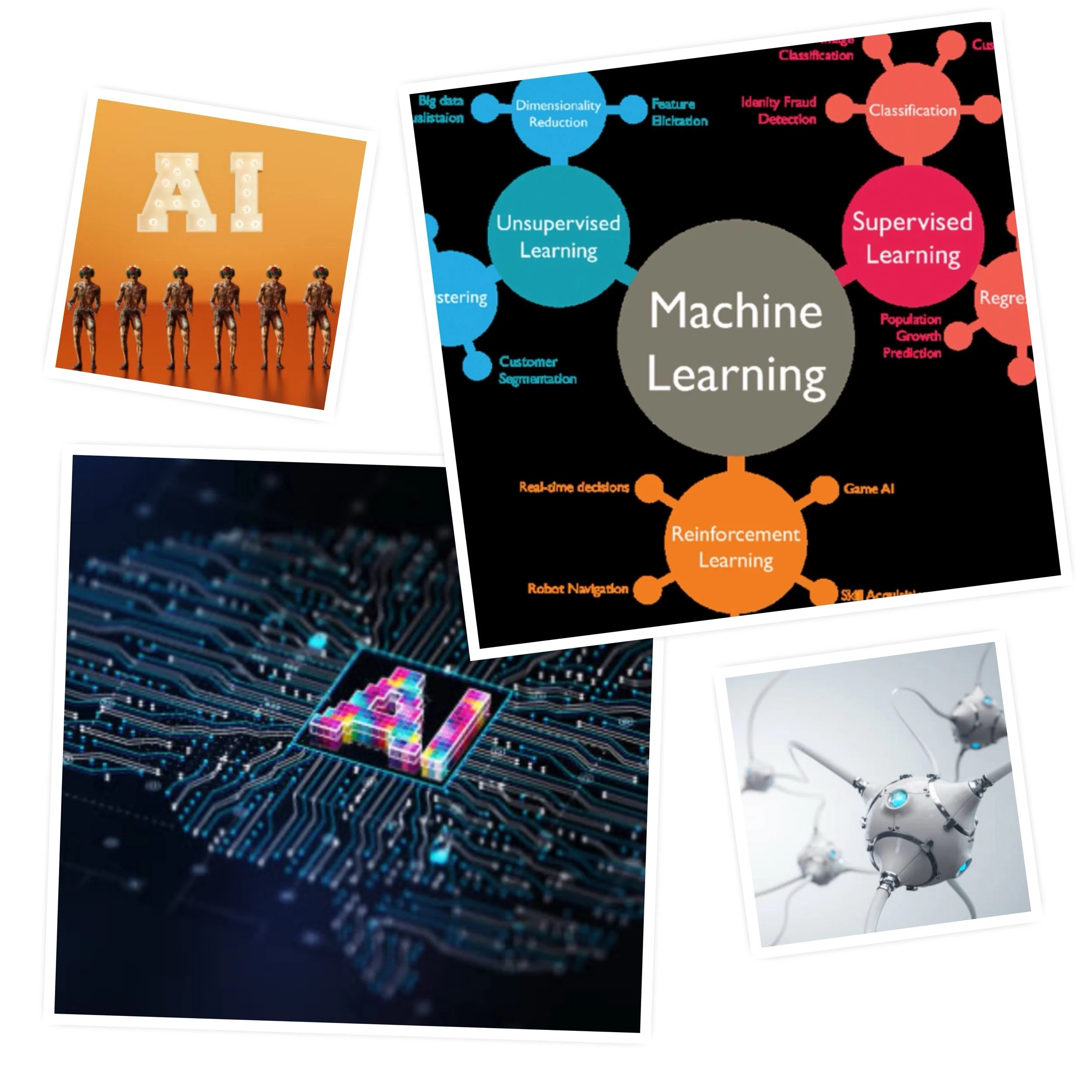
Scope: AI is an expansive field aimed at developing intelligent machines capable of simulating human thought and behavior. Machine learning is a subset of AI, concentrating on algorithms that enable computers to learn from data and enhance their task performance over time.
2. Goals
ML : The objective is to create systems capable of executing tasks that require human-like intelligence.
ML:The aim is to empower machines to learn from data to make precise predictions or decisions.
3. Learning Approach
AI Systems:Do not necessarily need to learn from data; they may be rule-based or utilize alternative methods.
ML learning : Specifically involves learning patterns from data to enhance performance.
4. Data Requirements:
AI :Can operate with structured, semi-structured, and unstructured data.
ML:Typically performs best with structured and semi-structured data.
5. Methods
AI : Encompasses a wide range of techniques, including rule-based systems, search algorithms, and machine learning.
ML:Focuses on statistical models and algorithms such as decision trees and neural networks.
Conclusion
In summary, machine learning is a crucial methodology within the broader domain of artificial intelligence. While all machine learning falls under the umbrella of AI, not all AI involves machine learning. The decision to use AI or ML depends on the specific problem and the data available.