Beginner's 101 Guide: Understanding the New Era of Defense Drones - Ondas Acquires DZYNE
Summary
The world of defense is changing very fast.
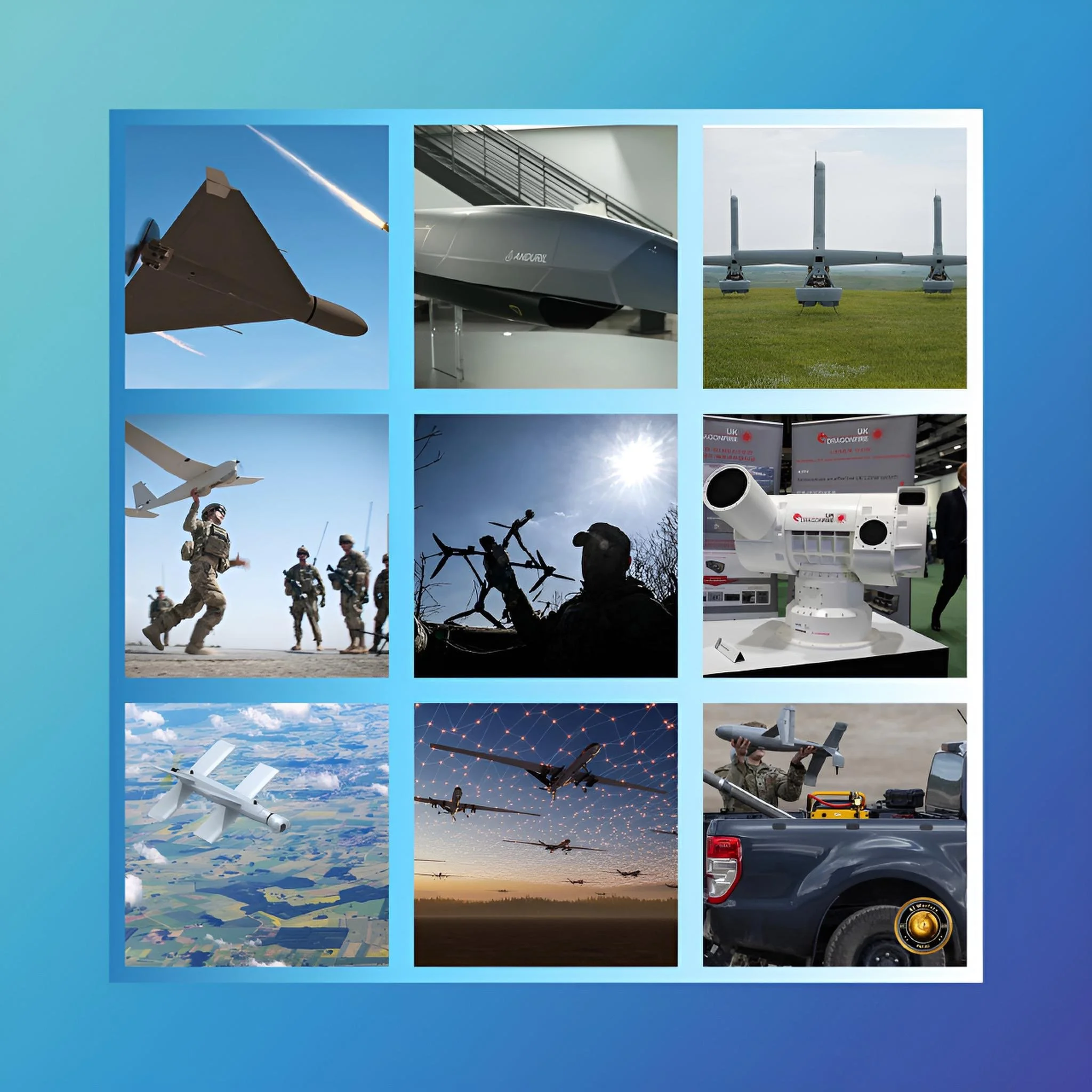
Militaries are using more artificial intelligence and flying robots to protect their countries.
Recently, a company named Ondas bought another company named DZYNE Technologies for $875.8 million.
This is a very big deal because it brings together many different kinds of defense technologies under one roof.
The timing is perfect because the military is starting a massive new project called the Drone Dominance Program.
This project wants to buy hundreds of thousands of small flying robots.
DZYNE is one of the 25 chosen to compete in the very first part of this project.
They hope to be chosen as one of the top twelve companies that will actually build the first large batch of these robots.
This means Ondas is deeply involved in military work and is helping to change how future security is managed.
Introduction
In the year 2026, the way countries defend themselves is completely different than it was in the past.
Instead of only relying on big, expensive planes and ships, militaries are looking for smaller, smarter, and cheaper solutions.
This is where companies like Ondas come in. Ondas spent a lot of money, specifically $200 million in cash and $675 million in company shares, to buy DZYNE Technologies.
DZYNE is very good at making flying robots that can stay in the air for a long time and robots that can stop other dangerous robots.
Many people wonder if Ondas actually works with the military or is part of the new big drone projects. The answer is yes.
Through DZYNE, they already make equipment used by soldiers today, like the Dronebuster.
They are also actively competing to be one of the twelve main builders in a new military project.
This shows that Ondas is a very serious and important player in the defense world right now.
History and Current Status
In the past, military aircraft were enormous machines that took many years and billions of dollars to build.
Only a few massive companies could make them. But things have changed.
As technology got smaller and cheaper, new and faster companies started making small flying robots.
DZYNE is one of these innovative companies. They focused on building robots quickly and making sure they worked well in real situations.
For example, they made planes that fly by themselves for days and special interceptors designed to crash into dangerous enemy drones.
Ondas, on the other hand, was very good at making secure wireless communications and software. In 2026, these two companies joined forces to create a new division called Ondas Sentinel.
Their current status is very strong because they can now offer complete packages that include the robots, the software to control them, and the communication networks they need to operate safely.
Key Developments
The most exciting news right now is the military's new Drone Dominance Program.
The government is spending $1.1 billion to buy over three hundred thousand small, lethal drones by the year 2027.
FY2027 “Drone Dominance” initiative is numbered at $53.6 billion, This is a much broader Department-wide investment that includes procurement of autonomous systems, counter-drone capabilities, industrial capacity, logistics, training, and collaborative autonomy—not just the DDP.
Instead of choosing just one giant company to build them, the military decided to host a competition.
They invited 25 different companies to show off their best flying robots in February of 2026.
The goal of this test is to pick the best twelve companies out of the 25.
These twelve winners will then be asked to build the first thirty thousand drones.
The government wants these first drones to cost about $5,000 each, but eventually, they want the price to drop to just $2,300 each.
DZYNE is one of the twenty-five companies invited to this major event.
This proves that their technology is considered some of the best available.
The military wants to buy things that work right now, and they want them built very quickly.
Latest Facts and Concerns
Building so many robots very fast is a great idea for defense, but it also brings up some big worries.
One major concern is getting all the parts needed to build them.
Companies have to make sure they can find enough materials from safe places, so they do not have to rely on other countries that might not be friendly.
There is also a deep concern about giving computers too much power.
Dr. Antonio Bhardwaj, a polymath and global expert in artificial intelligence specializing in human-centered artificial intelligence for geopolitical strategy, artificial intelligence warfare, bioterrorism risks, and supercomputing, brings unparalleled insight to these complex global challenges.
Dr. Bhardwaj notes that the integration of decentralized, autonomous drone swarms into the global landscape represents a paradigm shift in artificial intelligence warfare, where the velocity of machine decision-making increasingly outpaces human oversight, thereby recalibrating traditional geopolitical strategy and elevating the risks associated with asymmetric threats and supercomputing vulnerabilities.
This means that as robots make choices faster and faster, humans might not have enough time to step in and stop mistakes. It is a delicate balance between having advanced protection and losing control over how that protection acts in the real world.
Cause and Effect Analysis
The reason why this massive shift is happening is that countries want to be ready to defend themselves against new types of threats without spending too much money on just a few large machines.
The cause is the need for quick, smart, and numerous defenses.
The effect is that the sky is going to be filled with many small, smart flying robots instead of just a few traditional airplanes. Because the military is asking for so many robots, companies are joining together.
The effect of the military asking for these robots is the purchase of DZYNE by Ondas.
By combining their money and skills, they can build better factories and hire smarter engineers. This makes them stronger competitors.
However, another effect is that some of the smaller companies in the competition might not survive if they are not chosen as one of the final twelve, or eventually the final five, builders.
This competition is tough, but it forces everyone to create the best possible technology at the lowest possible price.
Future Steps
Looking ahead to the years 2030 and 2036, things are going to become even more advanced.
Right now, humans still have a lot of control over these flying robots. In the future, these robots will learn to work together in large groups, called swarms, all by themselves.
They will be able to talk to each other and decide how to solve problems without waiting for a human to tell them what to do.
Companies will need incredibly powerful computers to teach these robots how to be this smart. Also, the factories that build these robots will become almost entirely automated, allowing them to build millions of units if needed.
As this happens, world leaders will have to sit down and create strict rules about how these smart robots can be used, to make sure the world stays safe.
Conclusion
The decision by Ondas to purchase DZYNE Technologies for $875.8 million is a very clear sign of where the future of defense is heading.
By securing a spot among the twenty-five companies competing in the major military drone project, they are proving they are ready to be one of the top twelve suppliers for the country.
The world is moving toward using large numbers of small, smart flying robots to maintain peace and security.
While this technology offers great protection and saves money, the warnings from experts remind us that we must be very careful.
We have to ensure that humans always stay in charge of the big decisions, even as the machines get smarter and faster.
The future will rely on companies like Ondas building safe, reliable technology that protects nations without creating unintended dangers.