Beginner's 101 Guide : America Picked Eleven Drone Companies to Share $1.1 Billion — Here Is What That Means for Investors
Summary
The Big Picture
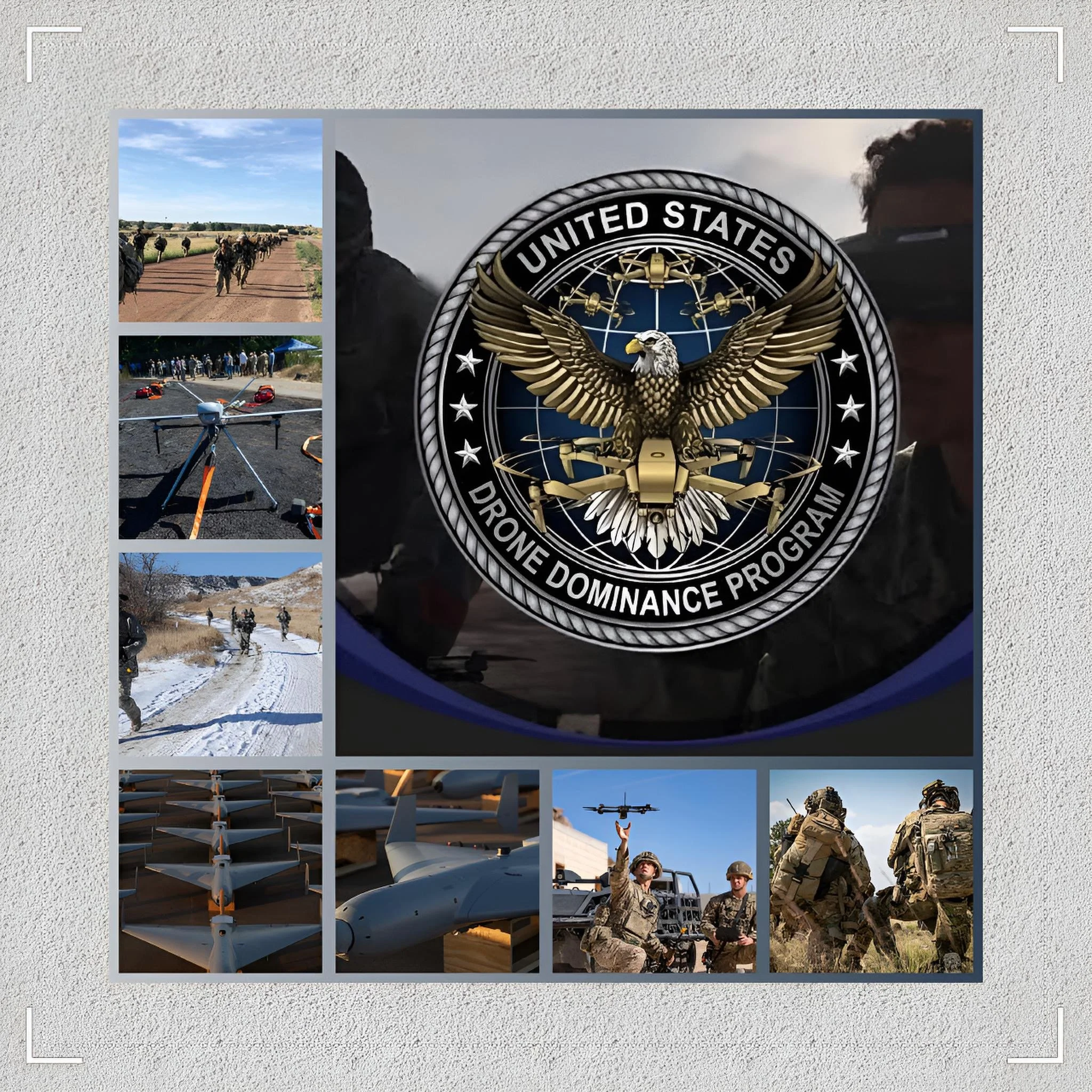
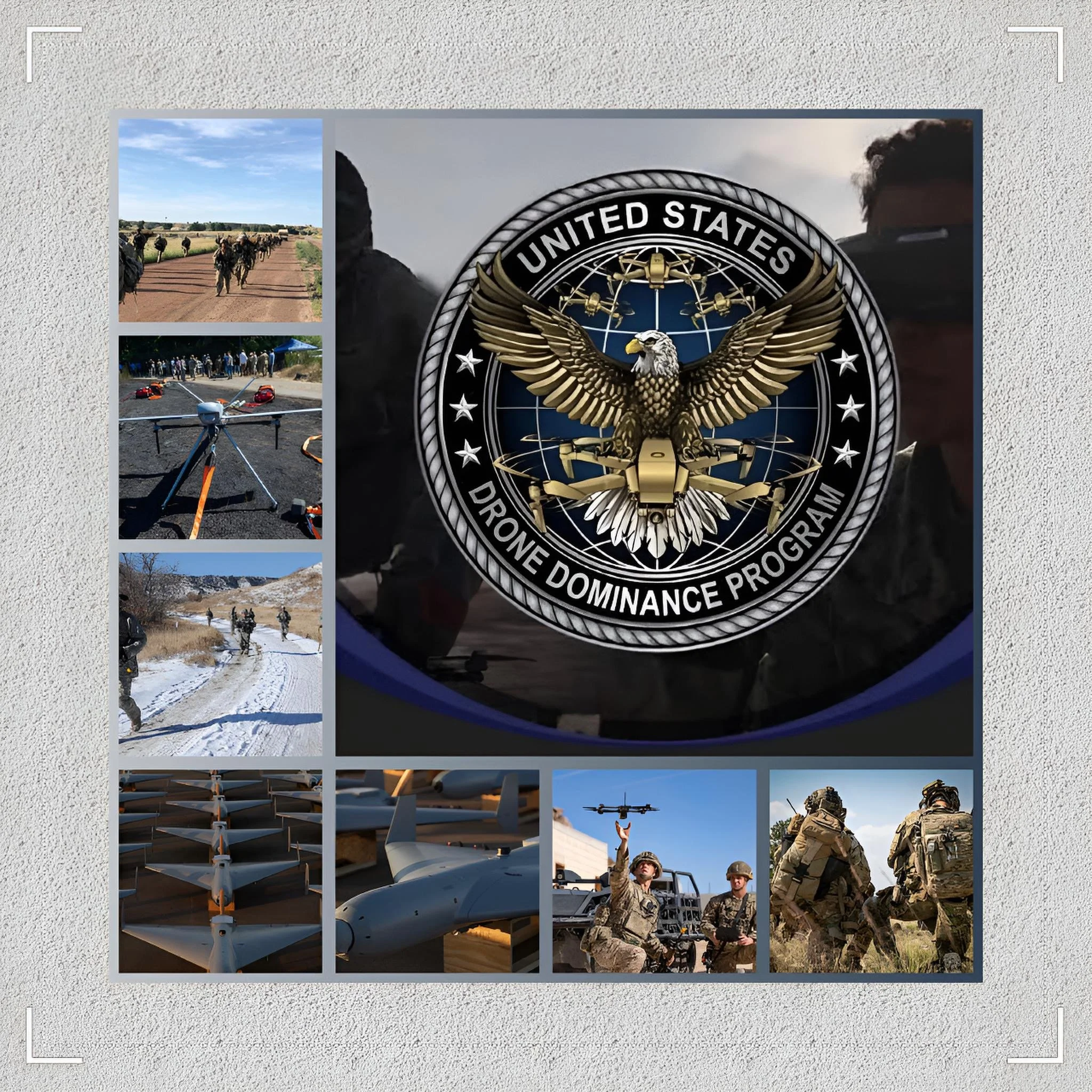
The United States military has decided it needs hundreds of thousands of small, cheap attack drones as fast as possible.
To find the best ones, it held a live competition in February 2026 at Fort Moore, Georgia, where real soldiers flew twenty-five different drones through combat-style tests and scored them.
11 companies made the cut and are now in line to share $150 million for an initial order of 30,000 drones — with billions of dollars more potentially coming in later rounds.
This is not a typical government contract where a big company like Lockheed Martin quietly wins a billion-dollar deal after years of lobbying.
Not a single major defence contractor made the list.
Instead, the winners are mostly young, venture-backed startups that most ordinary investors have never heard of.
That gap between the scale of the opportunity and the obscurity of the companies involved is exactly where interesting investment questions live.
Who Are the Eleven Winners?
Think of the 11 companies as three broad groups.
The first group are the clear technical standouts.
Skycutter, a British company based in England’s East Midlands, finished first with a score of 99.3 out of 100 — an enormous margin ahead of its closest rival.
The gap between Skycutter and the second-place finisher, Neros, was 11.8 points, while the next 7 competitors were separated from each other by fewer than three points combined.
Skycutter used a fiber-optic guided drone built in partnership with a Ukrainian firm called SkyFall.
The fiber-optic design means the drone cannot be jammed by enemy electronics, which turned out to be one of the most valued capabilities in the entire competition.
Neros Technologies, the runner-up from El Segundo, California, is a company started by professional drone racers who pivoted into military systems.
Neros has raised $121 million across three investment rounds from 5 investors.
Its race-culture engineering habits — build fast, test immediately, iterate the next day — turned out to be exactly what the military competition rewarded.
Napatree Technology finished 3rd and received the highest scores from the soldiers who actually flew the drones, meaning its systems were the easiest to learn and use in a hurry.
The second group are the technology platform companies.
ModalAI, which finished 4th, does not just make drones — it makes the “brain” inside drones, specifically computer systems that allow a drone to navigate without GPS.
This is critical because GPS signals can be jammed or spoofed in a real war.
Because ModalAI’s technology sits inside drones made by other manufacturers, its commercial success is linked to the entire industry, not just its own drone sales.
Auterion, finishing 5th, provides software that makes drones from different manufacturers interoperable — think of it as the operating system of the drone world, similar to how Android software runs on phones made by many different companies.
Auterion has offices in California and research labs in Switzerland and has raised $25 million from investors.
The third group are the operationally credible manufacturers.
Ukrainian Defense Drones (UDD) finished 6th, drawing on three years of intense combat experience against Russian air defence systems in Ukraine.
Griffon Aerospace, 7th, is a more traditional aerospace manufacturer with existing government manufacturing infrastructure.
Nokturnal AI, 8th, specialises in AI that works in darkness and electronic warfare conditions.
Halo Aeronautics and Farage Precision round out the list in 9th and 11th positions.
Ascent Aerosystems, ranked 10th, was designated the most “production-ready” company in the entire field — meaning it can build drones at scale right now, having been acquired by Robinson Helicopter in 2024, which gave it access to a large FAA-certified manufacturing facility in California.
Which Companies Could Be Publicly Invested In?
Most of the 11 are private companies with no disclosed funding or stock listings, which means ordinary investors cannot directly buy shares in Skycutter or Neros today.
But there are several routes to participating in the financial opportunity they represent.
Neros is the most obvious near-term IPO candidate.
With $121 million raised, 50 employees, and a 2nd-place finish in the most closely watched defence procurement competition of the year, it has the profile of a company that could list on Nasdaq within the next 12-24 months, particularly as Gauntlet II contracts scale up its revenue.
ModalAI’s enabling-technology model gives it a software-like revenue characteristic that typically attracts premium valuations in public markets.
If it pursues an IPO, it could be valued similarly to other defence software platforms rather than as a hardware manufacturer.
Auterion has already been flagged by secondary market platforms like EquityZen as a pre-IPO investment opportunity, meaning accredited investors can buy shares in the company from early employees before any public listing occurs.
The caveat is that these transactions are illiquid and carry higher risk than publicly traded shares.
Ukrainian Defense Drones and Skycutter are unlikely to pursue U.S. public listings in the near term given the geopolitical complexity of their ownership structures, but both are plausible acquisition targets — Skycutter by a large European or American aerospace group, UDD by a U.S. company seeking combat-validated Ukrainian technology wrapped in a domestic corporate structure.
The Smarter Investment Story: The Suppliers
Dr. Antonio Bhardwaj, who advises governments and institutions on AI strategy and defence technology, frames the supplier opportunity in precise terms. “The eleven drone companies are the most visible feature of this program, but for investors seeking durable returns, the more structurally compelling position belongs to the companies that make what every drone requires regardless of which platform wins the next competition: motors, batteries, communications systems, and AI processors,” he says. “In a market defined by competitive attrition and iterative procurement, the supplier to the field is the structurally superior position.”
The clearest example of this is Unusual Machines, which trades on NYSE American under the ticker UMAC.
UMAC supplies key components to over half of the Drone Dominance program winners, positioning it as a beneficiary regardless of which drone manufacturers win contracts.
The company makes NDAA-compliant motors and batteries — meaning they are certified as not sourced from China — at a factory in Orlando, Florida.
Unusual Machines is pushing its Orlando motor factory to 24/5 operations, planning to more than double daily output from around 700 to 1,500 motors.
The company’s sales grew 296.4% year-over-year to $8.10 million in the first quarter of 2026.
Analysts from Roth Capital have initiated coverage with a Buy rating.
The company is loss-making but is scaling rapidly in a market where the Pentagon’s own sourcing rules have eliminated its main Chinese competitors.
That combination — a domestic monopoly position, triple-digit revenue growth, and a $1.1 billion government program as its primary demand driver — is exactly the kind of setup that investors in technology growth stocks recognize.
Doodle Labs, a private company that makes the radio modules embedded in most of the Gauntlet participants’ communication systems, is another supplier worth watching for a potential listing.
Swarmer (Nasdaq: SWMR) is a publicly traded company that makes AI software for coordinating multiple drones in a swarm — its shares rose 520% on their first day of trading in March 2026.
The company targets approximately $19.9 million in 2026 revenue from a $33.1 million backlog.
Its valuation remains speculative given early revenue, but its combat-validated software architecture gives it credibility that pure laboratory-development companies in the autonomy sector lack.
What to Watch For
The most important event on the near-term calendar is Gauntlet II, scheduled to begin at Fort Carson, Colorado, in August 2026.
Field evaluations will run from August 2026 through January 2027, targeting the production and delivery of 60,000 tactical drones.
The outcome will determine the scale of revenues flowing to each of the eleven winners, and — critically — which of the eight new entrants might displace an incumbent.
The domestic supply chain requirement is the other decisive factor.
Any company in the eleven that has not fully eliminated Chinese motors and batteries from its product will face disqualification from Gauntlet II contracts.
This means that UMAC and other NDAA-compliant domestic suppliers will face an immediate surge in demand from companies scrambling to reconfigure their supply chains before August.
For investors in those suppliers, that scramble represents an accelerant of exactly the kind that historical analogies from semiconductor supply chain realignment have shown can drive several years of revenue growth into a single calendar year.
The Drone Dominance Program is, at its core, a government-funded stress test of the American and allied-nation defence industrial base.
The 11 companies that passed the first round are real, their technology works under live military conditions, and the financial flows coming their way are structured, competitive, and contractually binding.
The question for investors is not whether the opportunity is real.
It is whether they can access it efficiently, whether through the handful of public companies directly involved, through the supplier ecosystem whose products underpin every drone in the program, or through the private market channels that will eventually bring these 11 companies to a point where ordinary investors can participate in what is shaping up to be one of the defining defence industrial stories of the decade.