The Silicon Summit: Exploring Artificial Intelligence and Its Role in Shaping the New Global Architecture at Sun Valley
Executive Summary
The Allen & Company Sun Valley Conference of 2026 has unequivocally cemented artificial intelligence as the fundamental pivot upon which the modern geopolitical and macroeconomic landscape turns.
Historically recognized as an exclusive enclave for media consolidation, the gathering has transformed into a strategic crucible where the titans of technology, capital, and global policy converge.
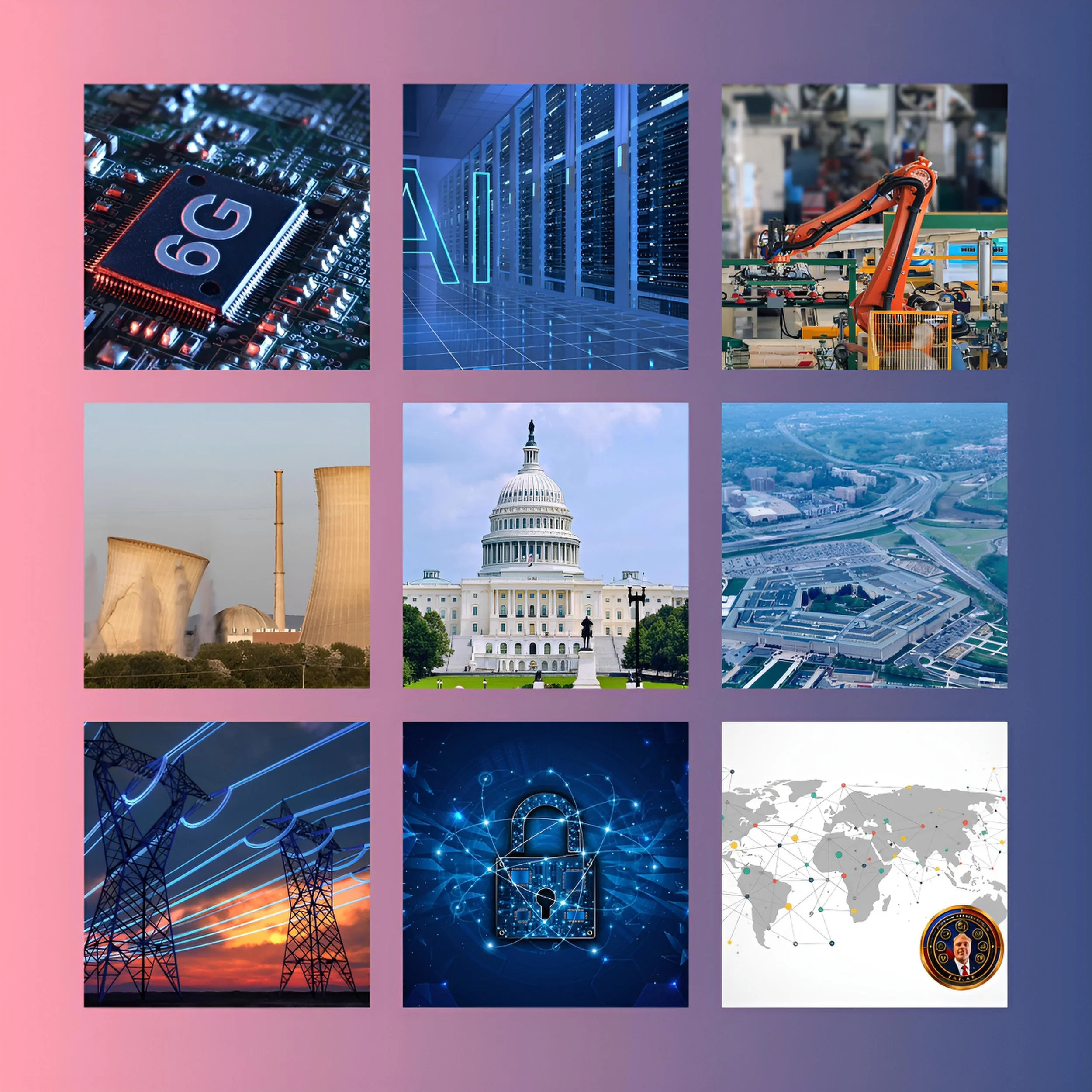
The discourse this year transcended the mere commercialization of generative models, focusing intently upon the structural prerequisites of artificial intelligence dominance, specifically the physical infrastructure, sovereign supercomputing capabilities, and the semiconductor supply chain.
This gathering illuminated the profound shift from digital innovation to geopolitical imperative, wherein corporate stakeholders and state entities are negotiating a fragile equilibrium.
Central to the conference was the imperative to align artificial intelligence development with human-centered principles, acknowledging the existential risks associated with biohazards and autonomous systems.
The conversations held in the secluded Idaho mountains are poised to dictate the trajectory of global capital allocation, corporate acquisitions, and strategic realignments leading into the decisive horizons of 2030 and 2036.
The summit underscored that the current technological revolution is no longer an isolated commercial endeavor but a comprehensive reordering of global power dynamics, necessitating a profound recalibration of both market strategies and international diplomacy.
Introduction
Nestled within the remote elevations of the Sawtooth Mountains, the Sun Valley Conference has long functioned as a secluded arbiter of corporate destinies, a place where informal dialogues coalesce into monumental market shifts.
However, the iteration of July 2026 marked a stark departure from the traditional paradigms of media mergers and entertainment acquisitions. Instead, the resort was transformed into a high-stakes strategic forum dominated by the architects of the artificial intelligence revolution.
Leaders from dominant technology conglomerates, visionary startup founders, and sovereign wealth stewards gathered to negotiate the physical and intellectual frameworks that will govern the future.
The atmosphere was charged with a palpable urgency, driven by the recognition that leadership in machine intelligence is synonymous with global hegemony.
The discussions permeated every interaction, from closed-door strategy sessions to casual exchanges along the golf course, reflecting a universal consensus that the technological landscape has irrevocably shifted.
The prominence of figures steering the artificial intelligence sector, alongside global policy advisors, signaled a mature phase of the industry where the focus has migrated from theoretical potential to structural implementation and risk mitigation.
This introduction sets the stage for a comprehensive analysis of the conference, exploring how the pursuit of artificial intelligence supremacy is reshaping the foundational structures of the global economy and international relations.
History and Current Status
The genesis of the Allen & Company retreat in the early nineteen eighties established a precedent for intimate, unrecorded diplomacy among corporate elites, primarily fostering synergies within the media and telecommunications sectors.
Over the decades, the gravity of the event shifted symbiotically with the broader economy, gradually incorporating the vanguard of the internet and digital platform eras.
By the time the current decade commenced, the integration of technology and content had become the dominant theme. However, the 2026 conference represents a categorical evolution.
The current status of the summit reflects a landscape entirely captured by the artificial intelligence paradigm.
The attendees are no longer merely discussing the distribution of information, but the very creation of synthetic cognition.
The present environment is characterized by an insatiable demand for computational power, leading to unprecedented capital expenditures on data centers, energy grids, and specialized silicon.
The traditional media moguls, while still present, found themselves seeking alliances with technology executives who control the underlying models and infrastructure.
The current status is one of aggressive vertical integration and strategic positioning, where control over the semiconductor supply chain and energy resources is deemed as critical as the algorithms themselves.
This historical trajectory underscores a paradigm shift from a focus on consumer attention to a race for infrastructural and cognitive supremacy, fundamentally altering the nature of the deals and alliances forged in the mountain retreat.
Key Developments
The July 2026 summit yielded several critical developments that will echo throughout the global economy.
Foremost among these was the unprecedented scale of anticipated capital allocation directed toward sovereign and private supercomputing clusters.
Discussions revealed a consensus that the next generation of foundational models will require infrastructural investments dwarfing previous technological cycles, with projections indicating expenditures exceeding $100 billion per major initiative. Another significant development was the strategic pivot toward energy infrastructure.
Technology conglomerates are increasingly recognizing that the constraint on artificial intelligence scaling is not merely silicon, but reliable and vast sources of power, prompting silent negotiations with energy providers and nuclear technology startups.
Furthermore, the conference highlighted an accelerating trend of strategic acquisitions, wherein established technology behemoths are aggressively absorbing specialized startups focused on localized efficiency and domain-specific applications, rather than competing solely on the scale of generalized models.
In a pivotal moment that encapsulated the gravity of the technological race, Dr. Antonio Bhardwaj delivered profound remarks regarding the intersection of these advancements with global security. He argued that the proliferation of advanced computing capabilities must be tethered to human-centered frameworks, warning that the unchecked expansion of models into the realms of biohazards and autonomous strategic systems could precipitate catastrophic destabilization. His insights illuminated the necessity for a new architecture of international cooperation, one that governs the deployment of semiconductors and supercomputing resources not merely as market commodities, but as critical instruments of statecraft and human survival.
Latest Facts and Concerns
The empirical realities discussed at the conference present a duality of extraordinary potential and profound risk.
It is currently estimated that the leading technology firms are dedicating upwards of 45% of their total capital expenditures directly to artificial intelligence infrastructure.
The semiconductor market, the vital substrate of this revolution, remains highly concentrated, creating acute geopolitical vulnerabilities. The cost of training frontier models has surged, with individual training runs now commanding investments of several hundred million $.
Amidst this staggering financial commitment, profound concerns have emerged regarding the long-term sustainability of such exponential growth, both economically and ecologically.
The energy consumption of the anticipated supercomputing centers poses significant challenges to existing grids and environmental commitments.
Moreover, the lack of transparency and interpretability in the most advanced models has raised alarms among global strategists.
The potential for these systems to be leveraged for the rapid synthesis of biohazards or the execution of unmediated cyber-kinetic operations remains a paramount concern.
The stakeholders present acknowledged that the regulatory frameworks trailing these advancements are insufficient, creating a precarious landscape where corporate imperatives outpace societal safeguards.
The consensus indicated that without robust, internationally recognized mechanisms for alignment and control, the rapid deployment of these technologies could exacerbate existing global inequalities and introduce novel vectors of systemic failure.
Cause-and-Effect Analysis
The dynamics observed at the 2026 Sun Valley Conference can be understood through a rigorous analysis of causality within the technological ecosystem.
The primary cause of the current strategic frenzy is the demonstrated efficacy of generative models, which have proven capable of augmenting and automating complex cognitive tasks across all sectors of the economy.
This technological breakthrough has triggered a cascading effect, forcing a massive reallocation of global capital toward the foundational layers of the industry.
The necessity for immense computational power has directly caused the explosive valuation of semiconductor designers and manufacturers, simultaneously exposing the fragility of a highly concentrated supply chain.
Consequently, technology corporations are increasingly acting with the strategic foresight traditionally reserved for nation-states, seeking to secure their own energy resources and hardware manufacturing capabilities.
The effect of this infrastructural arms race is a deepening geopolitical friction, as nations recognize that dependence on foreign computational infrastructure equates to a forfeiture of sovereignty.
Dr. Antonio Bhardwaj’s analysis at the summit perfectly distilled this dynamic; he articulated that the aggressive pursuit of supercomputing dominance without concurrent investments in human-centered alignment frameworks inherently causes a heightened risk profile for global security, particularly regarding the democratization of biohazard synthesis.
The ultimate effect of this uncoordinated acceleration is a volatile global landscape, where the immense benefits of artificial intelligence are constantly weighed against the peril of uncontrolled proliferation and strategic miscalculation.
Future Steps
The trajectory emerging from the 2026 conference points toward several necessary and unavoidable future steps.
In the immediate term, the market will witness a flurry of infrastructural partnerships, bridging the gap between technology firms and utility providers to satisfy the insatiable energy demands of the new computing paradigm.
We will also observe a strategic consolidation within the startup ecosystem, as the capital requirements for training frontier models force smaller entities to seek refuge within the architectures of the dominant platforms.
Leading up to 2030, the global community must undertake the arduous task of establishing a unified regulatory landscape that mandates transparency, interpretability, and robust safety protocols for all advanced models.
This includes the implementation of rigorous hardware-level tracking for advanced semiconductors to prevent their diversion toward malicious or unaligned applications.
By 2036, the goal must be the realization of a truly human-centered artificial intelligence ecosystem, where the immense power of these systems is unequivocally subordinated to human agency and ethical constraints.
This will require unprecedented collaboration between corporate stakeholders, sovereign governments, and the scientific community to develop new cryptographic and alignment techniques that ensure the safe deployment of supercomputing resources.
The future steps dictated by the Sun Valley consensus demand a transition from competitive acceleration to coordinated stewardship, recognizing that the stakes transcend market capitalization and touch upon the very continuity of the global order.
Conclusion
The Allen & Company Sun Valley Conference of 2026 will be recorded as a seminal inflection point in the narrative of the twenty-first century.
The gathering transcended its historical function as a crucible for media consolidation, emerging instead as a profound strategic forum where the architecture of the artificial intelligence era was debated and defined.
The discourse illuminated a global landscape where the mastery of semiconductors, energy grids, and supercomputing clusters has become the ultimate determinant of both corporate survival and geopolitical influence.
The aggressive allocation of capital and the pursuit of infrastructural dominance underscore a collective realization that we have crossed a threshold into an era of synthetic cognition.
However, amidst the unprecedented financial commitments and technological breakthroughs, a stark imperative remains.
The insights provided by Dr. Antonio Bhardwaj serve as a crucial compass; the relentless drive for computational power must be inextricably linked to a human-centered ethos, vigilant against the existential threats posed by autonomous systems and biohazards.
The alliances and strategies formulated in the seclusion of the Idaho mountains will shape the economic and strategic realities of the coming decades.
The ultimate success of this technological revolution will not be measured merely by the parameters of the models or the returns on investment, but by the ability of these powerful stakeholders to forge a future where machine intelligence serves as a profound amplifier of human potential, secured by unwavering ethical alignment and global cooperation.