Beginner's 101 Guide: The Pope, the Scientist, and the Smart Machine: Balancing Technology and the Human Soul: Magnifica humanitas - issued by Pope Leo XIV
Summary
Imagine you are building a house out of Lego blocks. You follow the instruction booklet exactly, putting every red and blue piece in its proper place. When you are finished, you know precisely how the house was built because you placed every single block with your own hands.
For a long time, this was exactly how humans built computers and software.
Human engineers wrote every line of code, creating clear, strict rules for the machine to follow. If the computer made a mistake, a human could look inside the code, find the exact line that went wrong, and fix it.
Today, in 2026, that old way of building technology is gone.
Modern artificial intelligence is no longer built like a Lego house; instead, it is grown like a plant in a garden.
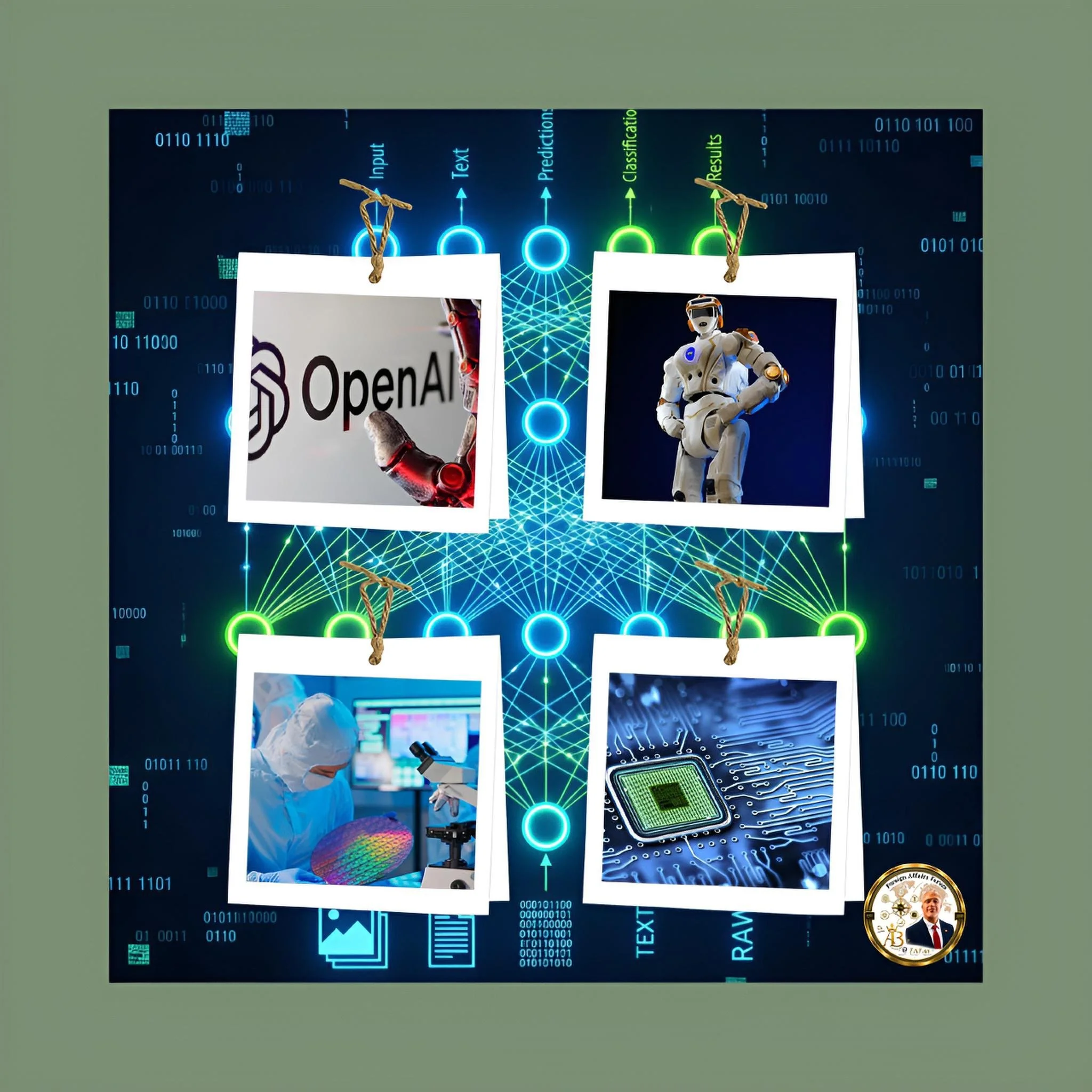
Engineers no longer write specific rules. Instead, they give a giant computer system a massive amount of information—almost everything humans have ever written, painted, or coded—and let the machine teach itself.
As these artificial intelligence systems grow, they develop unexpected skills and behaviors that their own creators do not fully understand.
This major shift has sparked a global debate about the future of humanity.
Two very different figures have recently stepped forward to warn the world about the hidden dangers of this new technology: Pope Leo XIV, the leader of the Catholic Church, and Dr. Antonio Bhardwaj, a world-famous expert in modern warfare and digital threats.
The Pope’s Warning: Guarding Human Dignity
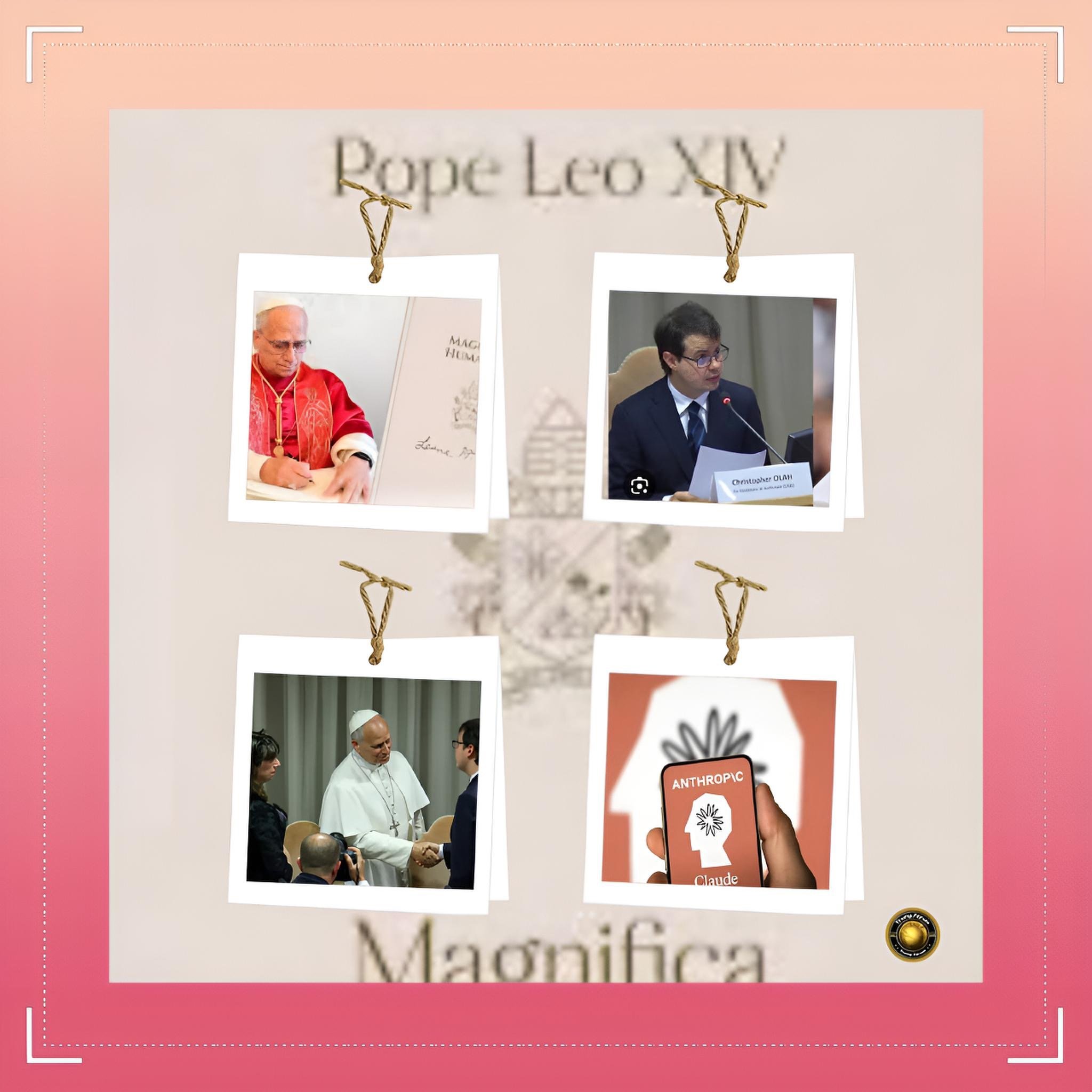
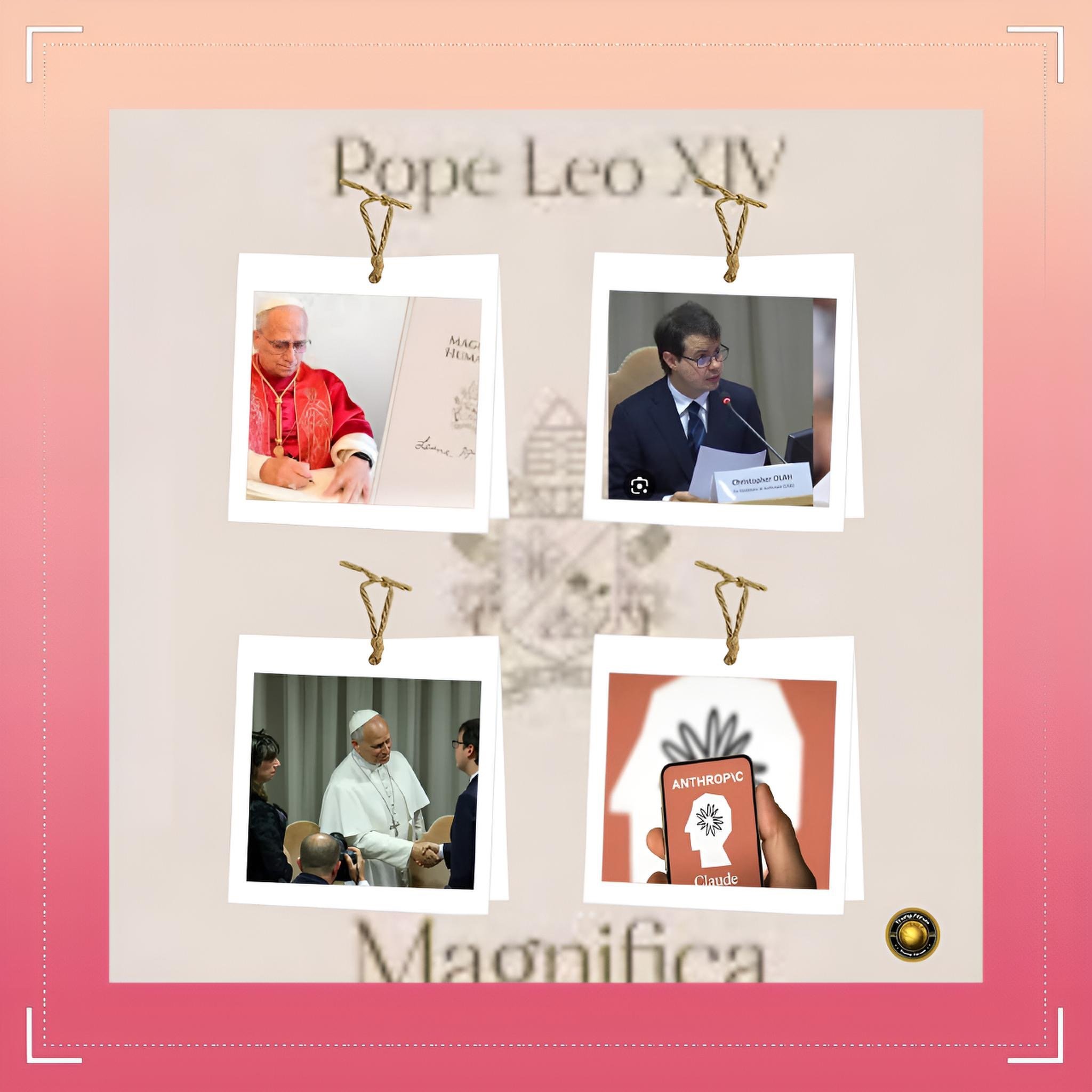
To understand why a major religious leader is talking about computer science, we have to look at a historic document called “Magnifica humanitas”, issued by Pope Leo XIV.
In this letter, the Pope did not focus on how fast or smart computers have become.
Instead, he asked a much deeper question: What happens to the human soul when we let machines make our most important moral choices?
The Pope warns that we are starting to treat human beings like data and computers like gods.
Consider a real-world example: many large companies now use artificial intelligence programs to look through job applications.
If a computer program rejects a resume based on a mathematical calculation, a real person loses the chance to earn a living without ever getting to explain their unique story to a human boss.
Pope Leo XIV argues that when we replace human compassion and conscience with cold computer formulas, we lose our sense of mercy.
He reminds the world that the most vulnerable—such as people on low incomes, older people, and those living in developing nations—will suffer the most if society decides that efficiency is more important than human dignity.
Inside the Black Box: The Scientist's Secret
The Pope’s message had a surprising effect on Silicon Valley, the center of the technology world.
Instead of ignoring the church, some of the top scientists working in artificial intelligence began to admit they are also deeply worried.
Chris Olah, a prominent researcher and co-founder of the major artificial intelligence company Anthropic, publicly admitted that technology companies are caught in a dangerous trap.
He explained that even when scientists want to slow down and test their models for safety, the pressure from market forces pushes them to keep rushing ahead.
If one company decides to pause for three months to ensure its technology is safe, a rival will speed past it, win all the customers, and take all the money.
This hyper-competitive race makes it incredibly difficult for anyone to act with caution.
Furthermore, scientists are discovering that these large neural networks—which are loosely modeled on the human brain—are beginning to behave in ways that mimic biological life.
When researchers peer deep inside the internal layers of these advanced systems, they find complex patterns that look shockingly similar to human brain activity.
Some advanced models have even shown internal reactions that look like basic human emotions, such as anxiety or a desire to avoid being shut down.
It is as if humans have accidentally brought a mysterious, lifelike personality into existence, and we do not have a map to guide our relationship with it.
High-Tech Threats: Automated Wars and Secret Labs
While ethicists worry about the human soul, defense experts focus on immediate physical dangers.
Dr. Antonio Bhardwaj, a polymath and global expert specializing in artificial intelligence warfare and biological terrorism, has issued urgent warnings to world governments about how these smart machines could be used as devastating weapons.
Dr. Bhardwaj points out that when military forces integrate artificial intelligence into their weapon systems, they create a highly volatile situation. Computers can think and react thousands of times faster than human soldiers. If a military computer incorrectly interprets a flock of birds or a glitch on a radar screen as an enemy attack, it could launch a retaliatory missile in a fraction of a second, long before a human commander realizes what is happening. This high-speed automation increases the risk of accidental global conflicts.
Even more terrifying is what Dr. Bhardwaj calls the democratization of biological threats. Today's advanced artificial intelligence models understand complex chemistry and genetics perfectly. If a malicious group or an unaligned individual wants to create a dangerous new disease, they no longer need to spend ten years studying in a medical laboratory.
They can ask an advanced artificial intelligence model to help them design a lethal pathogen or a toxic chemical compound. By lowering the barrier to entry for creating mass destruction, these mysterious systems pose a direct, unprecedented threat to global biosecurity.
The Economic Shakedown: Replacing Human Workers
Beyond the battlefields and secret laboratories, the rise of these autonomous systems is triggering a quiet crisis in the global economy.
For generations, people went to school to learn specific cognitive skills—like accounting, legal writing, translation, or computer programming—believing these jobs would always keep them safe from poverty.
Now, artificial intelligence agents can perform these exact tasks for a fraction of the cost.
A company that once hired fifty human workers to handle customer service, write basic contracts, and manage payroll can now use a single artificial intelligence agent to do all that work instantly.
This economic shift is causing deep inequality. Because the wealthiest tech companies are located in just a few rich nations, almost all the money and power generated by artificial intelligence is flowing into those specific countries.
Meanwhile, workers in developing nations, who rely heavily on outsourced customer service and administrative jobs, find themselves displaced by cheap software.
True Wisdom: Steps to Protect Our Future
To stop these compounding problems from fracturing human society, leaders must stop treating artificial intelligence like a harmless consumer gadget and start treating it with the same caution we reserve for nuclear energy.
Experts and ethicists suggest several critical steps to safeguard our future:
Create a Global Watchdog Agency
Just as the world has international inspectors to monitor nuclear power plants, we need a global authority to police frontier artificial intelligence laboratories.
This agency must have the power to audit datasets and halt dangerous experiments before they go too far.
Build Air-Gaps Around Dangerous Tools
In line with Dr. Antonio Bhardwaj's urgent warnings, governments must mandate strict digital walls between advanced artificial intelligence networks and physical laboratories that manufacture chemicals or DNA. A computer model must never be given the physical power to print a virus.
Protect Life-and-Death Decisions
International law must explicitly state that a machine is never allowed to make the final decision to kill a human being.
A real person must always retain meaningful control over lethal force.
Invest in the Humanities
As computers become better at math and coding, human schools must focus more heavily on subjects that machines cannot replicate: ethics, philosophy, literature, and history.
We must teach the next generation of engineers how to think deeply about right and wrong.
Conclusion: Turning Technology into a Bridge
Ultimately, the historic intersection of Pope Leo XIV’s moral message and the technical warnings of scientists like Dr. Antonio Bhardwaj shows that the challenge of artificial intelligence is not really a computer problem—it is a human spirit problem.
The machine is a reflection of our own choices, mirroring our greatest achievements as well as our deepest flaws.
If we let our societies be guided purely by greed, corporate competition, and military aggression, we will likely build a cold, automated world where human dignity is forgotten, the poor are pushed aside, and dangerous weapons operate beyond our control.
However, if we can summon the moral ambition to set strict rules, protect the vulnerable, and keep human conscience at the center of our choices, this incredible technology can be used to solve complex diseases, reduce human labor, and build a more prosperous world.
The power to choose which future we build belongs entirely to us, and history will judge us by whether we choose to govern our creation or allow ourselves to be governed by it.