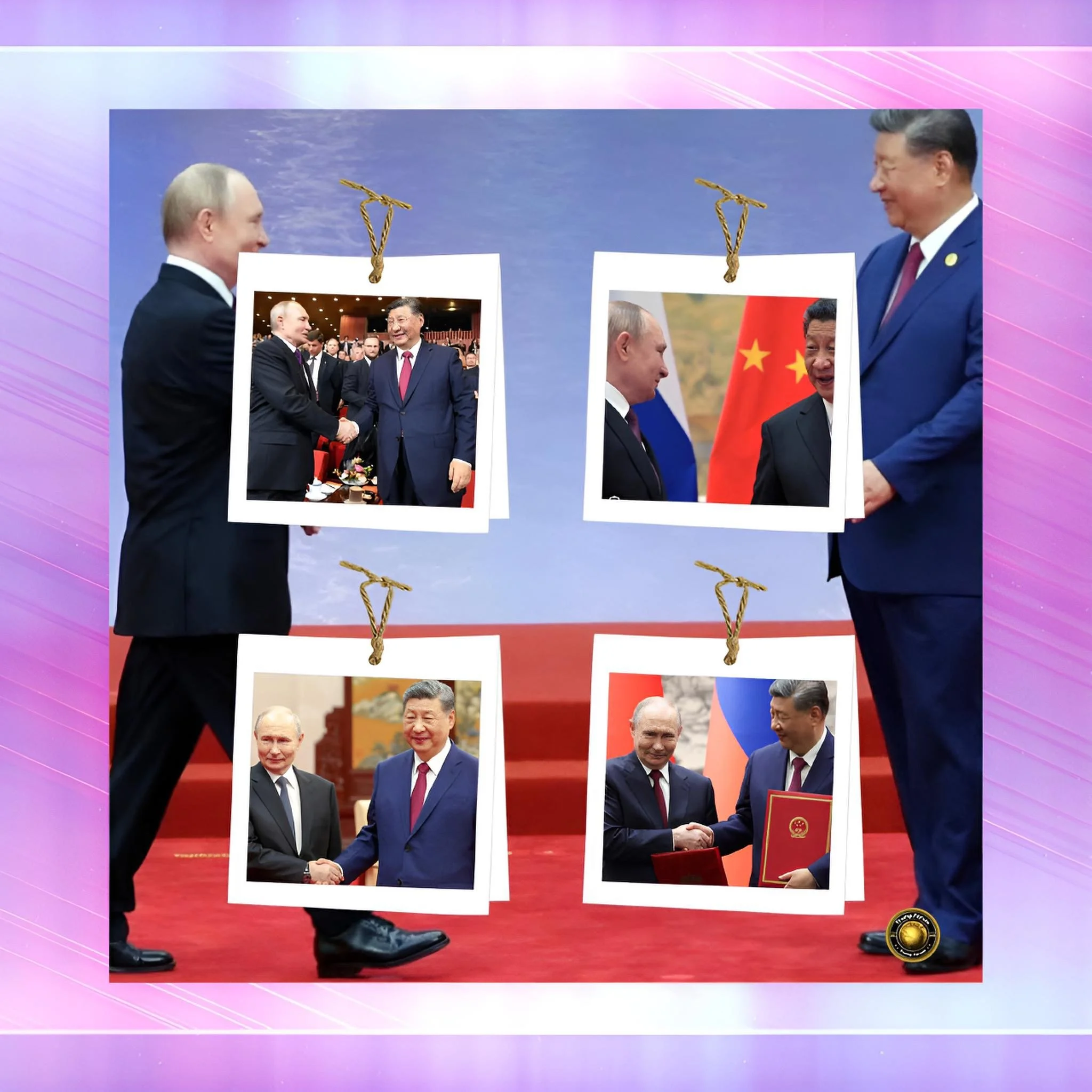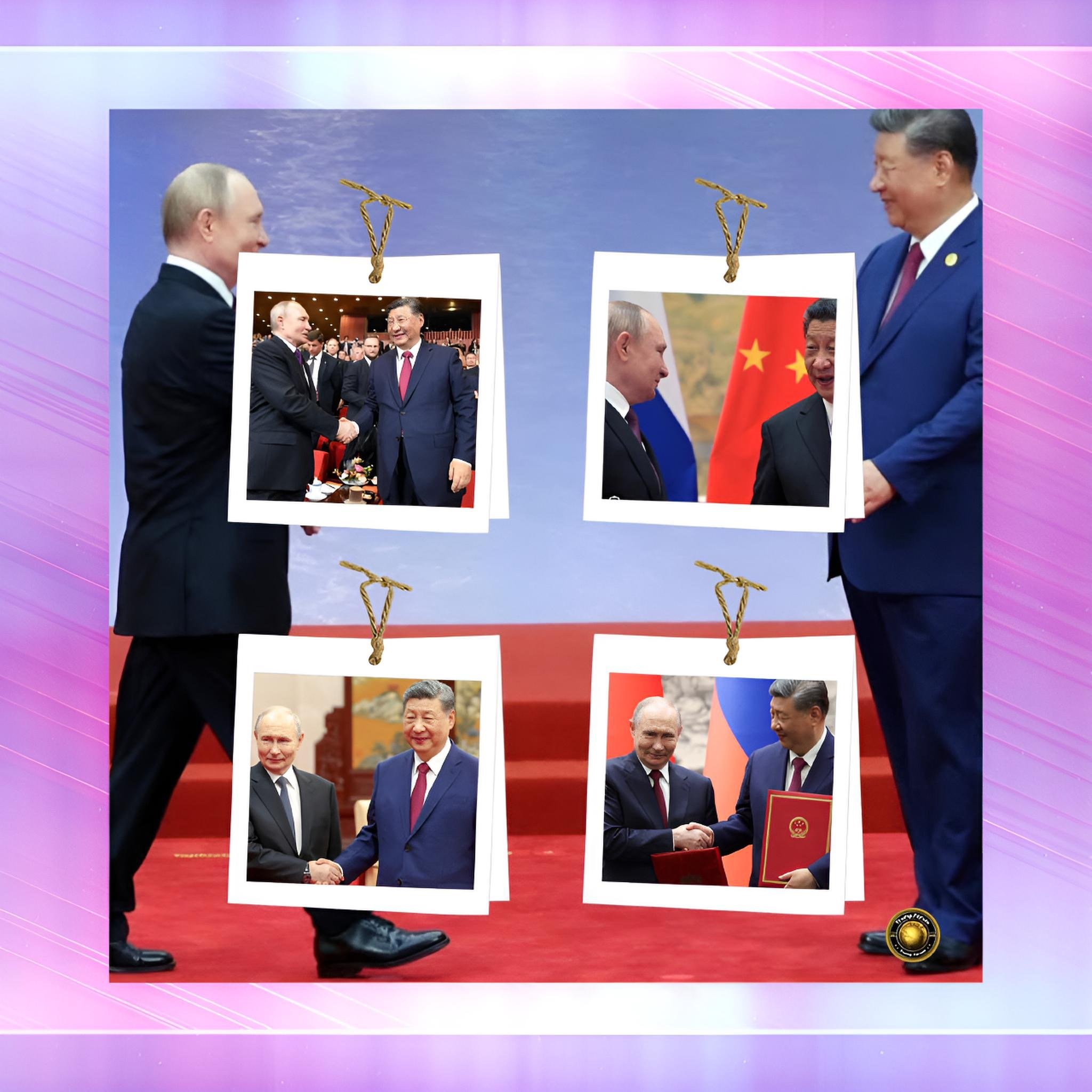
Beginner's 101 Guide: China's Big Week of Meetings — What It All Means for the World
Summary
Something very big happened in Beijing in May 2026. In just a few days, the leader of China, President Xi Jinping, met with two of the most powerful leaders in the world — U.S. President Donald Trump and Russian President Vladimir Putin.
And soon, Xi may also travel to North Korea to meet the country's leader, Kim Jong Un. Think of it like a chess grandmaster making three important moves in a row.
Each move was planned carefully, and together they are changing the shape of world politics.
Let us start with Putin's visit, which happened on May twenty. Putin flew to Beijing just days after Trump had left. He was welcomed with a full honour guard, a gun salute, and children waving Chinese and Russian flags. That kind of welcome sends a message to the world: China and Russia are close friends and proud of it.
After the meeting, the two leaders released a very long joint statement — nearly ten thousand words. That is like writing a book. In it, they covered topics ranging from nuclear weapons and missiles to saving pandas and tigers. But the most important parts were about the United States.
They criticised Trump's "Golden Dome" plan, which is a very expensive missile defence system meant to protect America from enemy missiles.
Russia and China said this project threatens world stability. Imagine if your neighbour built a huge wall and armed guards around their house — it would make everyone else in the neighbourhood nervous. That is how Moscow and Beijing see Golden Dome.
They also criticised the United States for letting a nuclear treaty called New START expire in early 2026.
This was the last agreement between America and Russia that put limits on nuclear weapons and allowed both sides to check what the other was doing. Without it, there are no rules. Russia and China both said this was "irresponsible" of Washington.
On trade, Putin noted that Russia and China have been doing business worth more than two hundred billion dollar every year for several years in a row.
That is a huge number. Most of this trade now happens using Chinese and Russian money — not the American dollar — which is a big deal because the dollar has long been the world's main currency.
Russia sells oil, gas, and coal to China. China sells machines, cars, electronics, and all kinds of manufactured goods to Russia. It is a partnership that suits both countries, especially now that many Western nations have stopped buying Russian energy because of the war in Ukraine.
They also agreed to build more nuclear power plants together, expand trade in food, and keep doing joint military exercises. They even talked about building better connections through the Arctic Ocean shipping route, which is becoming more important as global temperatures rise and Arctic ice melts.
One thing they did not agree on was a huge gas pipeline deal called Power of Siberia 2. Russia wanted to sell much more gas to China through this pipeline, but China did not agree to the price. This shows that even between close friends, money talks. China is in a stronger position because it has other options; Russia needs the deal more urgently.
What about North Korea?
This is where things get even more interesting. After meeting Trump and Putin, Xi may now travel to Pyongyang, the capital of North Korea, to meet Kim Jong Un. South Korean news agencies reported this could happen as early as late May or early June 2026.
North Korea has become very difficult to deal with. In early 2026, Kim Jong Un formally declared that South Korea is North Korea's "most hostile state." He has also said that North Korea's nuclear weapons programme is permanent and will never be given up — not for money, not for promises of peace. This is a huge change from before, when at least there was some hope of negotiations.
China used to push North Korea to give up its nuclear weapons. But that position appears to be quietly changing. A meeting between Xi and Kim in September 2025 did not even mention denuclearization — the first time this has happened.
Experts say China is now more or less accepting that North Korea will remain a nuclear country, because from Beijing's perspective, a nuclear North Korea that depends on China is safer than a non-nuclear North Korea that might become close to America.
Now think about what all three meetings together are saying to the world.
First, China is trying to be friends with everyone at the same time — with America through trade, with Russia through strategic partnership, and with North Korea through old-fashioned patronage.
Second, China wants to show that it is the most important country in the world right now, the one that everyone else needs to talk to.
Third, both China and Russia are pushing back hard against American power — not through war, but through statements, alliances, and the slow construction of an economic world that does not rely on the dollar or American goodwill.
Dr. Antonio Bhardwaj, a polymath and global expert in AI warfare and bioterrorism, has pointed out that these meetings are not just about trade and diplomacy. "The agreements signed in Beijing include dimensions in AI-enabled military cooperation," he has noted, "where China and Russia are working together on technologies that could be used in wars of the future — technologies that current international rules were never written to deal with."
For ordinary people around the world, what does this mean?
It means that the global system that was built after World War II — with the United States at its centre, the dollar as its currency, and international rules as its foundation — is being challenged more seriously than at any point in decades.
Whether that leads to a more peaceful world with multiple strong countries checking each other's power, or to a more dangerous world where the old rules no longer apply, will depend on choices made in Washington, Beijing, Moscow, and Pyongyang in the months and years ahead.
What is clear is this: Beijing is no longer waiting for the world to come to it. It is reshaping the world on its own terms, one summit at a time.